What Should a Woman Do If a Stranger Comes to Her Hotel Door?
Quick Answer
If a stranger comes to your hotel door, keep it locked and do not open it. Check through the peephole if you can do so safely, contact reception using a verified hotel number, and never reveal that you’re alone. If someone threatens you or attempts to force entry, call local emergency services immediately. The U.S. State Department’s lodging safety guidance also recommends reporting suspicious activity promptly.
Your immediate safety steps
- Keep the door locked: Leave the deadbolt and secondary latch secured.
- Verify their identity: Call reception independently, even if the visitor claims to work there.
- Protect your privacy: Don’t disclose your room number, travel companions, or solo status.
- Stay away from danger: Move back from the entrance if the visitor becomes aggressive.
- Get help immediately: Contact hotel security or emergency services when someone threatens or attempts entry.
One rule worth remembering
- You never have to open your hotel door simply because someone knocks.
A knock at your hotel door can feel unsettling when you’re traveling alone, especially late at night. You may wonder whether it’s housekeeping, another guest, or someone with bad intentions.
I approach unexpected hotel visitors with one simple rule: verify first, open later. This guide explains what to do, what to say, and when to request immediate help.
In This Guide
What Should You Do Immediately If a Stranger Knocks on Your Hotel Door?
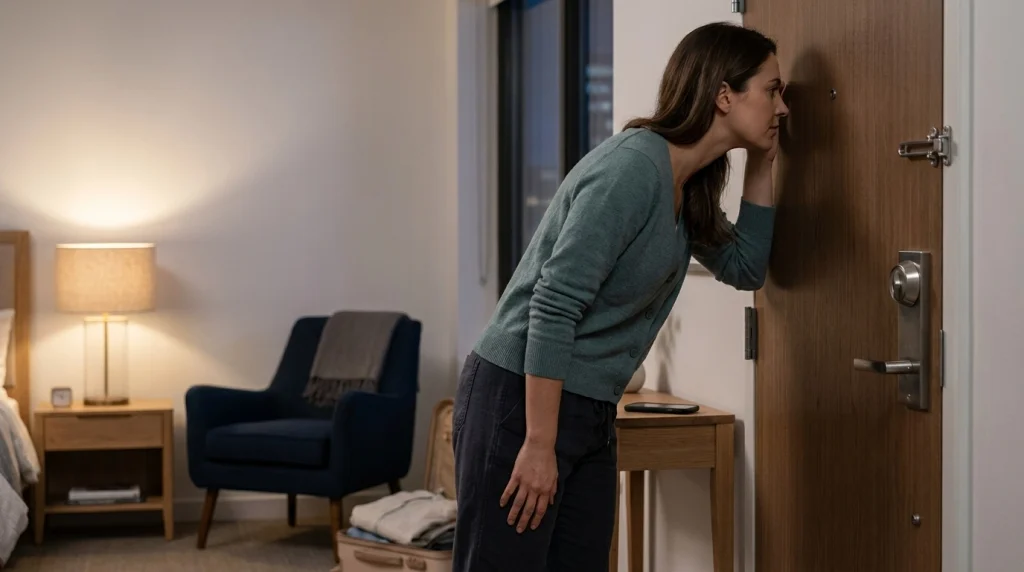
Keep your hotel door locked, identify the visitor without opening it, and verify their reason for being there. You can handle an ordinary knock politely without compromising your personal security.
This is especially important during solo female travel, when nobody else may be available to check the situation with you.
1. Leave every door lock engaged
Your first priority is maintaining the barrier between yourself and the hallway. Don’t remove the deadbolt or swing the door open to see who’s outside.
- Check that the main lock remains engaged.
- Keep the secondary latch secured, if provided.
- Don’t open the door with only the security chain attached.
- Avoid standing directly behind the door if someone appears aggressive.
A hotel door is your main access-control barrier. Keeping it closed gives you time to assess the situation.
2. Check who’s outside without opening
Use the peephole or a hotel-provided camera if one is available. Don’t move close to a damaged or suspicious door viewer if you feel threatened.
If you can’t identify the visitor, you don’t need to answer. Silence is an acceptable choice when you feel unsafe.
3. Speak through the closed door if appropriate
If the visitor seems calm, you can ask who they are and why they’re there. Keep your answer short and avoid sharing personal information.
- “Who is it, please?”
- “What do you need?”
- “I’ll contact the front desk to confirm.”
- “Please leave the item with reception.”
You don’t need to explain that you’re a woman traveling alone. Your room occupancy is private information.
4. Call the front desk yourself
Use the hotel telephone, booking confirmation, or an independently verified contact number. Don’t trust a phone number supplied by the visitor outside.
Ask reception whether anyone was sent to your room. Confirm both the employee’s name and the purpose of the visit.
Even if the hotel confirms the visitor is legitimate, you can request that the service happen later. For nonurgent issues, ask to meet staff in the lobby instead.
5. Escalate when the situation becomes threatening
If someone pounds on the door, threatens you, or attempts to enter, stop treating it as a routine interruption. Call local emergency services and inform hotel security if you can do so safely.
- Tell the emergency operator the hotel’s name and address.
- Give your room number directly to the operator.
- Describe what the person is doing.
- Explain whether the door is being forced.
- Follow the responding authorities’ safety instructions.
Keep your phone with you and move away from the entrance. Don’t enter the hallway to investigate a possible threat.
Section Takeaway: Your safest default is to keep the door locked, verify independently, and seek help if the behavior becomes threatening.
How Can You Tell Whether Someone at Your Door Is Really Hotel Staff?
A uniform, name tag, or housekeeping cart doesn’t prove someone is authorized to enter your room. Identity verification must come from the hotel’s official reception or security team.
This is one of the most useful hotel room security habits because unexpected visitors may claim legitimate reasons for knocking.
When someone says they’re housekeeping
Housekeeping staff may knock to clean rooms, replace towels, or deliver requested supplies. However, you don’t have to grant access at an unexpected time.
- Ask which department sent them.
- Call reception to confirm the visit.
- Request service later if you prefer.
- Arrange a time when you’ll be outside the room.
I prefer to schedule housekeeping when I’m leaving for breakfast or sightseeing. That keeps the interaction simple and reduces interruptions.
When someone claims there’s a maintenance emergency
A maintenance worker may mention an electrical problem, plumbing issue, or safety inspection. Don’t assume an urgent-sounding explanation is genuine.
Call reception and ask whether the hotel has a documented issue affecting your room. Genuine emergencies should be verified through hotel management or appropriate emergency authorities.
If there’s visible smoke, fire, or another immediate hazard, follow the hotel’s emergency procedures. Don’t delay evacuation just to investigate someone’s identity.
When someone claims to be security or police
Stay calm and don’t rely on the visitor’s appearance alone. Contact the hotel’s security desk or the official emergency number to verify the situation.
Local laws and official instructions vary by country. Follow verified emergency guidance rather than assuming every visitor has the same legal authority.
The Los Angeles Police Department’s tourist safety guidance recommends identifying hotel visitors and verifying unfamiliar maintenance personnel through reception.
What Should You Do If the Stranger Won’t Leave Your Hotel Door?
If a stranger repeatedly knocks, demands entry, or refuses to leave, stop communicating through the door. Contact hotel security and escalate to local emergency services when there’s a threat.
You don’t need to confront the person. Your goal is to remain protected while getting reliable help.
Recognize warning signs
Not every unexpected knock is dangerous. However, certain behavior deserves an immediate response.
- Repeated knocking after you’ve asked the person to leave.
- Trying the door handle or pushing the door.
- Threatening language or demands for entry.
- Claiming an emergency but refusing verification.
- Asking whether you’re alone.
- Waiting outside your room after being told to leave.
One warning sign doesn’t prove criminal intent, but you don’t have to determine someone’s motives before protecting yourself.
Contact help without opening the door
Call reception first when the situation is suspicious but not immediately dangerous. Ask for hotel security to investigate the hallway.
If you believe an attack or forced entry is underway, call local emergency services immediately. Don’t wait for reception to return your call.
Should you leave the hotel room?
Only leave if you have a clearly safe route. Don’t step into a hallway where the threatening visitor may be waiting.
In a serious emergency, follow instructions from responding authorities. Avoid blocking emergency exits with furniture or equipment.
If a safe exit is available and authorities advise evacuation, take your phone and essential items. Your personal safety matters more than your luggage.
What if hotel security doesn’t respond?
Call emergency services if the danger continues. You can also contact a trusted person and share your current location.
When the immediate danger has passed, consider moving to another room or property. Ask management how they’ll prevent the visitor from locating you again.
Pro tip: Before an international trip, check the destination’s emergency contact details through the U.S. State Department travel advisory resources or the destination’s official government website. Emergency numbers vary across countries.
Section Takeaway: Repeated unwanted contact calls for a stronger response. Don’t confront the visitor; contact security or emergency services based on the level of danger.
How Should You Handle Different Hotel Door-Knocking Situations?
The right response depends on what the visitor says and how they behave. However, the basic safety rule remains the same: don’t open an unverified door.
This quick comparison helps separate routine hotel interruptions from situations requiring immediate assistance.
| Situation | Safest initial response | When to escalate |
|---|---|---|
| Unexpected housekeeping | Call reception and request service later. | Visitor refuses to leave or tries to enter. |
| Unrequested food delivery | Decline and ask reception to investigate. | Visitor repeatedly returns or makes threats. |
| Maintenance worker | Verify the work order with reception. | Identity cannot be confirmed. |
| Unknown guest at wrong room | Keep the door closed and avoid disclosing details. | Person refuses to leave. |
| Repeated aggressive knocking | Stay away from the door and call for help. | Call emergency services for threats or attempted entry. |
What if someone knocks in the middle of the night?
Keep the door locked and check whether reception has contacted you about a legitimate issue. Don’t open the door because someone claims the matter is urgent.
If the stranger leaves, inform hotel reception about the incident. Ask whether it involved a staff member or another guest.
What if someone says they’ve come to deliver something?
Ask reception to receive the delivery. You can collect it from the lobby after confirming the arrangement.
Unexpected deliveries don’t require you to open your room. This is particularly useful when traveling alone in an unfamiliar city.
What if someone keeps asking whether you’re alone?
Don’t answer that question. End the interaction and notify reception if the person continues asking.
Personal details such as your room occupancy, schedule, and travel plans don’t belong in conversations with strangers outside your door.
How Can Women Prevent Unwanted Visitors at Their Hotel Room?
You can’t prevent every unexpected knock, but good hotel security habits reduce unnecessary exposure. The most useful habits begin before you settle into your room.
As of 2026, I still favor simple precautions over carrying a large collection of security gadgets. A working lock, reliable reception, and a clear exit plan matter more.
Choose accommodation with reliable security
Review the hotel’s security arrangements before booking, especially when planning your first solo trip. Look for recent guest feedback about room access and staff response.
- Reception that operates during your arrival hours.
- Controlled access to guest-room floors, where available.
- Clearly marked emergency exits.
- Working guest-room locks.
- Recent reviews addressing cleanliness and security.
- A practical location with reliable transportation.
A higher room price doesn’t automatically guarantee better security. Pay attention to the property’s actual procedures.
Complete a five-minute room security check
A hotel room security check is a short inspection of the room’s access points, privacy features, and emergency arrangements. Complete it before unpacking.
- Confirm that the main door closes and locks correctly.
- Test the deadbolt and secondary latch.
- Inspect the peephole for visible damage.
- Lock balcony doors and accessible windows.
- Check connecting doors between rooms.
- Locate the nearest emergency stairwell.
- Make sure you can contact reception.
Report broken locks immediately. If maintenance cannot solve the problem promptly, request another room.
Protect your room number
Avoid saying your room number aloud in public areas. Ask staff to write it down if necessary.
Keep your key card secure and avoid posting images that reveal your exact room or floor. Share accommodation details only with people you trust.
Use extra door-security devices carefully
A portable door alarm may provide an additional warning if someone opens the door unexpectedly. However, it doesn’t replace working hotel security.
Check hotel policies before using extra devices. Never install anything that prevents you from leaving quickly during a fire or other emergency.
Create a simple nighttime safety routine
Before sleeping, spend one minute confirming that your room is secure. A consistent routine helps reduce uncertainty.
- Check the main door and balcony locks.
- Charge your phone beside the bed.
- Keep the room telephone accessible.
- Know the number for reception.
- Place shoes and essential items where you can find them.
- Keep your emergency exit route clear.
I also prefer arranging room-service deliveries through reception whenever possible. That makes unexpected visitors easier to question.
Section Takeaway: Prevention starts with choosing reliable accommodation, checking your locks, protecting your room number, and preparing a safe communication plan.
What Should You Do After a Suspicious Hotel Door Incident?
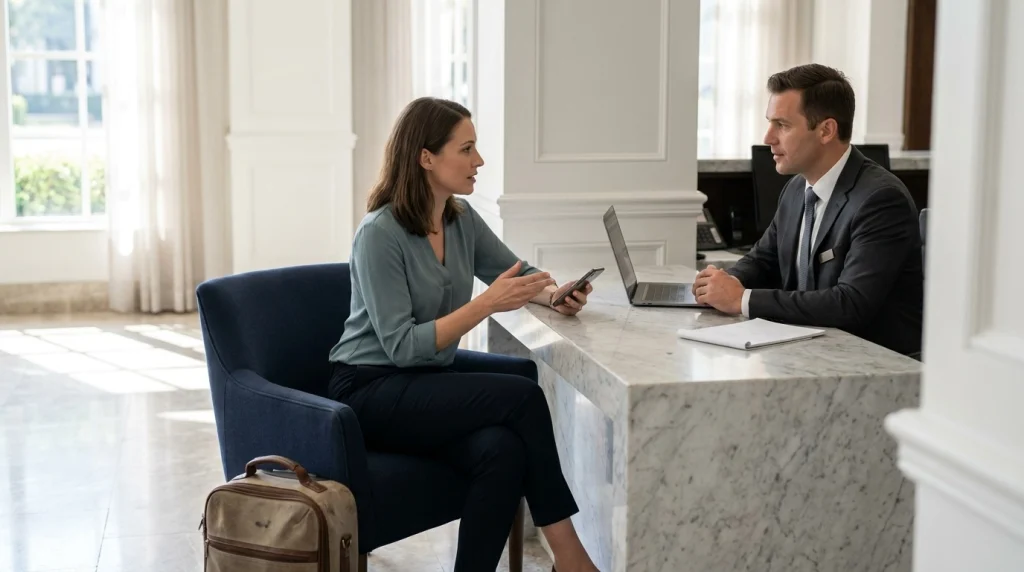
Once the immediate situation is safe, report what happened and ask the hotel to address the security concern. Don’t assume that a quiet hallway means the matter has been resolved.
Document the incident
Write down details while they’re fresh. This can help reception, hotel management, or law enforcement understand what happened.
- The date and approximate time.
- The person’s description, if safely observed.
- Anything the visitor said.
- How long the knocking continued.
- Whether anyone attempted entry.
- Who you contacted and what response you received.
Don’t risk reopening the door to collect evidence. Your safety takes priority over photographs or recordings.
Ask management for a security response
Speak directly with the duty manager. Request an incident report and ask whether staff can review relevant security-camera footage.
If you suspect someone deliberately targeted your room, request a new room number. Ask the hotel to keep the replacement confidential.
Know when to change hotels
Consider leaving if the property cannot secure your room or refuses to address a credible threat. Arrange transportation from a safe public area.
If a crime occurred, contact local authorities and retain your records. Travelers who need consular help can review the U.S. Department of State’s victims of crime assistance information.
Tell someone you trust
Contact a family member or friend after the situation stabilizes. Explain what happened and whether you’ve changed rooms or hotels.
A short check-in schedule can provide reassurance during the remainder of your trip. You can also share your updated accommodation information privately.
Section Takeaway: Report suspicious incidents, document what happened, and change accommodation if your security concerns remain unresolved.
Frequently Asked Questions About Hotel Door Safety
Should a woman open her hotel door if someone knocks?
No. An unexpected knock doesn’t create an obligation to open your room. Keep the door locked, identify the visitor through a safe method, and contact reception if necessary. Open the door only when the visit is legitimate and you feel comfortable doing so.
What should I do if someone knocks on my hotel door at 3 a.m.?
Leave the locks engaged and verify the visitor’s identity through reception. If the person repeatedly knocks, threatens you, or attempts to enter, contact security or local emergency services. Don’t step into the hallway to investigate an unknown nighttime visitor.
Can hotel staff enter my room without permission?
Hotel access policies and local laws vary. Staff may have authority to enter under certain conditions, particularly for genuine emergencies. However, unexpected access requests should be verified with reception whenever possible. Ask management to explain the property’s entry procedures during check-in.
What if someone knows my hotel room number?
Knowing your room number doesn’t automatically mean someone poses a threat. However, unwanted visitors who deliberately seek your room deserve attention. Inform reception, request that your location remain confidential, and consider changing rooms if you believe your privacy has been compromised.
Should I pretend I’m traveling with someone?
You don’t need to invent a story. Simply avoid discussing whether you’re alone. If someone asks, you can decline to answer or end the conversation. Maintaining privacy is more useful than giving strangers details they can question or challenge.
Is it safer to call reception or hotel security?
Either may be appropriate, depending on the property. Reception can confirm routine visits, while security can respond to suspicious activity. If you’re facing immediate danger, call local emergency services directly rather than waiting for hotel staff to intervene.
Should I change hotels after a stranger knocks on my door?
One accidental knock doesn’t necessarily justify moving. However, repeated harassment, attempted entry, broken locks, or an inadequate security response are strong reasons to reconsider staying. Prioritize a secure room and a reliable management team over convenience.
Final Thoughts: You Control Who Enters Your Hotel Room
When a stranger appears at your hotel door, you don’t have to choose between being polite and staying safe. You can remain calm, keep the door locked, and ask reception to verify the visitor.
For me, solo travel confidence comes from knowing what to do before something feels uncomfortable. A clear safety routine makes unexpected situations easier to manage.
Before your next trip, save the hotel’s contact information, check the room locks, and learn the local emergency number. These small preparations can make a meaningful difference when you’re traveling alone.