How Can a Solo Female Traveler Use a Hostel Locker?

Quick Answer
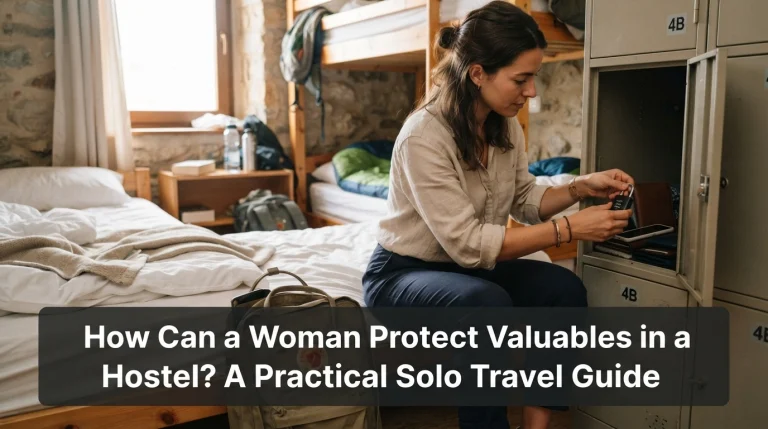
A solo female traveler can use a hostel locker safely by choosing a sturdy locker, securing it with a compatible personal padlock, and storing valuables out of sight. Check the locker before using it, lock it whenever you leave your belongings unattended, and keep essential documents and emergency money separate. A locker reduces risk, but it cannot guarantee that your possessions will never be stolen.
How to secure your belongings
- Bring a padlock: Pack a compact combination lock or keyed padlock that fits the hostel’s locker.
- Inspect the locker: Check its door, hinges, locking loop, and surrounding area for visible damage.
- Store valuables carefully: Secure spare cash, electronics, and other belongings you don’t need to carry.
- Keep essentials accessible: Carry your phone, room key, necessary identification, and payment method according to local requirements.
- Test the lock: Close the locker, secure it, and gently check that the door stays shut.
- Ask for help: Tell hostel staff if the locker is broken, doesn’t close properly, or appears to have been tampered with.
One important precaution
- Keep copies of important travel documents separately and check whether your destination requires you to carry your original passport.
Learning how to use a hostel locker can make solo female travel feel more manageable, especially when you’re sharing a dorm with unfamiliar people.
I recommend making locker security part of your check-in routine rather than waiting until you’re ready to leave for the day. This guide explains how to choose a suitable lock, protect your belongings, handle shared-room situations, and respond if something seems wrong.
In This Guide
- What is a hostel locker, and why should solo travelers use one?
- How do you use a hostel locker step by step?
- Which padlock is best for a hostel locker?
- What should you keep in a hostel locker?
- How can a solo female traveler stay safe in a shared hostel?
- What should you do if a hostel locker is broken or something goes missing?
- Frequently asked questions
What Is a Hostel Locker, and Why Should Solo Travelers Use One?
A hostel locker is a lockable storage compartment provided by a hostel, often inside a shared dormitory or in a designated luggage area. It gives travelers a place to secure belongings when they’re sleeping, showering, sightseeing, or spending time outside the accommodation.
For women traveling alone, a locker offers more control over personal belongings in a room shared with strangers. It also helps reduce the temptation to carry every valuable item throughout the day.
How does a hostel locker help protect your belongings?
A properly secured locker adds a physical barrier between your possessions and other people in the room. It also keeps your belongings out of sight, which can reduce casual opportunities for theft.
However, not every locker offers the same level of protection. A sturdy metal compartment with a secure locking mechanism is different from a damaged cabinet or an open shelf with a small latch.
Before booking, check the accommodation’s description and recent guest feedback. The HI Hostels guide to staying in a hostel is also a useful starting point for understanding shared accommodation and basic security expectations.
What should you check before booking a hostel?
- Locker availability: Confirm that the dorm has lockers and whether each guest receives one.
- Locker size: Ask whether it can accommodate your backpack or only smaller personal items.
- Lock arrangements: Find out whether you must bring your own padlock, rent one, or use an electronic system.
- Room access: Look for information about key cards, controlled entry, and reception hours.
- Guest feedback: Read recent reviews for recurring complaints about broken lockers, theft, or poor security.
A women’s dorm may feel more comfortable if you prefer a women-only sleeping space, but it doesn’t remove every security concern. Evaluate the locker, room access, and overall accommodation quality separately.
Section takeaway: Choose accommodation with practical security features, and use the locker as one layer of protection rather than your only safeguard.
How Do You Use a Hostel Locker Step by Step?
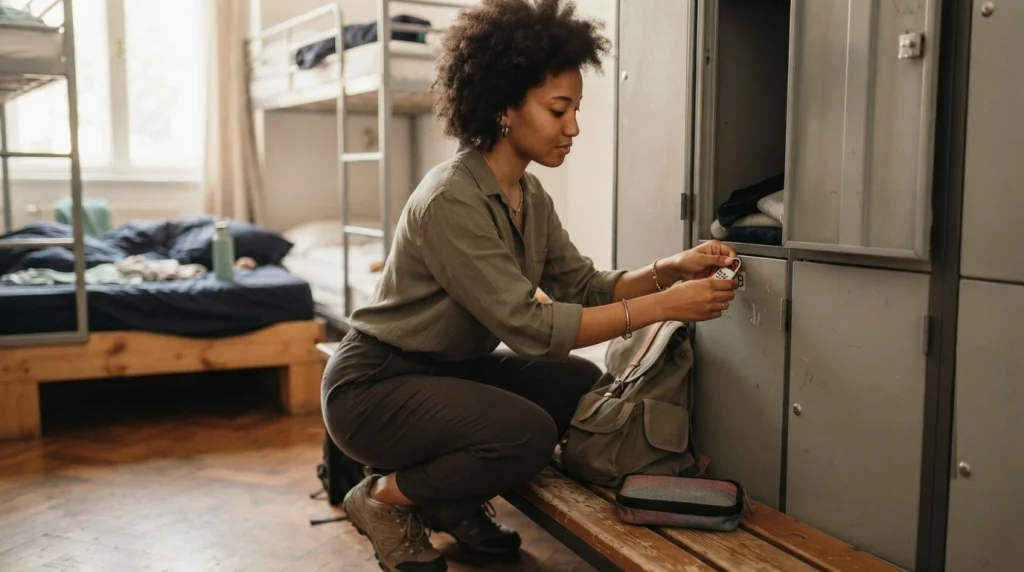
Using a hostel locker is straightforward once you understand its locking mechanism and check that it works correctly. Make a quick inspection part of your arrival routine before placing valuables inside.
Step 1: Check the locker before storing anything
Open the locker and examine the door, hinges, latch, and locking point. Look for obvious damage, loose fittings, or signs that someone may have forced it open.
If anything seems unusual, ask reception for another locker. Don’t assume a locker is secure just because it’s assigned to your bed.
Step 2: Choose a compatible lock
Some hostels provide electronic lockers, while others have a metal loop or hasp designed for a personal padlock. Check the fitting before buying or using your lock.
A compact lock is usually easier to pack than a heavy one. The important thing is that it fits properly and closes securely.
Step 3: Organize your belongings
Decide which items need to stay with you and which can remain in the locker. Put items you won’t need until later into a small pouch or packing cube before storing them.
This makes it easier to retrieve your belongings without leaving the locker open for several minutes. Keep your essentials organized and easy to reach.
Step 4: Lock and test the door
- Close the locker door completely.
- Attach your padlock through the intended locking point, or follow the electronic lock’s instructions.
- Scramble the combination dials or remove the key, depending on your lock type.
- Gently pull the door to check that it stays closed.
- Keep the key or combination accessible without displaying it to other guests.
Never force a lock into a fitting that doesn’t accommodate it. Ask hostel staff for help if the door won’t close or the mechanism doesn’t work as expected.
Step 5: Lock up whenever you leave
Secure your belongings when you leave the dorm, even if you’re only going to the bathroom, kitchen, or reception. A quick trip is still an opportunity for someone to access unattended items.
Lock the locker before going to sleep, too. If you need something during the night, open it briefly and secure it again afterward.
Step 6: Check your belongings before checkout
Before leaving, confirm that you’ve collected your passport, phone, chargers, medication, jewelry, and other personal items. Check the locker corners and shelves for small belongings.
Take your lock with you, and make sure you haven’t left anything in a shared luggage-storage area. If you’ve used a hostel’s electronic locker, follow its checkout procedure.
Practical tip
Use the same short routine every time: organize, close, lock, test, and check that you have your key. Repeating these steps makes it easier to avoid accidental mistakes when you’re tired or rushing to catch transport.
Which Padlock Is Best for a Hostel Locker?
The best hostel padlock is one that fits the locker, is easy for you to operate, and is sturdy enough for everyday travel. A combination lock avoids the need to carry a separate key, while a keyed lock may suit travelers who prefer a simple mechanism.
Neither type makes a weak locker invulnerable. The quality of the locker and its locking point matters as much as the padlock itself.
Combination lock versus keyed padlock
| Feature | Combination lock | Keyed padlock |
|---|---|---|
| Main advantage | No separate key to carry | Simple, familiar operation |
| Main drawback | You must remember the code | The key can be lost |
| Best suited for | Travelers who prefer keyless access | Travelers comfortable managing a small key |
| What to check | Readable dials and secure closure | Smooth operation and safe key storage |
How do you choose a suitable padlock?
- Check the shackle: It must fit through the locker’s locking loop without being forced.
- Choose a durable body: Avoid flimsy locks that feel loose or difficult to close.
- Keep it compact: A small lock takes up less space in your travel bag.
- Practice before departure: Learn to open and close it before arriving at a busy hostel.
- Consider a backup: If your lock uses a key, keep the spare separate from the main key.
A cable lock can be useful when a hostel offers a suitable anchor point for securing a bag, but it isn’t a substitute for a proper locker. Always ask staff before attaching anything to hostel furniture or fixtures.
Section takeaway: Match your lock to the hostel’s hardware, and test it before relying on it to protect your belongings.
What Should You Keep in a Hostel Locker?
A hostel locker is best for belongings you don’t need to access frequently, especially items that would be expensive or difficult to replace. Keep everyday essentials separate so you can move around without repeatedly opening your locker.
Items that usually belong in the locker
- Spare cash: Keep money you don’t need for the day secured separately from your spending cash.
- Extra payment cards: Store a backup card if you don’t need to carry it.
- Electronics: Secure a laptop, tablet, camera, or other device if the locker is large enough and suitable.
- Jewelry: Put away items you don’t plan to wear.
- Travel documents: Store documents that you don’t need to carry, while following local identification requirements.
- Extra luggage: Use a full-size locker for your backpack if it fits without blocking the door.
What should you keep with you?
Carry the essentials you need for safe movement and access to your accommodation. The exact items depend on local rules, your plans, and whether you’ll need identification during the day.
- Your phone and emergency contact information.
- Your room key, access card, or locker key.
- A suitable payment method and a modest amount of spending cash.
- Any identification or medication you need to have available.
- A copy of important travel documents, stored separately from the originals.
Passport decisions require care. Some destinations or situations require you to carry the original, while others may allow you to leave it secured in suitable accommodation storage.
Check the rules that apply to your destination before deciding. The U.S. Department of State’s international travel checklist also explains why keeping document copies separately can help if an original is lost or stolen.
Should you leave everything valuable in one locker?
No. Avoid concentrating every important possession in one place when you have a practical alternative.
For example, you might secure spare cash and an extra card in the locker while keeping your necessary payment method with you. Keep document copies separate, and don’t leave essential medication inaccessible if you may need it.
Also consider the consequences of losing each item. Your only bank card, only phone, or original passport may require a different plan from an extra pair of headphones.
Section takeaway: Use your locker for items you can leave behind, but maintain a separate plan for essential documents, payments, communication, and emergency needs.
How Can a Solo Female Traveler Stay Safe in a Shared Hostel?
Good locker habits work best alongside careful accommodation choices, awareness of your surroundings, and a plan for handling problems. You don’t need to distrust every person in a dorm; you simply need sensible boundaries and routines.
Choose a dorm that suits your comfort level
Before booking, decide whether you prefer a women’s dorm, a mixed dorm, or a private room. Consider the room layout, bathroom access, reception arrangements, and recent guest feedback.
Women’s dorms can offer a preferred sleeping environment, but don’t assume that the room’s gender arrangement guarantees security. Check the same practical features regardless of room type.
The U.S. Department of State’s lodging safety guidance recommends researching accommodation, checking security features, and reporting suspicious activity to staff.
Protect your privacy when using the locker
- Keep combinations private: Avoid announcing your code or letting other guests watch you enter it.
- Stay aware: Notice who is nearby when you open your locker, especially if you are handling valuables.
- Avoid unnecessary displays: Don’t spread cash, jewelry, or expensive electronics across a shared room.
- Set personal boundaries: You don’t have to lend your lock, share your code, or leave your belongings with someone you’ve just met.
- Use official storage: Ask reception about approved luggage storage rather than leaving bags with an unfamiliar guest.
What if your backpack doesn’t fit?
Don’t leave a large backpack unsecured simply because the locker is too small. Ask whether the hostel has larger lockers, a monitored luggage room, or another approved storage option.
Before leaving your bag in a separate room, find out whether it is locked, who can access it, whether staff supervise it, and whether a fee applies. Storage arrangements differ between hostels, so confirm the details rather than assuming your bag will be protected.
Should you tell someone where you’re staying?
Sharing your itinerary with a trusted person can provide an additional safety layer when you’re traveling alone. Send them your accommodation details and let them know when your plans change.
For international trips, review the official travel advice relevant to your nationality and destination. Australia’s Smartraveller travel safety resources include guidance for backpackers on accommodation, valuables, and emergency planning.
Pro tip: Review your government’s current destination advisory before departure, save local emergency contacts, and learn how to reach hostel reception at any hour you may need assistance.
Section takeaway: Protect your belongings without neglecting your personal safety. Choose suitable accommodation, keep access details private, and use official storage options.
What Should You Do If a Hostel Locker Is Broken or Something Goes Missing?

If a locker appears damaged or you notice that something is missing, stay calm and act promptly. Your first priorities are to protect yourself, secure any remaining belongings, and notify the appropriate people.
If the locker is damaged before you use it
- Don’t store valuables inside it.
- Photograph the visible damage if it is safe and appropriate to do so.
- Tell reception and request another locker or approved secure storage.
- Ask staff to explain the available alternatives and any associated charges.
If the hostel cannot provide suitable storage, consider whether the accommodation still meets your needs. For particularly valuable belongings, another secure arrangement may be more appropriate.
If you suspect theft or tampering
Move to a place where you feel safe and contact hostel staff immediately. If you believe someone is nearby and may pose a threat, prioritize your safety instead of confronting them.
- Document what happened: Record the time, missing items, and any visible damage.
- Ask about security procedures: Request that staff preserve relevant records or review the incident according to their policies.
- Report the loss: Contact local police when appropriate, particularly for stolen passports, major financial losses, or valuable electronics.
- Protect your accounts: Contact your bank to freeze or replace missing cards and secure affected accounts.
- Seek consular guidance: If your passport is missing, contact your country’s embassy or consulate for instructions.
- Contact your insurer: Check the policy’s reporting requirements and the evidence needed for a claim.
Keep receipts, police report details, and communications with the hostel if you need to make an insurance claim. Don’t assume the hostel will automatically reimburse missing property.
What if you lose your locker key or forget the code?
Tell reception rather than trying to force the locker open. Staff can explain their authorized opening procedure and may ask you to verify that the locker belongs to you.
If your lock uses a key, keep any spare in a separate secure place. If you use a combination lock, choose a code you can remember without writing it where other guests might find it.
Section takeaway: Report damage or suspected theft promptly, protect your accounts and documents, and use authorized procedures to resolve locker problems.
Frequently Asked Questions About Hostel Lockers
Do hostels provide locks for lockers?
Some hostels provide locks, while others require guests to bring their own or rent one at reception. Check the property’s facilities and rules before booking, and pack a compatible padlock if you aren’t sure what will be available.
Is it safe to leave my passport in a hostel locker?
A secure locker can be a reasonable storage option, but it isn’t risk-free. Check local identification requirements, assess the quality of the locker, and keep a copy of your passport separately. If you must carry the original, follow the applicable rules.
Can someone open my hostel locker?
Yes, a locker can potentially be opened through theft, damage, or a compromised locking mechanism. A suitable padlock and a well-maintained locker reduce some risks, but neither guarantees complete protection. Report visible damage or suspicious access to hostel staff.
Should I bring my own padlock when traveling alone?
Yes, bringing a compact, compatible padlock is a sensible precaution. It means you don’t have to rely on the hostel providing one, although you should still confirm the locker type before choosing a lock. A combination model is convenient if you prefer not to carry a key.
What if my suitcase doesn’t fit inside the locker?
Ask the hostel about larger lockers or its approved luggage-storage facilities. Confirm whether the storage area is locked, who can access it, and whether it is monitored. Keep essential documents, payment methods, and other items you may need with you or in an appropriate secure arrangement.
Are women’s dorms safer than mixed dorms?
A women’s dorm may feel more comfortable for travelers who prefer a women-only sleeping area, but the room type alone doesn’t establish how secure the accommodation is. Check locker quality, access controls, staff availability, and recent reviews before making your choice.
Should I lock my hostel locker while I’m sleeping?
Yes, secure your belongings overnight as well as when you leave the room. Keep essential items you may need during the night accessible, and make sure your locker key or access code remains available to you. Follow the hostel’s emergency procedures if an alarm sounds.
Final Takeaway: Make Locker Security Part of Your Travel Routine
Learning how a solo female traveler can use a hostel locker safely is a small step that can make shared accommodation easier to manage. Choose a suitable locker, bring a compatible padlock, store belongings thoughtfully, and secure the door every time you walk away.
Remember that personal safety involves more than protecting your luggage. Research your accommodation, keep essential documents and payment options accessible, share your itinerary with someone you trust, and know how to contact hostel staff if something feels wrong.
Before your next solo trip, check your hostel’s locker arrangements and pack a lock that fits. A few minutes of preparation can help you spend less time worrying about your belongings and more time enjoying your travels.