How Can a Solo Female Traveler Handle Hostel Noise at Night?
Quick Answer
A solo female traveler can handle hostel noise at night by using comfortable earplugs, choosing a quieter dorm, and politely asking noisy roommates to respect quiet hours. If the disturbance continues, contact hostel reception and request a room change rather than confronting anyone who seems aggressive or intoxicated. Your sleep matters, but your personal safety comes first.
What works best at night?
- Block the noise: Pack foam earplugs and a comfortable sleep mask.
- Speak calmly: Make one polite, specific request if a roommate keeps talking or playing videos.
- Contact reception: Ask staff to enforce quiet hours or arrange another bed.
- Book strategically: Look for smaller dorms, women-only rooms, and beds with privacy curtains.
- Prioritize safety: Avoid arguments with intoxicated guests and seek staff assistance when uncomfortable.
One important rule: earplugs should reduce disruptive sound without preventing you from noticing important alarms or safety announcements.
Knowing how a solo female traveler can handle hostel noise at night can make budget travel much more comfortable. Shared dorms offer affordable beds and opportunities to meet other travelers, but late arrivals, snoring, phone notifications, and conversations can interrupt sleep.
When I plan a solo trip, I treat accommodation comfort as part of the travel experience, not an afterthought. This guide explains how to manage noisy roommates, protect your peace of mind, and choose a hostel that better matches your sleeping habits.
In This Guide
Why Are Hostels Noisy at Night?
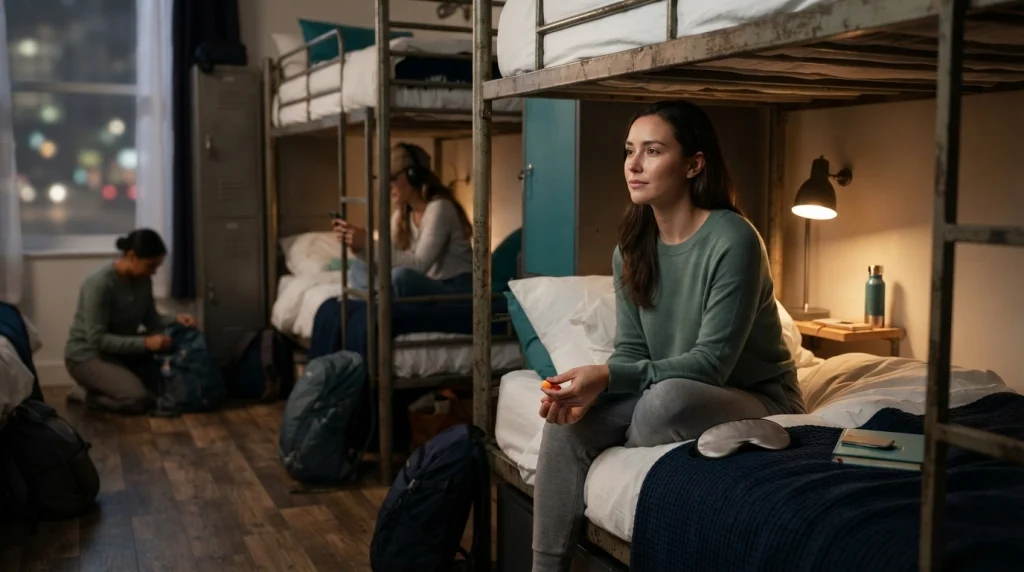
Hostels are shared accommodation where travelers with different schedules sleep in the same room or building. Noise often comes from ordinary activities rather than deliberate disrespect, although some guests ignore reasonable boundaries.
Understanding the source helps you choose the right response instead of letting frustration ruin the night.
What Causes Most Hostel Noise?
- Late arrivals: Guests may enter after midnight, unpack bags, and search for their beds.
- Snoring: Even considerate roommates can make sounds they cannot control.
- Phone use: Video calls, notifications, music, and alarms can disturb an entire dorm.
- Social conversations: Travelers may continue chatting because they forget others are trying to sleep.
- Building noise: Traffic, nearby bars, thin walls, and doors can carry sound into sleeping areas.
- Early departures: Guests preparing for morning tours or buses may wake others while packing.
Does Every Hostel Have Quiet Hours?
No. Quiet-hour policies vary by property, and the rules may be enforced differently between hostels. Some establishments ask guests to reduce noise around 10 p.m. or 11 p.m., while party-oriented properties may have livelier common areas.
Hostelling International’s hostel help centre discusses quiet hours, dorm etiquette, and the practical differences between shared and private rooms.
Before booking, check whether quiet hours apply to dormitories, corridors, outdoor terraces, and social spaces. A rule is most useful when you know whom to contact if other guests ignore it.
Why Is Noise Especially Frustrating When Traveling Alone?
Solo travelers may have early trains, walking tours, long travel days, or unfamiliar surroundings to manage. Poor sleep can make the next day more tiring and leave you feeling less confident when navigating a new place.
That doesn’t mean you must avoid hostels. A few practical preparations can help you enjoy the social benefits without accepting every disturbance as unavoidable.
How Can You Handle Hostel Noise Immediately?
The best response depends on the source, duration, and whether you feel comfortable approaching the person. Start with the least confrontational option, but involve staff when the problem persists or the situation feels unsafe.
Follow These Steps When Noise Interrupts Your Sleep
- Identify the source. Determine whether the sound comes from a roommate, hallway, street, or nearby bar.
- Give brief, harmless noise a moment. A guest putting away a bag may finish quickly without intervention.
- Use your sleep essentials. Put in earplugs and adjust your sleep mask if the noise is manageable.
- Make a polite request. Ask for one specific change, such as turning down a phone or moving a conversation outside.
- Contact reception if necessary. Staff can explain the rules, speak to guests, and check available beds.
- Request another room. If the disturbance continues, ask whether a quieter dorm or private room is available.
Don’t feel obligated to negotiate repeatedly. One respectful request is reasonable, but you do not need to manage another guest’s behavior all night.
What Can You Say to a Noisy Roommate?
Keep your words friendly, brief, and specific. You can be considerate without apologizing for needing sleep.
- For loud conversations: “Hey, would you mind continuing that conversation in the common room? I’m trying to sleep.”
- For phone audio: “Could you please use headphones or turn the sound off? Thank you.”
- For late-night packing: “Would you mind keeping the bags zipped and the noise down? I have an early start.”
- For repeated disturbances: “I’ve asked once already. Could we please follow the hostel’s quiet-hours policy?”
Speak at a normal, quiet volume instead of shouting across the room. If a guest responds aggressively, stop the conversation and contact hostel staff.
What If the Noise Comes From Snoring?
Snoring is different from loud conversations because the person may not know they are doing it. Earplugs, background sound at a safe volume, or moving beds may be more practical than waking someone repeatedly.
If you cannot sleep and no alternative works, explain the issue to reception without blaming the guest. Ask whether a different dorm is available.
| Noise problem | First response | If it continues |
|---|---|---|
| Snoring | Use earplugs | Ask about a bed change |
| Phone audio | Request headphones | Contact reception |
| Late-night chatting | Request a quieter conversation | Ask guests to use the common room |
| Street or bar noise | Use earplugs or steady background sound | Ask for a room away from the noise |
| Aggressive or intimidating behavior | Move to a safer staffed area | Seek staff assistance immediately |
Section takeaway: Match your response to the noise source, make one calm request when appropriate, and let staff handle persistent or intimidating behavior.
What Should You Pack to Sleep Better?
A small sleep kit can make shared accommodation more manageable without taking up much backpack space. The most useful items reduce sound, block unwanted light, and help you prepare for an early departure without disturbing others.
Which Sleep Accessories Help Most?
- Foam earplugs: Lightweight and inexpensive, they can reduce many everyday sounds when fitted correctly.
- Silicone earplugs: Some travelers find moldable versions more comfortable, although fit and performance vary.
- Sleep mask: Useful when roommates switch on lights or use illuminated screens.
- White-noise app: Steady background sound may make changing noises less noticeable.
- Comfortable sleep headphones: These may suit travelers who prefer audio, but avoid high volume and bulky designs that hurt while side sleeping.
- Small power bank: Helps keep your phone charged without searching for outlets in the dark.
You don’t need every accessory. Start with earplugs and a sleep mask, then add other items based on what typically wakes you.
Are Earplugs or White Noise Better?
Earplugs reduce the sound entering your ears, while white noise adds a consistent background sound that can mask some sudden noises. Neither guarantees silence, and their effectiveness depends on the noise and your personal comfort.
| Option | Best for | Limitation |
|---|---|---|
| Foam earplugs | General dorm noise and snoring | Incorrect fit reduces effectiveness |
| White-noise app | Masking inconsistent background sounds | Requires a charged device and suitable volume |
| Sleep mask | Blocking light from screens and overhead lamps | Does not reduce sound |
| Noise-canceling headphones | Some continuous low-frequency sounds | Can be uncomfortable for sleeping and may obscure warnings |
For many hostel stays, comfortable earplugs offer the simplest starting point. If you use background audio, keep it low and make sure you can respond to alarms or important announcements.
How Can You Prepare for an Early Departure?
Pack your main bag before bedtime so you don’t need to unzip multiple compartments at dawn. Keep tomorrow’s clothes, toiletries, transport ticket, and phone within easy reach.
Set your alarm with vibration if appropriate, keep your phone close, and avoid turning on the main dorm light. These habits protect your own rest and show courtesy to other travelers.
Section takeaway: A compact sleep kit and quiet packing routine can prevent many avoidable disruptions without adding much weight to your luggage.
When Should a Solo Female Traveler Contact Staff?
Contact hostel staff when a noise problem persists, a guest refuses reasonable requests, or you feel uncomfortable approaching someone. You don’t have to resolve every shared-room conflict by yourself.
Which Situations Need Immediate Help?
- A guest is intoxicated, threatening, or behaving aggressively.
- Someone enters your personal sleeping space or ignores your physical boundaries.
- A group continues disturbing the room after you have requested quiet.
- You feel unsafe walking through a corridor or confronting someone alone.
- Staff need to address noise coming from another room, a bar, or a shared area.
If you feel threatened, leave the immediate situation if you can do so safely and go to reception or another staffed area. If there is an immediate danger, contact local emergency services.
How Should You Ask Reception for Help?
Explain what is happening, when it started, and what you have already tried. A short, factual description helps staff decide whether to speak to guests, enforce quiet hours, or move you.
You could say, “I’ve been unable to sleep because the noise has continued for an hour. Could someone help, or is there another bed available?”
If reception is closed, check the hostel’s emergency contact instructions, night-duty number, or after-hours procedures. Do not assume help is available around the clock just because the property advertises reception services.
Should You Change Rooms or Leave the Hostel?
Ask about a room change if the noise continues or the sleeping environment feels uncomfortable. Confirm whether the alternative room has a working lock, secure access, and a location you feel comfortable using.
If staff dismiss a credible safety concern or you continue to feel threatened, consider moving to another reputable accommodation. Keep your phone charged, arrange transport through a trusted source, and tell someone you trust where you are going.
For broader preparation, consult Hostelworld’s hostel safety guide for practical information about lockers, shared rooms, and accommodation safety.
Section takeaway: Your safety takes priority over politeness. Use staff support early when necessary, and leave an environment that makes you feel genuinely unsafe.
How Can You Choose a Quieter Hostel?
The easiest night to manage is often the one you prepare for before booking. A hostel’s location, room size, house rules, and recent guest feedback can tell you a great deal about whether you’ll sleep comfortably.
What Should You Check Before Booking?
- Recent reviews: Search for comments about noise, snoring, nightlife, cleanliness, and staff responses to complaints.
- Dorm size: Compare smaller shared rooms with large dormitories if you’re a light sleeper.
- Room type: Check whether women-only dorms or private rooms are available.
- Bed design: Privacy curtains or pod-style bunks may reduce light and give you more personal space.
- Location: Check whether the property is near bars, busy roads, or late-night entertainment areas.
- Security arrangements: Look for secure entry, usable lockers, and clear instructions for getting help at night.
- Quiet-hour policy: Confirm when quiet hours begin and how staff handle repeated complaints.
How Can Reviews Help You Predict Nighttime Noise?
Read several recent reviews instead of relying only on the overall rating. A highly rated party hostel may be excellent for meeting people but unsuitable for someone who needs an early night.
Look for repeated patterns rather than one isolated complaint. Several mentions of street noise or late-night drinking may be more useful than a single vague comment that the property was loud.
Also check the date of each review. A hostel may have changed its management, room layout, or noise policy since older guests stayed there.
Should You Choose a Party Hostel or a Quiet Hostel?
Neither option is universally better. Choose according to your travel plans, sleep needs, and comfort with social activity.
| Feature | Party hostel | Quieter hostel |
|---|---|---|
| Nighttime atmosphere | Often lively | Usually more relaxed |
| Social activities | May offer frequent events | May focus on daytime activities or shared spaces |
| Sleep predictability | Can be less predictable | May be more suitable for light sleepers |
| Best fit | Travelers prioritizing nightlife | Travelers prioritizing rest |
These are general tendencies, not guarantees. Read the individual property’s rules and reviews before deciding.
Section takeaway: Choose accommodation for the experience you want, not just the cheapest bed or highest rating. Recent noise-related reviews are especially valuable for light sleepers.
Which Accommodation Option Is Best for Light Sleepers?
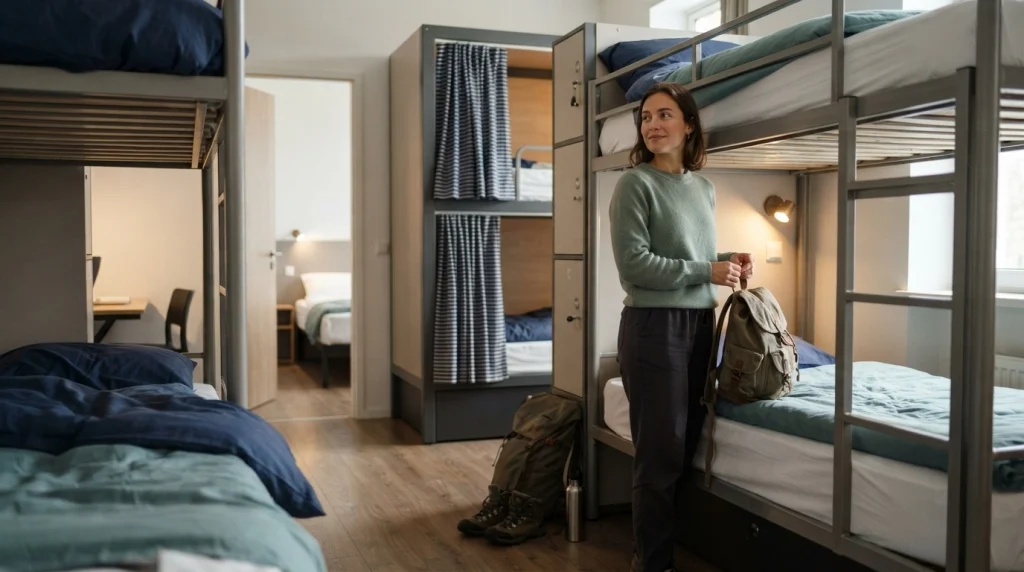
The best room depends on your budget, privacy preferences, and tolerance for shared spaces. A private room generally offers more control over your sleeping environment, while a smaller dorm can provide a balance between cost and comfort.
Compare Your Main Options
| Accommodation | Advantages | Trade-offs |
|---|---|---|
| Large shared dorm | Often budget-friendly and social | More people and varied sleep schedules |
| Small shared dorm | Fewer roommates to coordinate with | Still exposed to snoring and late arrivals |
| Women-only dorm | May offer greater comfort and privacy for some women | Noise is still possible |
| Pod-style dorm | May limit light and provide extra personal space | Does not fully block voices or snoring |
| Private hostel room | More control over your sleep environment | Usually costs more and may still have outside noise |
Prices and availability vary by city, season, and booking date, so compare the actual total cost rather than assuming a particular room type always costs a fixed amount more.
Can You Enjoy Hostel Social Life Without Sharing a Noisy Dorm?
Yes. You can book a private room in a social hostel or stay somewhere quieter while meeting people during breakfast, walking tours, communal dinners, and organized activities.
This arrangement can be especially useful if you’re traveling alone but need reliable rest for long walks, early transport, or demanding itineraries. You can enjoy the community without sacrificing every night’s sleep.
Section takeaway: If noise repeatedly affects your trip, spending more on a smaller dorm or private room may be worth considering when your budget allows.
Frequently Asked Questions
How can a solo female traveler handle hostel noise at night?
Use earplugs, keep a sleep mask handy, and politely ask guests to reduce disruptive noise when you feel comfortable doing so. If the problem continues, contact reception and request assistance or another room rather than allowing the disturbance to continue all night.
Is it rude to ask hostel roommates to be quiet?
No. A polite, specific request is a reasonable part of sharing accommodation, especially during posted quiet hours. Ask calmly, avoid personal criticism, and give the person a chance to respond; contact staff if the behavior continues or you feel uncomfortable.
Are women-only dorms quieter than mixed dorms?
Not necessarily. Women-only dorms may make some solo travelers feel more comfortable, but noise depends on the individual guests, room size, building layout, and hostel rules. Check recent reviews and available facilities instead of assuming any dorm type guarantees a quiet night.
Should I wear earplugs in a hostel dorm?
Earplugs can help reduce snoring, conversations, and other common dorm sounds. Choose a comfortable, properly fitted pair and avoid relying on them to block every sound, especially alarms or emergency announcements. If you have ear discomfort or relevant medical concerns, seek appropriate professional advice.
What should I do if a hostel guest makes me feel unsafe?
Do not feel obliged to confront the guest. Move to a safer staffed area if possible, contact reception or the designated night staff, and seek local emergency help if you face immediate danger. Request a room change or alternative accommodation if the situation remains uncomfortable.
Should I pay more for a private hostel room?
A private room may be worthwhile if shared-room noise regularly disrupts your sleep, particularly before an early departure or a busy travel day. Compare the total price with a smaller dorm and consider whether better rest would improve your trip enough to justify the extra expense.
How can I find a quiet hostel before booking?
Read recent guest reviews for repeated mentions of nightlife, thin walls, snoring, and staff responses to complaints. Check quiet hours, dorm size, bed curtains, and the surrounding location. Contact the hostel directly if quiet-room availability or nighttime support is unclear.
Final Takeaway: Protect Your Sleep and Your Peace of Mind
Hostel noise is a common challenge, but you have practical ways to manage it. Prepare a simple sleep kit, choose accommodation carefully, communicate respectfully, and ask staff for help when necessary.
As of 2026, the same basic planning principle remains useful: match your accommodation to your own needs instead of assuming every shared dorm will suit every traveler. A quieter room can be a worthwhile choice when rest and personal comfort matter more than saving a small amount.
If you’re planning your next solo trip, check recent reviews and quiet-hour rules before booking, then keep earplugs and a sleep mask in your day bag. You deserve to feel comfortable, rested, and confident while traveling alone.
Pro tip: Accommodation rules and local emergency procedures vary by destination. Check the relevant official travel advice at the U.S. Department of State travel website where applicable, along with your own country’s travel advisory and the destination’s official emergency guidance.