How Can a Woman Protect Valuables in a Hostel? A Practical Solo Travel Guide
Quick Answer
A woman can protect valuables in a hostel by using a secure locker, bringing a compatible padlock, keeping backup money separate, and avoiding unattended belongings in shared rooms. Before booking, check recent reviews for reliable security, working locks, and responsive staff. Keep essential documents and payment methods organized so one missing item doesn’t disrupt your entire solo trip.
Essential hostel valuables protection tips
- Secure your belongings: Lock your passport, electronics, jewelry, and spare cash in a suitable locker.
- Carry a padlock: Check locker compatibility before your trip and bring your own reliable lock.
- Separate essentials: Store backup cash and an alternative payment method apart from your everyday wallet.
- Protect electronics: Keep your phone, laptop, camera, and charging accessories secured when you’re away.
- Prepare digitally: Keep protected copies of important documents and enable device tracking where available.
- Check the property: Choose accommodation with individual lockers, controlled access, and staff who respond to concerns.
One important precaution
- Reduce potential losses: Leave expensive jewelry and unnecessary valuables at home whenever possible.
- Keep a backup plan: Save emergency contacts and know how to block your cards or report a stolen passport.
Knowing how to protect valuables in a hostel can make solo female travel less stressful, especially when you’re sharing a bedroom with people you’ve just met. You shouldn’t have to spend your entire trip worrying about your passport, phone, wallet, or camera.
I recommend building a simple security routine before you arrive, rather than relying on one gadget or assuming every hostel has the same facilities. This guide covers locker security, money management, electronics, packing essentials, and what to do if something goes missing.
In This Guide
- Why does hostel valuables security matter?
- How should you use hostel lockers and locks?
- How can you protect money, passports, and cards?
- How can you secure electronics in a shared room?
- What should you pack to protect valuables?
- What should you do if something goes missing?
- Frequently asked questions
Why Does Hostel Valuables Security Matter?
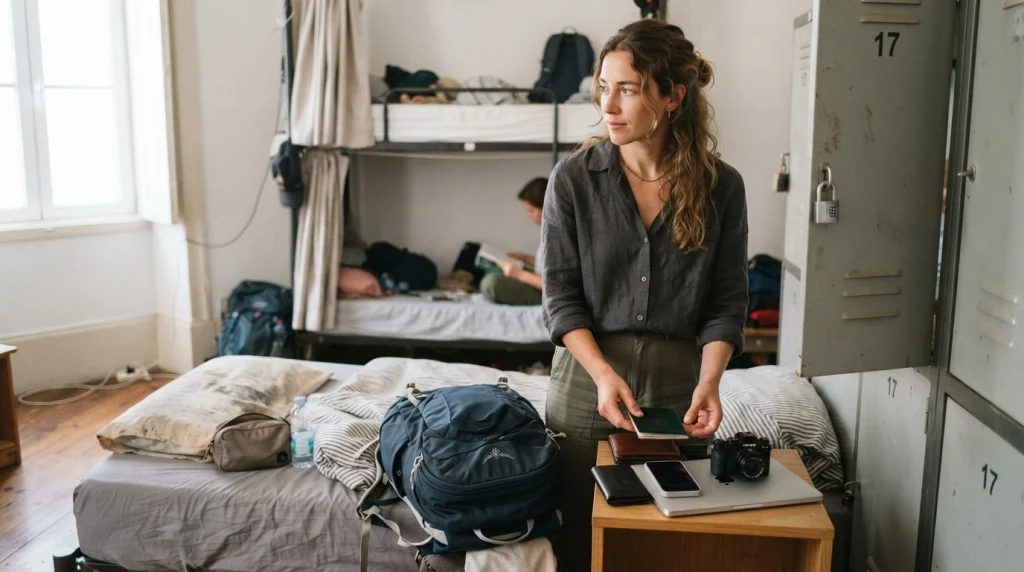
Hostel valuables security means protecting money, identity documents, electronics, and personal belongings in accommodation where guests may share bedrooms and facilities. It combines secure storage, sensible packing, privacy habits, and preparation for unexpected losses.
Hostels can be excellent options for women traveling alone because they often provide affordable beds and opportunities to meet other travelers. However, sharing a room means you cannot always control who is nearby or when someone enters the common sleeping area.
Which belongings need the most protection?
Start by identifying the items that would be difficult to replace or could create immediate problems if lost.
- Passport and identity documents: Losing these can complicate international travel and require contact with your country’s embassy or consulate.
- Payment cards and cash: Losing all your payment options at once can leave you unable to pay for transport, food, or accommodation.
- Phone and laptop: These devices may contain travel bookings, personal photographs, account access, and private information.
- Camera and jewelry: Expensive equipment and sentimental items can be difficult or impossible to replace.
- Medication and essential items: Some personal necessities require extra care because replacing them may not be straightforward.
You don’t need to bring every valuable item you own. Leave irreplaceable jewelry and unnecessary electronics at home whenever possible.
Does every hostel provide secure storage?
No. Some hostels provide individual lockers, while others offer smaller valuables boxes, reception safes, or no dedicated secure storage at all.
Check the listing before booking and ask whether the storage fits your backpack or laptop. A small locker may protect your passport and wallet but won’t accommodate a large suitcase.
Section takeaway: Identify your most important belongings before traveling, and choose accommodation that offers suitable storage rather than assuming every hostel provides it.
How Should You Use Hostel Lockers and Locks?
A working locker secured with a suitable lock is one of the most practical ways to protect valuables in a shared hostel room. It creates an additional barrier against casual access while you explore the destination or sleep.
How do you choose the right locker lock?
First, confirm whether your hostel provides electronic lockers, built-in keys, or lockers that require your own padlock. Different locking systems need different solutions.
- Combination padlock: Useful when you prefer not to carry a separate key, provided the lock fits the locker.
- Keyed padlock: A straightforward option if you can keep the key secure and carry a spare safely.
- Built-in electronic lock: Convenient when the hostel supplies a functioning system and explains how to use it.
Choose a lock that fits the locker hasp or locking mechanism. A large, expensive lock is not automatically better if it cannot attach properly.
What should you do when you arrive?
Make a quick security check before unpacking your most important belongings.
- Inspect the locker for visible damage or a broken locking mechanism.
- Test the lock while the locker is empty.
- Check whether your backpack, laptop, or valuables fit comfortably inside.
- Secure your belongings and confirm that the locker closes completely.
- Keep the key or combination private, and avoid leaving the key beside your bed.
- Report damaged equipment to reception and request another storage option.
Don’t leave your phone or wallet on your mattress while you shower, visit the kitchen, or step into the corridor. These brief absences are easy to overlook when you’re tired or rushing out.
What if the hostel doesn’t have lockers?
Ask reception whether a staffed safe or another secure storage option is available. If the property cannot protect essential belongings adequately, consider whether another hostel would be a better choice.
A locked backpack may deter casual handling, but it is not equivalent to a secure locker. Keep your most important documents and payment options under your control whenever practical.
Never attach your luggage to furniture, beds, or fixtures unless the property permits it and the arrangement doesn’t create a hazard. Never obstruct emergency exits or tamper with building security equipment.
Section takeaway: Test storage before trusting it, bring a compatible lock, and ask for an alternative if the available locker is damaged or unsuitable.
How Can You Protect Money, Passports, and Cards?
The safest practical approach is to avoid keeping every essential item in one place. Separate your daily spending money from backup funds and maintain a recovery plan for important documents.
How should you store cash and payment cards?
Use a simple system that keeps everyday spending convenient without exposing your entire travel budget.
- Daily wallet: Carry the cash and payment card you expect to need that day.
- Backup payment: Keep a second card or alternative payment method separately, if available.
- Emergency cash: Store a modest reserve in a different secure location.
- Digital access: Keep your bank’s official contact details available so you can report a missing card quickly.
Never leave your wallet sitting openly on a bedside table or in an unlocked bag. Avoid displaying large amounts of cash while organizing your belongings in shared spaces.
Where should you keep your passport?
When you aren’t required to carry your original passport, a suitable hostel locker or secure safe may be a practical storage choice. Requirements vary by destination, so check local rules and any identification requirements before deciding to leave it behind.
Keep a protected digital copy of your passport identification page and important travel documents. You can also store a separate paper copy securely, away from the original.
Copies can help you retrieve information during a replacement process, but they do not replace the original document when an authority requires it. Protect digital copies with appropriate account security and avoid leaving sensitive documents accessible on shared computers.
How can you reduce the impact of losing everything?
Think about what you would need during the first few hours after losing your wallet or passport. Having the right information ready can make a difficult situation more manageable.
- Save your bank’s card-blocking number and relevant account recovery instructions.
- Keep emergency contacts accessible without relying entirely on your phone.
- Share your itinerary with someone you trust.
- Know where to find your country’s official embassy or consular assistance information.
- Review your travel insurance policy for theft, baggage, and documentation-related exclusions.
For additional guidance, read the Australian government’s Smartraveller advice, which includes practical recommendations for securing valuables and preparing for accommodation-related risks.
Section takeaway: Separate essential payment options, store documents carefully, and prepare for loss before you leave home rather than after an emergency occurs.
How Can You Secure Electronics in a Shared Room?
Phones, laptops, cameras, and smartwatches deserve special attention because they can be expensive and contain sensitive personal information. Keep devices secured whenever you’re not actively using them.
How can you protect your phone and laptop?
- Use screen locks: Set a strong passcode and enable biometric security where appropriate.
- Enable device tracking: Turn on the manufacturer’s find-my-device feature before traveling.
- Back up important data: Store essential photographs, documents, and travel information securely.
- Secure charging: Charge devices in a place where you can reasonably monitor them, or lock them away when practical.
- Protect accounts: Use unique passwords and multifactor authentication where available.
- Limit exposure: Avoid leaving your laptop open or displaying valuable electronics unnecessarily in shared areas.
A power bank can help keep your phone charged when you’re away from the hostel. This matters because your phone may be your main source of navigation, booking information, and emergency contacts.
Should you use a luggage cable lock?
A cable lock can help secure compatible luggage to an approved, fixed anchor. However, it does not turn an ordinary bag into theft-proof storage.
Use it as a secondary measure when appropriate, not as a replacement for a working locker. Avoid securing bags to furniture that can be moved or to anything that interferes with safe movement around the room.
What about public charging stations and shared Wi-Fi?
Use your own charger and a trusted power adapter whenever possible. If you use a public USB charging port, consider a power-only adapter or charging from your own power bank.
Protect online accounts by avoiding sensitive transactions on untrusted networks when possible. If you must access financial accounts, use a trusted connection and check the service’s security recommendations.
Section takeaway: Combine physical storage with device security, reliable backups, and sensible charging habits. A secured device is more useful when its data and accounts are protected too.
What Should You Pack to Protect Valuables in a Hostel?
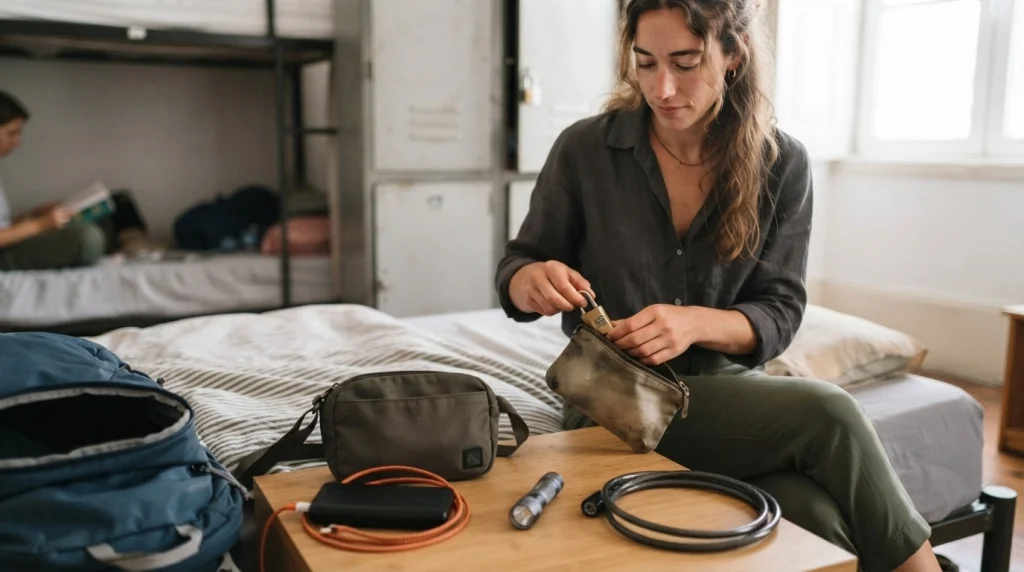
You can improve hostel security without carrying a large collection of travel gadgets. A few compact essentials can cover most everyday storage and organization needs.
| Item | Main purpose | Priority |
|---|---|---|
| Compatible padlock | Secures lockers that require a personal lock | High |
| Crossbody bag | Keeps daily essentials close while exploring | High |
| Power bank | Provides backup power for your phone | High |
| Document pouch | Keeps travel paperwork organized | Useful |
| Small flashlight | Helps during dark corridors or power outages | Optional |
| Portable luggage cable | Adds a secondary barrier when a suitable anchor exists | Optional |
How should you choose a hostel for better security?
Before booking, compare the property using these practical criteria.
- Individual lockers: Confirm that storage is available and large enough for your valuables.
- Controlled access: Look for reasonable restrictions on entry to sleeping areas.
- Responsive staff: Check whether guests can reach someone when problems occur.
- Recent reviews: Look for repeated comments about missing belongings, broken locks, or ignored complaints.
- Clear policies: Check how the hostel handles visitor access, lost property, and complaints.
A female-only dorm may provide additional privacy and comfort, but it does not automatically guarantee better valuables security. The quality of the property’s storage, access controls, and management matters too.
As you plan travel in 2026, verify the latest property details instead of relying on old reviews or photographs. Ask the hostel directly about anything the listing doesn’t explain.
Section takeaway: Pack a small security kit and choose a hostel with clear, verifiable safeguards. You don’t need expensive equipment to establish a sensible routine.
What Should You Do If Something Goes Missing?
If you discover that a valuable item is missing, focus first on your immediate safety and account protection. Avoid accusing another guest without evidence or putting yourself at risk by confronting someone alone.
What should you do first?
- Check carefully: Look through your belongings and retrace your recent movements without delaying urgent action.
- Notify staff: Explain what is missing and ask whether the property has a lost-and-found procedure or incident report process.
- Protect financial accounts: Freeze or cancel missing payment cards and review recent transactions.
- Secure devices: Use the official device-tracking service to locate, lock, or remotely erase a missing device if appropriate.
- Report suspected theft: Contact local police when appropriate and obtain a report or reference number for your records.
- Replace documents: If your passport is missing, contact your country’s embassy or consulate for official guidance.
- Contact your insurer: Check policy requirements and preserve receipts, reports, and other supporting evidence.
Don’t try to retrieve an item from someone who threatens you or behaves aggressively. Your safety is more important than recovering a phone, wallet, or camera.
How can you prevent the same problem during the rest of your trip?
Review how the loss occurred and adjust your routine without blaming yourself. You might need a different locker, a smaller amount of daily cash, or accommodation with better security.
If the hostel fails to address a serious concern, consider changing rooms or moving to another property. Keep your travel companion, family member, or trusted contact informed if you need help arranging alternative accommodation.
Section takeaway: Respond promptly, protect your accounts, document the incident, and seek official help when needed. Never risk personal injury to recover replaceable property.
Pro tip: Travel-safety conditions and official reporting procedures vary by destination. Check your government’s current travel advice and local emergency guidance before departure.
Frequently Asked Questions About Protecting Valuables in a Hostel
Should I keep my passport with me or leave it in the hostel?
If local requirements allow, a working hostel locker or secure safe may be suitable for storing your passport while you explore. Keep a protected copy separately and carry the original whenever required by law or your travel circumstances. Check your destination’s official guidance before deciding.
Are hostel lockers safe enough for expensive electronics?
A properly functioning locker with a suitable lock offers useful protection, but it cannot guarantee that theft will never occur. Check the lock and locker condition, secure your devices, and avoid bringing expensive electronics you don’t need. Ask about a staffed safe if additional protection is important.
Should I sleep with my valuables inside my pillowcase?
A pillowcase is not a reliable security system. Items can fall out, be forgotten, or become accessible when bedding moves. Keep essential belongings in a secure locker when possible, and maintain immediate control of any item you need beside you overnight.
Is a combination lock better than a keyed padlock?
Neither option is automatically better for every hostel. A combination lock avoids carrying a key, while a keyed lock may suit travelers who prefer a simple mechanism. Choose a reliable lock that fits the available locker, and keep the combination or key secure.
Should I buy an anti-theft backpack for hostel travel?
An anti-theft backpack may offer useful features such as lockable zippers or concealed pockets, but it cannot replace secure storage. Choose a comfortable bag that fits your itinerary and budget, and use a hostel locker for valuables when suitable storage is available.
What should I do if a roommate touches my belongings?
Secure your belongings and report the behavior to hostel staff, especially if it continues or you feel threatened. Request another room or leave if necessary. Avoid a private confrontation if you feel unsafe, and contact local emergency services if there is immediate danger.
Does travel insurance cover valuables stolen from a hostel?
Coverage depends on your policy, the circumstances of the loss, and any exclusions or security requirements. Check limits for electronics, unattended property, and items left in shared accommodation. Keep proof of ownership and follow the insurer’s reporting requirements if a loss occurs.
Final Thoughts: Protect Your Belongings and Enjoy Solo Travel
Protecting valuables in a hostel doesn’t require constant suspicion or an expensive collection of gadgets. It starts with choosing suitable accommodation, securing your belongings, separating payment options, and keeping a backup plan.
Before your next trip, confirm the hostel’s locker arrangements, pack a compatible lock, protect your phone and accounts, and store essential documents carefully. These small habits can reduce avoidable stress and help you focus on the experience you’re traveling for.
Most importantly, remember that personal safety comes before possessions. Make thoughtful choices, ask for help when necessary, and give yourself permission to change accommodation if the security arrangements don’t meet your needs.
For broader travel preparation, consult the U.S. Department of State’s official travel guidance or your own government’s travel-advice service for destination-specific information.
Save this guide before your next hostel stay and use the checklist to prepare your belongings before check-in.