Should a Solo Female Traveler Choose a Female-Only Dorm?

Quick Answer
Yes, a female-only dorm is often a good choice for a solo female traveler, especially on a first hostel stay or when sharing a bedroom with men feels uncomfortable. It offers a women-only sleeping environment while keeping the affordability and social benefits of hostel accommodation. However, the room label alone doesn’t guarantee safety, so check the property’s security, location, reviews, and management before booking.
What should you prioritize?
- Personal comfort: Choose a women-only room if it helps you sleep and relax more confidently.
- Building security: Look for controlled entry, secure lockers, reliable staff, and working room locks.
- Good location: Prioritize convenient transport, well-lit streets, and an area that suits your plans.
- Room size: Compare four-bed and larger dorms, especially if noise or privacy concerns you.
- Overall value: Compare the full cost with mixed dorms and private rooms before deciding.
Before you book
- Read recent reviews: Check feedback about harassment, cleanliness, staff response, and security.
- Verify the room type: Confirm that the reservation is specifically for a female-only dorm, not a mixed room.
Choosing between a female-only dorm and a mixed hostel room is a common decision for women traveling alone. The right choice can make a difference to your comfort, budget, sleep, and confidence in an unfamiliar destination.
I approach this decision by separating personal comfort from actual accommodation security. In this guide, I’ll explain when a female-only dorm is worth paying extra for, when a mixed dorm can work, and what to check before committing to a booking.
In This Guide
What Is a Female-Only Dorm?
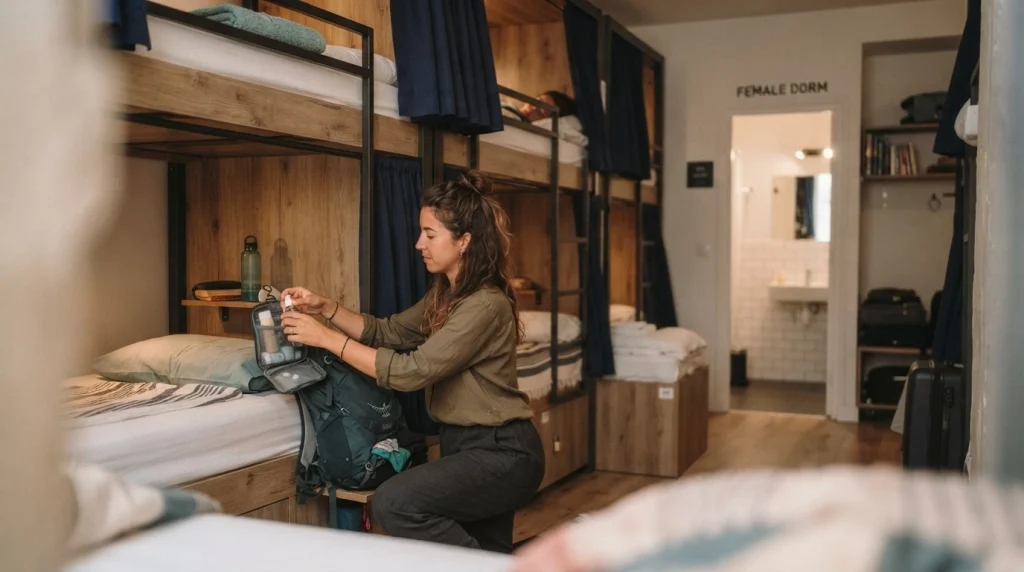
A female-only dorm is a shared hostel bedroom reserved for women under the property’s accommodation policy. Travelers book individual beds, share the sleeping area, and may use shared bathrooms or other communal facilities.
Unlike a private room, a dorm doesn’t give you exclusive control over the entire sleeping space. However, a women-only arrangement can offer greater personal comfort if you prefer not to share a bedroom with male guests.
What facilities can you expect?
Facilities vary by hostel, price, and destination. Check the actual listing rather than assuming every female dorm provides the same features.
- Bunk beds: Individual sleeping spaces in a shared room.
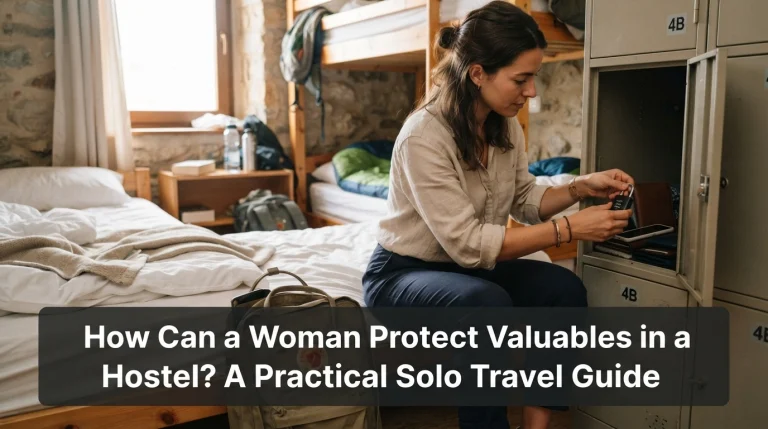
- Lockers: Storage for valuables and luggage, sometimes requiring your own padlock.
- Privacy curtains: Available on some bunks, but not a standard feature everywhere.
- Shared bathrooms: These may be inside the dorm or located along the corridor.
- Common areas: Lounges, kitchens, and activity spaces where guests can socialize.
Are female-only dorms available everywhere?
No. Many hostels offer female-only, mixed-gender, and private rooms, but smaller properties may have fewer choices. Availability also changes with location, season, and demand.
If this arrangement is important to you, select the correct room category before paying. Contact the hostel directly if its listing doesn’t clearly explain who can stay in the room.
Should You Choose a Female-Only Dorm?
Choose a female-only dorm when a women-only sleeping space would make your trip more comfortable without stretching your accommodation budget too far. It’s particularly useful for first-time solo travelers, light sleepers who dislike unfamiliar mixed-room arrangements, and women who value a more comfortable environment for changing or getting ready.
1. You’re taking your first solo trip
Your first hostel stay can involve several unfamiliar experiences at once: sharing a bedroom, navigating a new city, managing your belongings, and meeting strangers. A female-only dorm may remove one source of anxiety while you get used to independent travel.
You don’t need to prove your confidence by choosing a mixed room. Start with the arrangement that lets you settle in comfortably, then reconsider your preferences as you gain experience.
2. You value privacy and personal comfort
Sharing a room with other women may feel more comfortable when changing clothes, preparing for an early departure, or winding down after a long day. Some travelers also find it easier to discuss practical concerns with roommates who share similar accommodation preferences.
Remember that a women-only room is still shared accommodation. You may have limited space, noisy roommates, different sleep schedules, and little privacy outside your own bed.
3. You want to meet other women travelers
A female-only dorm can create opportunities to meet women who are exploring the same destination. You might exchange restaurant recommendations, compare sightseeing plans, or find someone interested in a daytime walking tour.
Friendship isn’t guaranteed, though. Some guests want to socialize, while others prefer to sleep, work, or spend time alone. Respecting those differences makes shared accommodation more enjoyable.
4. You’re arriving late or staying somewhere unfamiliar
A women-only dorm may help you feel more settled after a late arrival, but the hostel’s overall security matters more than the room label. Look for clear check-in instructions, dependable staff, controlled building access, and a straightforward route from transport to reception.
Section takeaway: A female-only dorm is worth prioritizing when it improves your comfort, confidence, or ability to rest. Treat it as one part of your accommodation decision, not a substitute for checking security.
Female-Only vs. Mixed Dorms: What’s the Difference?
Female-only dorms offer a women-only sleeping environment, while mixed dorms accommodate guests of different genders in the same room. Neither option is automatically the best choice for every solo female traveler.
Compare the actual room conditions, property management, and total price before deciding. A well-managed mixed dorm may suit you better than a poorly maintained female-only room.
| Factor | Female-Only Dorm | Mixed Dorm |
|---|---|---|
| Room arrangement | Reserved for women under the room policy | Guests of different genders share the room |
| Personal comfort | May suit travelers who prefer women-only sleeping spaces | Depends on your preferences and roommate behavior |
| Price | May cost more than a comparable mixed bed | May offer a lower-cost option |
| Privacy | Still shared; curtains and room size vary | Still shared; curtains and room size vary |
| Social opportunities | Can help you connect with women travelers | Offers opportunities to meet a wider mix of travelers |
| Safety | Doesn’t guarantee secure access or prevent theft | Requires the same attention to property security |
Is the extra cost worth it?
Compare the total price difference across your entire stay rather than judging one night in isolation. For example, if a female-only bed costs $5 more per night, a four-night stay adds $20 before taxes or other fees.
That additional cost may be worthwhile if the room helps you sleep better and enjoy your trip. If the price difference pushes you beyond your budget, a secure mixed dorm with good reviews may be a sensible alternative.
What if the female-only dorm is larger or noisier?
Don’t assume that a women-only room will be quieter or more private. A 12-bed female dorm may be less comfortable for a light sleeper than a four-bed mixed room with curtains, clear quiet hours, and considerate guests.
Compare the number of beds, bathroom arrangements, noise comments, and property rules. Room quality matters just as much as room category.
How Can You Check Hostel Safety Before Booking?

Evaluate the entire hostel, including its location, entry controls, staff, and recent guest feedback. A female-only label is useful information, but it isn’t proof that an accommodation is safe.
The U.S. Department of State recommends researching lodging, checking reviews for safety concerns, and looking for practical security measures. Its lodging safety guidance offers a useful starting point.
1. Read reviews from other solo women
Don’t rely exclusively on the overall star rating. Read recent reviews and look for repeated comments about the conditions that matter to you.
- Security: Do guests mention working locks, secure lockers, and controlled entry?
- Staff response: Do reviewers describe staff handling complaints promptly and respectfully?
- Cleanliness: Are bedrooms, bathrooms, and shared facilities maintained?
- Noise: Do guests mention late-night parties, loud common areas, or quiet hours?
- Location: Is the route to public transport convenient, and do recent reviews mention concerns about returning at night?
One negative review doesn’t necessarily tell the whole story. Look for repeated patterns, recent details, and responses from management.
2. Check access, lockers, and reception
Before booking, verify which security features the hostel actually provides. Ask questions if the listing is unclear.
- Is building entry controlled, and who can access the sleeping floors?
- Does each guest have a lockable locker large enough for essential belongings?
- Can you contact reception when you arrive late or need assistance?
- Does the dorm door lock properly, and are emergency exits clearly identified?
- Are bathrooms accessible without unnecessary exposure to shared public spaces?
No single feature guarantees safety. However, clear procedures and responsive management can help you make a better-informed choice.
3. Consider the neighborhood and your arrival time
A well-reviewed hostel can still be inconvenient if it sits far from your planned activities or requires a difficult walk with luggage after dark. Check transport options, the route from the station or airport, and the property’s check-in arrangements.
Whenever practical, schedule your arrival during daylight. If you must arrive late, arrange suitable transport in advance and confirm how you’ll enter the building.
Pro tip: Review your destination’s current official travel advice before departure. The Australian government’s Smartraveller guidance is one useful source for accommodation and solo-travel safety planning.
4. Know the warning signs
Consider another property if you find repeated reports of harassment, unresponsive management, unsecured access, or serious cleanliness problems. Vague room descriptions and unanswered questions about the accommodation policy also deserve attention.
Don’t let a nonrefundable discount pressure you into ignoring concerns. A slightly more expensive, well-reviewed option may provide better value and peace of mind.
Section takeaway: Check recent reviews, access arrangements, lockers, location, and staff responsiveness together. Choose the property with the strongest overall fit rather than relying on the female-only label alone.
How Can You Stay Comfortable in a Shared Dorm?
A little preparation can make a female-only or mixed dorm easier to manage. You don’t need elaborate equipment; focus on protecting your belongings, getting enough sleep, and maintaining your personal boundaries.
Pack a few useful essentials
- Small padlock: Bring one if the hostel provides lockers without locks.
- Earplugs: Useful when roommates arrive late or wake up early.
- Eye mask: Helps if someone switches on the lights while you’re sleeping.
- Portable charger: Useful when outlets are limited or inconveniently placed.
- Shower sandals: Helpful for shared bathroom floors.
- Compact toiletry bag: Makes bathroom visits easier when storage space is limited.
Keep your passport, payment cards, and other essential documents secured rather than leaving them unattended on your bed. Follow the hostel’s instructions for valuables and keep your room key separate from documents that identify your accommodation.
Set boundaries with roommates
Friendly conversation is welcome, but you’re never obligated to share personal details, accept invitations, or explain why you’re traveling alone. Keep discussions about your plans general until you feel comfortable with someone.
If a roommate behaves inappropriately, respect your instincts and seek help from staff. If management dismisses a serious concern, consider moving to another room or property when you can do so safely.
Protect your sleep and personal space
Choose a bed based on your needs, not just its position. A lower bunk may be easier to access, while a curtained bed can provide more visual privacy when available.
Check quiet hours and bathroom arrangements before booking. If you’re a light sleeper, choose a smaller room or a private room rather than assuming a female-only dorm will be peaceful.
Build social connections without pressure
Common rooms, hostel-organized walking tours, and group activities can help you meet people without inviting strangers directly into your personal space. Start with public settings and make independent plans for getting back to your accommodation.
You can enjoy the social benefits of a hostel without spending every evening with other guests. Solo travel should leave room for both connection and personal time.
When Should You Choose a Private Room Instead?
A private room may be the better option when you need greater privacy, uninterrupted sleep, or more control over your immediate sleeping environment. It can also make sense when the available dorms don’t meet your comfort or accessibility needs.
Consider a private room if you:
- Feel persistently anxious about sleeping in a shared room.
- Need quiet for remote work, early departures, or recovery after long travel days.
- Prefer to change clothes and organize luggage without roommates present.
- Have specific accessibility needs that the available dorms cannot accommodate.
- Find that the female-only dorm costs nearly as much as a suitable private room.
Some hostels offer private rooms while keeping their communal lounges, kitchens, and group activities open to guests. This arrangement can give you a personal retreat without sacrificing every opportunity to socialize.
Does a private room guarantee greater safety?
No accommodation type guarantees safety. A private room gives you more control over bedroom access, but the building’s security, room locks, neighborhood, and management still matter.
Compare the actual property features rather than assuming that privacy alone resolves every risk. The Hostelling International help centre also explains that room types and facilities vary by property, so confirm the details of your chosen hostel.
How should you make the final decision?
Use this simple decision guide before paying for your stay.
- Choose a female-only dorm if you want a women-only sleeping space, enjoy shared accommodation, and find the price reasonable.
- Choose a mixed dorm if you’re comfortable with the arrangement and the specific hostel has strong reviews, suitable security, and a good room setup.
- Choose a private room if privacy, rest, accessibility, or peace of mind outweighs the additional expense.
For a first solo trip, you can also mix accommodation types across your itinerary. A female-only dorm in a busy city, a private room after a long journey, and a well-reviewed mixed dorm elsewhere can all fit the same travel plan.
Section takeaway: Your accommodation should support the trip you want to have. Choose the room that balances comfort, security, location, and budget instead of treating one room type as universally best.
Frequently Asked Questions
Are female-only dorms safer for solo female travelers?
Female-only dorms remove the need to share a sleeping room with male guests, which may increase comfort for some women. However, they don’t guarantee safety or prevent theft and harassment. Check building access, lockers, staff responsiveness, location, and recent guest reviews before booking.
Are female-only dorms more expensive than mixed dorms?
They sometimes cost more, but pricing varies by hostel, destination, season, and room size. Compare the total cost for your stay, including taxes and extra fees. Paying a little more may be worthwhile if the room better meets your comfort needs.
Can I stay in a mixed dorm as a woman traveling alone?
Yes, if you’re comfortable with the arrangement and have evaluated the specific property. Look for reliable management, secure lockers, controlled entry, and positive recent reviews. A mixed dorm can be a practical budget option without requiring you to compromise on your personal boundaries.
Are female-only dorms quieter than mixed dorms?
Not necessarily. Noise depends on the number of beds, guest behavior, hostel rules, and room layout rather than gender alone. If uninterrupted sleep matters, prioritize a smaller dorm, reliable quiet hours, or a private room instead of assuming a women-only room will be quieter.
What should I check before booking a female-only hostel dorm?
Confirm that the room is reserved for women, then check recent reviews, building access, lockers, reception hours, bathroom arrangements, and location. Also verify cancellation terms and late check-in procedures. Contact the property directly if any important detail remains unclear.
Should first-time solo female travelers book female-only dorms?
A female-only dorm can be a comfortable starting point if you’re new to hostel accommodation or feel nervous about sharing a room with men. Choose a well-reviewed property and treat your first stay as a chance to learn your preferences. A private room is equally valid if you need more privacy.
What if a female-only dorm is unavailable?
Compare a smaller mixed dorm with a private room in a reputable hostel. Read recent reviews, check security features, and choose a location that suits your arrival time and travel plans. If neither option feels appropriate, book another property rather than forcing yourself into an uncomfortable arrangement.
Final Takeaway: Is a Female-Only Dorm Worth Choosing?
Yes, a female-only dorm is a worthwhile option for many solo female travelers, particularly those who value a women-only sleeping environment, affordable accommodation, and opportunities to meet other women. It can be a reassuring choice for your first hostel stay, but it isn’t essential for every trip.
Before booking, compare the room type, total price, property security, location, and recent reviews. A well-managed mixed dorm or a private room may be a better fit depending on your needs.
My recommendation is simple: choose the accommodation that lets you feel comfortable, sleep well, and explore independently. You don’t have to follow one rule for every destination; you can adjust your room choice as your experience, budget, and priorities change.
Pro tip: Before departure, review current official travel advice for your destination and save your accommodation address, contact details, and transport plan somewhere accessible offline.
Affiliate Disclosure: This article is for informational purposes. Some links may be affiliate links if added in the future, meaning the website could earn a commission at no additional cost to you. Always verify accommodation details and booking conditions directly with the provider.