What Should a Woman Check Before Booking a Hostel?

Quick Answer
Before booking a hostel, a woman traveling alone should check recent guest reviews, neighborhood safety, room-sharing arrangements, secure lockers, entrance controls, reception availability, and cancellation rules. Compare the total cost and confirm how you will reach the property, especially if you arrive after dark. For additional guidance, review the Australian government’s accommodation safety advice for women travelers.
Essential checks before you reserve
- Recent reviews: Look for repeated comments about staff behavior, cleanliness, theft, harassment, and working locks.
- Room choice: Confirm whether you are booking a female-only dorm, mixed dorm, or private room.
- Building security: Check controlled entry, individual lockers, emergency exits, and access to staff.
- Location: Check walking routes, nearby transport, lighting, and access to essential services.
- Extra charges: Verify taxes, deposits, towels, linen, laundry, and payment requirements.
- Booking flexibility: Read cancellation deadlines, refund conditions, check-in hours, and late-arrival rules.
One final precaution
- Contact the hostel directly if security details or room arrangements are unclear.
- Keep a backup accommodation option and enough money for alternative transport or a different room.
Choosing a hostel can make solo travel more affordable and social, but the cheapest bed isn’t always the best choice. Knowing what to check before booking a hostel helps you protect your privacy, manage your budget, and feel more comfortable sharing space with strangers.
I approach hostel selection as a series of practical decisions rather than a search for the highest rating. This guide covers the security, location, room arrangements, cleanliness, costs, and booking conditions that matter when you’re traveling alone as a woman.
In This Guide
- 1. How should you check hostel reviews and reputation?
- 2. Is the hostel location safe and convenient?
- 3. Which room type and security features should you check?
- 4. What should you check about cleanliness and facilities?
- 5. What costs and booking rules should you read?
- 6. Which hostel red flags should you never ignore?
- 7. Frequently asked questions
1. How should you check hostel reviews and reputation?

Read recent reviews from several sources before booking, paying particular attention to comments from women traveling alone. Repeated details about security, staff responsiveness, cleanliness, and sleeping conditions reveal more than a high overall score alone.
Look beyond the star rating
A hostel can receive positive reviews for its social atmosphere while still having problems that affect your comfort. Read the most recent reviews first, then check older comments to see whether recurring complaints have improved.
- Safety reports: Look for descriptions of broken locks, unauthorized visitors, missing belongings, or harassment.
- Staff support: Check whether guests describe staff handling complaints promptly and respectfully.
- Cleanliness: Notice recurring reports about dirty bathrooms, damp bedding, pests, or unpleasant odors.
- Noise levels: Look for comments about late-night parties, thin walls, and quiet-hour enforcement.
- Listing accuracy: Check whether photographs, room descriptions, and advertised facilities match guest experiences.
How recent should hostel reviews be?
Start with reviews from the last three to six months when available. Recent feedback is particularly useful because management, staffing, security procedures, and building conditions can change.
Don’t automatically dismiss one negative review, but investigate serious allegations and repeated complaints. If several guests mention the same unresolved security problem, choose another property or ask management for a clear explanation.
What should you ask the hostel directly?
Contact the property before paying if its listing leaves important questions unanswered. A helpful response can clarify the details, while evasive answers may give you a reason to keep looking.
- Is the entrance secured, and who can access the sleeping areas?
- Are lockers available for every guest, and do I need to bring a padlock?
- Is reception staffed overnight, or is there an emergency contact?
- Can I book a female-only dorm for the entire stay?
- What happens if I arrive after the advertised check-in time?
Section takeaway: Prioritize consistent, recent evidence over marketing claims. A trustworthy hostel should be able to explain its policies clearly.
2. Is the hostel location safe and convenient?
A good hostel location should make it practical to reach transport, food, and essential services without relying on uncomfortable or expensive journeys. Check the exact address and surrounding streets instead of judging the property by its neighborhood name alone.
Check the route, not just the map pin
Open the location in a mapping service and examine the walking route from the nearest station or bus stop. A short distance on a map can still involve poorly lit streets, isolated paths, steep hills, or limited pedestrian access.
- Transport access: Check walking distances to reliable public transport and main arrival points.
- Nighttime routes: Look for well-used streets, suitable lighting, and practical alternatives to walking alone late at night.
- Nearby essentials: Identify food shops, pharmacies, cash machines, and places where you can seek assistance.
- Local conditions: Research neighborhood-specific concerns using recent local guidance and credible travel sources.
- Arrival arrangements: Confirm whether you can check in if your flight or bus is delayed.
Should you pay more for a central hostel?
Sometimes, paying more for a convenient location can save money on taxis and reduce the stress of late-night travel. However, central addresses aren’t automatically safer, and quieter outer neighborhoods aren’t necessarily dangerous.
Compare the actual journey, local transport options, and total cost. Consider whether you would feel comfortable returning after dinner or an evening activity without depending on strangers for help.
Plan for your arrival time
Arriving in daylight gives you more time to find the building, resolve booking problems, and learn the neighborhood. If an evening arrival is unavoidable, arrange dependable transport and confirm the check-in procedure beforehand.
Save the hostel’s address, phone number, booking confirmation, and directions offline. Share your accommodation details with someone you trust, and keep enough battery power to contact them.
Pro tip: Review your destination’s official travel advice before departure. The UK government’s foreign travel advice provides country-specific safety information, including local risks and practical precautions.
Section takeaway: Choose a location that fits your itinerary and comfort level. A convenient, well-researched arrival route is part of a sensible hostel booking.
3. Which room type and security features should you check?
Confirm the exact room category, number of beds, bathroom arrangement, and available security features before reserving. Female-only dorms can offer greater privacy for women who prefer them, but the building’s management and access controls matter too.
Female-only dorm, mixed dorm, or private room?
Each option offers a different balance of privacy, price, and social interaction. The right choice depends on your budget, sleep preferences, and comfort with sharing a room.
| Room type | Main benefit | What to check |
|---|---|---|
| Female-only dorm | Women-only sleeping arrangement | Availability, room size, bathroom access, and secure entry |
| Mixed dorm | Often offers more room choices | Guest access, privacy curtains, locker availability, and dorm capacity |
| Private hostel room | More personal space while retaining shared facilities | Door locks, bathroom arrangements, and total price |
Don’t assume that every room described as female-only has a private bathroom or restricted access to the rest of the building. Confirm the details in writing if they influence your decision.
Are hostel lockers and door locks important?
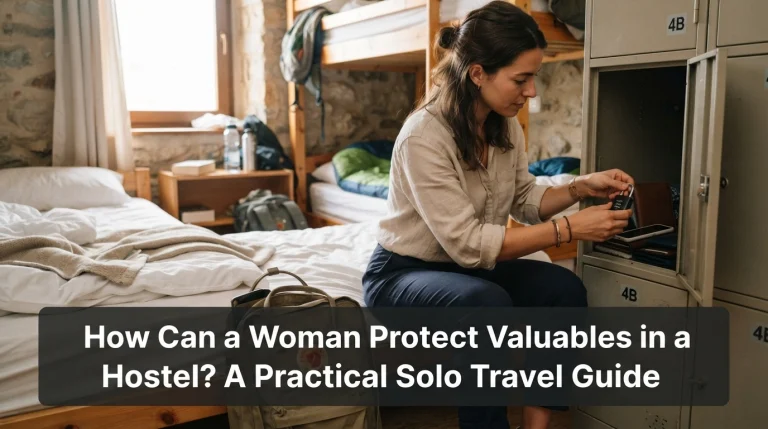
Yes. Individual lockers help protect passports, electronics, cash, and other valuables when you’re sleeping or away from the dorm.
Check whether each guest receives a locker and whether you must supply a padlock. Also look for secure sleeping-area doors, controlled building entry, and clear procedures for lost keys or access cards.
- Bed privacy: Curtains, personal reading lights, and individual power outlets can make shared rooms more comfortable.
- Reception access: Find out whether someone can help overnight or provide emergency assistance.
- Guest policies: Check rules covering visitors, unauthorized entry, harassment, and complaints.
- Emergency arrangements: Look for accessible exits, visible evacuation information, and functioning alarms where applicable.
Does a female-only dorm guarantee safety?
No. It determines the intended room-sharing arrangement, not the overall security of the property.
Review entrance controls, management responsiveness, and the condition of the room as well. If you prefer a mixed dorm or private room, apply the same checks rather than assuming one category is always safer.
Section takeaway: Book the exact room type you want and confirm the security details. Your comfort matters, and you don’t need to justify choosing extra privacy.
4. What should you check about cleanliness and facilities?
Check recent reports about beds, bathrooms, ventilation, shared kitchens, and general maintenance before booking. Clean facilities can make a hostel stay more comfortable, while neglected maintenance may signal wider management problems.
Look for practical cleanliness details
Hostel photographs often show attractive common areas, but guest reviews can reveal the condition of everyday facilities. Look for repeated complaints rather than relying entirely on staged images.
- Sleeping areas: Check reports about clean sheets, mattresses, ventilation, and pest problems.
- Bathrooms: Look for comments about cleaning frequency, hot water, drainage, and privacy locks.
- Showers: Confirm whether they are shared, private, or located inside the dorm.
- Common areas: Check kitchen cleanliness, rubbish disposal, and whether shared spaces are maintained.
- Laundry: Verify availability, opening hours, and any additional charges.
Which facilities affect your daily comfort?
Choose facilities that support your actual travel plans instead of paying extra for amenities you won’t use. Reliable Wi-Fi, secure luggage storage, and convenient showers may matter more than a bar or swimming pool.
- Wi-Fi availability and any restrictions on use.
- Kitchen access and rules for storing personal food.
- Included bedding, towels, and toiletries.
- Air conditioning, heating, or fans appropriate for the destination.
- Quiet hours, luggage storage, and accessible laundry facilities.
Check accessibility and personal needs
If you have mobility needs, allergies, sensory sensitivities, or require specific sleeping arrangements, confirm that the hostel can accommodate them. Don’t assume a listed facility is suitable without checking its actual setup.
Ask about stairs, lifts, bathroom accessibility, room placement, and noise conditions when relevant. A written response is useful if you need to resolve a problem before arrival.
Section takeaway: Check both cleanliness and everyday practicality. A comfortable stay depends on the facilities you will genuinely use.
5. What costs and booking rules should you read?
Compare the total cost of the stay rather than the advertised price per bed. Taxes, service charges, deposits, paid towels, and transportation can make a seemingly cheap hostel more expensive than another option.
Calculate the complete booking cost
Review the payment summary before confirming your reservation. Check whether the quoted amount covers your entire stay and whether any balance is payable when you arrive.
| Cost to check | Question to ask |
|---|---|
| Taxes and service fees | Are all mandatory charges included in the final amount? |
| Security deposit | Is a refundable deposit required, and when is it returned? |
| Towels and bedding | Are these included or available for an extra charge? |
| Locker or luggage storage | Do you pay for a locker, padlock, or storage outside check-in hours? |
| Transport | How much will it cost to reach the hostel and return at night? |
For a simple comparison, calculate the total for the same number of nights and similar room types. Include any additional transport expense rather than comparing bed prices alone.
What cancellation policy should you choose?
Read the cancellation deadline, refund conditions, and no-show rules before paying. A flexible booking can be worth the extra cost if your itinerary or arrival time may change.
- Free cancellation: Check the exact deadline and whether the refund covers the full amount.
- Non-refundable rates: Confirm that your dates and room choice are correct before paying.
- Prepayment: Check when the hostel or booking platform charges your card.
- No-show policy: Find out what happens if transport delays prevent you from arriving.
- Changes: Check whether you can adjust your dates or shorten your stay.
Booking platforms and individual hostels may have different terms. Read the conditions attached to your specific reservation rather than assuming every property follows the same cancellation rules.
Confirm check-in and age requirements
Some hostels impose minimum-age rules, curfews, identification requirements, or restrictions on children. Confirm that you meet the property’s conditions before booking, especially if you’re traveling internationally.
Check reception hours and late-arrival instructions. If you expect to arrive after midnight, obtain confirmation that someone can admit you or explain the property’s approved self-check-in process.
Section takeaway: Understand what you will pay, what you can recover if plans change, and how you will enter the property. Save the booking confirmation and terms.
6. Which hostel red flags should you never ignore?
Skip a hostel if serious safety concerns remain unresolved, the booking details appear misleading, or staff cannot explain essential security arrangements. Saving money isn’t worth accepting conditions that make you feel unsafe or leave you without a reliable place to sleep.
Warning signs to look for before booking
- Repeated safety complaints: Several recent guests describe theft, harassment, unauthorized visitors, or staff ignoring serious concerns.
- Unclear room descriptions: The property won’t confirm whether your reservation is for a female-only dorm, mixed dorm, or private room.
- Missing security information: Staff cannot explain building access, available lockers, or how guests get assistance during emergencies.
- Misleading photographs: The images don’t appear to match the listed rooms, facilities, or location.
- Unusual payment requests: Someone pressures you to pay through an unverified channel or outside the platform without a clear, legitimate explanation.
- Unclear cancellation terms: Fees, deposits, or refund conditions change during the booking process without a satisfactory explanation.
- No practical arrival plan: You cannot confirm how to enter the property or reach someone if your arrival is delayed.
What should you do if a hostel seems suspicious?
Pause the booking and investigate the concern before providing payment details. Check the property’s official contact information and ask the booking platform to clarify any disputed terms.
If the issue involves repeated safety complaints, misleading information, or unanswered security questions, compare other properties instead. You don’t have to prove that a hostel is dangerous to decide that it isn’t right for you.
Your final hostel booking checklist
Use this checklist before confirming your reservation, particularly when you’re booking accommodation in an unfamiliar destination.
Before you pay
- Read recent reviews, including feedback from solo women.
- Check the address and your route from the arrival point.
- Confirm the room category, bed count, and bathroom arrangement.
- Verify lockers, entrance security, and emergency assistance.
- Check cleanliness, Wi-Fi, bedding, and other essential facilities.
- Calculate the complete price, including taxes and extra fees.
- Read cancellation, refund, payment, and no-show policies.
- Confirm reception hours and late check-in arrangements.
- Save your booking details and identify a backup accommodation option.
Section takeaway: Trust clear evidence, ask questions, and walk away from unresolved concerns. A good booking should leave you informed rather than pressured.
7. Frequently Asked Questions
Is it safe for a woman to stay in a hostel alone?
Yes, many women stay in hostels while traveling alone, but safety depends on the property, location, management, and individual circumstances. Read recent reviews, check security measures, choose a suitable room, and prepare a backup plan before arriving.
Should a woman always book a female-only dorm?
No. A female-only dorm can offer greater privacy and may feel more comfortable, but it isn’t the only suitable option. A well-managed mixed dorm or private hostel room may also meet your needs if security, room arrangements, and guest policies are satisfactory.
What security features should a hostel have?
Look for controlled building access, secure sleeping-area doors, individual lockers, clear emergency procedures, and staff who can respond to problems. Confirm which features are available at your specific property, since facilities and security arrangements vary between hostels.
How can I tell whether a hostel’s reviews are trustworthy?
Read recent reviews across more than one source and look for specific, consistent details. Repeated comments about working locks, cleanliness, staff responses, and accurate listings are more useful than a star rating alone. Investigate serious complaints before booking.
Is a cheaper hostel always the better choice?
No. A low bed price may come with additional fees, inconvenient transport, paid facilities, or inflexible cancellation terms. Compare the complete cost for similar room types, including the expense of getting to and from the property.
What should I do if I arrive and the hostel feels unsafe?
Don’t ignore serious concerns about your immediate safety. Contact reception or the booking platform, request a suitable alternative when appropriate, and move to a safer public place if you feel threatened. Contact local emergency services if you face immediate danger, and arrange alternative accommodation if necessary.
Should I book a hostel in advance when traveling solo?
Booking ahead is particularly useful for your first night, busy travel periods, and destinations with limited accommodation. It lets you check the location and arrival arrangements before traveling. Choose a cancellation policy that suits your itinerary, and keep an alternative option available.
Final Takeaway: Choose Your Hostel With Confidence
Knowing what to check before booking a hostel helps you make decisions based on security, comfort, location, and value rather than price alone. Start with recent reviews and room arrangements, then confirm the building’s security, facilities, payment terms, and check-in procedures.
As you gain experience, you’ll develop a clearer idea of which features matter most to you. Some travelers prioritize female-only dorms, while others prefer smaller rooms, flexible bookings, or private accommodation with access to shared social spaces.
Before your next solo trip, compare a shortlist of properties using the same checklist. Choose the hostel that fits your budget and travel plans while giving you clear information, practical arrival arrangements, and enough confidence to enjoy your journey.
Most importantly, remember that you can change your plans when new information raises concerns. Your comfort and personal safety deserve a place in every booking decision.
Travel safety note: No accommodation can guarantee complete safety. Conditions vary by destination and property, so consult current official travel advice and confirm important arrangements directly with the hostel before departure.
Affiliate disclosure: This article may contain links to third-party resources. If affiliate links are added, the publisher may earn a commission from qualifying purchases at no additional cost to the reader. Recommendations should prioritize reader needs, transparency, and verifiable information.