How Can a Woman Handle Loneliness on Her First Solo Trip?
Quick Answer
A woman can handle loneliness on her first solo trip by adding small amounts of structure, safe social contact, and familiar routines to each day. Feeling lonely does not mean the trip is going badly; loneliness can appear during unfamiliar transitions, and the American Psychological Association’s guidance on loneliness explains that perceived social isolation can affect emotional well-being.
What to do when loneliness hits
- 1. Leave your room: Move to a café, hotel lounge, park, hostel common area, or other comfortable public place.
- 2. Add one connection: Join a walking tour, class, hostel event, or organized group activity.
- 3. Contact home: Have a short call or voice-message exchange with someone familiar rather than spending hours scrolling.
- 4. Give the day structure: Choose one simple activity, one meal destination, and one relaxing evening plan.
- 5. Lower the pressure: You do not have to make friends, love every minute, or prove that you are fearless.
Remember
- If loneliness becomes persistent distress or you feel unable to cope, changing your plans or returning home is a valid option.
If you’re wondering how can a woman handle loneliness on her first solo trip, start by removing the expectation that traveling alone should feel exciting every hour. First-time solo travel loneliness often appears during meals, quiet evenings, travel delays, or the first day in an unfamiliar place.
As of 2026, my approach is simple: don’t try to eliminate solitude. Learn how to alternate comfortable alone time with intentional connection, so you stay in control of your trip without feeling isolated.
In This Guide
Why Do I Feel Lonely on My First Solo Trip?
Loneliness can feel stronger on a first solo trip because almost everything familiar disappears at once. Your usual people, routines, meals, bedroom, language, transportation, and daily rhythm may all change within a few hours.
That emotional adjustment can happen even when you deliberately chose to travel alone.
Definition: Solo-travel loneliness is the uncomfortable feeling of lacking the amount or type of social connection you want while traveling independently. It is different from simply spending time alone, which can feel peaceful, restorative, or freeing.
The first 24 hours can feel unusually quiet
Arrival day is often emotionally awkward. You may have spent hours navigating airports, trains, luggage, check-in, mobile data, and unfamiliar streets.
Then the practical tasks suddenly stop. You close your hotel door and realize nobody is there to discuss the day with you.
- Travel fatigue can make ordinary worries feel larger.
- An unfamiliar room can make bedtime feel strange.
- No shared decisions means every choice rests with you.
- Social media can make everyone at home appear busy together.
- Unstructured evenings leave more room for overthinking.
Loneliness and independence can exist together
You can love choosing your own itinerary and still wish someone were sitting across from you at dinner. Those feelings are not contradictory.
Solo travel does not require enjoying isolation. It simply means you remain responsible for your own trip.
That distinction matters because trying to force yourself to “love being alone” can add unnecessary pressure. A healthier goal is learning which parts of solitude you enjoy and when you need more connection.
Section Takeaway: Feeling lonely during part of a first solo trip is not enough information to decide whether solo travel suits you. Give yourself time to settle before judging the entire experience.
What Should I Do When Loneliness Hits?
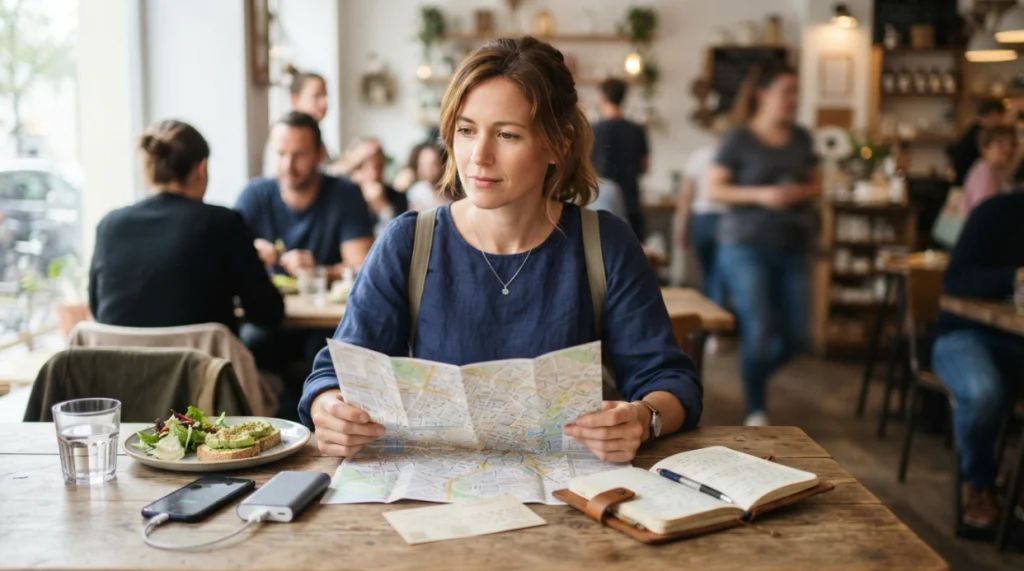
When loneliness suddenly feels heavy, change your environment before changing your entire trip. A small action often gives you better information about what you truly need.
I use a simple three-part check: body, environment, then connection.
1. Check your basic needs first
Travel fatigue can disguise itself as homesickness. Before making a major decision, check whether you need something basic.
- Eat a proper meal.
- Drink water.
- Take a shower.
- Charge your phone.
- Rest for 30 to 60 minutes.
- Get outside during daylight if appropriate.
A delayed lunch and six hours of transportation can make a destination seem much worse than it does after food and sleep.
2. Move somewhere with gentle human activity
You don’t necessarily need conversation. Sometimes you only need to stop feeling physically isolated.
Choose a place where you can comfortably exist around other people.
- A busy café
- A museum
- A food hall
- A hotel or hostel lounge
- A public park during appropriate hours
- A library
- A popular market
Bring a book, journal, camera, or simple plan. Having something to do removes the feeling that you must immediately make friends.
3. Give yourself one small mission
An empty afternoon can feel much longer when you’re lonely. Give the next two hours a purpose instead of trying to solve the whole trip.
- Find a local dessert.
- Visit one museum gallery.
- Walk a well-used sightseeing route.
- Buy breakfast for tomorrow.
- Choose postcards for people at home.
- Reserve tomorrow’s group activity.
Small successful decisions are one of the fastest ways to make an unfamiliar destination feel manageable.
How Can I Meet People Safely Without Forcing It?
The easiest way to meet people while traveling solo is to choose situations where conversation has a natural reason to begin. Structured activities remove much of the awkwardness.
You also keep more control than you would by depending on random encounters.
Choose activities where people expect interaction
Lonely Planet’s solo travel guidance highlights hostels and ordinary conversations as practical ways solo travelers can connect with others.
- Walking tours: You spend one or more hours with travelers following the same route.
- Cooking classes: A shared task creates easy conversation.
- Hostel events: Many social hostels organize dinners, games, tours, or group outings.
- Day tours: You can socialize without committing to traveling together afterward.
- Language exchanges: Conversation is the activity itself.
- Group fitness or workshops: Yoga, crafts, photography, and food experiences provide a shared subject.
You can also browse organized local gatherings through Meetup’s travel groups where available.
Use social accommodation strategically
A hostel does not automatically mean sleeping in a large dorm. Many properties offer private rooms alongside shared common spaces.
That combination can work well when you want privacy at night but easier opportunities for conversation during the day.
Keep first meetings public
Meeting people can make a solo trip richer, but loneliness should not pressure you into trusting someone faster than you normally would.
- Meet in public places.
- Keep control of your own transportation.
- Don’t give strangers your room number.
- Avoid sharing detailed future movements immediately.
- Keep your phone, money, passport, and accommodation access with you.
- Leave whenever something feels uncomfortable.
Pro tip: For international trips, review current destination guidance and the U.S. State Department’s information for women travelers before departure. Local laws, transport conditions, and cultural expectations vary by destination.
Section Takeaway: Aim for structured, public social opportunities. You can be open to friendship without surrendering the independence and safety boundaries that protect your trip.
Should I Call Home When I Feel Lonely?
Yes. A short call home can provide familiarity and reassurance when your first solo trip feels emotionally strange.
The key is using home as support rather than mentally spending the entire trip there.
Create a communication rhythm
Instead of checking your phone whenever you feel uncomfortable, choose predictable contact times.
- Send a morning message.
- Share one photo during the day.
- Have a 10- to 20-minute evening call.
- Send a voice note when time zones make live calls difficult.
This also helps family or friends know when to expect contact without requiring continuous updates.
Watch the social-media comparison trap
Scrolling can briefly distract you, yet it may also make loneliness worse if you spend an hour watching people at home socialize together.
Try using your phone for connection and practical travel tasks before entertainment.
- Message a friend directly.
- Confirm tomorrow’s tour.
- Look for a nearby class or event.
- Download a podcast for a walk.
- Save a restaurant for dinner.
- Journal or organize your photos.
A useful personal rule is to ask, “Am I using my phone to connect with someone, or to avoid being where I am?”
You do not need to disconnect completely to make solo travel meaningful. The goal is balance.
How Do I Handle Lonely Meals and Evenings?
Meals and evenings are common times for first-time travelers to become more aware that they are alone. Give those periods extra structure before the trip begins.
You can gradually increase the amount of unplanned solo time as your confidence grows.
| Situation | Low-pressure option | Suggested time | Social level |
|---|---|---|---|
| Breakfast | Café or hotel breakfast | 30–60 minutes | Low |
| Lunch | Market, food hall, or casual restaurant | 45–75 minutes | Low to medium |
| Late afternoon | Walking tour, class, museum, or café | 1–3 hours | Medium |
| Dinner | Counter seat, communal table, food tour, or early dinner | 45–90 minutes | Low to high |
| Evening | Hostel event, performance, journaling, or call home | 1–2 hours | Flexible |
Make your first solo meals easy
You don’t need to begin with a candlelit restaurant surrounded by couples. Start in places where people commonly eat quickly or independently.
- Cafés
- Food courts
- Markets
- Counter-service restaurants
- Hotel restaurants
- Outdoor seating in busy areas
Bring a book if it helps, but occasionally put it down. Watching the surroundings can turn an uncomfortable meal into one of the pleasures of independent travel.
Plan evenings before you get tired
Do not wait until 8 p.m. to decide what a lonely evening should look like. Make the decision while you still have energy.
- Choose dinner before returning to your accommodation.
- Decide whether you want company or quiet.
- If you want company, book an organized activity.
- If you want quiet, prepare something enjoyable rather than defaulting to endless scrolling.
- Know how you will return to your accommodation safely.
Section Takeaway: Meals and evenings become easier when you decide in advance what they are for. Give yourself options for both connection and restorative solitude.
When Should Loneliness Make Me Change My Plans?
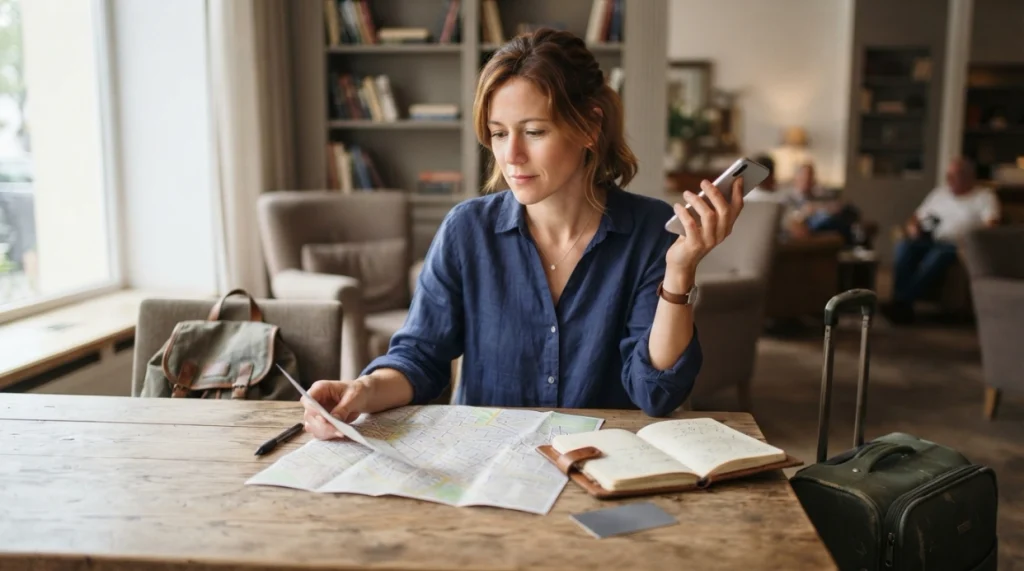
Change your plans when loneliness remains intense after you’ve tried rest, routine, social contact, and a reasonable adjustment period. A solo itinerary is not a contract.
Your trip should work for you, not the other way around.
First try a small change
Before abandoning the trip, ask whether one part of your environment is creating the problem.
- Your accommodation feels isolated: Move somewhere more central or social if practical.
- Your schedule is empty: Book a walking tour or structured activity.
- Your itinerary is exhausting: Cancel something and rest.
- You miss familiar people: Schedule a longer conversation with someone you trust.
- The destination feels overwhelming: Simplify your route or stay within one familiar neighborhood.
Consider shortening the trip if you remain deeply unhappy
Returning home early does not erase what you accomplished. You still planned, departed, arrived, navigated, and learned something about your travel style.
The information may help you design a better second trip.
Take persistent emotional distress seriously
Ordinary homesickness and loneliness can come and go. Persistent distress that interferes with eating, sleeping, functioning, or keeping yourself safe deserves more attention.
Contact someone you trust and seek appropriate professional or local support when needed. If you believe you are in immediate danger, use the destination’s local emergency services.
- Do not stay somewhere simply because you’ve already paid.
- Do not force social situations because you’re lonely.
- Do not ignore serious emotional distress to “prove” independence.
- Do not measure your trip against social-media versions of solo travel.
Section Takeaway: Adjusting or ending a trip is a practical decision, not a test of courage. The useful question is whether the trip still supports your well-being and safety.
Frequently Asked Questions
Is it normal to feel lonely on your first solo trip?
Yes. A first solo trip removes familiar people and routines while adding new decisions and surroundings. You may enjoy exploring independently during the day yet feel lonely during dinner or at night. Give yourself time to settle before deciding whether solo travel suits you.
How can a shy woman meet people while traveling alone?
Choose structured activities rather than trying to approach strangers randomly. Walking tours, cooking classes, day tours, hostel events, workshops, and language exchanges give everyone a natural subject to discuss and make leaving after the activity simple.
Will staying in a hostel stop me from feeling lonely?
Not automatically, but a social hostel can create more opportunities for casual interaction. If dorm sleeping doesn’t appeal to you, look for properties with private rooms and shared lounges so you can control how much privacy and social contact you get.
What should I do if I feel lonely at night while traveling alone?
Create an evening routine before loneliness appears. Have dinner somewhere comfortable, call someone at home, journal, watch something familiar, organize photos, read, or join a reputable organized activity. Plan your return transportation in advance if you go out.
Should I go home if I cry on my first solo trip?
One emotional evening does not require ending the trip. Eat, rest, contact someone familiar, and reassess after sleep. If severe distress continues or you no longer feel able to function or keep yourself safe, changing or ending the trip may be appropriate.
How much should I contact family during my first solo trip?
There is no required amount. A short daily check-in often provides reassurance without keeping your attention permanently at home. Before leaving, agree on a communication rhythm that works with your schedule, destination, and time-zone differences.
How can I prepare for loneliness before my first solo trip?
Book one or two social activities, research comfortable public places, schedule check-ins with people at home, and leave enough free time to rest. You can also practice solo cafés, museums, day trips, and meals before departure so those experiences feel less unfamiliar.
Final takeaway: You do not need to defeat loneliness to become a confident solo traveler. Build a trip where you can move naturally between independence, comfortable solitude, familiar contact, and safe opportunities to meet people.
Your first solo journey is partly about discovering your personal balance. Start gently, adjust when necessary, and let the experience teach you what you need from the next trip.