How Can a Solo Female Traveler Transfer Between Trains Safely?

Quick Answer
A solo female traveler can transfer between trains safely by planning the connection before departure, allowing enough time to change platforms, keeping luggage and valuables secure, and following official station signs. Check the connecting train’s platform and departure time as soon as you arrive, and ask uniformed railway staff for help if anything is unclear. You can also review official train safety guidance before your journey.
Essential steps for a safe train transfer
- Plan ahead: Save your train numbers, station maps, departure times, and ticket details offline.
- Allow a buffer: Choose a connection with enough time for delays, ticket checks, stairs, and long corridors.
- Follow signs: Verify the platform on departure boards instead of relying only on an app.
- Protect belongings: Keep your phone, wallet, passport, and tickets secure and your bags within reach.
- Choose visible areas: Wait near staffed desks, official help points, or other appropriate passenger waiting areas.
- Know your backup: Identify the official help desk and what to do if you miss your connection.
One important safety rule
- Never run across tracks, enter restricted areas, or board a closing train just to save a connection; seek assistance and arrange the next available service instead.
Learning how to transfer between trains safely as a solo female traveler can make a multi-stop journey feel far more manageable. The key is to treat each connection as a small journey of its own, with a clear route, a time buffer, and a backup plan.
In this guide, I’ll explain how to prepare before leaving, navigate unfamiliar stations, protect your belongings, and handle delays or missed connections without unnecessary stress.
In This Guide
- 1. How should you prepare before changing trains?
- 2. How can you navigate an unfamiliar train station safely?
- 3. How can you protect yourself and your belongings during a transfer?
- 4. How much transfer time should you allow?
- 5. What should you do if your train is delayed or you miss a connection?
- 6. How should you handle late-night and other challenging transfers?
- 7. Frequently asked questions
1. How Should You Prepare Before Changing Trains?

The safest train transfers usually begin before you reach the station. Knowing where to go, how much time you have, and whom to contact can reduce confusion when you arrive in an unfamiliar place.
Understand what a train transfer involves
A train transfer is the process of leaving one train and reaching another service to continue your journey. Depending on the station, you might walk directly to another platform, use an underpass or footbridge, pass through ticket barriers, or enter a separate station building.
For a solo female traveler, safe transferring means managing that movement while protecting personal belongings, staying aware of the surroundings, and having a workable alternative if the connection fails. It doesn’t mean avoiding every unfamiliar person or treating every station as dangerous.
Research your connection before departure
Check the station layout and connection requirements before booking, especially when changing in a major city. Some stations have straightforward platform changes, while others involve long walks, multiple levels, or separate terminals.
Before your trip, record these details:
- Arrival information: The first train’s scheduled arrival time and expected platform, if available.
- Departure information: Your connecting train’s number, departure time, destination, and booking reference.
- Station layout: The official map, accessible routes, ticket barriers, and customer service locations.
- Ticket conditions: Whether the connection is protected, whether tickets are separate, and what happens after a missed connection.
- Alternative services: The next reasonable departure and the official channel for rebooking.
Save screenshots or download information for offline use. Mobile data can fail in underground platforms, international roaming can be expensive, and station Wi-Fi may require a login.
Choose a connection that matches your needs
A short transfer might be reasonable at a small station with adjacent platforms, but risky at a large interchange with unfamiliar signs. If you have heavy luggage, limited mobility, or an international connection involving border controls, choose a more generous interval.
For your first independent rail journey, a slightly longer connection can be worth the extra time. You’ll have room to check the departure board, use the restroom, refill your water bottle, or ask for directions without rushing.
Keep your essential items accessible rather than buried beneath your clothes or other luggage. I recommend having your next ticket, phone, and a small note with your train details ready before your first train arrives.
Pro tip: Verify the details
Check the current timetable and station information through the official rail operator. Timetables, platform assignments, accessibility arrangements, and ticket rules can change.
Section takeaway: Prepare your route, ticket conditions, and backup plan before leaving. A transfer becomes easier when you know what to do next.
2. How Can You Navigate an Unfamiliar Train Station Safely?
At an unfamiliar station, use official signs and live departure information as your main guides. Confirm your next train’s destination and platform rather than following a crowd or assuming the connecting platform will be nearby.
Follow the correct route through the station
When you step off your first train, move away from the doorway when it’s safe to do so and find the nearest departure board or directional sign. Check the connecting service’s destination and departure time, then follow the signs for its platform or the designated transfer route.
Watch for signs indicating:
- Platforms or tracks: The numbered or lettered area where your train departs.
- Connections or transfers: The route to other rail services or platforms.
- Exit and ticket gates: Whether you must leave a controlled area before continuing.
- Customer information: Official staff or service desks where you can confirm directions.
- Lifts and step-free routes: Useful alternatives when stairs or escalators aren’t suitable.
Some stations use the same platform for trains going in different directions, while others change platform assignments shortly before departure. Read the full destination information, and recheck the board when you reach your platform.
Ask the right person for help
If signs are confusing, ask a uniformed railway employee or visit the official information desk. Show the train number and ticket if necessary, and ask for the exact platform or the correct route through the station.
For example, you can say, “I’m connecting to train 246 at 14:20. Which platform should I use, and do I need to pass through the ticket gates?” This is more precise than asking where to find the next train.
If someone you don’t know offers unsolicited help with your bags, tickets, or a shortcut, you don’t need to accept. You can thank them, keep your belongings with you, and confirm the information with railway staff instead.
What if the station is crowded?
Busy stations can be confusing because passengers move in different directions and signs may be difficult to see. Pause in a safe spot away from doorways, stair landings, and the flow of people before checking your route.
Avoid stopping suddenly at the top of an escalator or in a narrow passage. If you need more time, move to a suitable waiting area or the side of the concourse where you won’t obstruct other passengers.
When using stairs or escalators, keep your luggage stable, hold the handrail where practical, and avoid rushing. If your bag is heavy or you can’t safely manage the stairs, look for a lift or ask staff for an accessible route.
Should you leave the station during a transfer?
Usually, staying within the station’s designated passenger areas is the simpler option when you have a connection. Leaving the station may require another ticket check, a new security screening, or a longer walk back to the platform.
If signs direct you outside to another station building, verify the route with official staff before following it. Keep your onward ticket and booking information accessible, particularly when transferring between different operators or separate terminals.
Section takeaway: Follow official information, verify the platform, and ask railway staff when uncertain. You don’t have to solve an unfamiliar station alone.
3. How Can You Protect Yourself and Your Belongings During a Transfer?
Keep your valuables secure, your luggage under control, and your attention available while changing trains. Transfers create moments of distraction because you’re checking tickets, reading signs, and moving through unfamiliar crowds.
Keep essential belongings within reach
Use a zipped bag that stays securely attached to your body, and avoid putting your phone or wallet in an easily accessible outer pocket. A crossbody bag can be useful because you can keep it in front of you while moving through crowded areas.
Before leaving your seat, check that you have your essential belongings:
- Phone and charging accessories.
- Wallet, payment cards, and a little local currency.
- Passport or identification, where required.
- Tickets, reservations, and relevant travel documents.
- Prescription medication and other essential personal items.
Keep backup money and important documents separate from your everyday wallet when practical. If one item goes missing, this arrangement can help you avoid losing access to everything at once.
Manage luggage without rushing
A large suitcase can make a short platform change surprisingly difficult, especially when stairs, crowded corridors, or narrow ticket gates are involved. Choose a transfer route you can manage comfortably with the luggage you have.
- Before arrival: Put away loose items and prepare to collect your bags.
- On the platform: Keep luggage close without obstructing other passengers.
- On stairs: Use a lift when available if your bags make the stairs difficult.
- At ticket gates: Have your ticket ready before reaching the front of the queue.
- Before boarding: Check that every bag is accounted for and that you can board without rushing.
Never leave your luggage unattended while asking for directions or buying food. If you need help lifting a heavy suitcase, ask official station staff about available assistance.
Where should you wait for the next train?
Choose a designated passenger waiting area where you can see station information and access assistance if needed. A staffed information point or an appropriate waiting room may be preferable to an isolated corner of a large station.
On the platform, remain behind the marked safety line and away from the edge. Keep clear of closing doors, and never step onto the tracks to retrieve a dropped item.
Official railway guidance, such as the Network Rail station safety guidance, explains why passengers should walk carefully, respect platform boundaries, and avoid rushing near trains.
What if someone makes you uncomfortable?
You don’t need to confront a stranger or explain why you want to move away. Change your position, approach railway staff, or move to a more appropriate public area if an interaction feels uncomfortable.
If someone follows you, threatens you, or interferes with your belongings, seek help from station staff or railway police where available. Contact local emergency services if you face an immediate threat.
For broader preparation, see this guide to protecting your phone in public, especially when you need navigation in crowded transport hubs.
Section takeaway: Secure your belongings before the train arrives, stay behind platform safety markings, and choose waiting areas where help is accessible.
4. How Much Transfer Time Should You Allow?
Choose a transfer window that gives you time to reach the next platform without running. The right amount depends on the station layout, ticket arrangements, train reliability, luggage, and whether you must pass through additional checks.
Use these example planning windows
The following figures are planning examples, not guaranteed minimum connection times. Always check the railway operator’s official connection guidance and the requirements of your particular ticket.
| Transfer situation | Illustrative time to consider | What to check |
|---|---|---|
| Small station, nearby platforms | 10–15 minutes | Actual walking distance and delay risk |
| Large station with several levels | 20–30 minutes or more | Stairs, lifts, corridors, and platform changes |
| Separate tickets or different operators | A generous buffer, often 30–60 minutes or more | Ticket conditions and missed-connection protection |
| International journey with border or security checks | Follow the operator’s specified allowance | Check-in deadlines, immigration, and security procedures |
These ranges are conservative starting points for planning, not official standards. Some stations require less time, while complex interchanges or unreliable services may require substantially more.
Understand the difference between one booking and separate tickets
A connection sold as one through-journey may provide protection if a delay causes you to miss the next train, subject to the operator’s rules. Separate tickets can leave you responsible for arranging another service unless specific protections apply.
Before booking, check whether the tickets cover the whole journey, whether seat reservations are required, and which operator handles missed connections. Don’t assume that a booking website’s suggested transfer guarantees every possible expense will be covered.
Make a simple transfer timeline
Imagine your first train is due at 12:00 p.m. and the next departs at 12:30 p.m. You have 30 minutes on paper, but a 10-minute delay leaves only 20 minutes to get across the station.
Build your plan around the time you may realistically have, not just the scheduled interval. If a missed connection would leave you stranded or require an expensive replacement ticket, choose a more forgiving itinerary.
Section takeaway: Match your transfer time to the actual station and ticket conditions. A comfortable connection is better than a technically possible one that leaves no room for delays.
5. What Should You Do If Your Train Is Delayed or You Miss a Connection?
If a delay threatens your connection, check official service updates and contact the railway operator as soon as practical. Stay in a designated passenger area while you confirm your options instead of rushing through the station or boarding an unverified service.
If your first train is running late
Use the journey to monitor updates, review your next platform, and check whether the operator has announced an alternative connection. If the connection looks tight, ask the train crew or station staff what to do when you arrive.
- Check the latest arrival and departure information.
- Find out whether the connecting train will wait or whether another service is recommended.
- Confirm whether your ticket remains valid on a replacement service.
- Keep screenshots of relevant booking details and disruption notices.
Do not assume the next train will wait for you. Nor should you assume that a delayed arrival automatically entitles you to board any other service.
If you have already missed the train
First, move away from the platform edge and find a suitable place to review your options. Then contact the official ticket office, service desk, or operator through its verified app or customer service channel.
Ask three specific questions:
- Can I use my existing ticket on the next available train?
- Do I need a new seat reservation or an updated ticket?
- Where should I wait, and what is the next confirmed departure?
Keep any rebooking confirmation until your journey is complete. If you purchased separate tickets, ask each relevant operator what its conditions allow before spending more money.
What if the disruption leaves you stranded?
If no suitable train is available, consider a staffed waiting area, an official replacement bus, or reputable transport to accommodation. Compare the available options and costs before committing to an unfamiliar service.
If you need to stay overnight, look for established accommodation and arrange transport through legitimate channels. Share your revised arrival details with a trusted contact if doing so is helpful.
For general trip preparation, this guide to planning a solo trip around public transportation can help you think through alternative routes before you travel.
If a connection fails
Pause, verify, then decide
A missed train is a travel problem, not a reason to put yourself at risk. Confirm the next legitimate option, keep your belongings with you, and choose a safe place to wait while making arrangements.
Section takeaway: Use official rebooking guidance and keep a safe waiting option available. Never let a missed train pressure you into an unsafe shortcut.
6. How Should You Handle Late-Night and Other Challenging Transfers?
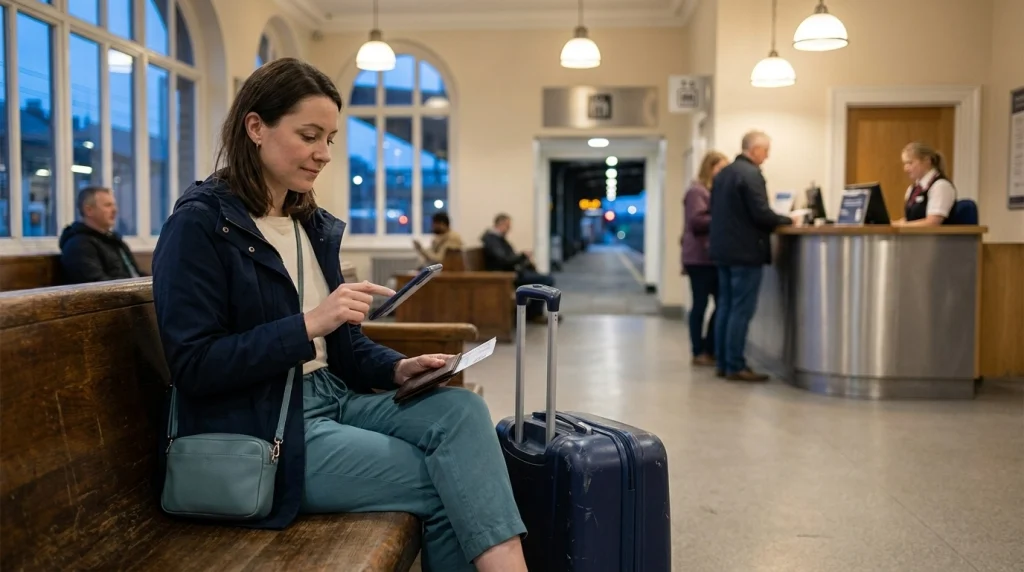
Transfers need extra planning when services are infrequent, stations are unfamiliar, or you have luggage or accessibility requirements. In these situations, reducing the number of uncertain steps can be more useful than choosing the fastest itinerary.
Late-night transfers
Check the final departure time for every leg of the journey, including the service after your transfer. A route that works during the day may have fewer alternatives late at night.
- Prefer a connection with a workable backup service.
- Check whether ticket offices, help desks, and waiting rooms remain open.
- Keep your phone charged and your accommodation address accessible offline.
- Consider a direct alternative if a complicated transfer creates unnecessary uncertainty.
If you feel uncomfortable while waiting, move toward an appropriate staffed or populated area. Ask official personnel for assistance rather than accepting a stranger’s offer to take you somewhere else.
Transfers with heavy luggage or mobility needs
Check lift availability and step-free routes at each station before booking. A transfer that looks short on a map may be difficult if the lift is out of service or the route involves multiple flights of stairs.
Where available, arrange passenger assistance in advance through the railway operator. Tell the operator about the stations, connection times, luggage, and help you need so it can explain what arrangements are possible.
Transfers in a country where you don’t speak the language
Save the connecting train number, destination, departure time, and platform information in a format you can show someone. A screenshot or translated destination name can help you communicate without relying on a long conversation.
Use official station maps and information desks whenever possible. Translation apps are useful, but confirm critical ticket or platform information with the railway operator when the consequences of a mistake could be significant.
Keep a compact emergency plan
Before starting a multi-train journey, save the following information on your phone or in a small travel note:
- Your ticket references and railway operator contact details.
- The name and address of your destination accommodation.
- A trusted contact who can receive your updated itinerary.
- The local emergency number and relevant railway assistance contact.
- A backup payment method and enough money for an unexpected change.
Pro tip: For international journeys, check your government’s travel advice and the destination’s official railway website. Emergency numbers, passenger assistance, ticket rules, and station procedures vary by country.
For broader precautions beyond train travel, review this guide to daily safety habits for women traveling alone.
Section takeaway: Adjust your transfer plan to local conditions, language, accessibility, and operating hours. A reliable backup gives you options when the original route changes.
7. Frequently Asked Questions About Safe Train Transfers
Is it safe for a woman to change trains alone?
Changing trains alone can be manageable with good preparation, although conditions differ by station and destination. Check your route, follow official signs, secure your belongings, wait in appropriate passenger areas, and ask railway staff for help when necessary.
What should I do if I cannot find my connecting platform?
Check the official departure board and follow the signs for your train number or destination. If you’re still unsure, ask uniformed railway staff or visit the information desk. Avoid following an unfamiliar person’s directions without verifying them.
Is a 10-minute train transfer enough time?
Ten minutes may work at a small station with adjacent platforms, but it can be too short at a large interchange. Check the operator’s minimum connection time, station layout, ticket conditions, and likely delays before deciding whether the connection suits you.
Should I leave the station during a long transfer?
Staying in designated passenger areas is often simpler, particularly when you’re unfamiliar with the area. Leave only after checking whether you must pass through ticket barriers again, whether your ticket remains valid, and whether you’ll have enough time to return.
What should I do if someone follows me through a station?
Move toward a staffed or populated area and tell railway personnel what is happening. You can change direction, avoid isolated passages, and contact local emergency services if you feel threatened. You don’t need to confront the person yourself.
How can I keep my luggage safe while changing platforms?
Keep bags zipped, close to you, and under your control. Avoid leaving luggage unattended while checking signs or buying food. If your bags are heavy, use available lifts or ask station staff about assistance instead of rushing up stairs.
What happens if I miss my connecting train?
Your options depend on your ticket, operator, and reason for the missed connection. Contact the official service desk or operator to confirm whether you can use the next train, need a new reservation, or must purchase another ticket before boarding.
Make Your Next Train Transfer With Confidence
Learning how a solo female traveler can transfer between trains safely is mostly about building a few reliable habits. Prepare the route, allow enough time, protect your belongings, and know where to get official assistance.
You don’t have to memorize every station or predict every disruption. You simply need enough information to make your next decision calmly.
Before your next journey, check the connection, save your tickets offline, and identify a backup option. Then you can focus less on the logistics and more on enjoying the experience of traveling independently.