What Should a Solo Female Traveler Check During Airbnb Self Check-In?
Quick Answer
During Airbnb self check-in, a solo female traveler should verify the property address, confirm the entry code, test every accessible door and window lock, inspect basic safety equipment, and identify emergency exits. Keep your phone charged, share your arrival details with someone you trust, and report suspicious conditions through Airbnb. If the property feels unsafe, leave for a secure public place and arrange alternative accommodation.
Your essential arrival checklist
- Correct property: Match the address and entrance to your confirmed reservation.
- Secure access: Test the main lock and confirm you can secure the door from inside.
- Private space: Check windows, curtains, bathroom privacy, and unexpected access points.
- Emergency readiness: Locate exits, fire safety equipment, and local emergency contact details.
- Personal safety: Keep your phone, identification, money, and essential belongings accessible.
- Clear communication: Save your host’s contact details and document problems through Airbnb messages.
Remember: Never ignore a serious security concern simply because you have already paid for the reservation.
Knowing what a solo female traveler should check during Airbnb self check-in can make arriving in an unfamiliar place feel much more manageable. I recommend checking the property systematically before unpacking, especially when you arrive after dark or enter through a shared building.
This guide covers the practical steps that matter most, from verifying your entry instructions to checking locks, privacy, fire safety, and what to do when something feels wrong.
In This Guide
- What should you prepare before arriving?
- How do you check entry and door security?
- What should you inspect for privacy and room safety?
- Which emergency features should you locate?
- How should you handle common self check-in problems?
- What should you do during your first hour?
- Frequently asked questions
What Should You Prepare Before Arriving?
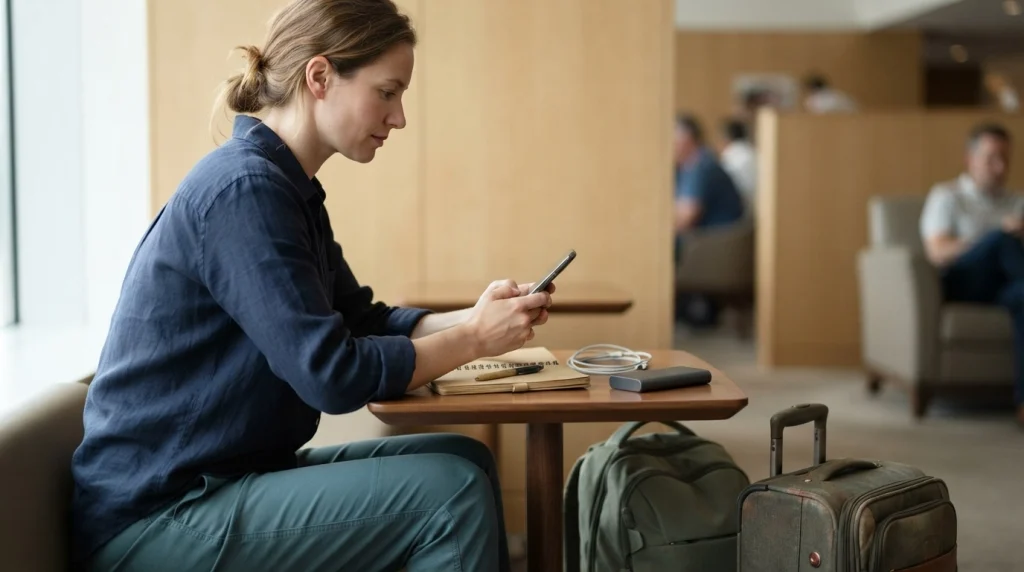
Prepare your arrival plan before leaving the airport, station, or previous accommodation. Airbnb self check-in means you enter without a host necessarily meeting you in person, so reliable instructions and a backup plan are important.
Verify the address and check-in instructions
Open your confirmed reservation in the Airbnb app and compare the address with your travel arrangements. Confirm the building entrance, floor, apartment number, check-in time, and access method.
Don’t rely entirely on a screenshot or an old message from the host. Check the latest instructions in your reservation and contact the host through Airbnb if anything conflicts.
For a smart lock, keypad, or lockbox, make sure you understand the opening procedure before arriving. Airbnb’s self check-in guidance describes these common entry methods and the importance of clear access instructions.
Prepare your phone and backup arrangements
Your phone is an essential safety tool during a solo arrival. Keep it charged and make sure you can access your reservation, maps, messaging, and local emergency information.
- Download offline maps if your destination has unreliable mobile coverage.
- Save your host’s contact details and the property’s full address.
- Keep a power bank available if you have a long transfer.
- Share your expected arrival time and accommodation details with a trusted person.
- Identify a nearby staffed hotel or another reputable accommodation as a backup.
- Arrange a reliable way to reach the property, especially if arriving late at night.
I would rather spend five minutes confirming these details than arrive tired and discover that the building entrance is confusing or the access code doesn’t work.
Review the listing for safety information
Read the listing details and recent reviews for information about the entrance, neighborhood, building access, lighting, and noise. Pay attention to repeated reports of broken locks, misleading directions, or difficulty contacting the host.
Check the advertised safety features before you arrive, including smoke alarms and carbon monoxide detectors where applicable. Airbnb’s guest safety guidance also recommends reviewing safety amenities and keeping communication within the platform.
Pro tip: If you expect to arrive after dark, ask the host to confirm the entrance lighting, access instructions, and availability of assistance if the lock fails.
How Do You Check Entry and Door Security?
Check that the entrance matches your reservation and that you can secure the property after entering. A successful check-in is not complete until you know the door closes properly and the available locks work.
Confirm the correct entrance
Look for the building number, street name, and apartment details before entering a code or opening a lockbox. If someone unexpectedly directs you to another apartment or building, pause and confirm the change with your host through Airbnb.
In shared buildings, observe whether the entrance closes behind you and whether strangers can easily follow you inside. Avoid sharing access codes with anyone who has not been confirmed as part of your reservation.
Test the main door and available locks
After entering, close the door and test the lock from inside. Confirm that the door latches securely and that any additional deadbolt, security chain, or other installed lock operates normally.
- Check whether the door closes without forcing it.
- Test the inside locking mechanism while you are safely inside.
- Check that the door handle and frame do not feel loose or damaged.
- Confirm that the smart lock or keypad works as instructed.
- Ask the host how to secure the door if the locking mechanism is unfamiliar.
- Check that you can exit quickly in an emergency without needing a key that you cannot find.
Never force a jammed lock or dismantle a security device. If the door will not secure, contact the host immediately and ask for a prompt solution.
Check windows and secondary access points
Inspect accessible windows, balcony doors, and other exterior openings. Make sure they close and lock as intended, particularly when the accommodation is on the ground floor or overlooks an accessible roof, terrace, or fire escape.
Do not block an emergency exit or make it impossible to leave quickly. If a window cannot lock or an exterior door remains open, report the problem before settling in.
Understand shared access
Some Airbnb properties occupy a room within a shared home or have communal entrances, hallways, and facilities. Confirm which spaces are private and which other guests, residents, or staff may access.
If you booked an entire home, an unexpected person entering the private living area is a reason to investigate immediately. Ask the host to clarify any planned maintenance, cleaning visits, or access arrangements that were not disclosed in the listing.
Section takeaway: Confirm the address, test the main lock, and understand who can access your space before unpacking.
What Should You Inspect for Privacy and Room Safety?
A quick privacy and condition check helps you identify problems before you relax. Focus on doors, windows, curtains, bathrooms, unusual devices, and anything that differs significantly from the listing.
Check curtains, windows, and bathroom privacy
Close the curtains or blinds and check whether people outside could see into sleeping and bathroom areas. This matters particularly in ground-floor apartments, buildings close to neighboring windows, and homes with large glass doors.
Inspect bathroom doors and bedroom doors for working privacy locks where provided. If a bedroom is advertised as private but cannot be secured as described, ask the host to explain or correct the issue.
Look around the room without disturbing anything
Take a brief look at the sleeping area, bathroom, cupboards, and accessible spaces. Check for obvious hazards, unexpected occupants, damaged fixtures, and anything that appears inconsistent with the property description.
Unfamiliar electronics are not automatically surveillance devices, and an ordinary charger or router is not proof of wrongdoing. If you find a device that raises a credible privacy concern, document its location without dismantling it and contact Airbnb through the appropriate reporting channel.
Airbnb has rules governing surveillance devices and guest privacy, but policies can change. Review the current Airbnb Help Center if you suspect a privacy violation.
Inspect cleanliness and basic living conditions
Check that the sleeping area and bathroom appear reasonably clean and that essential facilities work. Look for significant mold, signs of pests, exposed wiring, broken glass, or appliances that seem unsafe to operate.
- Check the bed and nearby furniture for obvious damage or hazards.
- Look for wet floors, leaks, or electrical equipment near water.
- Confirm that the bathroom door and taps work as expected.
- Check that the refrigerator, heating, or air conditioning appears safe to use.
- Note any major mismatch between the listing and the actual accommodation.
Don’t use an appliance that smells of gas, produces smoke, sparks, or behaves dangerously. Leave the affected area if needed and contact the appropriate local emergency service or utility provider.
Document problems before unpacking
Take clear photos of pre-existing damage, broken locks, missing amenities, and serious cleanliness concerns. Send a factual description to the host through Airbnb so the issue and timing are recorded.
Documentation helps distinguish an existing problem from damage that occurs later. Avoid photographing other guests or capturing private information unnecessarily.
A useful rule for privacy checks
Look for clear, observable problems rather than assuming that an unusual object is dangerous. If you have a credible reason to believe your privacy is at risk, prioritize leaving the space and reporting the concern instead of investigating it alone.
Which Emergency Features Should You Locate?
Before settling in, identify how you would leave the property and get help if something went wrong. You do not need to memorize every house rule, but you should know the main exit route and where essential safety equipment is located.
Find the exit and emergency information
Locate the main exit and identify another safe exit if one is available and legally usable. In an apartment building, look for marked stairwells and posted evacuation instructions rather than assuming an elevator will operate during a fire.
Check the host’s instructions for emergency contacts, building access, and any special hazards. If you cannot find important information, request it through Airbnb messages.
Check fire and carbon monoxide safety
Look for smoke alarms, a fire extinguisher where provided, and a carbon monoxide detector where appropriate for the property’s appliances and layout. Carbon monoxide is an odorless gas, so you cannot rely on smell to detect it.
The U.S. Department of State’s lodging safety guidance recommends checking fire safety equipment, door and window locks, and emergency exit routes when entering accommodation.
Never ignore a sounding carbon monoxide alarm or suspected gas leak. Leave the affected area immediately, avoid operating electrical switches if a gas leak is suspected, and contact local emergency services from a safe location.
Save emergency contacts and keep your phone accessible
Find the correct local emergency number for your destination instead of assuming your home country’s number works there. Save the number in your phone and identify the nearest appropriate medical facility if you have special travel needs.
- Local police or emergency services.
- Your host’s Airbnb messaging thread and contact details.
- Airbnb’s current support and safety contact options.
- A trusted friend or family member who knows your location.
- Your travel insurer’s emergency assistance number, if applicable.
Keep your phone charged and within reach, especially during your first night. If you need help, use the most appropriate local emergency channel rather than waiting for a host or platform representative to respond.
Know when to leave instead of troubleshooting
A failed keypad may be a simple maintenance problem, but a door that cannot lock or an unauthorized person inside presents a different concern. Do not remain in an unsafe situation just to avoid inconvenience or a possible cancellation fee.
If you feel threatened, move to a secure public place or staffed accommodation and contact local emergency services when necessary. Once you are safe, report the issue to Airbnb and ask about suitable next steps for your reservation.
Section takeaway: Know how to exit, where to get help, and which safety problems require you to leave immediately.
How Should You Handle Common Self Check-In Problems?
The right response depends on whether the issue is a minor inconvenience, a property defect, or an immediate threat. Identify the problem, document it when safe, and choose the response that protects you first.
Use this arrival problem comparison
| Problem | What to do | Priority |
|---|---|---|
| Incorrect or expired access code | Recheck the latest instructions and message the host through Airbnb. | Restore access safely. |
| Door will not lock | Request immediate assistance; relocate if the property cannot be secured. | Secure accommodation. |
| Unexpected person inside | Avoid confrontation, leave if safe, and seek help. | Personal safety. |
| Missing advertised amenity | Document the discrepancy and ask the host for a solution. | Resolve the booking issue. |
| Suspicious device or privacy concern | Avoid tampering, leave if concerned, and report through Airbnb. | Protect privacy. |
| Smoke, gas leak, or carbon monoxide alarm | Leave the affected area and contact local emergency services. | Immediate safety. |
What if the host does not respond?
Send one clear message explaining the problem and the help you need. For example, state that the entry code fails, the door cannot be secured, or the property differs materially from the listing.
If the issue prevents safe access or makes the accommodation unsuitable, contact Airbnb support through the app and request guidance before making non-emergency changes to your booking. Keep screenshots, photographs, and relevant messages where practical.
Do not send money outside Airbnb to obtain a replacement key or alternative accommodation promised by an unknown person. Airbnb advises guests to keep payments and booking communications on its platform to reduce the risk of fraud.
What if someone asks you to enter a different property?
Verify any proposed change through your confirmed reservation and Airbnb’s official trip-change process. Do not accept a last-minute address change solely because someone sends a message or approaches you outside the building.
If the alternative location seems suspicious or you cannot confirm the arrangement, wait somewhere secure while contacting Airbnb. You should not feel pressured to enter an unfamiliar property without reliable confirmation.
How should you report a serious safety concern?
Prioritize your immediate safety before collecting evidence or writing a detailed complaint. Once safe, report the facts clearly, including what happened, when it occurred, and whether anyone else was present.
For a serious threat or crime in progress, contact local emergency services or law enforcement first. Platform support can help with the reservation, but it is not a substitute for emergency assistance.
Section takeaway: Treat access errors as problems to resolve, but treat threats, unsecured accommodation, and serious hazards as reasons to prioritize safety.
What Should You Do During Your First Hour?
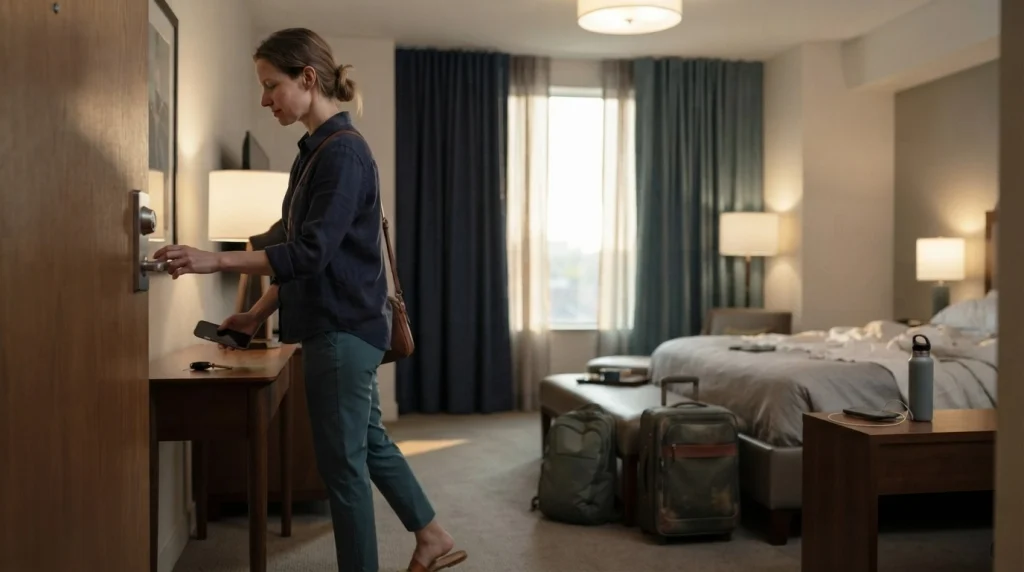
Your first hour should focus on security, communication, and getting comfortable with the space. A simple routine reduces the chance of overlooking an important detail while you are tired from traveling.
Follow a practical arrival sequence
- Confirm your location. Match the address and entrance with the booking before entering.
- Secure the door. Close it, test the lock, and learn how to unlock it quickly from inside.
- Check windows and privacy. Close curtains and inspect accessible exterior openings.
- Locate emergency equipment. Identify the exit route, alarms, fire extinguisher where provided, and emergency information.
- Inspect the essentials. Check the bathroom, sleeping area, lighting, and obvious hazards.
- Send an arrival update. Tell your trusted contact that you arrived and share your location details.
- Report problems promptly. Message the host through Airbnb and document relevant issues.
Keep your accommodation details private
You can share your location with trusted people without broadcasting your exact room number or access code publicly. Avoid posting real-time details that reveal when you are alone or away from the property.
If a stranger asks where you are staying, you do not need to provide the address. Keep keys and access devices secure, and avoid leaving identification or booking documents visible to visitors.
Make a small first-night essentials area
Keep the items you might need quickly in one accessible place. This can be a bedside surface or a small section of your bag.
- Charged phone and power bank.
- Room key or other access device.
- Identification and a payment card.
- Water and essential medication, if applicable.
- Glasses, a flashlight, or other personal necessities.
Choose a place where you can reach these items without searching through your luggage. Avoid leaving valuables or important documents next to an open window or unsecured entrance.
Check your route out of the building
Before going to sleep, make sure you can reach the main exit and understand the building’s evacuation instructions. If you plan to return late, confirm the entrance procedure and whether you will need a code, key, or mobile connection.
For destination-specific risks, check current government travel advice and reliable local information. Conditions can change, so guidance that was accurate when you booked may not reflect the situation on your arrival date.
Pro tip: The U.S. Department of State’s travel advisories provide destination-specific information for U.S. travelers. Travelers of other nationalities should also consult their own government’s official advice.
Section takeaway: Finish your first-hour routine before unpacking fully, then keep your phone, exit route, and access device easy to reach.
Frequently Asked Questions
1. Is Airbnb self check-in safe for solo female travelers?
Airbnb self check-in can be a practical option for solo female travelers when the property is accurately described, access instructions are reliable, and the accommodation can be secured. Check recent reviews, verify the entrance, test the locks, and make a backup plan before arriving.
2. What should I do if my Airbnb door does not lock?
Contact your host immediately through Airbnb and request a prompt repair or alternative secure accommodation. If you cannot secure the property, move to a safe location while arranging help. Contact Airbnb support, and use local emergency services if you face an immediate threat.
3. Should I tell someone where I am staying?
Yes, sharing your accommodation address and expected arrival time with a trusted person is a sensible precaution. Let them know when you arrive and consider agreeing on a check-in message if you are traveling somewhere unfamiliar or arriving late.
4. What if the Airbnb looks different from the listing?
Document significant differences with photos and contact the host through Airbnb. If the property has serious safety issues, an unexpected occupant, or a major security problem, leave if necessary and contact Airbnb for assistance with your reservation.
5. Can I leave an Airbnb if I feel unsafe?
Yes. Your immediate safety should come before the inconvenience of changing accommodation. Move to a secure public place or staffed property, contact emergency services if necessary, and notify Airbnb through official channels to discuss the situation and available options.
6. Should I inspect the Airbnb for hidden cameras?
You can make a reasonable visual check for unexpected devices and privacy concerns, but unfamiliar electronics do not automatically indicate surveillance. Do not dismantle equipment or conduct risky investigations. If you have a credible concern, leave if necessary and report it through Airbnb’s official support channels.
7. What should I do if the host asks me to pay outside Airbnb?
Do not send an off-platform payment for a booking-related charge or access arrangement without verifying it through official Airbnb channels. Keep messages and payment records, and report suspicious requests. If the request affects your ability to enter the property, contact Airbnb support for guidance.
Final Takeaway: Make Safety Your First Check-In Task
For solo female travelers, a careful Airbnb self check-in begins with confirming the property, securing the entrance, checking privacy, and locating emergency exits. These simple checks can help you identify problems before you unpack or settle in for the night.
Remember that no checklist can guarantee complete safety. Trust clear warning signs, document issues when it is safe to do so, and leave a situation that presents an immediate risk.
Before your next solo trip, save this checklist with your reservation details and share your arrival plan with someone you trust. A few minutes of preparation can help you start your stay with greater confidence and peace of mind.
Affiliate disclosure: This article is informational and does not contain paid product recommendations. Always check current accommodation policies and official local safety guidance before traveling.