Should a Solo Female Traveler Stay in an Airbnb?
Quick Answer
Yes, a solo female traveler can stay safely and comfortably in an Airbnb, provided she chooses the property carefully. A well-reviewed private apartment or room in a secure, well-connected neighborhood can offer privacy, a kitchen, and more flexibility than some traditional accommodations. However, a private rental is not automatically safer than a hotel, so check the host’s history, access arrangements, location, and recent guest feedback before booking.
What to check before booking
- Recent reviews: Look for consistent feedback about cleanliness, accurate listings, secure entry, and responsive hosts.
- Neighborhood safety: Check transport access, lighting, local conditions, and your planned arrival time.
- Private access: Confirm whether you’ll have an entire place or share the property with a host or other guests.
- Entry security: Check the lock, building access, windows, and how you’ll receive the keys.
- Host communication: Choose a host who answers practical questions clearly and keeps communication on the booking platform.
- Total cost: Compare cleaning fees, service fees, transport expenses, and cancellation terms with hotel rates.
Safety tip: Share your address and check-in details with someone you trust, keep your phone charged, and have a backup accommodation option if the property doesn’t match the listing.
Choosing accommodation alone can feel like one of the biggest decisions of a solo trip. I would weigh privacy, security, location, and how easy it is to get help before choosing an Airbnb over a hotel.
This guide explains when an Airbnb makes sense for a woman traveling alone, which warning signs to look for, and how to compare private rentals with hotels and hostels. The goal is to help you book a place where you can relax without compromising your peace of mind.
In This Guide
- Is Airbnb safe for solo female travelers?
- Is Airbnb better than a hotel or hostel?
- How do you choose a safe Airbnb when traveling alone?
- What Airbnb red flags should women watch for?
- How can you stay safer during check-in and your stay?
- When is an Airbnb the right choice for a solo trip?
- Frequently asked questions
Is Airbnb Safe for Solo Female Travelers?
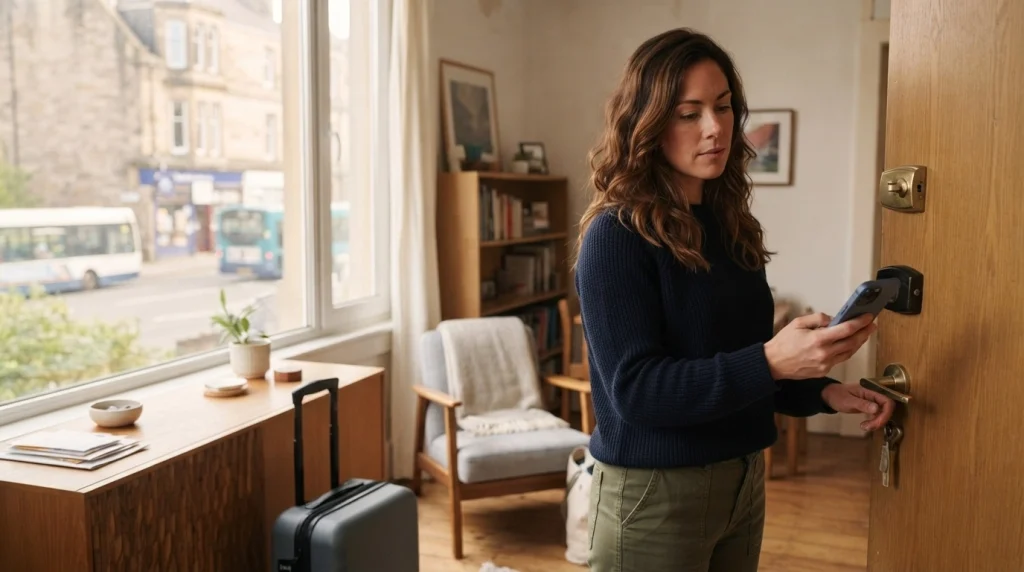
Airbnb can be a reasonable accommodation choice for solo female travelers, but safety depends on the individual property, host, neighborhood, and access arrangements. The platform’s reviews and booking protections can help you assess a listing, but they cannot guarantee your personal safety.
Solo female travel means traveling independently as a woman, making your own decisions about transportation, accommodation, activities, and personal safety. Your accommodation should support that independence rather than introduce avoidable risks.
What makes an Airbnb a safer choice?
I would start with the property itself rather than attractive photographs or a low nightly rate. A good listing should provide enough information to assess the entrance, sleeping arrangements, bathroom access, neighborhood, and host communication.
- A reliable review history: Look for several recent reviews that describe actual stays rather than relying on a single positive comment.
- Clear privacy arrangements: Check whether the rental is an entire apartment, a private room in a shared home, or a room with shared facilities.
- Secure access: Look for a lockable entrance, controlled building access where available, and clear instructions for receiving keys.
- A practical location: Choose somewhere with suitable transport, nearby essentials, and a manageable route home after dinner or sightseeing.
- Responsive communication: A host should answer questions about access, check-in, and the property’s facilities without unnecessary pressure.
Can reviews guarantee your safety?
No. Reviews offer useful clues, but they cannot confirm that every security feature works or predict how a future interaction will unfold. Even a highly rated property deserves a careful review of its location and arrangements.
Read comments from guests who mention traveling alone, arriving late, using public transport, or staying for several nights. These details can help you judge whether the property suits your actual plans.
For broader planning, consult the U.S. Department of State travel information alongside relevant local authorities when researching your destination. Although country-level guidance cannot assess an individual Airbnb, it can help you understand wider travel risks.
Practical safety reminder
Don’t book a property simply because the host has a friendly profile or the photographs look luxurious. Verify the practical details that affect your stay, and trust your judgment if something feels inconsistent.
**Section Takeaway:** An Airbnb can suit a solo female traveler when the property, location, access arrangements, and host communication meet her needs. Reviews are one part of the decision, not a safety guarantee.
Is Airbnb Better Than a Hotel or Hostel?
An Airbnb is not automatically better than a hotel or hostel for women traveling alone. The best choice depends on how much privacy you want, whether you value on-site assistance, how long you’re staying, and whether meeting other travelers matters to you.
An Airbnb is a short-term accommodation rental booked through a platform, ranging from a shared room to an entire home. A hotel typically offers professionally managed rooms, while a hostel often provides shared dormitories or private rooms alongside communal facilities.
Airbnb vs. hotel vs. hostel
Use this comparison to narrow your options before checking specific listings. Features vary by property, so confirm the details rather than assuming every accommodation in a category offers the same experience.
| Factor | Airbnb | Hotel | Hostel |
|---|---|---|---|
| Privacy | High in an entire rental; varies in shared homes | Usually a private guest room | Lower in shared dorms; private rooms may be available |
| On-site help | Depends on the host and property | Often available through reception or staff | Varies; some have staffed reception |
| Kitchen access | Often available in entire homes; verify listing | Usually limited | Common in many hostels |
| Social opportunities | Depends on the arrangement | Generally more limited | Often strong through shared spaces and events |
| Arrival flexibility | Depends on the host and entry system | Often more predictable when reception is staffed | Depends on reception hours and property rules |
| Best suited for | Travelers wanting privacy or home-style facilities | Travelers prioritizing predictable service and assistance | Travelers seeking social contact or lower-cost options |
These are general comparisons, not guarantees about a particular property. A professionally managed apartment may offer more support than a small hotel, while a well-run hostel can provide secure private rooms.
Which option is best for your first solo trip?
If you’re traveling alone for the first time, a hotel with staffed reception may feel more reassuring, especially if you’re arriving late or visiting a destination where you don’t speak the local language.
An entire Airbnb can work well when you want to cook, work remotely, or settle into a neighborhood for a week. A hostel with a private room may be a better fit if you want privacy while still having access to a reception desk and social spaces.
- Choose an Airbnb when privacy, kitchen access, and a home-like environment matter most.
- Choose a hotel when predictable check-in, luggage storage, and access to staff are priorities.
- Choose a hostel when you want opportunities to meet fellow travelers and join group activities.
Compare the total price rather than the advertised nightly rate. An Airbnb with cleaning and service fees may cost more than a hotel for a short stay, while a kitchen-equipped rental could help with meal costs on a longer trip.
**Section Takeaway:** Pick the accommodation that fits your travel style and gives you a reliable plan for arrival, access, and assistance. For a first solo trip, a well-managed hotel or private hostel room may offer more reassurance than an unfamiliar rental.
How Do You Choose a Safe Airbnb When Traveling Alone?
The best way to choose a safer Airbnb is to assess the host, listing, neighborhood, and entry arrangements before paying. Don’t let a beautiful interior or a tempting discount distract you from practical details.
1. Read recent reviews carefully
Start with recent reviews, then look for recurring details across multiple stays. A long history of positive feedback can be reassuring, but the substance of the reviews matters more than a rating alone.
- Look for comments about secure entrances, working locks, and accurate property descriptions.
- Check whether guests found the host responsive when they needed help.
- Notice repeated complaints about noise, unwanted visitors, poor lighting, or confusing check-in instructions.
- Check whether recent reviews suggest that the property or management has changed.
One negative review doesn’t necessarily make a property unsuitable. Repeated complaints about security, privacy, or misleading information deserve more attention.
2. Research the neighborhood independently
A secure apartment in an inconvenient location may leave you walking alone through unfamiliar streets or relying on expensive late-night transport. Research the surrounding area as well as the property itself.
- Check the walking route from the nearest transit stop.
- Look for nearby shops, restaurants, pharmacies, and other useful services.
- Review recent local safety information and destination-specific travel advice.
- Consider whether you’ll return after dark and how you’ll get home.
Use map services to understand distances, but don’t assume a short route is safe simply because it looks convenient on a screen. Local conditions, lighting, foot traffic, and the time of day all matter.
3. Confirm exactly what you’re booking
The difference between an entire place and a private room can significantly affect your comfort. Read the listing carefully to establish who else may have access to the property.
- Entire place: Check whether the whole apartment or house is exclusively yours during the reservation.
- Private room: Confirm whether the host or other guests share the entrance, kitchen, bathroom, or living areas.
- Shared room: Understand who else sleeps in the same room and what privacy measures are available.
If you prefer not to share living spaces with strangers, filter for an entire place and confirm the arrangement with the host before booking.
4. Ask the host specific questions
A professional host should be able to explain how access works and what to expect when you arrive. Keep your questions on Airbnb’s messaging system so you have a record of the answers.
Useful questions include:
- Is the main entrance lockable from inside and outside?
- Is check-in self-service, or will someone meet me?
- Will anyone else have access to the accommodation during my stay?
- What happens if I arrive later than expected?
- How can I contact you if the lock or entry code doesn’t work?
- Are smoke alarms and other relevant safety devices present?
Clear answers can help you plan. Vague replies, pressure to move the conversation elsewhere, or requests for unusual payments are reasons to pause and reconsider.
Airbnb publishes safety requirements for homes, including expectations concerning secure entry and certain safety hazards. These policies are useful reference points, although you should still inspect the actual accommodation on arrival.
5. Check the complete price and cancellation rules
Compare the total amount due, including mandatory fees, taxes, cleaning charges, and any other disclosed costs. Also review the cancellation policy before committing to a nonrefundable booking.
For an unfamiliar destination, flexible cancellation can be valuable if your itinerary changes or new information makes you uncomfortable with the property. Read the actual terms rather than assuming every booking has the same protection.
**Section Takeaway:** Choose a property based on evidence, not appearance alone. Recent reviews, a practical neighborhood, clear access arrangements, and straightforward host communication are essential parts of a careful booking decision.
What Airbnb Red Flags Should Women Watch For?
Several warning signs should make you stop and reassess a listing before booking. If something seems inconsistent or a host pressures you to ignore platform rules, you don’t need to proceed just because you’ve already spent time researching the property.
Warning signs before you book
- Requests for off-platform payment: A host asks you to transfer money directly, pay an unexpected deposit outside the platform, or complete a booking through another website.
- Pressure to communicate elsewhere: The host insists on moving essential booking conversations off Airbnb before confirmation.
- Unclear accommodation details: The photos, address information, sleeping arrangements, and written description don’t appear consistent.
- Repeated security complaints: Several guests mention broken locks, unexpected access, or unresolved privacy concerns.
- Unusual entry arrangements: The host cannot explain who has keys or how access is controlled.
- Unexpected visitors: The listing or host’s messages suggest that people may enter your private accommodation without a clear, agreed arrangement.
- Unreasonable personal questions: The host asks for unnecessary details about your schedule, relationships, or plans beyond legitimate booking requirements.
Airbnb advises guests to keep communication, booking, and payments on its platform. Its official guidance on payments and communication explains why off-platform arrangements can put guests at risk and affect available protections.
What if the listing looks suspicious?
Don’t send money or sensitive personal information while you investigate. Save relevant messages, review the listing details, and report suspicious requests through Airbnb’s official channels when appropriate.
Remember that a verified identity, a popular host badge, or many positive reviews cannot guarantee that a specific stay will be problem-free. Assess all available evidence together.
Also, don’t feel obliged to accept a booking simply because the host responds politely or offers a discount. A suitable property should meet your practical needs without requiring you to overlook serious concerns.
Pause before paying
If a host asks you to break platform rules, cannot explain basic access arrangements, or repeatedly dismisses reasonable safety questions, choose another property. Losing a little research time is better than accepting a booking that makes you uncomfortable.
**Section Takeaway:** Pressure, unclear access, repeated security complaints, and off-platform payment requests are meaningful warning signs. You can walk away from a listing before booking rather than trying to resolve every concern yourself.
How Can You Stay Safer During Check-In and Your Stay?
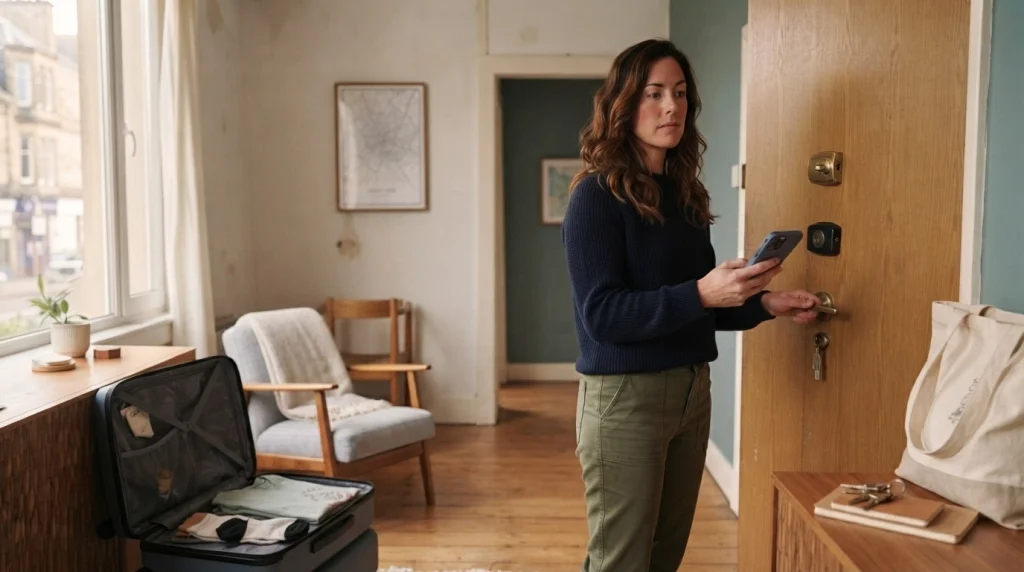
Even after choosing a promising property, your arrival plan matters. Prepare before you travel, check the accommodation when you arrive, and know what you’ll do if something doesn’t match the listing.
Before leaving for your destination
Make your first night as straightforward as possible, especially if you’re arriving in an unfamiliar city or after dark. I would prioritize a confirmed booking, reliable transport, and clear check-in instructions over squeezing in an extra activity on arrival day.
- Share your plans: Send a trusted friend or family member the accommodation address, booking dates, and expected arrival time.
- Save essential details: Keep the reservation confirmation, host instructions, and property address accessible offline.
- Arrange transport: Know how you’ll reach the property before landing, including a backup option if your original plan fails.
- Keep your phone ready: Charge it, arrange mobile data where possible, and save local emergency contact information.
- Confirm your arrival: Ask the host about check-in timing and what to do if you experience a delay.
For trips abroad, the U.S. Department of State offers destination-specific travel information for U.S. citizens. Travelers of other nationalities should also consult their own government’s official travel advice and their destination’s local authorities.
What should you check when you arrive?
Take a few minutes to make sure the accommodation matches what you booked. If something feels wrong, you can contact the host and Airbnb before settling in.
- Check that the entrance and doors lock properly.
- Make sure windows and other accessible entrances close securely.
- Identify the nearest exit and locate any listed smoke alarms or fire safety equipment.
- Confirm that the sleeping arrangements and shared spaces match the description.
- Locate your phone charger, keep your phone accessible, and check that you can contact the host.
- Notice any unexpected people, access arrangements, or conditions that raise a legitimate concern.
If you discover a problem, document it with photos or messages when safe to do so. Contact the host through Airbnb and escalate serious issues to platform support when necessary.
What if you feel unsafe during the stay?
Take your discomfort seriously, especially if someone enters unexpectedly, threatens you, or interferes with your privacy. You don’t need to wait for a situation to become dangerous before seeking help.
- Move to a safer public place or staffed accommodation if you can do so safely.
- Contact local emergency services immediately if you face an immediate threat.
- Contact Airbnb support about accommodation-related safety concerns and explain what happened.
- Tell your trusted contact where you are and what assistance you need.
- Keep relevant messages and evidence if doing so doesn’t increase your risk.
Airbnb describes its guest protections and support options, including assistance with certain serious reservation problems and access to a 24-hour safety line. Coverage and available remedies depend on the circumstances, and these services are not a substitute for emergency services.
Pro tip: Save your destination’s official emergency number before traveling. Don’t assume that the emergency number you’re familiar with at home will work everywhere.
**Section Takeaway:** Plan your arrival, inspect the accommodation, and keep a backup option available. If a serious safety concern arises, prioritize getting somewhere safe over resolving the booking issue yourself.
When Is an Airbnb the Right Choice for a Solo Trip?
An Airbnb is often worth considering when you want independence, privacy, or home-style facilities and have enough information to assess the property. It may be less suitable when you need immediate on-site assistance or feel uneasy about arriving alone.
Situations where an Airbnb may work well
- Longer stays: An apartment with a kitchen and laundry facilities can make a week or more away from home easier to manage.
- Remote work: A private workspace and reliable internet may help if you’re combining travel with work.
- Independent routines: Having your own kitchen and living area can make it easier to follow your preferred schedule.
- Travel with a clear itinerary: If you’ve researched the neighborhood and planned your transport, a private rental can offer flexibility.
- Comfortable, self-directed travel: Travelers who prefer quiet evenings and limited interaction may appreciate an entire apartment.
When another accommodation may be better
- Your first night is complicated: If you’re arriving late, have a long transfer, or expect limited phone connectivity, staffed reception may be reassuring.
- You want immediate assistance: A hotel with staffed reception can offer a more direct route to help with routine problems.
- You want to meet people: A hostel with organized activities or communal spaces may make socializing easier.
- The rental is poorly documented: If the host cannot explain the entrance, check-in, or sleeping arrangements, choose a clearer alternative.
- You would feel isolated: If being alone in an unfamiliar building would make you anxious, choose accommodation with a setup that helps you relax.
A simple decision checklist
Before confirming your booking, check each item that matters for your trip. If you cannot resolve an important concern, compare another property or accommodation type.
- Does the property have consistently reassuring, recent reviews?
- Can you explain exactly how you’ll enter and secure the accommodation?
- Is the neighborhood suitable for your itinerary and arrival time?
- Have you confirmed whether the property is shared or entirely private?
- Can you contact the host and access support if a problem occurs?
- Does the full cost fit your budget, including transport and fees?
- Do you have a realistic alternative if the booking doesn’t work out?
My main recommendation is to choose the accommodation that reduces practical uncertainty. A cheaper rental isn’t a good deal if its location, entry arrangements, or lack of support makes your trip more stressful.
**Section Takeaway:** Airbnb is a useful option for many solo female travelers, particularly on longer trips. A hotel or hostel can be the better choice when staffed support, easy check-in, or social connection matters more than having an independent living space.
Frequently Asked Questions
Is Airbnb safe for a woman traveling alone for the first time?
It can be, provided you choose carefully and prepare for arrival. Prioritize recent reviews, clear entry arrangements, a suitable neighborhood, and responsive host communication. If you’re nervous about managing an unfamiliar rental, consider starting with a well-reviewed hotel or a private hostel room with staffed reception.
Is it safer to book an entire Airbnb instead of a private room?
An entire Airbnb generally offers more privacy because you don’t normally share the living space with a host or other guests. However, privacy alone doesn’t establish safety. Check building access, locks, reviews, and the host’s arrangements before deciding which type of rental suits you.
Should a solo female traveler stay with a male Airbnb host?
A host’s gender alone cannot determine whether a property is safe. Assess the listing, guest reviews, access arrangements, and communication instead. If you prefer not to share a home with a host, choose an entire property or another accommodation type that matches your comfort level.
Is Airbnb safer than a hotel for solo female travelers?
Neither option is universally safer. A hotel with staffed reception may offer easier access to assistance, while a carefully selected entire Airbnb can provide privacy and independence. Compare the specific property’s security, location, management, and support arrangements rather than relying on the accommodation label.
What should a woman check before booking an Airbnb alone?
Review recent guest feedback, the property’s location, entry security, shared-space arrangements, host responsiveness, and total cost. Ask about late check-in and who can access the accommodation. Keep all booking communications and payments on the platform, and avoid listings with unresolved security concerns.
What should I do if my Airbnb feels unsafe after I arrive?
Leave for a safer location if necessary and contact local emergency services if you’re in immediate danger. Notify Airbnb support about the issue, keep relevant evidence when safe, and tell someone you trust. If the property doesn’t match its description or presents a serious problem, ask support about available rebooking or refund options.
Is Airbnb a good option for a solo female traveler on a budget?
It can be, especially for longer stays or when kitchen access helps reduce meal costs. Compare the full booking price, cleaning and service fees, transport expenses, and cancellation conditions with hotels and hostels. Avoid sacrificing a practical location or essential security arrangements just to save money.
Final Takeaway: Should You Book an Airbnb Alone?
Yes, an Airbnb can be a good choice for a solo female traveler when the property is well documented, the location suits your plans, and the entry arrangements make sense. You don’t need to rule out private rentals simply because you’re traveling alone.
At the same time, you don’t have to prove your independence by choosing an accommodation that makes you uncomfortable. A hotel or hostel may be the smarter option for a particular destination, arrival time, or stage of your solo travel experience.
Before booking, compare a few suitable properties, read their recent reviews, ask practical questions, and make a backup plan. The best accommodation is one that lets you spend less time worrying about where you’re staying and more time enjoying the trip you’ve planned.
For your next solo adventure, make safety and comfort part of the booking decision from the beginning. With careful preparation and realistic expectations, you can choose accommodation that supports both your independence and your peace of mind.