What Safety Habits Should a Woman Use Every Day While Traveling Alone?
Quick Answer
The most important daily safety habits for women traveling alone are staying aware of their surroundings, protecting personal information, checking transportation, securing accommodation, and keeping someone informed of their plans. A simple routine helps you spot problems early without spending your whole trip worrying. Before traveling internationally, review the U.S. State Department’s international travel checklist and current destination guidance.
Essential daily safety habits
- Check your route: Review your destination, transportation options, and return journey before leaving your accommodation.
- Stay connected: Keep your phone charged and arrange regular check-ins with someone you trust.
- Protect your belongings: Secure your passport, money, room key, and backup payment method.
- Limit personal details: Avoid sharing your room number, exact itinerary, or live location with strangers.
- Verify transportation: Confirm vehicle and driver details before entering a booked ride.
- Trust warning signs: Leave uncomfortable situations early and move toward staffed, populated places.
One habit to remember
- Spend five minutes each morning checking your plans, phone, money, surroundings, and emergency options.
When I think about solo female travel safety, I don’t picture spending every minute watching for danger. I picture having small habits that make unfamiliar places easier to navigate.
Whether you’re taking your first solo weekend away or exploring another country, this guide explains practical routines for mornings, sightseeing, transportation, evenings, and emergencies.
In This Guide
- Why Do Daily Safety Habits Matter When Traveling Alone?
- What Should a Woman Check Every Morning?
- How Can Women Stay Safe While Exploring Alone?
- What Transportation Safety Habits Should Women Follow?
- How Should Women Protect Themselves at Hotels and at Night?
- What Should You Do When Something Feels Unsafe?
- What Is a Simple Daily Solo Travel Safety Checklist?
- Frequently Asked Questions
Why Do Daily Safety Habits Matter When Traveling Alone?
Daily safety habits help solo female travelers reduce avoidable risks, notice changes, and respond more confidently to unexpected situations. They are most useful when they become simple routines rather than constant sources of worry.
When you travel alone, you usually make every decision yourself. You choose the route, handle money, manage luggage, and decide whom to trust.
That freedom can feel wonderful. It also means having practical backup plans matters.
What counts as a daily travel safety habit?
A daily travel safety habit is a small action you repeat to protect yourself, your belongings, or your ability to get help. It should be simple enough to use even when you’re tired.
- Awareness habits: Noticing your surroundings and identifying safe places nearby.
- Communication habits: Keeping a trusted contact updated without sharing your location publicly.
- Transportation habits: Checking routes, licensed services, and pickup details.
- Accommodation habits: Locking doors, securing valuables, and checking exits.
- Emergency habits: Keeping essential contacts and backup resources accessible.
The goal isn’t to predict every problem. It’s to keep one unexpected setback from becoming several problems at once.
Does being cautious mean being afraid?
No. Healthy caution means making informed choices while still enjoying your destination.
I find it useful to separate reasonable preparation from constant suspicion. I can enjoy a lively market while keeping my bag secure and knowing how I’ll get home.
Not every unfamiliar person presents a threat. Being friendly and maintaining boundaries can work together.
As of 2026, destination-specific guidance remains important because local conditions, transport practices, and safety concerns can change. A routine that works in one city may need adjusting in another.
Pro tip: Check your destination’s current official travel advisory before departure and again when conditions change. Advice for one country should never replace local guidance for another.
What Should a Woman Check Every Morning?
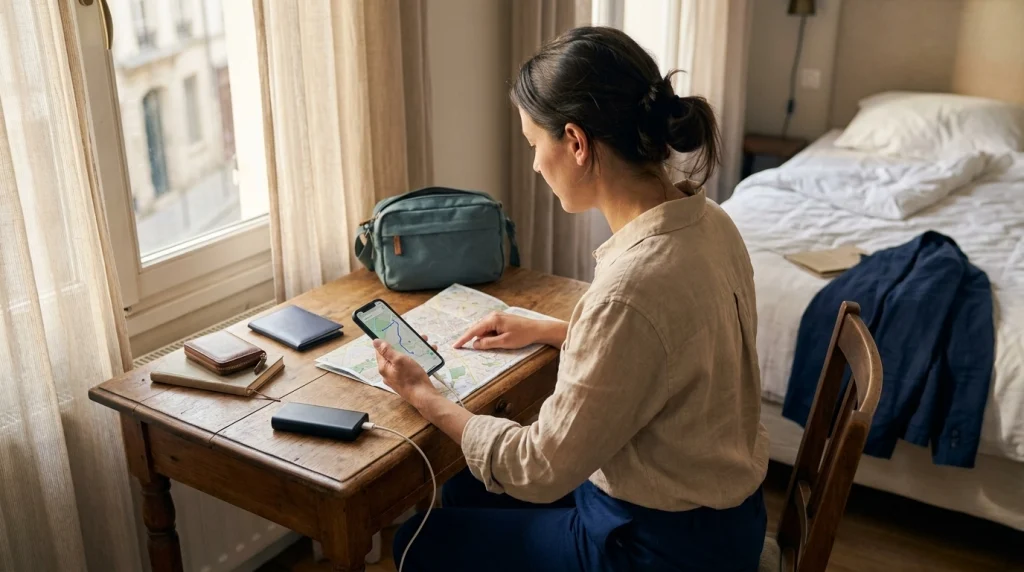
A woman traveling alone should begin each morning by checking her route, phone battery, essential belongings, transportation, and communication plan. Five focused minutes can prevent common problems later.
I like to treat this as part of getting ready. It belongs alongside breakfast and checking the weather.
1. Review your route and return plan
Before leaving, look at where you’re going and how you’ll return. Knowing the route is especially useful when mobile data disappears.
- Save your main destination and accommodation address.
- Download an offline map when possible.
- Check public transport schedules and service notices.
- Identify a suitable backup route.
- Check whether your return journey will happen after dark.
If I planned a sightseeing day in Lisbon, for example, I’d check the final transit connection before leaving. I wouldn’t assume the return service runs as frequently as it does during the day.
This is a planning example, not a warning about Lisbon. The same principle applies anywhere.
2. Check your phone and connectivity
Your phone may hold your maps, bookings, payment apps, and emergency contacts. Keeping it functional is an important daily safety habit.
- Charge your phone before leaving.
- Carry a compatible power bank when practical.
- Confirm your mobile data or roaming works.
- Save key addresses where you can access them offline.
- Keep essential numbers written down separately.
A phone that runs out of battery is often an inconvenience rather than an emergency. Still, it can make an unfamiliar journey harder.
3. Separate money and essential documents
Keep your main payment method and backup payment method in different secure places. Avoid taking every valuable item sightseeing.
Use accommodation storage where appropriate, and follow local identification requirements. Some destinations may require travelers to carry original identification.
- Carry enough accessible money for your expected daily expenses.
- Keep a backup card separate from your main wallet.
- Store protected digital copies of essential documents.
- Avoid showing large amounts of cash in public.
- Check that your bag closes securely before leaving.
The U.S. State Department recommends keeping copies of important travel documents in separate locations. Its guidance also encourages travelers to share copies with a trusted person.
4. Establish a practical check-in routine
Choose one trusted person who knows your general plans. Agree on a realistic check-in schedule before the trip.
A short evening message may be sufficient for an ordinary city visit. A remote hike or complicated transfer may justify more frequent contact.
Set a clear plan for missed check-ins. Your contact should know when to try calling and when to contact your accommodation or appropriate local services.
Avoid treating temporary signal loss as automatic evidence of danger. Agreeing on a reasonable response window reduces unnecessary alarm.
Section takeaway: A useful morning routine covers navigation, communication, money, and the journey home. Keep it short enough to repeat every day.
How Can Women Stay Safe While Exploring Alone?
Women can improve their safety while sightseeing by staying aware, protecting personal information, managing belongings, and choosing environments that fit their comfort level. These habits work best without constant anxiety.
Stay aware without watching everyone
Situational awareness means knowing what’s happening around you and recognizing when something changes. It doesn’t mean treating every stranger as suspicious.
When entering an unfamiliar area, notice the main streets, nearby businesses, transportation stops, and pedestrian activity. This gives you options if you want to change direction.
- Avoid becoming absorbed in your phone while crossing streets or navigating crowded areas.
- Step inside a café or shop when you need to study directions.
- Keep your bag positioned where you can monitor it.
- Pay attention when a location becomes unusually isolated.
- Adjust your route if local conditions or your comfort level change.
At a busy train station, I’d rather stop near an information desk than stand in the middle of a moving crowd checking directions. That small choice makes navigation easier.
Keep your accommodation details private
Protecting personal information matters as much as protecting cash. You don’t need to tell new acquaintances everything about your travel arrangements.
You can be warm and social while keeping specific details to yourself.
- Don’t casually share your hotel room number.
- Avoid revealing that nobody knows your whereabouts.
- Share your exact accommodation address only when necessary.
- Be cautious about posting your location in real time.
- Consider posting photos after leaving a location.
If someone asks where I’m staying and I prefer privacy, a general neighborhood is enough. I don’t owe a stranger my precise address.
How should you handle unwanted attention?
Unwanted attention may range from persistent conversation to harassment or threatening behavior. Your response should prioritize distance and access to help.
You don’t need to remain polite when a situation feels unsafe. Ending an interaction is a reasonable choice.
- Use short, clear boundaries without prolonged explanations.
- Move toward a staffed business or populated location.
- Avoid following strangers into isolated places.
- Ask identifiable staff or local authorities for assistance when appropriate.
- Call local emergency services if you face an immediate threat.
You can also enter a hotel lobby or open business and ask staff for support. There’s no need to prove that a situation is dangerous before seeking help.
Use social media and dating apps carefully
Online platforms can help solo travelers meet people, but they can also reveal sensitive information. Treat new online contacts as people you haven’t yet verified.
- Meet new acquaintances in suitable public places.
- Avoid sending your room number or confidential booking details.
- Tell a trusted contact about a planned meeting.
- Arrange your own transportation when possible.
- Leave if someone ignores your boundaries.
Meeting people can be one of the most rewarding parts of traveling alone. A little planning lets you enjoy that social side with more confidence.
Protect your physical health throughout the day
Personal safety includes staying healthy and physically able to make decisions. Fatigue, dehydration, and illness can make normal travel challenges more difficult.
The CDC’s guidance for staying healthy during travel covers hygiene, transportation, and other everyday precautions.
- Drink safe water regularly.
- Eat before you become exhausted or lightheaded.
- Wash your hands before meals.
- Take prescribed medicines as directed.
- Use sun, heat, and insect protection appropriate to your destination.
- Plan breaks during long sightseeing days.
I’d rather miss one attraction than continue walking when I’m too tired to think clearly. Rest is part of managing a trip well.
Section takeaway: Stay aware, keep personal information private, and protect your energy. Good judgment is easier when you have time and space to make decisions.
What Transportation Safety Habits Should Women Follow?
Women traveling alone should use legitimate transport services, verify pickup details, protect belongings, and plan their arrival. Transportation deserves extra attention because unfamiliar routes can limit your options.
Check a ride before entering the vehicle
When using an app-based ride service, compare the vehicle and driver details with your booking. Don’t enter merely because someone claims to be your driver.
- Confirm the registration number where the service provides one.
- Check the driver and vehicle against booking details.
- Use designated pickup areas when available.
- Follow the trip route on your own phone if practical.
- Use in-app trip sharing or emergency features when available.
- Leave or seek help before departure if important details don’t match.
When using a traditional taxi, follow local official guidance on licensed operators, fares, and pickup locations. App-based rides are not automatically safer in every destination.
Make public transportation easier to manage
Public transportation can be practical for solo travelers. The best choice depends on the city, route, service frequency, and current safety conditions.
Research local practices rather than relying on one rule for every country.
- Use official schedules and current service information.
- Keep bags secure in busy stations.
- Avoid displaying valuables unnecessarily.
- Choose staffed areas when you need assistance.
- Identify your stop before boarding.
- Have a backup plan for missed connections.
Some transit systems have women-only carriages or designated seating. These may be useful options where they exist, but availability and rules differ.
What changes when you’re traveling after dark?
After-dark travel calls for more route planning and closer attention to transport availability. Darkness alone doesn’t determine whether an area is safe.
Local activity, lighting, distance, and reliable transport matter more than the clock by itself.
- Check the last available train or bus before going out.
- Know where you can arrange a legitimate ride.
- Consider direct transportation instead of complicated transfers.
- Choose well-used pickup points when available.
- Keep enough battery and money for a change of plans.
For late arrivals, I favor an easy route over the cheapest possible route when the price difference fits my budget. Avoiding several uncertain transfers can reduce stress.
How do different transportation options compare?
No transportation option is always the safest. Compare the route, operator, time, and availability before making a choice.
| Transport option | Useful safety habit | Main limitation to check |
|---|---|---|
| App-based ride | Match driver, vehicle, and booking details. | Local service reliability and pickup rules. |
| Licensed taxi | Use recognized operators and official taxi stands. | Local licensing and fare practices. |
| Public bus or train | Plan stops, connections, and bag security. | Crowding, schedule gaps, and local conditions. |
| Walking | Choose suitable streets and monitor surroundings. | Traffic, isolation, lighting, and distance. |
| Prearranged transfer | Confirm the operator and meeting instructions. | Booking legitimacy and cancellation arrangements. |
Think of this table as a decision guide, not a universal safety ranking. A reliable train in one city may be preferable to a poorly regulated taxi elsewhere.
Section takeaway: Verify your ride, understand the route, and protect your ability to change plans. Reliable transportation is worth planning before you need it.
How Should Women Protect Themselves at Hotels and at Night?
Women traveling alone should check accommodation security, protect room details, secure doors, and plan evening transportation. These habits help turn an unfamiliar room into a more predictable place to rest.
Check the room before settling in
When entering a hotel room, I recommend a short security check before unpacking. It should take only a few minutes.
- Confirm the room door closes and locks properly.
- Check windows and accessible secondary entrances.
- Locate the nearest practical emergency exit.
- Review the hotel’s emergency instructions.
- Confirm you can reach reception or building staff.
- Request another room if there is a serious security concern.
Use the room’s existing security features according to the property’s instructions. Don’t block emergency exits or use improvised devices that could prevent a quick escape.
Keep room numbers and keys private
Hotel room numbers are personal information. Avoid announcing yours in a crowded lobby or sharing photos that reveal it.
If someone approaches claiming to represent the hotel, confirm their identity through reception before allowing entry. You can call the front desk using a verified number.
For guesthouses or short-term rentals, check emergency access and communication arrangements. Not every property has an on-site receptionist.
Make an evening return plan
Before heading out for dinner or entertainment, decide how you’ll return. Confirm that your preferred transportation remains available at the expected time.
- Save your accommodation address offline.
- Charge your phone before leaving.
- Check the area’s current transport options.
- Carry a backup payment method.
- Tell a trusted contact if your plans change substantially.
- Set a personal limit for alcohol if you choose to drink.
Keep control of your drinks and food, and avoid accepting opened drinks from strangers. If you suspect drink tampering, move to safety and seek urgent medical help.
What if the accommodation feels unsafe?
You don’t have to stay somewhere that presents a credible safety concern. A broken room lock, threatening behavior, or serious access problem deserves attention.
Contact management when doing so is safe, and request a suitable alternative. If the problem can’t be resolved, consider moving to another legitimate accommodation.
For an immediate threat, leave the area when safe and contact local emergency services. Your immediate safety matters more than protecting a booking payment.
What Should You Do When Something Feels Unsafe?
If something feels unsafe, prioritize getting to a safer location, contacting appropriate help, and avoiding unnecessary confrontation. You don’t need to wait for absolute proof of danger before leaving an uncomfortable situation.
Know when to leave and ask for help
A useful warning sign is behavior that crosses your boundaries or reduces your freedom to leave. Examples include persistent following, threats, or attempts to isolate you.
Move toward a populated, staffed place when that is safer than remaining where you are.
- Enter an open business or hotel lobby when appropriate.
- Ask staff for help arranging legitimate transportation.
- Call local emergency services if danger is immediate.
- Contact a trusted person after reaching safety.
- Avoid returning alone to confront someone who threatened you.
If robbery occurs, prioritize physical safety over property. Don’t escalate a violent confrontation to recover replaceable belongings.
Keep emergency information available offline
Emergency numbers differ by destination. Save the correct numbers before arrival rather than assuming your home country’s emergency number will work.
For international trips, prepare the following details:
- Local police, ambulance, and fire emergency numbers.
- Your accommodation’s address and contact information.
- The nearest appropriate medical facility.
- Your travel insurer’s emergency assistance number.
- Your country’s embassy or consulate contact details.
- A trusted person’s telephone number.
Eligible U.S. travelers can also use the Smart Traveler Enrollment Program, or STEP, to receive embassy alerts. Other nationalities should check whether their government provides a similar service.
The U.S. State Department’s travel planning resources explain advisory checks, emergency preparation, and available assistance for U.S. citizens.
What if you lose your phone, wallet, or passport?
Losing something important can feel frightening when nobody is traveling beside you. A prepared backup plan makes the next steps more manageable.
- Lost phone: Use a trusted device to contact your emergency person and secure important accounts.
- Lost wallet: Contact your card providers and use your separately stored backup funds.
- Lost passport: Contact your country’s embassy or consulate for replacement instructions.
- Lost room key: Ask accommodation staff to deactivate or replace it.
- Lost medication: Seek professional medical or pharmacy guidance about a lawful replacement.
Never assume that a photocopy can replace an original passport for border crossing. Follow your embassy’s official document procedures.
Prepare for medical problems before they happen
Medical emergencies require a separate plan because insurance coverage and healthcare access vary between destinations. Check your policy before departure.
The CDC’s guidance on getting healthcare during travel recommends arranging access to care and reviewing insurance protection.
Some insurance policies exclude certain activities or have separate evacuation conditions. Read those exclusions before relying on coverage.
For nonurgent health concerns, contact an appropriate medical professional. For severe symptoms or immediate danger, seek emergency medical assistance.
Pro tip: Verify emergency numbers, healthcare arrangements, and current destination advisories through official government sources. Don’t rely solely on a travel blog or an outdated saved screenshot.
How can you manage panic or travel anxiety?
Feeling nervous doesn’t automatically mean you’re in danger. First check whether there is a specific, immediate safety concern.
If there is no apparent threat, move somewhere comfortable and reduce the number of decisions you need to make.
- Stop and sit somewhere appropriate.
- Drink water and eat if needed.
- Check your phone battery and location.
- Contact someone you trust.
- Cancel optional activities until you feel ready.
You don’t have to complete every item on your itinerary. Choosing rest can be a practical decision.
Section takeaway: Have a plan for threats, document loss, health problems, and communication failures. Preparation makes it easier to take the next useful action.
What Is a Simple Daily Solo Travel Safety Checklist?
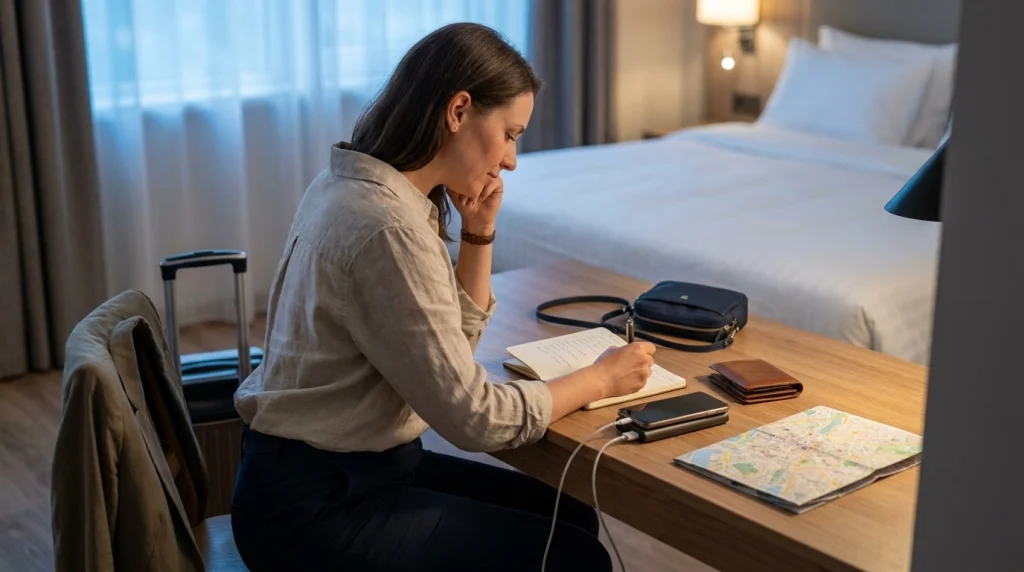
A good daily solo travel safety checklist should cover the morning, time spent exploring, transportation, and the evening. It should be realistic enough to use even on a busy travel day.
Here’s a routine I recommend adapting to your destination and personal needs.
Morning: Five-minute safety check
- Check today’s itinerary and local conditions.
- Review navigation and your return route.
- Charge your phone and pack essential power accessories.
- Confirm your main and backup payment options.
- Secure important documents and valuables.
- Send your planned check-in details when needed.
During the day: Stay aware and flexible
- Keep belongings secure in crowds.
- Check directions from a suitable stopping place.
- Avoid sharing sensitive information with strangers.
- Eat, hydrate, and take breaks.
- Verify transportation details before boarding.
- Change plans when circumstances justify it.
Evening: Finish the day safely
- Confirm your return transportation.
- Message your trusted contact as agreed.
- Lock the accommodation door and secure valuables.
- Charge your devices.
- Review the next day’s essential plans.
- Get enough rest for the following day.
How much preparation is enough?
You don’t need an elaborate security system to travel alone. Focus on the habits that solve likely problems in your particular destination.
For example, a three-day city break might require a saved hotel address, reliable transport, and one daily check-in. A remote trekking trip calls for more detailed route and emergency arrangements.
The right amount of preparation changes with your activities. Simpler isn’t careless when it still covers the important risks.
What safety habits should women avoid overdoing?
Some precautions can become counterproductive when they consume your attention or create new problems. Safety planning should support your trip, not dominate it.
- Constant location sharing: Share with trusted people when useful, not publicly or with casual acquaintances.
- Carrying every document: Keep originals accessible when required, but don’t carry unnecessary valuables everywhere.
- Excessive checking: Use a planned routine instead of repeatedly reviewing the same information.
- Overcomplicated routes: Prefer manageable journeys over unnecessary transfers.
- Ignoring fatigue: Reduce your itinerary when you need rest.
My favorite travel safety habits are almost invisible once they become routine. They take little effort but leave more room for enjoyment.
Section takeaway: Check your essentials in the morning, stay adaptable during the day, and secure your accommodation at night. Repeat the routine without turning every moment into a safety assessment.
Frequently Asked Questions
What is the most important safety habit for a woman traveling alone?
The most important habit is maintaining awareness while keeping practical backup options. Know where you’re going, how you’ll return, and whom to contact for help. This approach supports safer decisions without requiring constant suspicion or fear.
Should women traveling alone share their location every day?
Sharing your location with a trusted person can be useful, especially during complicated journeys. It doesn’t need to be continuous for every traveler. Agree on suitable check-ins, protect access to your location, and avoid posting your precise movements publicly.
Is it safe for a woman to walk alone at night while traveling?
Nighttime walking safety depends on the specific location, route, lighting, traffic, and current conditions. Research local guidance before deciding. If a route is isolated or unfamiliar, reliable transportation may be a better choice than walking.
How can a woman protect her money while traveling alone?
Carry only the money you need for your activities and keep a backup payment method separately. Use secure storage, avoid displaying large amounts of cash, and monitor transactions. Keep protected copies of important financial and travel information.
What should a solo female traveler do if someone follows her?
Move toward a populated, staffed location and ask for assistance. Avoid leading the person to your accommodation. If the behavior continues or becomes threatening, contact local emergency services. Prioritize getting somewhere safe rather than confronting the person.
Should women avoid talking to strangers when traveling alone?
No. Meeting new people can be a rewarding part of solo travel. Use reasonable boundaries, choose appropriate meeting places, and protect sensitive details. You can enjoy conversations without sharing your accommodation address, exact schedule, or private contact information.
How can a first-time solo traveler feel more confident about safety?
Start with a manageable destination, research transportation, and practice simple daily routines. Save emergency contacts and arrange check-ins with someone you trust. Confidence often grows as you handle ordinary travel decisions and learn that plans can be adjusted.
Final Thoughts: Make Safety a Habit, Not a Fear
Traveling alone as a woman doesn’t mean you must expect something bad to happen. It means taking responsibility for your plans while giving yourself permission to enjoy the journey.
The strongest safety routines are simple: check your route, protect personal details, verify transport, stay connected, and know how to get help. Repeat them until they feel natural.
You don’t need to feel fearless before taking a solo trip. You need preparation, flexibility, and confidence in your ability to make thoughtful decisions.
Before your next solo adventure, save this daily safety checklist and choose five habits you’ll practice every day. Small, consistent actions can make independent travel feel more manageable and enjoyable.