How Should a Woman Carry Valuables While Traveling Alone?
Quick Answer
A woman traveling alone should carry valuables in a secure, zipped crossbody bag worn in front of her body, while keeping backup money, cards, and important documents in separate locations. Never place everything in one wallet or bag. Follow destination-specific official travel safety advice before deciding what to carry each day.
Six Smart Ways to Protect Valuables
- Secure crossbody bag: Choose strong straps, reliable zippers, and compartments that stay close to your body.
- Separate payment methods: Keep your main card and backup card in different places.
- Carry limited cash: Bring enough for immediate expenses without exposing your entire travel budget.
- Protect your passport: Carry the original when required and otherwise store it securely when appropriate.
- Secure your phone: Keep it accessible for navigation without leaving it exposed or unattended.
- Prepare emergency backups: Store document copies, emergency contacts, and backup funds separately.
The Most Important Rule
- Avoid one point of failure: Losing one bag should never mean losing every way to pay, communicate, identify yourself, or reach your accommodation.
One of the first things I think about when planning a solo trip is where I’ll keep my passport, money, and phone. These small decisions can make an unfamiliar city feel easier to navigate.
Knowing how a woman should carry valuables while traveling alone isn’t about buying expensive security gear. It’s about building practical habits that protect your belongings without distracting you from the trip.
In This Guide
- What Is the Safest Way to Carry Valuables When Traveling Alone?
- Where Should You Keep Your Passport, Cash, and Credit Cards?
- How Can You Protect Valuables in Crowded Places?
- Should You Leave Valuables in Your Hotel or Carry Them?
- Which Travel Security Accessories Are Worth Using?
- What Should You Do If Your Valuables Are Lost or Stolen?
- Frequently Asked Questions
What Is the Safest Way to Carry Valuables When Traveling Alone?
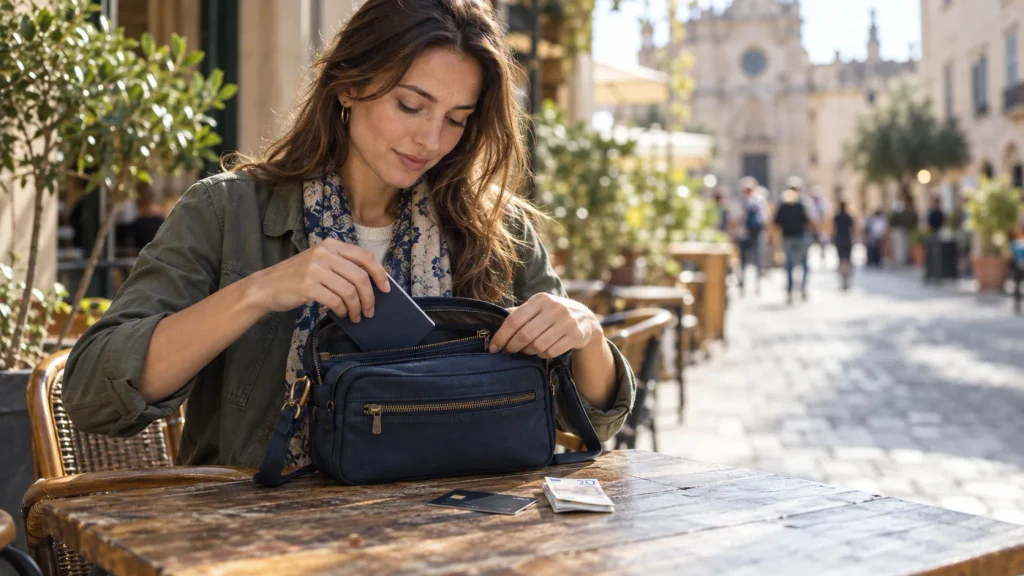
The safest everyday approach is to keep essential items in a secure bag you control and divide your backups elsewhere. Your best setup depends on your destination, clothing, activities, and accommodation.
For city sightseeing, I prefer a compact crossbody bag over a large handbag. It keeps the basics organized and makes it easier to notice anyone approaching the bag.
Travel valuables security means organizing money, identification, electronics, and irreplaceable belongings to reduce theft, accidental loss, and the impact of an emergency.
Why a Crossbody Bag Is Often the Best Choice
A crossbody bag with a sturdy strap and reliable zipper offers a useful balance of comfort and control. Wear it across your torso, with the main compartment toward your front in crowded areas.
The bag shouldn’t swing behind you when walking or boarding transportation. Adjust the strap until you can reach the zipper without removing the bag.
- Zipped compartments: Reduce the chance of belongings falling out or being reached unnoticed.
- Adjustable strap: Keeps the bag close without restricting movement.
- Lightweight construction: Makes long sightseeing days more comfortable.
- Organized interior: Prevents unnecessary searching for money or identification.
- Durable attachment points: Reduce the chance of a strap connection breaking during ordinary use.
Cut-resistant materials can provide another barrier against some theft methods. They don’t make a bag impossible to steal.
Crossbody Bag vs. Backpack vs. Money Belt
Different carrying methods solve different problems. I wouldn’t use the same setup for a busy market, a mountain hike, and a quiet museum.
| Carrying Method | Best Use | Main Advantage | Main Limitation |
|---|---|---|---|
| Zipped crossbody bag | City sightseeing | Easy access and visibility | Can still be grabbed |
| Small front-worn sling | Transit and crowds | Close control of essentials | Limited capacity |
| Concealed money belt | Backup cash and documents | Less visible storage | Awkward for frequent access |
| Lockable daypack | Hiking and longer outings | More carrying space | Harder to monitor behind you |
| Interior jacket pocket | Small valuables | Discreet and convenient | Depends on clothing and closure |
Why You Should Avoid Keeping Everything Together
Imagine arriving at a train station and discovering your handbag is missing. If it held every card, your phone, passport, and cash, recovering becomes much harder.
I plan my valuables around this exact possibility. One missing item shouldn’t prevent me from getting back to my accommodation.
My recommended three-location system is simple:
- Daily-access storage: Your phone, one payment card, and a modest amount of spending cash.
- Secure backup storage: Another payment method, reserve cash, and documents you don’t need that day.
- Separate recovery information: Secure copies of documents, emergency contacts, and account recovery details.
Don’t rely on hidden pockets alone. A bag left unattended is still vulnerable, no matter how cleverly its compartments are designed.
Section Takeaway: Choose a practical, body-controlled bag and divide irreplaceable essentials. Preventing one loss from becoming a complete travel emergency matters more than owning expensive gear.
Where Should You Keep Your Passport, Cash, and Credit Cards?
Carry only the documents and payment methods you need for your current activity. Keep backup resources separate and accessible if your primary wallet disappears.
This is especially important on international solo trips. You may need identification and money to replace transportation or accommodation unexpectedly.
Should You Carry Your Passport Everywhere?
Not necessarily. Some destinations require visitors to carry original identification, while others accept copies in certain situations.
Before leaving the hotel, check the relevant identification rules. Never assume a passport photograph satisfies a legal requirement.
- Original passport: Carry it securely when required for identification, transport, accommodation, or border procedures.
- Paper photocopy: Keep a separate copy of the identification page for reference.
- Digital copy: Store an encrypted or otherwise access-controlled version for emergencies.
- Secure storage: When legally appropriate, keep the original in a suitable accommodation safe or locker.
A hotel safe isn’t a guarantee against theft or loss. Review your accommodation’s security arrangements and use your judgment.
For country-specific rules, I check official information before departure. The UK government’s foreign travel advice is one useful reference.
How Much Cash Should a Solo Female Traveler Carry?
Carry enough for foreseeable daily purchases and an unexpected transport expense. The amount depends on whether your destination relies mainly on cards or cash.
For example, a traveler with an estimated $40 daily budget might carry $30–$60 in local currency. That’s a planning example, not a universal recommendation.
In a cash-heavy destination, you may need more. Research card acceptance, ATM access, and local transport payment methods beforehand.
- Keep small bills in an easy-access compartment.
- Use a separate pocket for larger notes.
- Avoid counting large amounts of cash publicly.
- Withdraw money at suitable, well-monitored ATMs when possible.
- Keep emergency funds away from your daily wallet.
When paying in a busy area, prepare your money before reaching the counter. That reduces the time your wallet stays open.
How Should You Carry Debit and Credit Cards?
Keep your everyday card separate from your backup card. If possible, use cards from different accounts or payment networks.
I also recommend checking international fees and withdrawal limits before travel. A card that works perfectly at home may face restrictions abroad.
- Primary card: Keep in your daily-access bag.
- Backup card: Store securely away from your main wallet.
- Bank contacts: Save instructions for freezing cards.
- Payment alerts: Enable transaction notifications when available.
- Digital payments: Set them up before departure, but don’t rely on them exclusively.
As of 2026, many travelers use phones for payments and banking. That convenience makes independent account recovery especially important.
Make sure you can contact your bank even if your phone disappears. A trusted contact or securely stored backup details can help.
Section Takeaway: Carry essential spending money and one payment method, then secure the backups separately. Research passport rules and local payment habits before deciding what belongs in your daily bag.
How Can You Protect Valuables in Crowded Places?
Protecting valuables in public starts with awareness, controlled access, and sensible bag placement. Busy transportation hubs and tourist attractions deserve extra attention.
I don’t believe in treating every stranger as suspicious. I do believe in making my important belongings harder to reach unnoticed.
On Trains, Buses, and Public Transportation
Public transportation often creates moments when people stand unusually close together. Boarding, sudden stops, and luggage handling can divide your attention.
Before entering a crowded vehicle, I would make these adjustments:
- Move your crossbody bag to your front.
- Close every important zipper.
- Keep your phone away from doors and open windows.
- Avoid leaving a handbag on an empty seat.
- Keep small valuables in your personal possession rather than checked luggage.
- Follow operator safety rules when placing luggage in racks or storage areas.
On overnight transport, don’t assume a bag beside your sleeping position is secure. Use appropriate locks or approved storage when available.
At Markets, Attractions, and Busy Streets
Crowds can make it difficult to notice small movements near your belongings. Pay particular attention when someone interrupts you unexpectedly.
Common situations worth preparing for include:
- Distraction: Someone draws your attention while another person approaches your bag.
- Crowded entrances: People press together at ticket gates or popular viewpoints.
- Unsolicited assistance: A stranger insists on handling your luggage or wallet.
- Open bags: Phones and wallets remain visible near the top.
- Outdoor dining: Bags hang loosely from chairs or sit on public-facing tables.
A simple change helps at restaurants. Keep your bag zipped, attached to your person when practical, and out of easy reach.
How Should You Use Your Phone Safely?
Your phone may be your map, ticket wallet, translator, and emergency contact system. Losing it can disrupt several travel plans at once.
I like checking the next few turns on a route before leaving a café or station. That reduces the need to stand near traffic while looking at a screen.
- Download offline maps before exploring unfamiliar areas.
- Use a secure screen lock and available device-tracking features.
- Consider a wrist strap or tether where appropriate.
- Keep the phone out of sight when not using it.
- Save important addresses somewhere outside the phone.
A phone tether may help prevent accidental drops. It cannot guarantee protection from forceful theft and could create an injury risk if pulled.
For UK travelers, the Foreign, Commonwealth & Development Office publishes destination-specific security information. Check official warnings about street theft and transportation before traveling.
Section Takeaway: Protect your valuables most carefully during transitions and distractions. Keep essential items secured without allowing constant worry to control the experience.
Should You Leave Valuables in Your Hotel or Carry Them?
Leave nonessential valuables in secure accommodation storage when appropriate, but carry what you genuinely need. The right choice depends on the accommodation’s security and local identification rules.
I wouldn’t take a second bank card, expensive jewelry, and every important document on an ordinary sightseeing walk. Carrying more creates more opportunities for loss.
How to Secure Valuables in a Hotel Room
Inspect your room’s storage options before unpacking. Confirm that the door locks properly and that any safe functions as expected.
- Use an appropriate room safe or hotel-managed secure storage.
- Check that the safe locks and opens correctly.
- Keep valuables away from windows and public view.
- Don’t leave money or documents loose on furniture.
- Ask hotel staff about security arrangements when uncertain.
- Check insurance limitations for unattended valuables.
Hotel safes can fail or be accessed by authorized personnel. Think of them as one security measure, not complete protection.
What About Hostels and Shared Accommodation?
In shared accommodation, a lockable personal locker is particularly useful. Confirm locker availability before booking rather than assuming it’s included.
Bring a compatible padlock if the property requires one. Some lockers use built-in electronic locks instead.
Don’t leave your passport or wallet on a shared-room bed while showering. Shared spaces make it harder to monitor belongings continuously.
Should You Travel With Expensive Jewelry?
For most leisure trips, leaving irreplaceable jewelry at home is simpler. The emotional cost of losing a sentimental item may exceed its financial value.
When choosing accessories, I favor pieces that are comfortable and replaceable. I don’t want to spend a museum visit thinking about an expensive necklace.
Travel insurance may limit jewelry coverage or require special documentation. Review exclusions and claim conditions before packing valuable items.
**Section Takeaway:** Secure storage and thoughtful packing reduce the number of valuables exposed each day. Avoid carrying anything expensive simply because you brought it on the trip.
Which Travel Security Accessories Are Worth Using?
The most useful accessories address a specific weakness in your travel routine. You don’t need a suitcase full of security devices to protect everyday essentials.
I would choose comfort and reliable construction before buying features that sound impressive but are awkward to use.
Anti-Theft Crossbody Bags
An anti-theft bag may include lockable zipper pulls, reinforced straps, or protective fabric. These features can discourage opportunistic theft but don’t eliminate risk.
Before buying one, check its weight, zipper access, and carrying comfort. A secure bag is only useful if you’ll actually wear it correctly.
Concealed Money Belts and Hidden Pouches
A concealed money belt sits beneath clothing and holds compact valuables. It works best for backup cash or documents you don’t need frequently.
Don’t repeatedly reveal its location in public. Use your everyday wallet for small purchases instead.
Consider comfort in hot climates. Sweat, bulky clothing, and frequent access can make some designs impractical.
Small Travel Locks
A compact padlock can help secure compatible hostel lockers or luggage compartments. A lock mainly discourages casual interference.
Don’t assume any luggage lock makes a bag theft-proof. Fabric, zippers, and unattended luggage remain vulnerable.
Bluetooth Trackers
A Bluetooth tracker can help locate misplaced luggage or compatible belongings. Its performance depends on the tracking network, battery, and nearby devices.
Trackers don’t physically prevent theft or guarantee live location updates. Never confront a suspected thief based on a tracking signal.
Which Security Gear Should You Prioritize?
For a first solo trip, I’d focus on these essentials before buying specialty products:
- A comfortable zipped crossbody bag.
- A small backup wallet or concealed pouch.
- A suitable lock for shared accommodation storage.
- Secure digital document backups.
- A practical phone-charging setup.
For travel insurance considerations, review official Consumer Financial Protection Bureau financial guidance alongside the actual terms from your bank and insurer.
Always check exclusions concerning unattended baggage, cash, electronics, and valuables. Coverage varies considerably between policies.
Section Takeaway: Start with a reliable carrying system rather than expensive accessories. A comfortable bag, divided backups, and sound habits usually provide the greatest everyday benefit.
What Should You Do If Your Valuables Are Lost or Stolen?
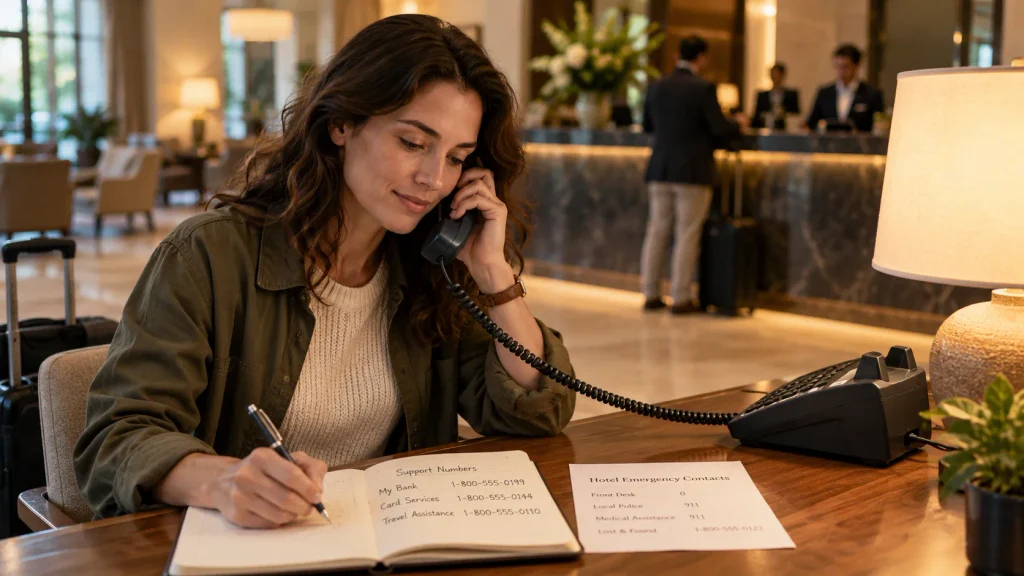
If your valuables disappear, prioritize personal safety, then secure financial accounts and replace essential documents. A prepared recovery plan helps you act without relying on memory under stress.
Most importantly, don’t chase or physically confront someone who steals your belongings. Move to a safer location and request assistance.
First Steps After Losing Your Wallet or Bag
I recommend following a clear order rather than trying everything at once.
- Get somewhere safe: Enter a staffed hotel, shop, transportation office, or another appropriate public location.
- Check what is missing: Confirm whether you’ve lost identification, money, cards, keys, or electronics.
- Freeze payment cards: Contact financial providers through official apps or phone numbers.
- Secure digital accounts: Lock or erase a missing device remotely when supported and appropriate.
- Report theft: Contact local police through the proper channel and request documentation when possible.
- Contact accommodation: Arrange a safe return and replace compromised room access if necessary.
- Notify your insurer: Ask about reporting deadlines and required evidence.
Save your bank’s emergency contact information before traveling. A stolen phone may also remove access to your usual banking app.
What If Your Passport Is Stolen?
A missing passport may require both a police report and contact with your country’s embassy or consulate. Replacement procedures depend on your nationality and destination.
Keep a separate passport copy and evidence of your travel plans. These may help officials establish your identity and determine replacement options.
U.S. citizens can review the U.S. Department of State’s international travel resources for passport and consular assistance.
Pro tip: Before departure, identify your embassy or consulate and the local emergency numbers. Recheck details through official government websites because procedures can change.
How to Prepare an Emergency Recovery Kit
A recovery kit doesn’t need to be a physical pouch. It can combine secure digital records with a small paper backup.
- Passport information and an appropriately secured copy.
- Travel insurance policy number and support contact.
- Bank card cancellation numbers.
- Accommodation address and reservation details.
- Emergency contact information.
- Local police and emergency service numbers.
- Embassy or consulate contact details.
- Access to emergency funds through a separate method.
Protect these records from unauthorized access. Never store passwords, security codes, or full payment-card details in an unsecured document.
A Simple Five-Minute Valuables Check
Before leaving accommodation, I recommend a quick repeatable check. Consistency catches small packing mistakes before they become major problems.
- Phone: Charged, locked, and accessible.
- Wallet: Daily card and suitable cash included.
- Identification: Correct document for today’s activities.
- Bag: Zippers closed and straps secure.
- Backups: Reserve money and documents stored separately.
- Return plan: Accommodation address and safe transport options available.
This habit is useful before long train journeys, airport transfers, and busy sightseeing days. It takes little effort once it becomes routine.
Section Takeaway: Plan for recovery as carefully as prevention. Separate payment methods, secure document copies, and official emergency contacts give you practical options when something goes wrong.
Frequently Asked Questions
What is the safest bag for a woman traveling alone?
A compact, zipped crossbody bag is a practical choice for everyday sightseeing. Choose a sturdy adjustable strap and organized compartments, then wear it where you can monitor access. For crowded streets, keep it toward your front.
Is a money belt safer than a crossbody bag?
A concealed money belt can be useful for emergency cash and important documents. A crossbody bag is usually more convenient for daily purchases. Using each for a different purpose can offer better protection than relying on either one exclusively.
Should I carry my passport or leave it at the hotel?
Check your destination’s identification requirements first. Carry the original when law or travel arrangements require it. Otherwise, suitable secure accommodation storage may reduce everyday loss risk. Keep a separate copy, but don’t assume it replaces valid identification.
How can I prevent pickpocketing while traveling alone?
Close your bag, wear it in front in crowded locations, and keep your phone and wallet out of easy reach. Pay special attention when boarding transportation or handling luggage. Avoid displaying large amounts of cash in public.
Is it safe to carry valuables in a backpack?
A backpack can be suitable for hiking, transportation, and everyday travel. However, its rear compartments may be difficult to monitor in crowds. Keep essential valuables in secured interior compartments, and move the bag forward when appropriate.
Should I use a phone tether while traveling alone?
A phone tether may help prevent accidental drops and some opportunistic grabbing attempts. However, it is not theft-proof and may create a pulling hazard during forceful theft. Use it only when comfortable and appropriate for the environment.
What should I do if someone tries to steal my bag?
Prioritize your physical safety rather than protecting possessions. Don’t resist a violent robbery or chase a thief. Move to safety, contact local emergency services, secure financial accounts, and report the incident through official channels.
Final Thoughts: Carry Less, Separate More, and Stay Prepared
Learning how to carry valuables while traveling alone is mostly about making thoughtful decisions before leaving your room. A reliable bag, separated backups, and an emergency plan can significantly reduce the inconvenience of losing something important.
For my own solo-travel planning, I focus on keeping essentials accessible without carrying everything at once. I want to enjoy the city, not spend the day checking my handbag.
Start with the bag you already own, review its weak points, and build a simple valuables routine. You’ll be better prepared to explore independently while keeping your attention on the experience.