What Should a Solo Female Traveler Do If a Stranger Follows Her?
Quick Answer
If a stranger follows you while traveling alone, stay calm, move toward a busy public place, and ask someone for help. Do not return to your hotel, enter a quiet alley, or confront the person. If you feel threatened, call the local emergency number immediately. You can also review the U.S. State Department’s emergency assistance guidance before traveling abroad.
Six immediate safety steps
- Stay aware: Notice the person’s movements without staring or provoking them.
- Find people: Enter a staffed shop, café, hotel lobby, or another busy location.
- Avoid isolation: Stay away from deserted streets, stairwells, and unfamiliar shortcuts.
- Ask directly: Tell an employee or security officer that someone may be following you.
- Call for help: Contact local emergency services if you believe you are in danger.
- Stay somewhere safe: Wait until the situation is resolved before continuing your journey.
Remember: You do not need proof that someone is following you before taking reasonable steps to protect yourself.
One of the most unsettling moments in solo female travel is realizing that someone might be following you. Even a familiar-looking street can suddenly feel uncomfortable.
I’ve always believed that a personal safety plan matters more than trying to appear fearless. This guide explains how to recognize concerning behavior, respond safely, and get help without making a tense situation worse.
In This Guide
How Can You Tell If Someone Is Following You?
You may suspect someone is following you when their movements repeatedly match yours across different streets or locations. One coincidence doesn’t prove anything, but repeated behavior deserves attention.
Start by noticing what happens around you. Avoid becoming so focused on the stranger that you lose track of traffic, nearby exits, or other people.
Recognize behavior that may signal a problem
Someone walking behind you isn’t automatically dangerous. Busy tourist areas naturally bring strangers onto the same routes.
However, certain behaviors can create a stronger reason for concern:
- Repeated direction changes: The person continues behind you after several natural turns.
- Uncomfortable proximity: Someone repeatedly moves close despite available walking space.
- Unwanted approaches: The person keeps attempting conversation after you clearly decline.
- Unusual waiting: Someone remains nearby whenever you stop, then moves when you leave.
- Blocked movement: The person steps into your path or tries to prevent you from leaving.
- Persistent surveillance: Someone appears to watch your movements across multiple locations.
None of these signs alone proves criminal intent. Your goal is to recognize a possible risk and reach a safer location.
How can you check without putting yourself at risk?
If you’re in a populated area, you can make one ordinary change in direction toward a staffed business. Observe whether the person continues without deliberately provoking them.
For example, imagine walking through a busy shopping district after dinner. You notice the same stranger behind you through two intersections.
Instead of entering an empty side street, you turn toward a well-lit café. That decision gives you people, witnesses, and a place to request assistance.
Avoid creating elaborate tests, repeatedly circling blocks, or stopping somewhere isolated to confirm your suspicion. Safety matters more than certainty.
Trust your discomfort without assuming the worst
Solo travel requires balancing caution with an open mind. Most strangers you encounter will have ordinary reasons for being nearby.
Still, you don’t owe anyone an explanation for choosing a safer route. You can enter a store, contact someone, or request help whenever you feel uncomfortable.
Section Takeaway: Focus on patterns of behavior, not someone’s appearance. If you’re uncertain, move toward people rather than trying to prove you’re being followed.
What Should You Do Immediately If a Stranger Follows You?
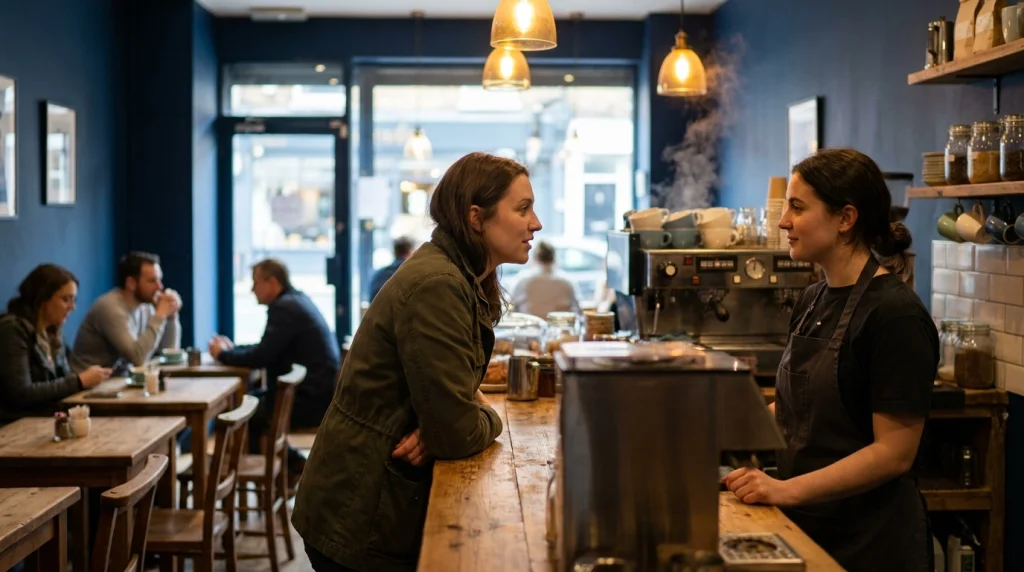
If someone appears to be following you, your first priority is reaching a safe location with other people. Avoid confrontation and contact emergency services when the situation feels threatening.
I think about this as a simple sequence: notice, move, ask, and report. Having those actions in mind can reduce hesitation.
Step 1: Move toward a busy, staffed location
Look for the nearest place where employees or security personnel can assist you. A staffed location offers more practical support than merely standing on a crowded sidewalk.
Good options include:
- A hotel lobby with reception staff
- A busy restaurant or café
- A pharmacy or convenience store
- A staffed transit station
- A hospital reception area
- A police station, if safely accessible
Choose the safest nearby option rather than walking a long distance toward an unfamiliar police station. Keep yourself near visible staff and other customers.
Step 2: Avoid revealing your accommodation
Do not automatically return to your hotel, rental apartment, or hostel. Someone following you could discover where you’re staying.
If your hotel is already the closest staffed, secure location, entering its public reception area may still be appropriate. Ask staff for help instead of heading directly to your room.
Don’t lead the person through quiet residential streets or into a private building simply to escape attention.
Step 3: Tell someone exactly what is happening
You don’t need a detailed explanation. A clear request is more useful when you’re nervous.
Try saying:
“I think someone has been following me. I don’t feel safe going outside. Could you help me contact security or the police?”
If the person is nearby, quietly point them out when you can do so safely. Ask the employee to remain with you or call a supervisor.
You can also request a safe waiting area, but avoid entering an isolated back room with an unfamiliar person.
Step 4: Call emergency services when necessary
Call the local emergency number if someone threatens you, blocks your escape, attempts physical contact, or continues pursuing you. You don’t need to wait for an assault.
When speaking to an operator, provide:
- Your current location or nearest recognizable landmark
- A simple description of the person
- What the person has done
- Whether they are still nearby
- Whether you have a safe place to wait
For example, you might say, “I’m a traveler inside a café near the central train station. A man followed me for several blocks.”
Then explain whether the person is outside or attempting to approach you. Follow the operator’s directions.
Step 5: Contact someone you trust
Once you’re somewhere safer, contact a trusted friend, family member, or travel companion. Tell them where you are and what happened.
Share your live location if your phone supports it. However, don’t let texting distract you from the immediate situation.
If you need transport, ask staff to help arrange a legitimate licensed taxi or verified ride. Check the vehicle details before entering.
Section Takeaway: Get to a staffed public location first. Ask for assistance, contact emergency services when threatened, and avoid revealing your accommodation.
What If Someone Follows You at Night, on Public Transport, or Near Your Hotel?
The safest response depends partly on your surroundings. A crowded train station offers different options from a quiet street after midnight.
The core rule stays the same: move toward available help without increasing your exposure.
If someone follows you while walking at night
At night, prioritize staffed businesses and active streets over shortcuts. Bright lighting helps visibility, but it doesn’t replace access to other people.
If you notice suspicious behavior:
- Stay on streets with open businesses and pedestrians.
- Don’t enter parks, underpasses, or empty parking structures.
- Keep your phone accessible without staring at the screen.
- Contact local emergency services if you feel in immediate danger.
- Ask nearby staff or security personnel for help.
Don’t feel obligated to continue a planned walking route. Changing your plans is a sensible response to changing circumstances.
If someone follows you on a bus or train
Move closer to staff, the driver, conductor, or other passengers if possible. Avoid moving into an empty carriage or isolated platform.
If the person follows you between carriages or repeatedly approaches you, alert transport personnel. Request assistance at a staffed station.
Don’t exit at an unfamiliar, deserted stop solely to test whether the person follows. Remain aboard or at a busy station when that is safer.
If someone follows your taxi or rental car
When driving, avoid going directly to your accommodation. Stay on major roads and travel toward a staffed, accessible location.
Do not speed, drive recklessly, or attempt to lose another vehicle through dangerous maneuvers. Contact local emergency services when safe, using hands-free calling if driving laws permit.
If you’re in a taxi or rideshare and suspect the driver is deliberately taking you somewhere unsafe, contact emergency services. Use the ride service’s safety features when available.
Do not attempt to jump from a moving vehicle. Prioritize safe opportunities to stop near other people.
If someone follows you near your hotel
Head toward the main reception desk rather than your room. Ask staff to contact security if the person enters or waits nearby.
If you believe your room number or access details have been exposed, request a room change or alternative accommodation. Ask whether staff can help arrange secure transport.
Don’t post your room number or live accommodation location on social media.
Which response fits your situation?
| Situation | Safer response | Avoid |
|---|---|---|
| Busy shopping street | Enter a staffed store or café. | Confronting the stranger. |
| Quiet street at night | Move toward people and call for help. | Taking isolated shortcuts. |
| Bus or train | Alert transport staff and remain visible. | Exiting at a deserted stop. |
| Driving a car | Continue safely toward a staffed location. | Speeding or driving home. |
| Near accommodation | Seek reception or security assistance. | Leading someone to your room. |
Section Takeaway: Different environments require different actions, but staffed public locations are usually preferable to isolated escape routes.
How Can You Get Help If You’re Being Followed in a Foreign Country?
When traveling abroad, contact local emergency services for immediate threats. Your embassy or consulate may provide additional support after you’re safe.
Language differences can make a frightening situation harder to explain. Prepare a few simple ways to request assistance before your trip.
Know the correct emergency number
Emergency numbers vary by destination. Don’t assume the number used at home will work in another country.
Examples include:
- United States: 911
- United Kingdom: 999 or 112
- European Union: 112
- Australia: 000
- Bangladesh: 999
Save the correct number before arrival and verify it through official government sources. Emergency-service coverage and language assistance differ by location.
Pro tip: Check the U.S. State Department travel advisories for destination-specific safety information and local emergency guidance.
What should you say if you don’t speak the local language?
Simple phrases can help you communicate under stress. Save a translated message in your phone’s notes before leaving your accommodation.
Useful English phrases include:
- “Someone is following me.”
- “I need help.”
- “Please call the police.”
- “I don’t feel safe outside.”
- “Can I wait here?”
A translation app can help when the situation allows. You can also show staff a written message instead of trying to explain everything aloud.
Keep emergency details available offline. Your mobile connection might fail when you need it.
Can your embassy help after a threatening incident?
Your embassy or consulate may help you understand local reporting procedures and identify appropriate support services. It generally cannot replace local police or provide immediate law enforcement protection.
For U.S. citizens, the State Department’s crisis guidance explains how to seek consular help during emergencies.
Travelers from other countries should contact their own embassy or consulate. Save those details alongside your accommodation information.
Should you report the incident after reaching safety?
Consider making a police report if the person threatened, touched, assaulted, harassed, or persistently pursued you. Report immediately when the danger continues.
If you can do so safely, write down:
- The approximate time and location
- The person’s clothing and visible features
- What happened and how long it continued
- Nearby businesses or possible witnesses
- Any relevant messages or other evidence
Don’t follow the person or return to the scene to collect evidence. Your safety is more important than getting a photograph.
If you experience an injury or assault, seek medical care and ask about local victim-support services.
Section Takeaway: Local emergency services should be your first contact during immediate danger. Embassies, accommodation staff, and trusted contacts can provide additional assistance afterward.
What Mistakes Should Solo Female Travelers Avoid When Being Followed?
The biggest mistake is prioritizing politeness, certainty, or your original itinerary over safety. You can take protective action before you’re completely sure what is happening.
Don’t confront the person just to get answers
Asking someone why they’re following you could escalate the situation. You cannot predict how an unfamiliar person will respond.
Move toward help instead. If the person approaches, use a firm, brief statement and keep moving toward safety when possible.
Don’t walk into an isolated location
An empty alley may look like a shortcut, but it can reduce access to assistance. The same applies to stairwells, deserted beaches, and quiet parking garages.
Choose visibility and staff support over speed whenever possible.
Don’t assume you must handle everything yourself
Traveling independently doesn’t mean refusing help. Hotel receptionists, shop employees, transport personnel, and police officers may provide practical support.
Ask clearly for what you need. You don’t have to apologize for being concerned.
Don’t become distracted by filming
Recording someone can sometimes preserve evidence, but openly filming may also escalate a confrontation. Never prioritize footage over reaching safety.
If documentation is appropriate, gather it only when doing so doesn’t increase your risk. Written notes made afterward can also be useful.
Don’t accept an unverified escape ride
A stranger offering transportation may seem helpful when you’re frightened. However, entering an unfamiliar vehicle can create a different safety problem.
Ask trusted staff to arrange licensed transport or use a verified service. Share the journey details with someone you trust when practical.
Don’t return outside too quickly
Someone leaving your immediate view doesn’t necessarily mean the situation has ended. Ask staff to help assess whether it is safe to leave.
When appropriate, wait for police, security assistance, or a verified ride before departing.
Section Takeaway: Avoid unnecessary confrontation, isolation, and risky shortcuts. Reaching help matters more than proving someone’s intentions.
How Can Solo Female Travelers Prepare for Unwanted Attention?
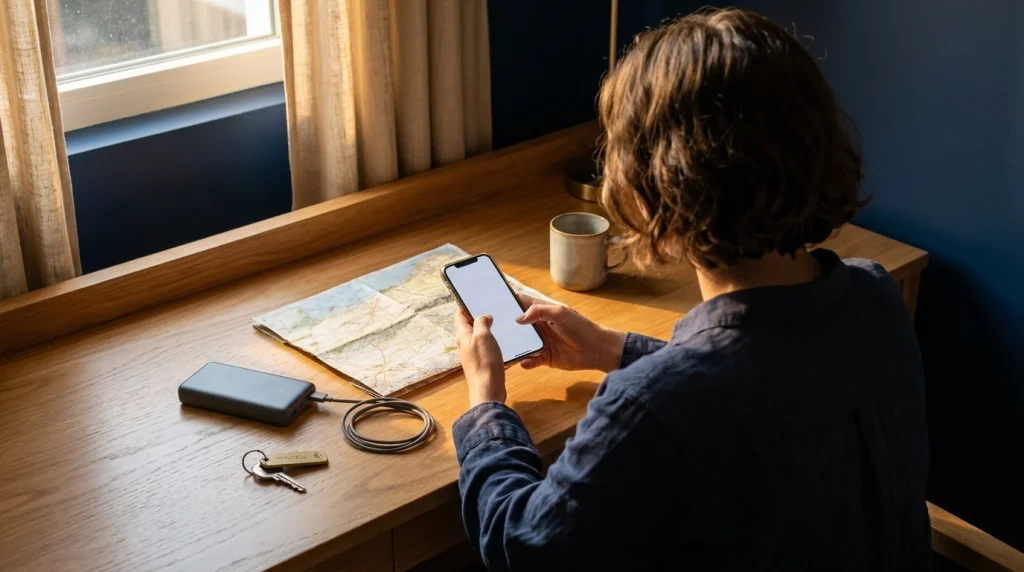
No preparation can guarantee that a stranger won’t behave threateningly. A good safety plan helps you respond faster and locate support when something feels wrong.
For me, the most practical preparation starts before leaving the hotel. I want to know where I’m going, how I’ll return, and whom I can contact.
Research your route before leaving
Check your destination, transportation options, and expected return route. Identify nearby staffed locations, especially if you’ll be out after dark.
When planning an evening outing, consider:
- Whether the route uses busy, accessible streets
- Whether public transport operates late
- Where you can find a staffed hotel or business
- How you’ll return if plans change
- Whether your phone will have mobile coverage
Use maps as guidance, not unquestionable instructions. The shortest route isn’t always the most suitable route for walking alone.
Keep important information accessible
Save essential details in your phone and maintain an offline backup. You may need them when mobile data is unavailable.
My recommended emergency information checklist includes:
- Local emergency telephone number
- Accommodation address and reception number
- Nearest appropriate police or emergency facility
- Embassy or consulate contact information
- Trusted emergency contact
- Relevant travel insurance assistance details
Use your phone’s emergency features if available. Learn how to trigger an emergency call without unlocking multiple applications.
Agree on a simple check-in plan
Tell a trusted person your general plans when appropriate. A check-in system can be useful during late arrivals or unfamiliar excursions.
For example, agree to send a message after returning from dinner. Decide in advance what your contact should do if you miss a check-in and cannot be reached.
For eligible U.S. travelers, the Smart Traveler Enrollment Program can also provide embassy alerts and emergency communication support.
Choose accommodation with practical safety features
Review recent guest feedback and consider the surrounding area, staffing, access control, and transport availability. A low room price alone shouldn’t decide where you stay.
Useful features include:
- Reliable reception or security support
- Controlled guest access
- Well-lit entrances and common areas
- Accessible transportation connections
- Clear emergency contact procedures
Ask accommodation staff how to obtain help after reception closes. This matters especially at properties with self-check-in.
Consider simple safety equipment
A charged phone and reliable communication plan are more useful than carrying numerous gadgets. Choose equipment that suits your destination and its laws.
Some travelers carry a personal alarm, small flashlight, or portable power bank. Check local restrictions before packing any defensive item.
Don’t rely on an alarm or app as your entire safety strategy. People, accessible exits, and emergency assistance remain essential.
Build confidence through preparation
Confidence doesn’t mean ignoring discomfort. It means recognizing when to change plans and knowing how to request assistance.
Before each new destination, I recommend a brief safety review:
- Save local emergency numbers.
- Check the area around your accommodation.
- Identify transportation options for late returns.
- Prepare a short emergency message.
- Make sure someone can contact you.
This routine doesn’t need to dominate your trip. A little preparation can make everyday decisions easier.
Section Takeaway: Plan routes, communication, and accommodation safety before going out. Preparation cannot remove every risk, but it gives you more options when circumstances change.
Frequently Asked Questions
Should I run if someone is following me?
Running may be appropriate if you’re facing immediate danger and have a clear route to safety. However, rushing into traffic or an isolated area can create additional hazards. Move quickly toward people or a staffed building, and call emergency services when necessary.
Should I turn around and confront someone who is following me?
Generally, avoid confronting someone merely to confirm your suspicion. An argument could escalate the situation. Instead, enter a public place, request assistance, and contact emergency services if the person’s behavior becomes threatening.
What if a stranger follows me into a store?
Approach an employee, manager, or security officer and explain your concern. Ask them to help contact police or security if needed. Stay near staff and other customers rather than leaving alone while the person remains nearby.
What if I don’t have mobile data or a working phone?
Go to a staffed business, hotel, or transport station and request help. Ask an employee to contact local emergency services if necessary. Keeping emergency numbers and accommodation details written down can also help when technology fails.
Should I tell the police even if nothing physical happened?
You can contact police when someone repeatedly follows, threatens, or harasses you, even without physical contact. Reporting requirements and available responses vary by location. Describe the behavior factually, including when and where it happened, and ask what assistance is available.
What if someone follows me near my hotel room?
Do not lead the person to your room. Return to a staffed reception or security area when possible and request assistance. If someone has learned your room number or attempted to access your room, ask management about changing rooms or accommodation.
Does being followed mean the destination is unsafe for solo female travelers?
One incident doesn’t establish the safety of an entire city or country. Risk depends on circumstances, neighborhoods, transport, and other factors. Review current official travel guidance and local reports, then adjust your plans based on the specific concerns involved.
Final Thoughts: Your Safety Comes Before Your Itinerary
If a stranger follows you during a solo trip, focus on reaching people, finding support, and contacting emergency services when necessary. Don’t let embarrassment or uncertainty prevent you from taking reasonable precautions.
You don’t have to confront someone, prove their intentions, or continue toward your original destination. Changing your plans is always an option.
Before your next solo outing, save the local emergency number and identify a safe way back to your accommodation. Those small steps can give you more choices when an unexpected situation occurs.
Your goal isn’t to travel without ever feeling afraid. It’s to know what to do when something doesn’t feel safe.