Is It Safe for a Solo Female Traveler to Walk Alone After Dark?
Quick Answer
Walking alone after dark can be reasonable for a solo female traveler in some places, but it should never be an automatic decision. Check the specific neighborhood, route, local conditions, transport options, and current official guidance such as the U.S. State Department guidance for women travelers before relying on walking at night.
Check these factors before walking
- Route activity: Favor streets with open businesses, regular pedestrians, traffic, and places you can enter if needed.
- Lighting: Avoid poorly lit streets, isolated parks, empty alleys, waterfront paths, and unfamiliar shortcuts.
- Local guidance: Check current destination-specific safety advice instead of assuming a city is safe everywhere.
- Return options: Know whether a licensed taxi, reputable ride-hailing service, public transport, or hotel-arranged ride is available.
- Your condition: Fatigue, alcohol, a low phone battery, or poor navigation can turn a simple walk into a harder situation.
My simplest rule
- If I have to convince myself that a route is probably fine, I choose another way back.
Walking alone after dark is one of the questions I think about differently from almost every other solo travel decision. A route that feels easy at 2 p.m. can feel completely different at 10 p.m.
I don’t believe solo women need to hide in their hotel after sunset. I do believe nighttime movement deserves a fresh safety check every time.
In This Guide
- Is walking alone after dark safe for a solo female traveler?
- What makes a nighttime walk safer or riskier?
- How can I decide whether to walk after dark?
- When should I choose transport instead of walking?
- What should I do if I feel followed or unsafe?
- Frequently asked questions
- What is the best rule for walking alone at night?
Is Walking Alone After Dark Safe for a Solo Female Traveler?
Sometimes, but there is no universal yes-or-no answer. Night walking safety depends more on your exact location and circumstances than on the fact that you are traveling alone.
Solo female travel safety means making travel decisions that reduce avoidable exposure to danger while keeping practical ways to leave, communicate, and get help. It does not mean eliminating every possible risk.
The first mistake I avoid is judging an entire destination with one label. A city can have lively central streets and isolated blocks within a short distance of each other.
- Time matters: A restaurant district at 8:30 p.m. may feel different after businesses close.
- Location matters: A main avenue and an empty side street can create different conditions within minutes.
- Transport matters: Walking is a different decision when reliable alternatives are readily available.
- Local conditions matter: Demonstrations, strikes, holidays, transit disruptions, or recent security concerns can change an otherwise familiar route.
Official guidance also varies by destination. Some governments specifically recommend avoiding isolated or poorly lit places at night, while certain country advisories may go further and advise women against traveling alone after dark.
That is why I check the destination page rather than relying on a general ranking of the “safest countries.” The UK guidance for women travelling abroad is a useful starting point, followed by the country-specific advisory.
Pro tip: Check an official government travel advisory shortly before your trip and again after arrival. Security conditions can change faster than old travel blogs or forum posts.
What Makes a Nighttime Walk Safer or Riskier?
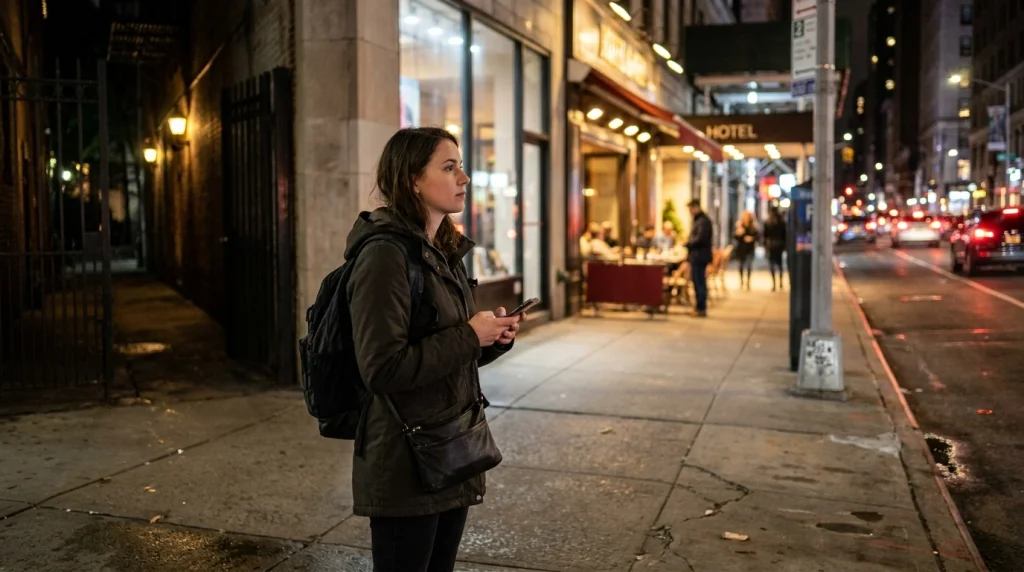
A better nighttime route usually gives you visibility, other people nearby, and several ways to change your plan. Isolation removes those options.
I look at the route itself before I look at the distance. A six-minute shortcut through an empty park may be a worse choice than a 12-minute walk along restaurants and hotels.
Signs that make me more comfortable with a short walk
- Open restaurants, shops, hotels, or other staffed businesses
- Regular pedestrian activity rather than an empty street
- Good lighting for most of the route
- A route I already walked during daylight
- Simple navigation with few turns
- Reliable mobile service and enough phone battery
- Several places where I could stop or ask for help
Red flags that make me change plans
- Empty streets or closed commercial areas
- Parks, beaches, tunnels, alleys, or isolated paths
- A route that requires unfamiliar shortcuts
- Long waits at quiet transit stops
- Poor mobile reception
- Someone repeatedly matching my direction or pace
- Heavy fatigue or enough alcohol to affect judgment
The Australian government’s solo traveler safety guidance recommends researching destination risks, avoiding isolated areas, and staying in public if an interaction with a stranger makes you uncomfortable.
I also pay attention to my ability to respond. Good situational awareness becomes harder when I’m staring at navigation, wearing noise-blocking headphones, or searching through a bag.
How Can I Decide Whether to Walk After Dark?
I use a simple decision check rather than asking, “Is this city safe?” The useful question is, “Does this exact walk make sense tonight?”
- Check the route before leaving. Look for main roads, active businesses, bridges, parks, station exits, and isolated stretches.
- Check current local advice. Look for warnings involving crime, demonstrations, transportation, or specific neighborhoods.
- Confirm an alternative. Know how you will call a licensed taxi, reputable ride service, or accommodation-arranged transport.
- Check your phone. Make sure you have enough battery, data access, and your accommodation details saved.
- Tell someone your plan when appropriate. Share your destination or journey details with a trusted person if the situation warrants it.
- Reassess at street level. A map cannot show whether a street feels unexpectedly deserted or chaotic tonight.
I never let the fact that I already planned to walk pressure me into continuing. Changing my mind costs little compared with staying committed to a bad route.
Use the 60-second test
Before I start walking, I try to answer five questions quickly. If several answers are unclear, I switch plans.
- Do I understand this route?
- Are other people using it?
- Can I see places where I could enter or get help?
- Do I have another transport option?
- Would I still choose this walk if it took twice as long as expected?
This last question catches a common planning mistake. An eight-minute map estimate can become much longer after a wrong turn, closed entrance, or transit disruption.
When Should I Choose Transport Instead of Walking?
Choose transport when it reduces exposure to an unfamiliar or isolated environment. Walking is not automatically safer simply because it gives you control over your route.
The same applies to transport. A random unlicensed car is not automatically safer than a busy, familiar walking route.
| Option | Stronger fit when | Reasons to reconsider | Check before leaving |
|---|---|---|---|
| Walking | Route is short, familiar, active, and well lit | Isolation, parks, shortcuts, poor lighting | Route, phone battery, backup transport |
| Licensed taxi | Hotel or established venue can arrange it | Unmarked vehicle or unsolicited driver | Company, destination, payment method |
| Ride-hailing app | Service is established and locally appropriate | Vehicle or driver details do not match | Plate, car, driver, pickup point |
| Public transport | Service is frequent and stations remain active | Long waits, final services, empty stops | Last service, exits, connections |
Late-night transport deserves its own research because safe practices differ by country. Local official guidance may recommend particular taxi companies, ride services, or pickup procedures.
If I expect to return after dark, I try to solve this before dinner rather than outside a venue at midnight. That removes a decision from the part of the day when I’m likely to be tired.
What Should I Do If I Feel Followed or Unsafe?
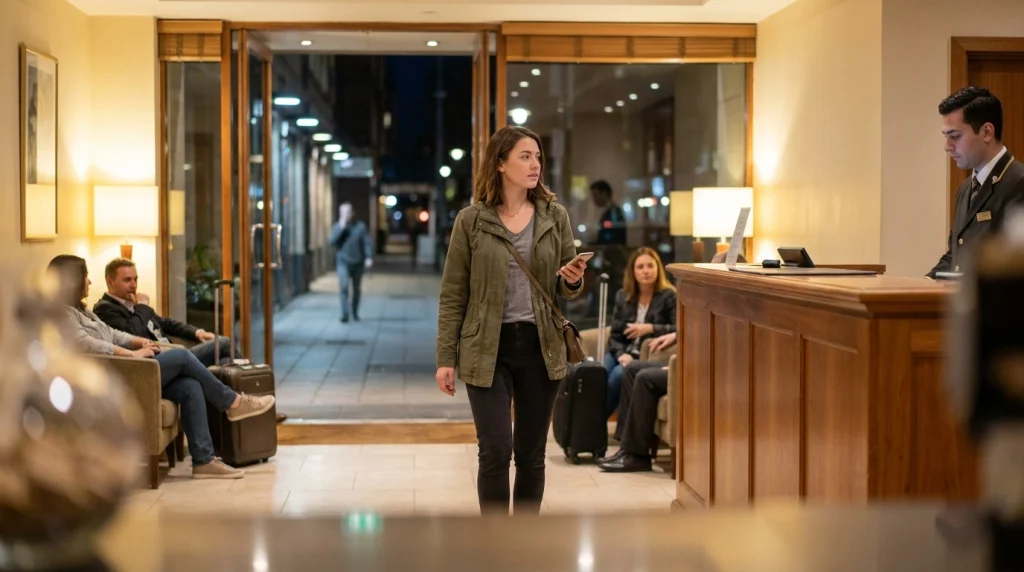
Move toward people, staff, lighting, and controlled spaces. Do not prioritize politeness over creating distance from someone who concerns you.
The U.S. State Department advises women travelers to plan for unsafe situations, keep a trusted person informed when appropriate, and know where local emergency services are located.
If someone appears to be following you
- Move toward a busy shop, hotel, restaurant, pharmacy, or staffed venue.
- Change direction if doing so does not take you somewhere more isolated.
- Do not lead the person directly to your accommodation.
- Ask staff for help arranging transport if needed.
- Call local emergency services if you believe you are in immediate danger.
Smartraveller’s guidance on reducing sexual assault risk overseas likewise recommends moving toward a busy, well-lit place if you believe someone is following you.
If your phone is nearly dead
Stop solving the problem while walking. Enter a staffed place if possible and arrange your next move there.
I keep my accommodation name and address available separately from a live map. That gives me something usable if navigation fails.
If a stranger makes you uncomfortable
You do not owe a stranger a detailed explanation for leaving. A firm boundary, changing seats, entering a business, or asking staff for help can be appropriate.
Pro tip: Save the local emergency number before going out. Do not assume the number used at home works in another country.
Frequently Asked Questions
Should solo female travelers avoid going out after sunset?
No universal rule says every woman traveling alone must return indoors at sunset. Base the decision on the destination, neighborhood, route, transportation, official guidance, and conditions you can observe that evening.
Is a short walk alone at night safe?
A short distance does not automatically make a walk safe. A five-minute route through an isolated park can create different risks from a longer walk along active, well-lit commercial streets.
Is it safer to take a taxi than walk alone after dark?
It depends on the destination and transport system. A licensed or accommodation-arranged taxi may be the better choice for an unfamiliar nighttime route, while unlicensed vehicles or unsolicited drivers can create their own risks.
Should I share my live location when walking alone?
Location sharing can be useful when you want a trusted contact to follow a journey, especially during an unfamiliar nighttime trip. It should supplement good route and transport decisions rather than replace them.
Can I wear headphones while walking alone at night?
I avoid anything that significantly reduces awareness of traffic, people, announcements, or changes around me. If you use audio, keep enough environmental awareness to notice what is happening nearby.
What if locals tell me an area is safe at night?
Local advice is useful, but ask specific questions about the exact streets, time, transportation, and current conditions. Someone who lives locally may also have familiarity, language skills, and social context that a visitor does not.
What if I feel silly paying for a ride when the walk is only ten minutes?
Do not let the price or short distance pressure you into a route you do not want to walk. Paying for appropriate transport can be a practical travel expense when conditions do not feel right.
What Is the Best Rule for Walking Alone at Night?
The best rule is to make the decision from the conditions in front of you, not from a blanket claim that a destination is “safe.” After dark, I care most about route activity, visibility, local guidance, transport choices, and easy exit options.
Solo travel does not require proving that you can handle every walk alone. The goal is to keep enough control over your evening that changing plans remains easy.
Before your next evening out, check the route in daylight, save a backup ride option, and confirm current official travel advice. Those few minutes of planning can make the rest of the night much simpler.