What Should a Woman Do the Day Before Flying Alone?
Quick Answer
The day before flying alone, confirm your flight and documents, finish packing, charge your devices, save your arrival details offline, and tell a trusted person your basic travel plan. If you are traveling internationally, I also recommend checking current official travel guidance one last time before leaving.
Your day-before solo flight checklist
- Confirm the flight: Check departure time, terminal, baggage allowance, check-in status, and any schedule changes.
- Check documents: Put your passport or ID, required visas, boarding details, insurance information, and reservations together.
- Finish your carry-on: Pack medication, valuables, chargers, a clean outfit, toiletries, payment methods, and other first-day essentials.
- Plan your arrival: Save your accommodation address and decide how you will travel there from the airport.
- Share your plan: Give one trusted person your flight and accommodation details plus an expected arrival check-in time.
- Protect your energy: Eat normally, hydrate, finish last-minute jobs early, and get a full night’s sleep.
One final rule
- Do not leave important travel decisions for the airport if you can settle them calmly at home.
If you’re wondering what should a woman do the day before flying alone, focus on reducing decisions rather than finding more things to worry about. Your goal is to wake up knowing your documents, luggage, transport, money, phone, and arrival plan are ready.
I treat the final 24 hours as a preparation window, not a second trip-planning session. That approach makes flying alone feel far more manageable, especially on a first solo trip.
In This Guide
What Should a Woman Do the Day Before Flying Alone?
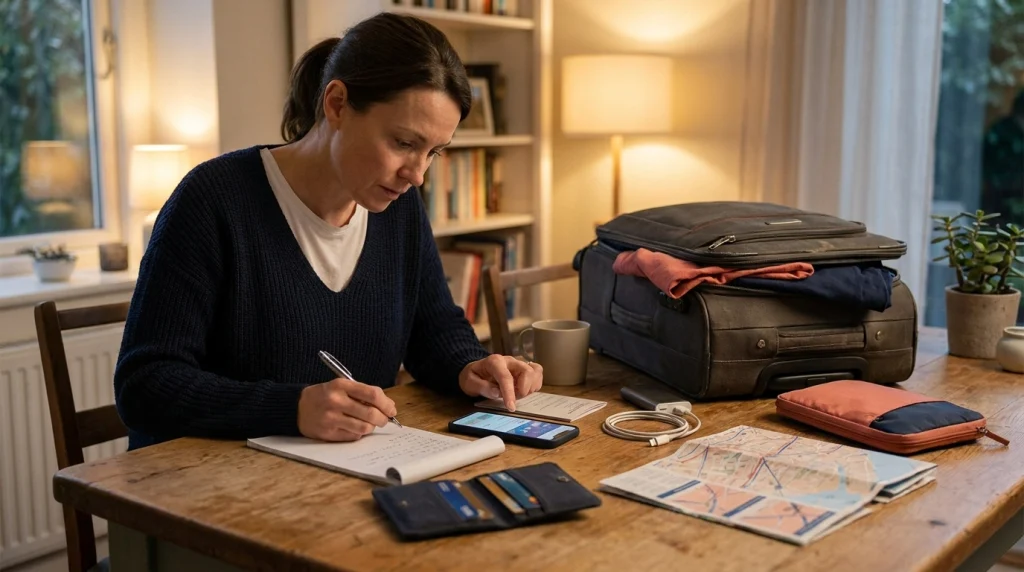
The most useful thing you can do is remove avoidable uncertainty. Confirm the essentials first, then stop adding complicated tasks to your day.
Solo female travel means traveling without a companion while independently managing your transportation, accommodation, money, schedule, communication, and everyday safety decisions.
The day before departure is therefore different when you’re alone. There is no travel partner checking the second passport, carrying another charger, or remembering the hotel address for you.
Use a six-part final check
I like to divide my preparation into six simple categories. It catches important gaps without turning the evening into a stressful inspection.
- Flight: Confirm the date, departure time, airport, terminal information available so far, seat, baggage allowance, and check-in status.
- Documents: Check your passport or accepted ID, visa when required, boarding information, accommodation confirmation, and insurance details.
- Luggage: Finish your checked bag and carry-on before the evening gets late.
- Money: Carry your main payment method plus a separate backup option.
- Communication: Charge your phone, prepare backup power, and save critical details offline.
- Arrival: Know how you plan to get from the airport to your first accommodation.
What belongs today, and what can wait until departure morning?
Anything that could cause a missed flight or leave you stranded belongs on the day-before list. Small comfort tasks can wait until morning.
| Task | Day before | Departure morning |
|---|---|---|
| Passport or ID | Verify and place in your travel wallet or personal bag | Confirm it is physically with you |
| Flight | Check schedule and complete check-in when available | Check for new airline notifications |
| Phone | Charge fully and save key information offline | Top up the battery before leaving |
| Money | Prepare at least two usable payment options | Put them in separate secure locations |
| Airport transport | Choose your route and backup | Check traffic, transit, weather, or pickup status |
| Arrival details | Save accommodation address and transfer plan offline | No major planning should be necessary |
I use one extra test: could I leave home tomorrow with my personal bag and still complete the journey? If the answer is no, I find the missing essential now.
Section Takeaway: Finish the decisions that affect whether you can board, pay, communicate, and reach your accommodation. Leave only simple checks for departure morning.
Which Documents and Flight Details Should You Verify?
Check every document that could stop your trip if it were missing or incorrect. Do this while you’re calm enough to solve a problem.
What travel documents should you check?
The exact requirements depend on your destination and nationality. International travel usually deserves a more careful review than a domestic flight.
- Passport or government-issued ID: Confirm the physical document is where you expect it to be.
- Visa or travel authorization: Check any requirement that applies to your destination or transit route.
- Boarding information: Keep the airline app working and save useful details where practical.
- Accommodation: Save the property name, full address, contact information, and check-in instructions.
- Insurance: Keep your policy and emergency assistance information accessible if you have coverage.
- Prescription information: Carry supporting documents when your medication or destination requires them.
Do not rely on one phone screen for everything. A dead battery, broken device, lost connection, or app logout can turn a small inconvenience into a larger problem.
What flight information matters most?
Start with the flight number, departure airport, scheduled time, and the airline’s current baggage information. Then review any airline messages you may have ignored during the week.
- Confirm whether you have checked in.
- Check your seat assignment if one has been issued.
- Review checked and cabin baggage limits for your fare.
- Look for schedule changes or important airline notices.
- Confirm which airport you are using in cities served by several airports.
- Check how you are getting there and what your backup option will be.
For an international trip, I also do a last check of entry and destination information. Rules and local conditions can change after the day you originally booked.
Pro tip: For international travel, verify current entry, safety, and local information through your own government’s official travel-advisory service before departure.
What Should You Pack in Your Carry-On Before Bed?
Your carry-on should protect your ability to keep traveling if your checked luggage is delayed. Think independence first and convenience second.
I use three packing zones: things that stay on me, things under the seat, and things that can go overhead. The most important items never depend on access to an overhead bag.
What should stay in your personal bag?
- Passport or accepted identification
- Phone
- Wallet
- Backup payment method
- Essential medication
- Charging cable
- Approved portable power source when permitted
- Accommodation and arrival details
- Glasses or other essential personal aids
Prescription medicine and valuable documents belong where you control them. I don’t put essentials I may need during the journey into checked luggage.
What should cover your first 24 hours?
Imagine your larger suitcase arriving one day after you. Your cabin bag should keep that delay inconvenient rather than disastrous.
- One change of underwear and socks
- One lightweight clean top
- Basic toiletries within applicable airport rules
- Menstrual products if needed
- Any daily health supplies you depend on
- A useful layer for cold cabins or changing weather
- A small snack where transport and security rules allow it
Check restrictions with your airline and the airports on your route. Security, liquid, battery, and prohibited-item rules can differ between jurisdictions.
Should you finish packing the night before?
Yes, except for a few morning-use items such as your toothbrush or phone charger. Leave those together in one visible place.
A half-packed suitcase creates unnecessary decisions when you’re trying to leave on time. Finish the real packing before bed.
How Should You Prepare a Solo Travel Safety and Arrival Plan?
Your safety plan should answer one practical question: what will you do if the easiest version of the journey doesn’t happen? You don’t need a disaster plan for every imaginable scenario.
Share the right information with one trusted person
Choose someone who will notice if you fail to check in. Give them enough information to understand your route without sharing every minute of your trip.
- Flight number and travel date
- Destination
- First accommodation
- Your planned airport-to-accommodation transport
- An approximate arrival check-in time
- A reasonable action plan if you do not make contact
A check-in plan works better than promising to message constantly. It gives both of you clear expectations.
Know exactly how you’ll leave the arrival airport
Landing alone feels easier when the first ground-transport decision is already made. Research your primary option and one backup.
- Primary route: Airport train, official taxi, bus, hotel transfer, or another suitable option.
- Backup route: A second option you can use if the first is unavailable.
- Accommodation address: Save it offline and in the local language when useful.
- Operating times: Check whether your planned transport still runs around your arrival time.
- Payment: Know whether you need a card, cash, ticket, or transport app.
I don’t want my first decision after a long flight to involve evaluating several unfamiliar ride offers while tired. I prefer to know where I am walking before I exit the terminal.
Do a final health check for international travel
If you’re traveling internationally, review any current health information that could affect your destination or route. The CDC travel health resources are useful for checking destination-specific health guidance.
If you are not a U.S. traveler, use the equivalent public-health and foreign-affairs resources for your nationality. Official destination sources should take priority when rules conflict with an old blog post.
Pro tip: Health requirements and outbreaks can change, so verify current information with an official public-health source shortly before international travel.
Section Takeaway: Share a simple itinerary, save your arrival route offline, and know your backup transport. A good solo safety plan reduces uncertainty without turning the trip into a list of worst-case scenarios.
What Should You Do the Evening Before Your Flight?

The best evening-before routine is deliberately boring. You want food, hydration, charged devices, finished luggage, and enough sleep.
Stop planning at a sensible point
I use a “no new decisions” rule once my essentials are ready. The night before a flight is not when I redesign my itinerary or add three new excursions.
If you still need inspiration for later in the trip, save it rather than solving it immediately. Broad planning resources such as Lonely Planet can wait until you’re settled.
Set up your departure zone
Put everything you need to physically leave home in one controlled area. This prevents the classic last-minute search for an item you used the night before.
- Travel document wallet
- Personal bag
- Suitcase
- Shoes and outer layer
- Keys
- Any morning medication
- Final toiletries pouch
Charge everything you depend on
Charge your phone and any other permitted devices you rely on for navigation, boarding information, communication, or entertainment. Keep the charging cable where it will go back into your bag.
Download critical information before sleeping. Useful offline items include your accommodation address, booking confirmation, airport route, important phone numbers, and a basic map.
Prepare your body too
Eat a normal meal and drink enough water rather than treating the trip like an emergency. Avoid creating a sleep problem with excessive caffeine or a late-night packing session.
Set more than one alarm if an early departure worries you. Then stop checking the suitcase every 15 minutes.
What should you avoid the day before flying alone?
- Do not start major shopping: It creates more packing and decisions.
- Do not carry unnecessary valuables: Leave items at home when you do not need them.
- Do not depend on one payment method: Prepare a backup before you travel.
- Do not postpone document checks: Discovering a problem at the airport leaves fewer options.
- Do not stay awake packing: Fatigue makes simple solo-travel decisions harder.
- Do not obsess over every possible risk: Prepare for realistic problems, then let yourself enjoy the trip.
As of 2026, travel information can change quickly enough that a final official check is worthwhile. After that check, give yourself permission to stop researching.
Section Takeaway: Your final evening should make tomorrow easier, not more ambitious. Finish practical tasks early, charge what matters, and protect your sleep.
Day-Before Solo Flight FAQ
Should I check in online the day before flying alone?
Complete online check-in when your airline makes it available and your booking permits it. You should still review current airline messages before leaving because gates, times, aircraft, and other operational details can change.
Should I tell someone that I’m flying alone?
Yes, sharing your flight, destination, first accommodation, and expected arrival check-in with one trusted person is sensible. You do not need to broadcast your solo status publicly or give strangers detailed information about where you’re staying.
What should I keep in my personal bag when flying alone?
Keep your passport or ID, wallet, phone, essential medication, boarding information, charging access, accommodation details, and other difficult-to-replace valuables with you. Your personal bag should contain the items that keep you mobile if your larger luggage is delayed.
How can I calm travel anxiety the night before a solo flight?
Turn vague worry into a short written checklist, complete each practical task, and then stop planning. A clear airport route, packed luggage, charged phone, confirmed documents, and an arrival plan usually help more than hours of additional research.
Should I carry cash when traveling alone?
That depends on your destination, but I prefer having more than one usable payment method. Keep your backup separate from your main wallet so losing one item does not remove every way you can pay.
What if my flight is very early in the morning?
Finish almost everything the night before, including packing, document checks, transport planning, and charging. Set alarms, place your bags near your departure point, and leave only essential morning tasks such as dressing, basic hygiene, medication, and a final flight-status check.
Is flying alone safe for a woman?
Many women fly alone successfully, but no trip is risk-free. Good preparation includes protecting documents and money, planning airport transportation, staying aware of your surroundings, checking official destination guidance, and keeping someone you trust informed about your arrival.
The day before your solo flight should leave you feeling prepared, not exhausted. Confirm what matters, pack for independence, plan your first steps after landing, and then let yourself look forward to the trip.
If this is your first time flying alone, keep the plan simple. You do not need to feel fearless before you leave; you need to know what your next step is.