What Medications Should a Solo Female Traveler Prepare for Travel?
Quick Answer
A solo female traveler should prepare her regular prescription medicines first, then add a small set of familiar over-the-counter medicines for pain, allergies, stomach problems, diarrhea, and motion sickness. Destination-specific medicines, including malaria prevention or prescription treatment for travelers’ diarrhea, should only be added when a healthcare professional recommends them. The CDC travel health kit guidance is a useful starting point.
What to prepare
- Regular prescriptions: Bring enough for the trip plus extra for unexpected delays.
- Pain and fever relief: Pack a medicine you already know you can safely take.
- Stomach support: Consider oral rehydration salts, diarrhea medicine, and an antacid if appropriate for you.
- Allergy medicine: Carry your normal antihistamine and prescribed emergency allergy treatment if needed.
- Women’s health needs: Include your usual period-pain medicine, contraception, and other familiar treatments when medically appropriate.
- Destination medicines: Ask a clinician about malaria, altitude, diarrhea, or other location-specific risks.
One important rule
- Don’t try a new medicine for the first time while alone in transit unless a clinician has told you how to use it safely.
If you’re wondering what medications should a solo female traveler prepare for travel, the answer isn’t a suitcase full of pills. A smart travel medication kit is small, familiar, legal at your destination, and matched to your itinerary.
I prefer to plan medications the same way I plan accommodation or transportation: cover the problems that could realistically disrupt the trip, then leave unnecessary extras at home. That matters even more when you’re traveling alone and need to manage a minor illness without a companion beside you.
In This Guide
- What medications should a solo female traveler pack?
- Which over-the-counter medicines are worth packing?
- Which prescription and destination-specific medicines need advance planning?
- What women’s health medications should you consider?
- How should you carry medications through airports and borders?
- Frequently asked questions
- Final medication checklist before traveling solo
What medications should a solo female traveler pack?
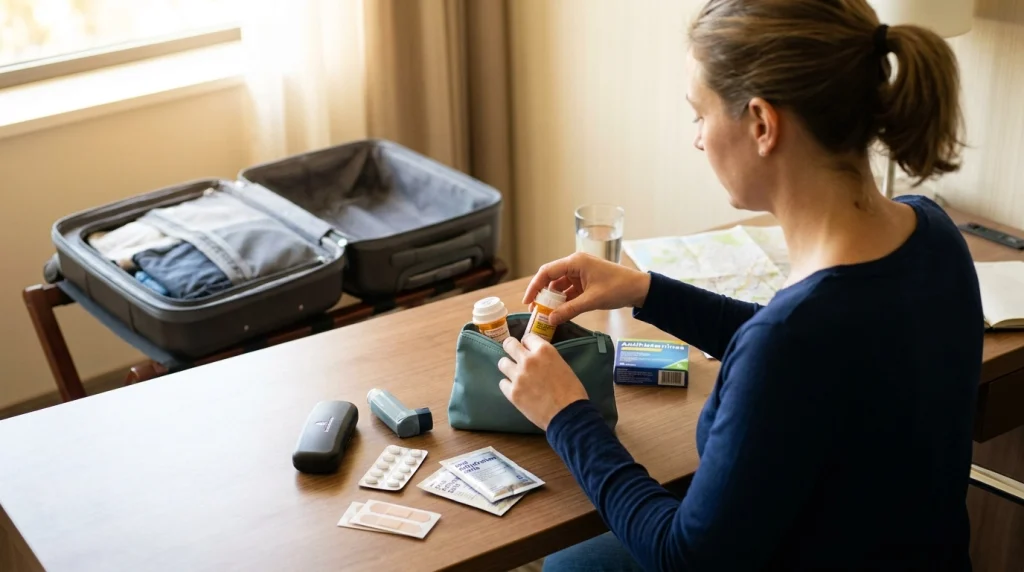
A practical travel health kit starts with medicines you already use safely. It should help you manage predictable minor problems while giving you time to reach professional medical care when something is more serious.
Travel medication preparation means organizing your regular prescriptions, appropriate nonprescription medicines, medical documents, and destination-specific treatments before departure.
Start with medications you already depend on
Your regular prescriptions come first. Bring enough to cover the full trip and some extra in case a flight cancellation, weather event, strike, illness, or other disruption delays your return.
- Daily prescription medicines: Include medicines for any ongoing condition.
- Prescription inhalers: Carry them if you use them for asthma or another respiratory condition.
- Severe-allergy medication: Bring prescribed epinephrine auto-injectors if you need them.
- Hormonal medication: Include your normal contraception or other prescribed hormonal treatment.
- Medical supplies: Carry compatible needles, testing equipment, or other supplies when medically necessary.
Don’t assume you’ll simply replace a prescription after arrival. Drug names, strengths, availability, quality, and prescription rules can differ between countries.
A simple medication packing comparison
| Category | Usually worth packing? | Why it helps when traveling solo | Important caution |
|---|---|---|---|
| Regular prescriptions | Yes | Prevents an interruption in normal treatment | Check destination laws |
| Pain or fever medicine | Usually | Useful for headaches, minor pain, or fever | Use only if normally safe for you |
| Antihistamine | Often | Helps with familiar mild allergy symptoms | Some types cause drowsiness |
| Diarrhea medicine and ORS | Often | Can make gastrointestinal illness easier to manage | Some symptoms require medical care |
| Motion-sickness medicine | If prone to it | Useful for ferries, buses, boats, and winding roads | May cause sedation |
| Antibiotics | Not routinely | May be useful for selected travelers | Bring only when prescribed with clear instructions |
| Malaria or altitude medicine | Destination dependent | Addresses itinerary-specific health risks | Requires professional advice |
Think about where you’ll be as well as how long you’ll be away. A three-night city trip with pharmacies nearby requires a different kit from a two-week trek through remote areas.
Pro tip: Check official destination health guidance before every international trip, even if you’ve visited that country before.
Section Takeaway: Pack for realistic problems, not every possible illness. Your essential prescriptions should always take priority.
Which over-the-counter medicines are worth packing?
The most useful over-the-counter medicines are ones you already understand and tolerate. Avoid building your travel kit around products you’ve never used before.
Pain and fever relief
Many travelers carry acetaminophen, also called paracetamol in many countries, or an anti-inflammatory medicine such as ibuprofen. Which one is appropriate depends on your health, medications, allergies, and other personal factors.
Period pain, headaches, muscle soreness, and minor fever are common reasons travelers reach for these medicines. Pack the option you normally use rather than experimenting abroad.
Allergy medicine
An antihistamine can be useful if you develop familiar mild allergy symptoms. This may include reactions to pollen, dust, insect bites, or another known trigger.
- Check whether your antihistamine makes you sleepy.
- Avoid testing a sedating medicine for the first time before a flight or overnight journey.
- Carry prescribed emergency treatment separately if you have a serious allergy.
For a solo traveler, drowsiness deserves extra attention. A medicine that makes you unusually sleepy can reduce your awareness while navigating an airport, station, taxi, or unfamiliar neighborhood.
Stomach and diarrhea medicines
Digestive problems can disrupt a solo itinerary quickly. I would rather have a small, familiar stomach kit in my day bag than search an unfamiliar pharmacy while feeling sick.
- Oral rehydration salts: Useful for replacing fluids and electrolytes during significant diarrhea or vomiting.
- Antidiarrheal medicine: Loperamide can help certain adults manage non-bloody diarrhea when appropriate.
- Antacid: Helpful if you’re prone to familiar heartburn or indigestion.
- Mild laxative: Consider one only if travel-related constipation is a recurring problem for you.
Don’t use an antidiarrheal as a reason to ignore serious symptoms. CDC guidance says antimotility medicines such as loperamide should not be used alone for diarrhea accompanied by fever or bloody stools.
Read the current CDC travelers’ diarrhea guidance before trips where food- and water-related illness is a concern.
Motion-sickness medicine
If boats, mountain roads, or long bus rides usually make you nauseated, your normal motion-sickness treatment may deserve a place in your kit. Check its drowsiness warning before relying on it while traveling alone.
A scenic ferry becomes much less scenic when you’re nauseated for three hours. Planning for a problem you know you have makes sense.
Section Takeaway: Your OTC kit should focus on familiar, short-term problems you can recognize and manage safely. Unfamiliar or severe symptoms need professional care.
Which prescription and destination-specific medicines need advance planning?
Some travel medications depend entirely on where you’re going and what you’ll do there. There is no universal prescription list for solo female travelers.
As of 2026, CDC recommends discussing destination-specific vaccines, medicines, health conditions, and planned activities with a healthcare professional before travel. For complex itineraries, starting that conversation several weeks before departure gives you more options.
Malaria prevention
Malaria medication is appropriate only for certain destinations and itineraries. The recommended medicine can vary according to location, medical history, resistance patterns, trip duration, and other factors.
Don’t buy a random antimalarial because another traveler packed it. Use the CDC destination health pages to check whether malaria or another infectious disease is relevant to your route.
Travelers’ diarrhea antibiotics
Routine self-prescribing of antibiotics is a poor travel strategy. A travel-health clinician may give some travelers a standby antibiotic with precise instructions about when to use it.
- Don’t pack leftover antibiotics from an old illness.
- Don’t take an antibiotic because another traveler recommends it.
- Know which symptoms mean you should seek medical care instead.
Altitude medication
High-altitude itineraries may require additional planning. This is more relevant to a trek in the Andes or Himalayas than a weekend in Amsterdam.
A clinician can evaluate your route, sleeping altitude, ascent schedule, health history, and whether preventive medication makes sense. Medication doesn’t replace a sensible ascent plan.
Your existing prescriptions may also need review
Travel can change when and how you take regular medicine. Time-zone changes, refrigeration requirements, missed meals, heat, and long transport days can all complicate a normal routine.
The U.S. Department of State advises travelers to review destination rules and local medical conditions before departure. Its medicine and health guidance for international travelers is a useful planning resource.
- Ask how to handle major time-zone changes.
- Check whether heat can damage your medication.
- Plan safe refrigeration if your medicine needs it.
- Carry written details of the generic name, strength, and dosing schedule.
- Ask about possible interactions between travel medicines and your regular prescriptions.
Pro tip: Official destination health recommendations can change. Recheck them shortly before departure rather than relying on advice from an older trip.
Section Takeaway: Prescription travel medicine should match your health and itinerary. Destination-specific treatment is one area where personalized medical advice matters most.
What women’s health medications should you consider?
There isn’t a separate medicine cabinet every woman needs for solo travel. There are, however, a few health needs worth planning around because dealing with them alone in an unfamiliar place can be inconvenient.
Menstrual pain and period management
If you normally use medication for menstrual cramps, bring enough for the trip. Changing brands in another country can be confusing because ingredient names and strengths may differ.
- Pack your usual pain medicine if it’s safe for you.
- Bring enough menstrual products for the first part of the trip.
- Consider a small heat patch if that normally helps you.
- Keep a few supplies in your personal item during flights or long train journeys.
Birth control
If you use prescription birth control, make it part of your essential medication count. Pack enough for the entire journey and consider potential delays.
Changing time zones can complicate schedules for medicines that need consistent timing. Ask your prescriber or pharmacist how to manage your specific product rather than improvising after landing.
Emergency contraception
Availability, prescription requirements, and legal rules can vary by country. If carrying emergency contraception is appropriate for you, confirm that the product is legal at your destination and discuss any medical questions with a healthcare professional.
Don’t assume you’ll find the same product or access rules abroad. This is one area where planning before departure can reduce stress.
Recurring yeast infections or urinary problems
If you’ve previously had recurring yeast infections, ask a clinician whether carrying a familiar treatment makes sense. New vaginal symptoms can have different causes, so avoid assuming every symptom is the same condition.
For recurring urinary tract infections, don’t travel with leftover antibiotics and create your own treatment plan. A clinician who knows your history can decide whether a standby prescription is appropriate and tell you exactly when to seek care.
Pregnancy or possible pregnancy
Pregnancy changes medication choices. Some common medicines that are appropriate for other adults may not be appropriate during pregnancy or at certain stages of pregnancy.
If you’re pregnant, trying to conceive, or think pregnancy is possible, review your medicines and destination health risks with an appropriate healthcare professional before traveling.
Solo travel note: I also avoid relying on unfamiliar sedating medicines while moving between airports, stations, hotels, and taxis. Staying alert can matter as much as managing a minor symptom.
Section Takeaway: Women’s health planning should be personal, not generic. Pack treatments you already use safely and get professional advice for prescriptions, recurrent infections, pregnancy, or new symptoms.
How should you carry medications through airports and borders?
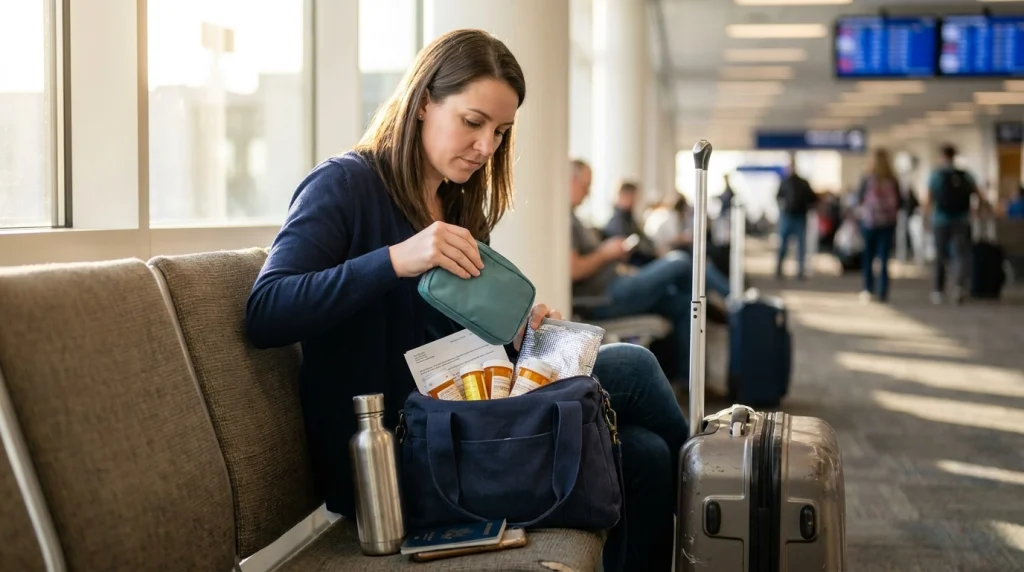
How you pack medicine can be as important as what you pack. A perfectly chosen medication doesn’t help if it’s in a lost checked suitcase.
Keep essential medicine in your carry-on
CDC guidance recommends keeping medicines in carry-on luggage because checked baggage can be delayed or lost. I treat daily prescriptions the same way I treat my passport: they stay with me.
- Carry essential medication in your personal item or cabin bag.
- Keep medicines in original, clearly labeled containers.
- Bring copies of written prescriptions.
- Know both the brand and generic names of important medicines.
- Carry a doctor’s letter when needed for controlled or injectable medication.
The FDA also advises travelers to carry enough information about prescriptions to identify the medicine, strength, dosage form, and how often it is taken. Review its guidance on traveling with prescription medications when planning an international trip.
Check the rules for every country on your route
A medication that’s ordinary at home may be restricted, controlled, or unavailable elsewhere. This can apply to certain stimulants, strong pain medicines, sedatives, anxiety medicines, and other controlled drugs.
Check the destination country’s embassy or appropriate government authority. Do the same for a transit country if you’ll pass through its border controls.
Don’t remove important labels just to save space
A pill organizer can be useful in everyday life, but international travel creates an extra documentation issue. Original packaging makes it easier to show what a medication is and who it was prescribed to.
You can still organize your routine, but keep the official labeled packaging and prescription documentation available. Border requirements always take priority over packing convenience.
Protect medication from heat, cold, and moisture
Don’t leave medication in a hot rental car or direct sun unless the storage instructions allow it. Extreme temperatures can reduce the effectiveness of some medicines.
- Check the storage instructions before departure.
- Ask a pharmacist about medication that needs refrigeration.
- Use an appropriate travel container when temperature control is necessary.
- Don’t place temperature-sensitive medicine directly against ice unless instructed.
Pro tip: Medication laws aren’t universal. Verify your prescription with the destination’s official authorities instead of trusting a social-media post or another traveler’s experience.
Section Takeaway: Keep essential medicines accessible, labeled, documented, and protected from damaging temperatures. Check legality before crossing a border.
Frequently asked questions about medications for solo female travel
What OTC medications should every solo female traveler bring?
There isn’t one mandatory list. Common options include a familiar pain or fever medicine, antihistamine, oral rehydration salts, an antacid, and diarrhea or motion-sickness medicine when appropriate. Your medical history, destination, activities, and known reactions should determine the final kit.
Should I pack my prescription medication in checked luggage?
Essential prescription medicine is better kept in your carry-on or personal item. Checked luggage can be lost or delayed, which could interrupt treatment. Keep medicines in original labeled containers and carry prescription documentation when required.
Should I bring antibiotics when traveling alone?
Don’t bring leftover antibiotics or take them without a clear medical plan. A travel-health clinician may prescribe a standby antibiotic for certain travelers or destinations and explain exactly when to use it. Severe illness, bloody diarrhea, significant fever, or dehydration may require medical care instead.
Can I travel internationally with birth control?
Birth control is commonly carried by international travelers, but medication rules vary by country. Bring it in labeled packaging and check the laws at your destination. If timing matters for your specific method, ask a pharmacist or prescriber how to adjust for major time-zone changes.
What should I do if my prescription medicine is restricted at my destination?
Contact the destination’s embassy or relevant authority before departure. Ask your healthcare professional whether an alternative medicine is appropriate and whether you need a prescription copy, medical certificate, or doctor’s letter. Don’t hide or relabel a restricted medication.
How much extra prescription medicine should I carry?
Carry enough for the planned trip plus a reasonable buffer for travel disruption, subject to local import limits. Longer trips may require an early refill or insurer approval, so arrange this before departure rather than depending on an overseas pharmacy.
Final medication checklist before traveling solo
Your travel medicine kit should make a minor health problem easier to manage, not turn your bag into a portable pharmacy. For most solo women, preparation matters more than quantity.
- Pack every essential prescription first.
- Add enough medication to cover reasonable travel delays.
- Choose only familiar OTC medicines that are safe for you.
- Include oral rehydration salts if gastrointestinal illness is a realistic concern.
- Add motion-sickness medicine only if you normally need it.
- Pack your normal period-pain medicine and contraception when applicable.
- Discuss recurrent infections with a healthcare professional before leaving.
- Ask about malaria, altitude, or other destination-specific prescriptions.
- Keep essential medication in your carry-on.
- Retain original labels and prescription documents.
- Check the medication laws of your destination and transit countries.
- Know where you would seek medical care if self-care isn’t enough.
Seek urgent medical help for symptoms such as trouble breathing, a severe allergic reaction, fainting, confusion, severe dehydration, significant bleeding, intense or worsening pain, or another symptom that feels like an emergency. When you’re alone, it’s better to get help early than to struggle through a serious illness in your hotel room.
For my own planning, I want the medication pouch to answer one simple question: can I safely handle the common minor problems while still knowing when I need professional help? That’s the balance worth aiming for on your next solo trip.