What Should a Woman Know Before Taking Her First Solo International Trip?
Quick Answer
Before taking your first solo international trip, choose a manageable destination, research local laws and transportation, book your first nights in advance, protect your money and documents, and create a simple emergency plan. Women should also research destination-specific concerns using reliable resources such as the official guidance for women travelers rather than relying only on social media advice.
Your first-trip priorities
- Choose carefully: Pick a destination with straightforward transport, established tourism, and accommodation that fits your comfort level.
- Plan your arrival: Know exactly how you’ll travel from the airport or station to your accommodation before landing.
- Protect documents: Keep passport copies, insurance details, emergency contacts, and reservation information in separate places.
- Stay connected: Arrange mobile data and give a trusted person your basic itinerary and check-in plan.
- Keep flexibility: Leave spare time and money for delays, transport changes, illness, or simply changing your mind.
- Trust discomfort: You never owe a stranger politeness when a situation feels wrong.
One rule I never ignore
- Make your first solo international trip easier than you think it needs to be. Confidence grows faster when the basic logistics are simple.
Your first solo international trip can feel thrilling and slightly unreal at the same time. You’re choosing the flight, hotel, meals, schedule, and backup plans without another person beside you.
I’ve learned that good solo female travel isn’t about removing every possible risk. It’s about knowing what you can control, preparing for what matters, and leaving enough space to enjoy being somewhere new.
As of 2026, entry requirements, transport systems, health guidance, and safety conditions can change quickly. Treat destination research as part of the trip itself, not something you finish months before departure.
In This Guide
- How should you choose your first solo international destination?
- What documents, health checks, and legal details should you prepare?
- Where should a first-time solo woman stay, and how should she plan arrival?
- How should you manage money, your phone, and transportation?
- How do you stay safer without spending the whole trip afraid?
- What should you know about confidence, loneliness, and meeting people?
- What should you pack, and what should you do during the first 24 hours?
- First solo international trip FAQ
Solo female travel means traveling without a companion while taking responsibility for your own itinerary, accommodation, transportation, decisions, and day-to-day safety. It doesn’t mean avoiding tours, hostels, social events, local guides, or other travelers.
How Should You Choose Your First Solo International Destination?
Your first destination should reduce unnecessary friction. Look for a place where transportation, accommodation, communication, and tourist infrastructure feel manageable to you.
Don’t choose solely because somebody online calls a country “perfect for solo women.” A destination that’s easy for one traveler may feel exhausting to another.
Match the destination to your current experience
I prefer a first solo trip with one main city or region rather than an ambitious multi-country route. Four to seven nights in one base can teach you more about independent travel than racing through four airports.
- Choose one home base: Fewer hotel changes mean fewer opportunities to lose belongings or arrive somewhere unfamiliar after dark.
- Check airport connections: Know whether official taxis, trains, buses, or reputable app-based rides operate from your arrival point.
- Research language barriers: You don’t need fluency, but you should know whether transport signs and essential services are easy to navigate.
- Check local customs: Learn expectations concerning clothing, photography, alcohol, public behavior, and interaction between men and women.
- Study neighborhoods: “Safe city” is too broad. The exact area where you sleep and walk each evening matters more.
Keep your first itinerary intentionally simple
On early solo trips, I discovered that every change of accommodation costs more energy than expected. Packing, checking out, finding transport, navigating a new station, and locating another hotel can consume half a day.
A slower itinerary also gives you room to recover from jet lag. That’s valuable when every small decision is yours alone.
| Trip choice | Easier first-trip option | Why it helps |
|---|---|---|
| Trip length | About 4–7 nights | Enough time to settle in without creating a complicated itinerary. |
| Bases | One primary city or region | Reduces repeated transfers and unfamiliar arrivals. |
| Arrival | Daylight or early evening | Makes transport and accommodation problems easier to solve. |
| First night | Booked in advance | Removes a major decision after a tiring flight. |
| Schedule | One major activity daily | Leaves time for navigation, meals, delays, and spontaneous plans. |
Pro tip: Recheck official destination advisories, entry requirements, local laws, and transportation information shortly before departure. Conditions can change after you book.
Section Takeaway: A good first solo destination isn’t necessarily the most exciting choice on your list. It’s the place where you can practice independence without making every hour unnecessarily difficult.
What Documents, Health Checks, and Legal Details Should You Prepare?
Before leaving home, make sure your passport, visa status, health preparation, insurance, and emergency information are organized. These boring tasks become extremely important when something goes wrong.
Check entry rules before booking non-refundable plans
Passport validity rules vary by destination. Visa rules can also depend on your nationality, trip purpose, transit airports, and length of stay.
Use the destination country’s official immigration source whenever possible. The U.S. State Department also maintains an international travel checklist covering documents, advisories, local laws, insurance, and emergency preparation.
- Passport: Check its expiration date and destination-specific validity requirements.
- Visa: Confirm whether you need one before arrival, online authorization, or another entry document.
- Transit rules: Research countries where you change planes, not only your final destination.
- Return proof: Some destinations or airlines may ask for onward or return travel evidence.
- Accommodation details: Keep the address and reservation confirmation for your first stay available offline.
Create document backups
I keep digital copies where I can reach them without my main phone. I also carry a paper copy of essential information separately from my passport.
- Passport identification page
- Visa or travel authorization
- Travel insurance policy and emergency number
- Flight and accommodation confirmations
- Emergency contact information
- Prescription information where relevant
- Bank and card emergency numbers
Prepare your health needs early
Health requirements depend on your destination, medical history, season, and planned activities. The CDC recommends checking destination-specific guidance and discussing relevant travel health needs before departure.
Its before-travel health guidance suggests arranging a healthcare or travel-medicine appointment around four to six weeks before departure when possible.
- Routine vaccines: Check whether you’re up to date.
- Destination risks: Review food, water, insects, altitude, heat, and infectious-disease considerations.
- Prescription medicine: Carry enough for the trip plus a reasonable delay buffer.
- Insurance: Understand medical coverage, exclusions, deductibles, and emergency evacuation terms.
- Period products: Pack enough if you use a specific product that may be difficult to replace locally.
Pro tip: Health rules and vaccine recommendations can change. Check official destination-specific health guidance rather than relying on an old packing article or social media post.
Section Takeaway: Your passport gets you to the border, but good preparation goes further. Know your entry rules, protect copies of important documents, and understand how you would access healthcare abroad.
Where Should a First-Time Solo Woman Stay, and How Should She Plan Arrival?
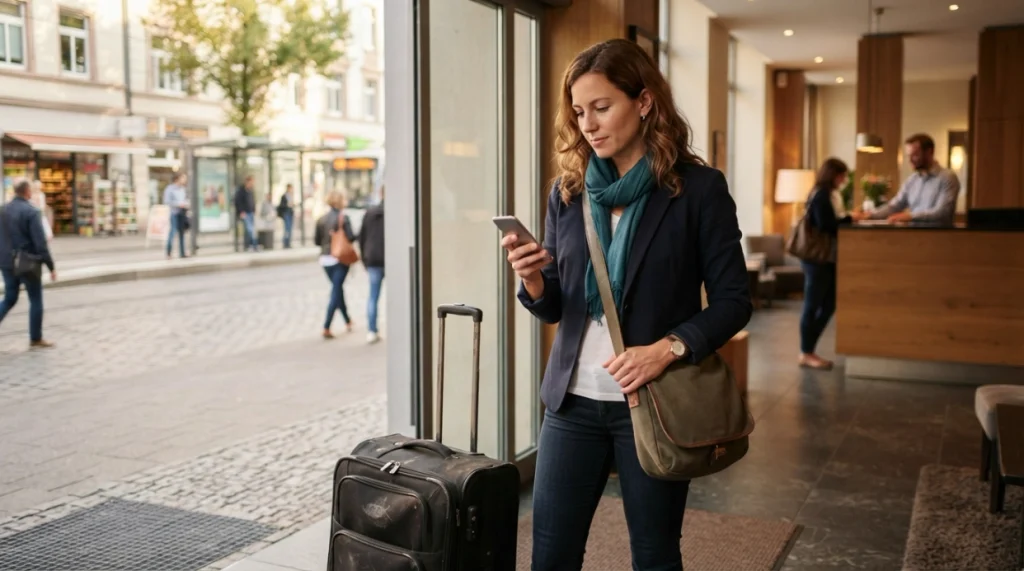
For a first solo trip, I care more about location and arrival logistics than saving the final few dollars on a room. A cheap stay can become expensive if every evening requires complicated transport.
Choose the neighborhood before choosing the property
Look at where the accommodation sits relative to public transport, restaurants, busy streets, and the activities you expect to visit. Read recent reviews specifically mentioning nighttime surroundings, reception, locks, noise, and transportation.
- Hotels: Useful when you want private space, reception staff, and predictable service.
- Private hostel rooms: A good compromise if you want privacy plus social spaces.
- Hostel dorms: Often social and affordable, but check locker size, room configuration, and recent security reviews.
- Apartments: Useful for longer stays, though support may be limited if something goes wrong late at night.
Female-only dorms can feel more comfortable for some travelers. They aren’t automatically better managed, so I still check recent guest reviews and locker arrangements.
Plan your airport-to-bed route before flying
This is one of my strongest first-solo-trip rules. I don’t want my first decision after a long international flight to be choosing between six strangers offering rides.
- Identify your official options: Airport train, licensed taxi rank, hotel transfer, bus, or reputable ride app.
- Save the accommodation address: Keep it in the local language if useful.
- Check operating hours: Public transportation may stop before late flights arrive.
- Know the approximate route: A downloaded map helps you notice major deviations.
- Have payment ready: Carry an accepted card or enough local currency for arrival expenses.
Think carefully about arrival time
When possible, I prefer arriving while transport is still running and accommodation staff are available. Daylight also makes a new neighborhood easier to understand.
If a late arrival is unavoidable, simplify it. Arrange transport beforehand and confirm that somebody can check you in.
Section Takeaway: Your first accommodation should make the trip easier, not merely cheaper. Prioritize a practical neighborhood, good recent reviews, secure storage, and a clear arrival plan.
How Should You Manage Money, Your Phone, and Transportation?
Don’t build a solo trip around one card, one phone, or one way to access money. Small backups prevent manageable problems from becoming trip-ending problems.
Split your money access
I keep my main spending card separate from at least one backup. If my wallet disappears, I don’t want every financial option disappearing with it.
- Main card: Use for ordinary spending where accepted.
- Backup card: Store separately from your primary wallet.
- Emergency cash: Keep a modest amount separate from daily cash.
- Bank access: Make sure you can log in while abroad.
- Card controls: Know how to freeze a lost card quickly.
Check foreign transaction fees and ATM charges before departure. Avoid carrying the entire trip budget in cash.
Get reliable mobile data
Your phone is more than entertainment when traveling alone. It can hold maps, reservations, translation tools, transport apps, emergency contacts, and banking access.
- Check roaming prices before leaving home.
- Compare local SIM and eSIM options.
- Download offline maps for your main destination.
- Save accommodation addresses offline.
- Carry a charging cable and compact power bank.
- Write important contact numbers somewhere outside your phone.
Research transport before using it alone
Don’t assume the transport method you use at home works the same way abroad. Taxi licensing, rideshare availability, train ticketing, and bus safety vary widely.
I like app-based rides where they are established because I can confirm the vehicle and keep a digital trip record. In other destinations, licensed taxis or public trains may make more sense.
- Confirm the vehicle: Match plates and driver information where available.
- Keep bags controlled: Don’t place your passport, wallet, and phone together in an inaccessible luggage compartment.
- Watch your route: Follow progress on an offline or live map when practical.
- Avoid unofficial offers: Especially when arriving tired at an airport or station.
A useful budget habit is keeping a 15–20% contingency beyond your expected daily spending. That gives you room to choose a safer taxi, replace a ticket, change accommodation, or solve a problem without panicking over every dollar.
Section Takeaway: Redundancy creates freedom. Separate cards, backup cash, mobile data, offline information, and researched transportation give you more options when plans change.
How Do You Stay Safer Without Spending the Whole Trip Afraid?
Solo female travel safety isn’t about being suspicious of everyone. It’s about noticing your environment, controlling the information strangers receive, and giving yourself permission to leave uncomfortable situations.
Create a simple check-in system
Choose one trusted person at home and tell them your broad itinerary. You don’t need to report every coffee shop.
- Your flight dates
- Your main accommodation details
- Your expected city changes
- How often you’ll check in
- What they should do if you miss an agreed check-in
U.S. citizens can also use the Smart Traveler Enrollment Program to receive embassy or consulate alerts for destinations abroad.
Be selective with personal information
You don’t need to tell a stranger that you’re alone, where you’re staying, or what tomorrow’s plans are. I often answer casually without giving useful details.
That isn’t being rude. It’s ordinary privacy.
- Don’t share your room number publicly.
- Avoid displaying your hotel key sleeve if it shows identifying details.
- Post real-time location updates selectively.
- Don’t tell a persistent stranger that nobody expects you back.
- Keep your passport secured unless you genuinely need it.
Have an exit plan when socializing
Meeting people can become one of the best parts of traveling alone. Keep control of how you get home and how much you drink.
- Know your route back: Save your accommodation before going out.
- Watch your drink: Don’t leave it unattended.
- Keep your own transport money: Don’t depend completely on somebody you just met.
- Leave early if needed: You don’t need evidence that something is wrong before walking away.
I once changed seats, changed trains, and even walked into busy shops simply because somebody’s attention felt too persistent. None of those decisions required a dramatic confrontation.
Your instincts don’t need courtroom-level proof. Create distance first, then reassess.
Pro tip: Save the local emergency number, the location of your country’s nearest diplomatic mission where relevant, and your insurer’s emergency contact before you need them.
Section Takeaway: Good safety habits should increase your choices rather than shrink your trip. Protect personal information, stay connected to someone you trust, and leave situations that make you uncomfortable.
What Should You Know About Confidence, Loneliness, and Meeting People?
You don’t need to feel fearless before your first solo international trip. Confidence often arrives after you’ve successfully handled several ordinary moments alone.
Expect the first few hours to feel strange
The emotional low point can arrive right after check-in. You’re tired, your surroundings are unfamiliar, and suddenly the trip you’ve imagined for months is real.
Don’t judge the whole experience from that moment. Eat, shower, sleep, and reassess tomorrow.
Practice being alone before departure
If you’ve never eaten, explored, or attended an activity alone at home, start there. Solo travel becomes easier when solitude isn’t completely new.
- Eat lunch alone.
- Spend an afternoon exploring your own city.
- Take a short train journey alone.
- Visit a museum by yourself.
- Practice navigating somewhere new without asking a friend to lead.
This is one reason I like the gradual approach recommended in many experienced-traveler discussions. Lonely Planet’s solo travel tips for women also highlight easing into independent travel rather than forcing yourself into maximum discomfort immediately.
Use structured activities to meet people
You can travel solo without spending seven days speaking only to restaurant staff. Structured activities make conversation much easier because everyone already shares a reason for being there.
- Walking tours
- Small-group food tours
- Cooking classes
- Hostel social events
- Day trips
- Language exchanges
- Group hiking or cultural activities
I prefer meeting people through an activity instead of arranging a completely unstructured meeting with someone I’ve never seen before. There’s a public setting and a natural endpoint.
Give yourself permission to change plans
Solo travel means you can leave a museum early, eat dinner at 5 p.m., cancel a tour, or spend an afternoon reading. You don’t need to create an impressive itinerary for anybody watching online.
The freedom becomes much more enjoyable once you stop treating every hour as evidence that you’re “doing solo travel correctly.”
Section Takeaway: Confidence usually follows action. Start small, use structured social settings when you want company, and remember that changing your plan is one of the advantages of traveling alone.
What Should You Pack, and What Should You Do During the First 24 Hours?
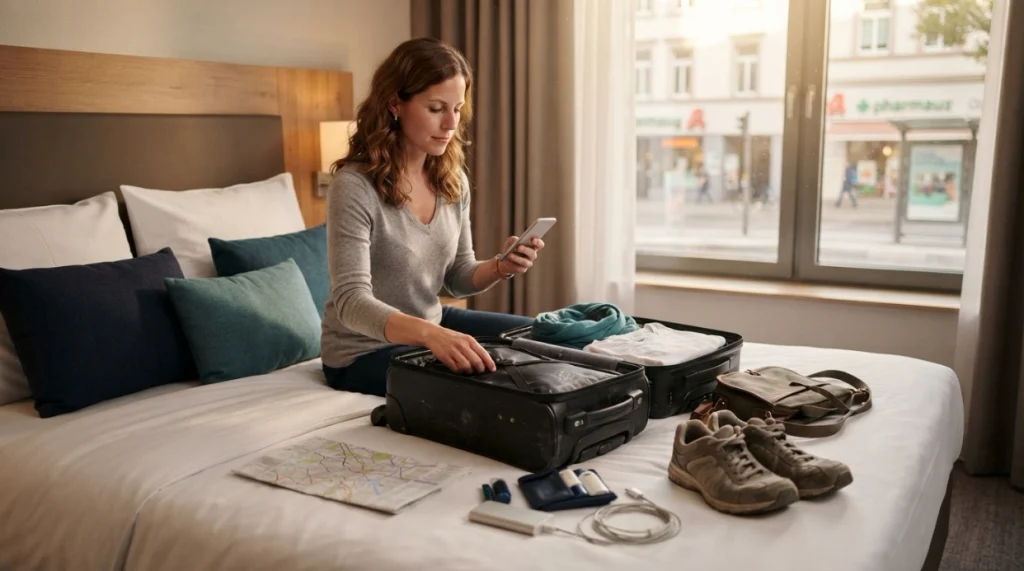
Pack to stay mobile rather than prepared for every imaginable scenario. The easier your luggage is to control, the easier stations, stairs, airports, and hotel changes become.
Pack the things that solve important problems
- Passport and required documents: Keep them secure and accessible during travel days.
- Two payment methods: Store them separately.
- Phone and charger: Add a power bank if you’ll depend heavily on navigation.
- Prescription medicine: Bring enough for your planned trip plus reasonable delays.
- Basic health items: Include products you may need before finding a pharmacy.
- Comfortable footwear: New cities often involve more walking than expected.
- Simple layers: Useful for changing weather, religious sites, transport, and air-conditioning.
- Small lock: Helpful when using hostel lockers where appropriate.
- Copies of essentials: Keep backups separate from originals.
Don’t turn safety packing into carrying items you don’t know how to use. Some defensive products are restricted or illegal in certain destinations.
Use the first day to orient yourself
I rarely schedule a complicated attraction immediately after landing. My first goal is learning the neighborhood and getting basic systems working.
- Check in: Secure your passport, backup money, and luggage.
- Connect your phone: Confirm data, maps, and messaging work.
- Walk the immediate area: Locate a supermarket, pharmacy, transport stop, and easy meal option.
- Confirm tomorrow: Check transport or reservation details for your first full day.
- Message home: Tell your chosen contact that you’ve arrived.
- Sleep: Jet lag creates poor decisions faster than most packing mistakes.
Don’t overschedule your first full day
One meaningful activity is enough. Leave room to get lost, find food, solve a SIM problem, or simply sit somewhere and absorb the fact that you made it.
That first successful day changes something. Once you’ve navigated breakfast, transportation, sightseeing, and dinner alone, the trip usually begins feeling far less intimidating.
Section Takeaway: Pack for mobility and make your first 24 hours deliberately easy. Getting oriented, connected, fed, and rested is more valuable than racing immediately into a packed sightseeing schedule.
First Solo International Trip FAQ
Is it safe for a woman to travel internationally alone?
Many women travel internationally alone, but safety varies by destination, neighborhood, activity, and current conditions. Research official advisories, local laws, transportation, accommodation areas, and women-specific concerns before deciding whether a particular trip fits your comfort level.
How long should a first solo international trip be?
About four to seven nights can work well for many first-time solo travelers. It provides enough time to settle into a destination without requiring a complicated multi-week itinerary or repeated accommodation changes.
Should my first solo trip be a city break or a multi-city trip?
A single city or one main region is usually simpler. You’ll spend less time packing, navigating stations, checking into accommodation, and solving transportation problems while you’re still learning how you personally handle solo travel.
Should I stay in a hotel or hostel when traveling alone?
Choose according to your priorities. Hotels offer privacy and often staffed reception, while hostels make meeting travelers easier. A private hostel room can provide both privacy and access to shared social spaces.
How can I stop feeling scared before my first solo trip?
Reduce uncertainty rather than demanding that fear disappear. Practice solo activities at home, plan your airport transfer, book your first accommodation, organize emergency information, and learn how transportation works before departure.
How do I meet people while traveling alone?
Join activities with a built-in social setting, such as walking tours, cooking classes, food tours, hostel events, language exchanges, and small-group day trips. Public group settings also give you an easy way to leave when the activity ends.
What is the biggest mistake first-time solo female travelers make?
Trying to make the first trip too complicated is a common problem. Too many cities, late-night arrivals, tight connections, and packed schedules create stress that has little to do with the benefits of traveling independently.
Your first solo international trip doesn’t need to prove anything. It only needs to give you enough preparation to make your own decisions and enough flexibility to respond when reality differs from the itinerary.
Start with a trip that feels manageable. Book the first essentials, prepare sensible backups, learn the local basics, and then leave some room for the unexpected moments that make solo travel worth doing.