How Can a Woman Meet People on Her First Solo Trip?
Quick Answer
A woman can meet people on her first solo trip by choosing social accommodation, joining small-group activities, and starting simple conversations in shared spaces. You can also check established communities such as women solo travel groups on Meetup before you arrive, while keeping first meetings public and easy to leave.
A simple first-trip plan
- Book social accommodation: Choose a well-reviewed hostel, guesthouse, or hotel with shared spaces and organized activities.
- Join one activity: Reserve a walking tour, food tour, class, or day trip during your first full day.
- Use easy openers: Ask another traveler where they are from, what they have visited, or what they recommend nearby.
- Meet in public: Keep new connections in cafés, tours, hostel common areas, busy restaurants, and other public places.
- Protect your independence: Keep your own accommodation, transport plan, money, phone, and schedule under your control.
Your first solo trip does not have to feel lonely. The easiest way to meet people is to create several low-pressure opportunities for conversation while keeping control of where you go and when you leave.
In This Guide
- What Are the Easiest Ways to Meet People on a First Solo Trip?
- Where Should a Solo Woman Stay if She Wants to Meet People?
- How Do You Start Conversations Without Feeling Awkward?
- Which Activities Are Best for Meeting Other Travelers?
- How Can a Woman Meet New People Safely While Traveling Alone?
- What if You Are Shy, Introverted, or Nervous About Meeting People?
- Frequently Asked Questions
What Are the Easiest Ways to Meet People on a First Solo Trip?
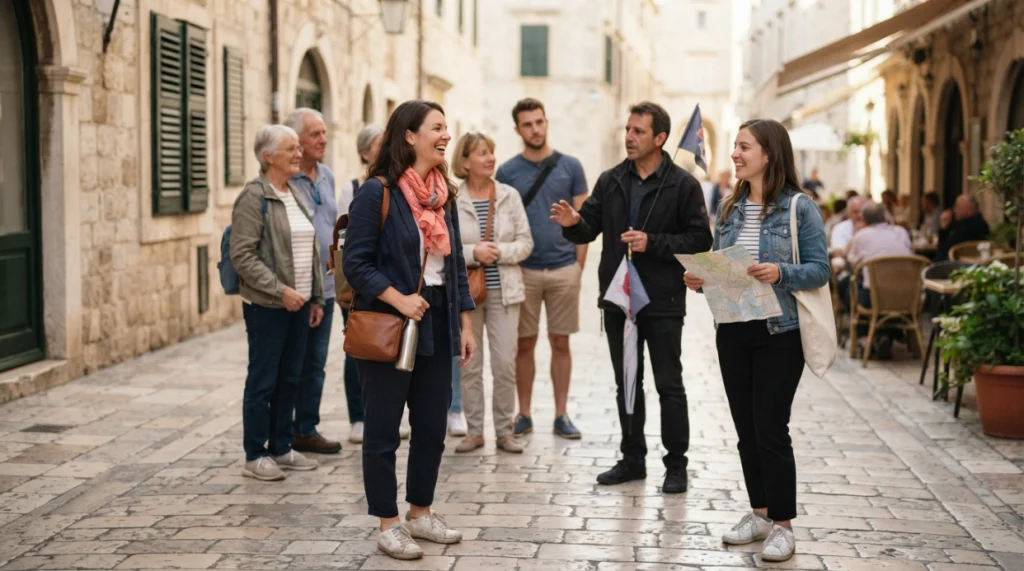
The easiest method is to put yourself in places where conversation already has a reason to happen. Structured activities usually feel simpler than approaching strangers with no shared context.
Social solo travel means traveling independently while deliberately creating opportunities to interact with other people. You still control your accommodation, itinerary, money, transport, and personal boundaries.
Build social opportunities into your itinerary
I recommend planning one social activity for your first full day. That removes the pressure of hoping you will randomly make friends.
- Walking tours: Easy for first conversations because everyone is seeing the same places.
- Food tours: Meals and tastings naturally give people something to discuss.
- Cooking classes: Small groups often work together for several hours.
- Day trips: Transport time creates repeated chances to talk.
- Language exchanges: Useful when you want conversation without needing sightseeing plans.
- Hostel events: Group dinners, games, tours, and common-room gatherings can make introductions easier.
A good first-trip rhythm is simple. Schedule one social activity, leave another part of the day free, and keep at least one meal flexible.
That balance matters. An itinerary packed from morning until night can leave no room for spontaneous invitations.
Choose repeated contact instead of chasing instant friendship
Friendship often starts through repeated small interactions. Seeing the same person at breakfast, on a tour, and later in a common room can make conversation feel natural.
This is one reason staying two or three nights in one place can feel more social than changing cities every day. You have time to recognize people.
If someone mentions visiting a museum tomorrow, you can say, “I was thinking about going there too.” That is often easier than directly asking someone to spend an entire day with you.
Section takeaway: Put yourself in social situations with built-in conversation. You do not need to become unusually outgoing to meet people while traveling alone.
Where Should a Solo Woman Stay if She Wants to Meet People?
Accommodation can influence how social your trip feels more than almost any other booking. Look for common spaces and organized activities rather than choosing solely by price.
You do not have to sleep in a shared dorm
A private room in a social hostel can give you privacy without removing the social side of hostel travel. Some properties also offer lounges, cafés, kitchens, terraces, tours, and shared dinners.
Before booking, read recent reviews for phrases such as “easy to meet people,” “friendly common area,” and “good for solo travelers.” Avoid assuming that every hostel is automatically social.
Hostelworld can be useful for comparing hostel styles, reviews, facilities, and traveler-focused features before booking.
Guesthouses and small hotels can work too
You do not need a hostel if that environment makes you uncomfortable. Small guesthouses, boutique hotels, homestays, and organized retreats can offer regular contact with staff and other guests.
- Choose breakfast spaces: Shared breakfast gives you a natural reason to see other guests.
- Look for activities: Some properties organize tours, dinners, classes, or transfers.
- Check location: A central neighborhood can make joining evening activities easier.
- Read solo reviews: Reviews from individual travelers can reveal whether a property feels welcoming or isolated.
I would prioritize a safe, convenient location over a property that is highly social but difficult to reach. Being comfortable with your surroundings makes socializing easier.
Section takeaway: Choose accommodation that gives you both privacy and optional social contact. You should never have to trade personal comfort for companionship.
How Do You Start Conversations Without Feeling Awkward?
The easiest conversation starter is usually a practical travel question. It feels natural because both of you are already experiencing the same destination.
Use questions that are easy to answer
- “Have you done the walking tour yet?”
- “How long are you staying here?”
- “Have you found a good place for dinner?”
- “What have you enjoyed most so far?”
- “Are you traveling anywhere after this?”
- “Do you know whether this tour is worth it?”
You do not need a clever opening line. A simple question followed by genuine interest usually works better.
Pay attention to the other person’s response. Short answers, headphones, limited eye contact, or turning away can mean they want space.
Turn a good conversation into a simple invitation
If the conversation flows, suggest something small. Low-commitment invitations are easier for both people.
- “I’m grabbing coffee after this if you want to join.”
- “I’m heading to the market around four.”
- “A few of us are getting dinner later.”
- “Want to walk over to the museum together?”
Avoid treating every friendly conversation as the beginning of a friendship. Some connections last ten minutes, while others continue for years.
Both are valuable. Part of solo travel is learning to enjoy temporary connections without forcing them into something bigger.
Which Activities Are Best for Meeting Other Travelers?
Activities with small groups, repeated interaction, and shared tasks usually create the easiest social environment. The best choice depends on your budget and comfort level.
| Activity | Typical Time | Planning Budget* | Social Pressure | Best For |
|---|---|---|---|---|
| Walking tour | 2–3 hours | $10–$30 equivalent including a tip | Low | First-day introductions |
| Hostel event | 1–3 hours | Free–$25 | Medium | Meeting other solo travelers |
| Cooking class | 2–4 hours | $30–$100 | Low–Medium | Shared tasks and conversation |
| Food tour | 2–4 hours | $35–$100 | Low | Conversation over shared meals |
| Language exchange | 1–2 hours | Free–$15 | Medium | Longer conversations |
| Small-group day trip | 5–10 hours | $40–$150+ | Low–Medium | Repeated contact during the day |
*Prices are broad planning estimates in USD equivalents. Costs vary significantly by country, city, season, and activity.
Walking tours are especially good on day one
A walking tour solves two problems at once. You learn the layout of the destination while meeting travelers who may also be new.
Arrive ten minutes early rather than at the final second. That short waiting period is often one of the easiest times to introduce yourself.
Classes make conversation easier for shy travelers
Cooking, pottery, surfing, dance, photography, and craft classes give your hands something to do. That reduces the pressure to keep a conversation going constantly.
You also have an automatic topic. Ask what someone made, whether they have tried the activity before, or what brought them to the destination.
Small-group tours can create longer connections
A six-hour day tour gives you more repeated interaction than a quick museum visit. Shared transport and meal stops naturally create several openings for conversation.
Do not book every day around meeting people. Leaving space for solo wandering protects one of the biggest benefits of traveling independently.
Section takeaway: Choose structured activities where conversation happens around a shared experience. You will rarely need to force an introduction.
How Can a Woman Meet New People Safely While Traveling Alone?
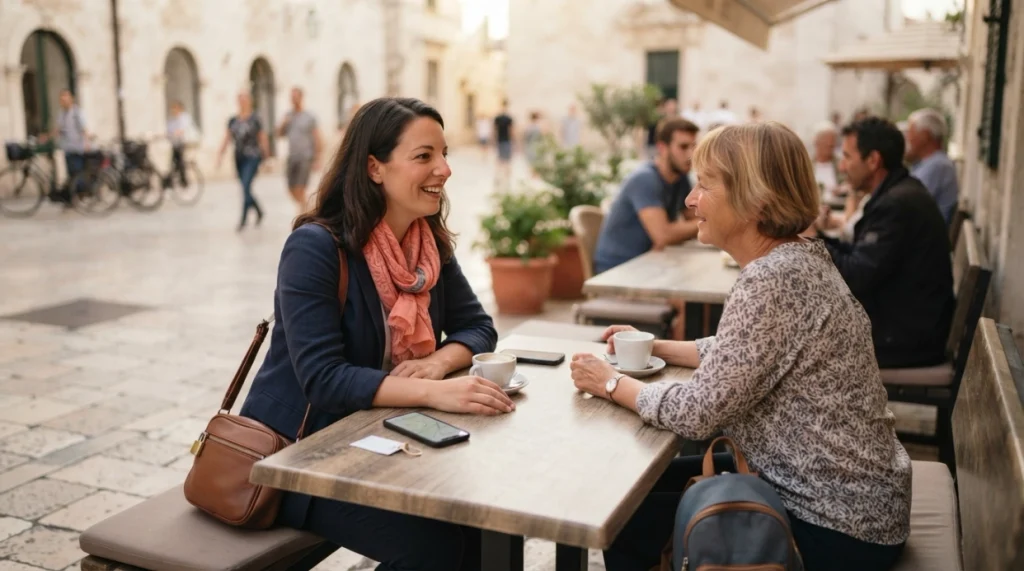
Meeting people does not require giving strangers access to your accommodation, schedule, money, or transport. Keep early interactions public and preserve your ability to leave independently.
Use public places for first meetings
- Meet somewhere busy: Choose a café, restaurant, tour meeting point, hotel lobby, market, or similar public setting.
- Control your transport: Know how you will return to your accommodation before meeting someone.
- Protect your room: Avoid giving a new acquaintance your room number or unrestricted access to where you are staying.
- Keep valuables with you: Do not hand a passport, phone, wallet, or bank card to someone you recently met.
- Limit personal details: You do not need to explain that nobody knows where you are or that you have no nearby contacts.
- Leave when uncomfortable: You never owe someone extra time because they were friendly earlier.
Consider telling a trusted person when you are meeting someone new. Share the public venue and your expected check-in time if that makes you feel more secure.
Do not let politeness override discomfort
You can change your mind at any point. “I’m heading back now” is a complete explanation.
If someone pressures you to change locations, drink more, share private information, or abandon your transport plan, step away. A respectful new friend will accept a boundary.
Check destination-specific guidance before your trip
Social norms and practical risks vary between destinations. The U.S. State Department international travel resources include destination advisories and broader guidance for international travelers.
Pro tip: Check official government guidance for your destination shortly before departure, because local conditions and travel advisories can change.
If your trip raises destination-specific health questions, use CDC Travelers’ Health or the relevant health authority for current guidance rather than relying on social media posts.
Section takeaway: Good social travel keeps your independence intact. Public meetings, personal transport, clear boundaries, and current destination information give you more control.
What if You Are Shy, Introverted, or Nervous About Meeting People?
You do not need to become an extrovert for your trip. Aim for small social moments instead of trying to become the center of every room.
Set a tiny daily social goal
Your goal could be one conversation per day. That may mean talking to another traveler at breakfast or asking someone on a tour where they are going next.
Small goals are easier to repeat. They also stop one quiet afternoon from feeling like your entire solo trip has failed.
Use activities where conversation has a purpose
Choose environments where you do not have to invent a reason to speak. Classes, tours, volunteer sessions, and shared meals provide that reason automatically.
If large hostel parties drain you, skip them. A morning walking tour may be a better match.
Give yourself permission to spend time alone
Meeting people is optional, not a requirement for a successful solo trip. Some of your favorite hours may be spent walking, reading, eating, or exploring alone.
I recommend treating social time like another itinerary choice. You can join when it feels good and step away when you need quiet.
- Social morning: Join a walking tour.
- Quiet afternoon: Explore a museum alone.
- Flexible evening: Decide whether you want dinner with people you met earlier.
This approach can reduce travel anxiety because you are not committing your entire day to strangers. You always retain an exit.
Section takeaway: Introverted travelers can meet people successfully by choosing small, structured interactions and protecting enough alone time to recharge.
Frequently Asked Questions About Meeting People on a First Solo Trip
Is it easy to make friends while traveling alone?
It can be, especially in destinations with hostels, tours, classes, and active traveler communities. However, not every conversation becomes a friendship, so focus on creating opportunities to connect rather than expecting an instant travel companion.
Are hostels the best place for women traveling alone to meet people?
Hostels can be one of the easiest options because shared spaces bring travelers together. They are not essential, though. Guesthouses, tours, classes, local events, cafés, and organized day trips can also provide social contact.
How can I meet other female solo travelers?
Look for women-focused travel communities, walking tours, hostel events, Meetup groups, classes, and local travel gatherings. When meeting someone from an online community, choose a public location and keep your own transport plan.
Should I use travel apps to meet people?
Travel communities and event platforms can help you find activities before arrival. Treat an online introduction like any other first meeting: verify the event where possible, meet publicly, and avoid depending on a stranger for accommodation or transportation.
What should I do if I feel lonely on my first solo trip?
Book one structured group activity instead of waiting for loneliness to disappear. A walking tour, class, group meal, or day trip can provide several hours of easy human contact without changing the rest of your itinerary.
Is it safe to tell people I am traveling alone?
You can decide how much information to share based on the situation. You do not need to tell a stranger where you are staying, how long you will be alone, or that nobody knows your plans.
What if I meet someone but do not want to spend the whole day together?
Keep invitations specific. Suggest coffee, one meal, or one attraction instead of committing to the entire day, then continue your own plans afterward if that is what you prefer.
Your first solo trip can be independent without being isolated. Choose social places, book one or two structured activities, start simple conversations, and keep every new connection within boundaries that feel comfortable.
For your first trip in 2026, I would plan companionship rather than leave it entirely to chance. Give yourself several ways to meet people, then enjoy the freedom to decide which connections you want to continue.