How Long Should My First Solo Trip Be as a Woman?
Quick Answer
For most women taking their first solo trip, I recommend starting with 4 to 5 days in one manageable destination. That gives you time to get past first-day nerves without committing to a long trip if solo travel feels tiring. Before booking an international trip, check the latest official travel advisory for your destination.
How I would plan a first solo trip
- Start with four nights: It gives you several full days without making the trip feel endless.
- Pick one base: Avoid changing hotels, cities, or transport every day.
- Choose easy logistics: Favor simple airport transfers, good public transport, and a central place to stay.
- Plan lightly: Book one main activity per day instead of filling every hour.
- Leave flexibility: You may want extra rest, spontaneous sightseeing, or time with people you meet.
Adjust the length when needed
- 2–3 days: Good for a nearby confidence-building test trip.
- 4–5 days: My preferred starting point for most first-time solo women.
- 6–7 days: Better if the journey is long and the destination is easy to navigate.
If you’re wondering how long your first solo trip should be as a woman, you probably aren’t only choosing a number of days. You’re trying to balance excitement, safety, loneliness, cost, confidence, and the fear of being stuck somewhere if you don’t enjoy traveling alone.
I’ve found that a first trip works best when it feels like an experiment rather than a test of bravery. This guide will help you choose a trip length that gives you enough time to grow comfortable without exhausting yourself.
In This Guide
- How many days should your first solo trip be?
- How do you choose the right trip length?
- What should a 4-day or 5-day solo itinerary look like?
- Is a weekend too short or a week too long?
- How can women make a first solo trip feel safer?
- When are you ready for a longer solo trip?
- Frequently asked questions
How Many Days Should Your First Solo Trip Be?
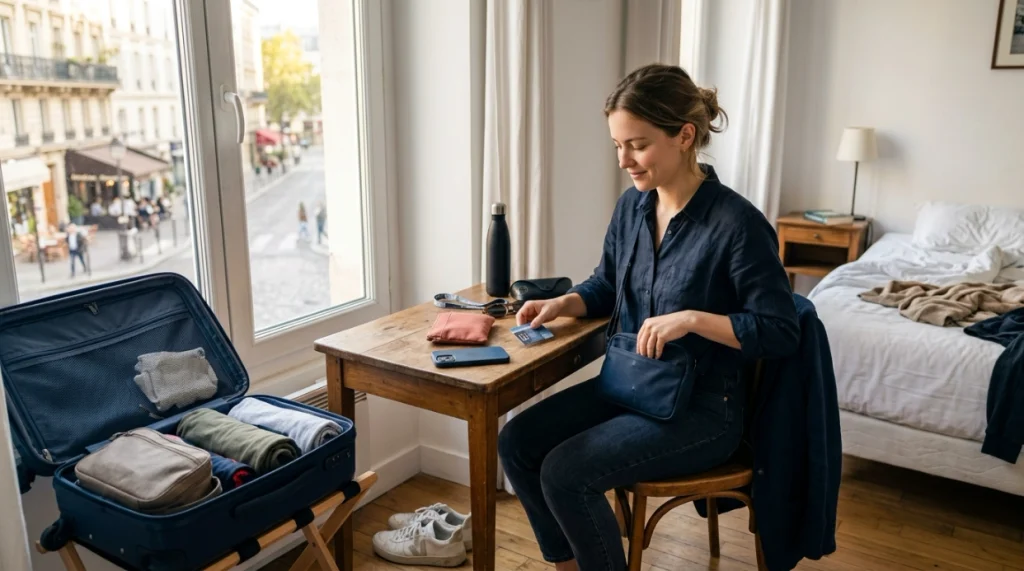
Four to five days is a practical sweet spot for many first-time solo women. It’s long enough to experience the rhythm of traveling alone but short enough to keep the commitment manageable.
The important word is “first.” You don’t need your first solo trip to prove that you can backpack alone for a month.
Solo female travel means traveling independently without a companion controlling your itinerary. You may still join walking tours, stay in social accommodation, meet friends, or spend time with other travelers.
Why four or five days works so well
Day one often isn’t representative of the whole experience. You’re navigating your arrival, finding your accommodation, learning the neighborhood, and dealing with travel fatigue.
By days two and three, simple things usually require less thought. You know where breakfast is, how the transport system works, and how long it takes to reach your accommodation.
- Day 1: Arrive, settle in, walk locally, and eat somewhere easy.
- Day 2: Explore one main neighborhood or attraction.
- Day 3: Try something more independent or spontaneous.
- Day 4: Repeat what you enjoy, take a tour, or slow down.
- Day 5: Have breakfast, take a final walk, and travel home.
That structure gives you several chances to experience solo travel after the awkward arrival period has passed.
Don’t measure success by how far you travel
Your first solo destination could be three hours from home. It can still teach you how you respond to unfamiliar places, solo meals, navigation, and independent decisions.
Lonely Planet’s current advice for women traveling solo also emphasizes easing into independence rather than forcing yourself too far outside your comfort zone at once. Their solo travel tips for women are useful reading while planning.
Section Takeaway: For most beginners, start with 4–5 days and one destination. A manageable first trip builds more useful confidence than an exhausting itinerary.
How Do You Choose the Right Trip Length?
Your ideal trip length depends on travel time, destination difficulty, budget, and how comfortable you already are doing things alone. The same number of days won’t suit every traveler.
I use five questions before deciding whether a first solo trip should be three days, five days, or a full week.
1. How far are you traveling?
A three-night trip can work beautifully when the destination is a two-hour train ride away. It makes less sense after a 12-hour flight plus several hours of airport transfers.
- Under 3 hours away: 2–4 nights can work well.
- 3–6 hours away: Consider 4–5 nights.
- Long-haul international: 6–8 nights may justify the travel time better.
Jet lag matters too. Spending half a short holiday adjusting to a large time difference can make the trip feel unnecessarily difficult.
2. How complicated is the destination?
A compact city with reliable transport generally requires less planning than a multi-island route, remote hiking region, or destination where transport must be arranged in advance.
For your first trip, simplicity has value.
- Stay in one city or region.
- Choose accommodation near places you expect to visit.
- Research your arrival route before departure.
- Avoid unnecessary hotel changes.
- Keep late-night transport requirements to a minimum.
3. How comfortable are you spending time alone?
If you already eat at restaurants alone, attend events alone, or regularly spend weekends independently, five to seven days might feel natural.
If being alone in public feels unfamiliar, try a shorter trip first. You can also practice with a solo museum day, restaurant meal, or overnight stay before departure.
4. How flexible is your budget?
Solo accommodation can make longer trips expensive because there is nobody to split a hotel room with. The cheapest trip isn’t always the one with the cheapest nightly room.
A centrally located room may cost more but reduce transport, stress, and late-night journeys.
5. What do you want this trip to prove?
I prefer asking, “What do I want to learn?” Maybe you want to discover whether you enjoy eating alone, navigating public transport, staying in hostels, or making your own itinerary.
You can answer those questions in four days. You don’t need fourteen.
Section Takeaway: Match your trip length to the destination’s difficulty and your current confidence. Distance alone should never determine the number of days.
What Should a 4-Day or 5-Day Solo Itinerary Look Like?
A beginner solo itinerary should have structure without becoming a timetable. I recommend one important activity per day, plus optional ideas for your free hours.
That leaves space for fatigue, weather changes, new friends, and those moments when you simply want coffee and an early night.
Day 1: Make arrival boring
I mean that as a compliment. Your first evening doesn’t need an epic sunset viewpoint, complicated restaurant reservation, and cross-city nightlife plan.
- Arrive during daylight when practical.
- Check in and learn the accommodation layout.
- Locate a convenience store, pharmacy, or supermarket.
- Take a short orientation walk.
- Eat somewhere straightforward.
- Get enough sleep.
On an early solo city trip, I once tried to turn arrival evening into a full sightseeing day. I remember far more about dragging my bag between transport connections than the attraction I rushed to see.
Day 2: Book one confidence-building activity
A walking tour, food tour, museum booking, cooking class, or small-group excursion gives your day an anchor. You still have several hours to yourself.
This can also reduce the strange feeling of having nobody to talk to after waking up alone in a new place.
Day 3: Practice genuine independence
By now, give yourself more freedom. Choose an area you want to see and navigate there independently.
- Use local transport.
- Have one solo meal you genuinely look forward to.
- Explore during daylight without rushing.
- Change plans if something doesn’t feel right.
Day 4: Follow your mood
This is where a four-night trip starts paying off. You’re no longer spending every hour learning how the destination works.
Return to a favorite neighborhood, meet travelers you’ve connected with, or spend the afternoon doing nothing ambitious.
Day 5: Leave margin before departure
Don’t schedule an attraction across town two hours before your flight or train. Keep departure day simple.
A calm ending often changes how you remember the entire trip.
Is a Weekend Too Short or a Week Too Long?
Neither is automatically wrong. A weekend works well as a trial run, while a full week suits travelers who have longer journeys or feel comfortable with independence.
| Trip length | Best for | Main advantage | Possible drawback |
|---|---|---|---|
| 2–3 days | Nearby test trip | Low commitment | May end just as you settle in |
| 4–5 days | Most first-timers | Balanced learning curve | Can feel short after long-haul travel |
| 6–7 days | Easy destination or long flight | More relaxed pacing | More expensive and emotionally demanding |
| 10+ days | Confident beginners with clear plans | Deeper exploration | Higher stakes if you dislike the experience |
When a weekend is enough
A two-night or three-night trip is useful when anxiety is the main barrier. Think of it as a rehearsal.
You can practice checking in alone, eating alone, navigating somewhere unfamiliar, and handling small travel problems yourself.
When a full week makes more sense
Consider six or seven days if getting there takes most of a day. A week also works when you have already spent nights away alone and know that solitude doesn’t bother you.
Condé Nast Traveler’s first-time solo travel guidance also reflects a useful principle: preparation matters more than trying to copy somebody else’s version of solo travel.
Section Takeaway: A short trip isn’t a lesser trip. Choose enough time to experience independence without making your first attempt unnecessarily complicated.
How Can Women Make a First Solo Trip Feel Safer?
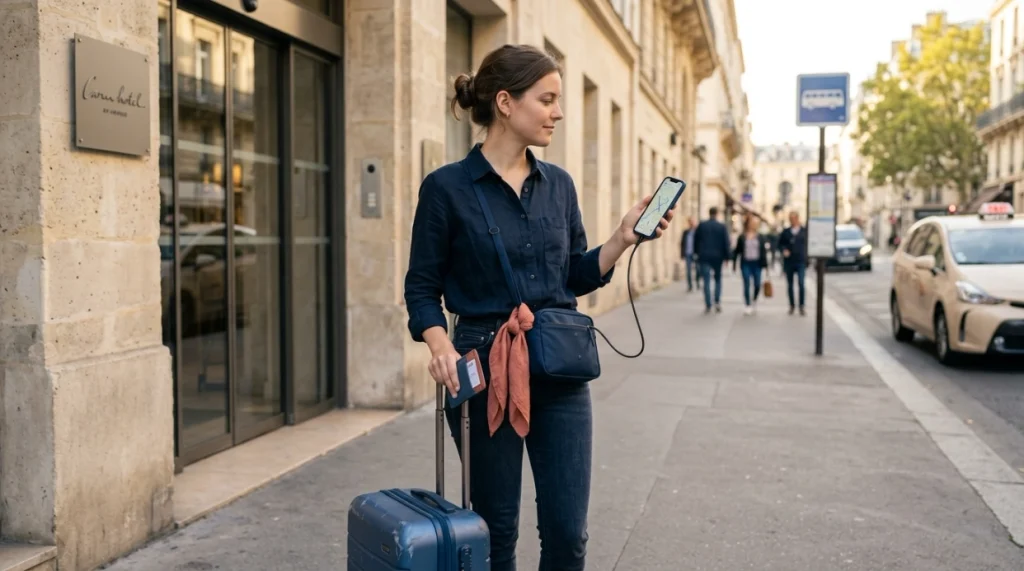
Safety starts with reducing uncertainty before you arrive. You can’t remove every travel risk, but you can avoid creating avoidable problems through rushed planning.
I pay particular attention to arrival transport, accommodation location, communication, and what I’ll do if my original plan fails.
Research the destination, not just the hotel
Read about neighborhoods, transportation, local laws, cultural expectations, common scams, and areas where visitors are advised to use extra caution.
For international trips, official government information should take priority over viral videos or old forum posts.
- Save your accommodation address offline.
- Know how you’ll get there from the airport or station.
- Keep your phone charged.
- Store emergency contacts separately from your phone.
- Share your basic itinerary privately with someone you trust.
- Avoid publicly posting your exact live location or room details.
Choose accommodation for logistics
Cheap accommodation on the edge of a city may become inconvenient when evening transportation is limited. I would rather simplify my first trip than save a small amount and create a difficult commute.
Read recent reviews with an eye toward location, reception arrangements, access, noise, and transport.
Give yourself permission to leave
You don’t owe a stranger politeness when your instincts tell you to go. You can leave a bar, cancel a ride, change seats, enter a busy shop, or return to your accommodation.
Solo travel gives you control over your plans. Use it.
Don’t forget travel health preparation
International health requirements depend on your destination and personal circumstances. The CDC advises travelers to review destination-specific health information before departure.
Pro tip: Check the CDC’s official pre-travel guidance and your destination’s official advice before an international trip, particularly when vaccines, medicines, or health notices could apply.
Section Takeaway: A safer first trip usually comes from good logistics, current information, and an easy exit plan—not from trying to predict every possible problem.
When Are You Ready for a Longer Solo Trip?
You’re ready to extend future trips when everyday solo decisions stop consuming most of your energy. You don’t need to eliminate nerves completely.
Instead, notice whether you can handle the ordinary parts of travel without feeling constantly overwhelmed.
- You can eat alone without reorganizing your entire day around avoiding it.
- You can navigate unfamiliar transport and recover from a wrong turn.
- You know when you need downtime.
- You can change plans without panicking.
- You can enjoy your own company for several hours.
- You can recognize when you want social interaction and seek it out safely.
- You manage your budget without checking it anxiously after every purchase.
Build your solo travel length gradually
If your first trip is three nights, try five or six next time. After that, a 7–10 day trip won’t feel like such a dramatic jump.
You can also increase difficulty without increasing duration. For example, try a five-day international city trip after completing a five-day domestic one.
You don’t have to become a long-term traveler
Some women discover they love two-week solo adventures. Others learn that four-day independent breaks are exactly what they enjoy.
Both are successful outcomes. Solo travel should fit your personality rather than becoming another standard you’re expected to meet.
Frequently Asked Questions
Is three days enough for a first solo trip?
Yes. Three days can be excellent for a nearby destination, especially if you’re nervous about traveling alone. Keep travel time short and stay in one place so you spend your limited time experiencing the destination rather than moving between hotels.
Is five days too long for my first solo trip?
No. Five days is one of my preferred lengths because it gives you time to settle in after arrival. It also lets you experience a few genuine solo days before you have to think about traveling home.
Should my first solo trip be domestic or international?
A domestic trip is often easier because language, phone service, payment systems, and transportation may feel more familiar. An international first trip can still work well when the destination has straightforward logistics and you’ve researched entry, transport, safety, and health requirements.
Should I stay in a hostel on my first solo trip?
Only if you like the idea of a social environment. A female-only dorm, private hostel room, guesthouse, or centrally located hotel can all work. Choose based on your comfort, budget, security needs, sleep preferences, and desired level of social interaction.
What if I get lonely during my first trip?
Plan a few natural opportunities for interaction, such as a walking tour, food class, hostel event, or small-group excursion. Loneliness during one evening doesn’t mean you dislike solo travel, just as enjoying company doesn’t make the trip less independent.
Should I plan every day before leaving?
No. Book the important pieces, including transport, accommodation, and any high-demand attractions. I prefer having one main plan per day plus optional ideas, because flexibility becomes especially valuable when you’re responsible for your own energy and schedule.
Can my first solo trip be longer than a week?
Yes, particularly if you already enjoy spending time alone and have independent travel experience. Keep the route simple, schedule rest days, and avoid assuming that a longer trip needs more destinations.
For your first solo trip as a woman, you don’t need to go far or stay away for weeks. Start with four or five manageable days, learn what kind of solo traveler you are, and let that experience shape the next adventure.
Coming home wishing you’d stayed one more day is a wonderful result. It means you’re ready to start planning trip number two.