How Big Should a Carry On Backpack Be for Easy Travel Packing
Wondering how big your carry on backpack should be? This guide breaks down ideal backpack sizes for hassle-free travel, ensuring you pack smart and travel light. Master the art of choosing the perfect carry on backpack size to breeze through airport security and fit your essentials comfortably.
Key Takeaways
- Carry on size limits: Most airlines allow backpacks between 18-22 inches in height, with volume around 35-45 liters.
- Optimal volume: A 30-40 liter backpack balances packing space and portability for most travelers.
- Dimensions matter: Pay attention to length, width, and depth to fit overhead bins and under-seat spaces.
- Pack efficiently: Use compression bags and packing cubes to maximize space.
- Weight considerations: A lighter backpack reduces strain and meets airline weight limits.
- Material and design: Choose backpacks with organized compartments and durable materials for better travel experience.
- Check airline policies: Always verify your airline’s specific carry on backpack size rules before traveling.
How Big Should a Carry On Backpack Be for Easy Travel Packing
If you love to travel light and avoid checked baggage fees, choosing the right carry on backpack size is a game changer. But how big should a carry on backpack be? Picking the ideal size lets you pack everything you need without hassle, fits airline requirements, and makes navigating airports easier.
In this guide, you’ll learn what dimensions and volume work best, how to pack efficiently, and tips for selecting a backpack that suits your travel style. Let’s dive in!
Step 1: Understand Airline Carry On Size Limits
Before buying a carry on backpack, check the size rules for your airline. Most major carriers have similar limits, but they can vary slightly.
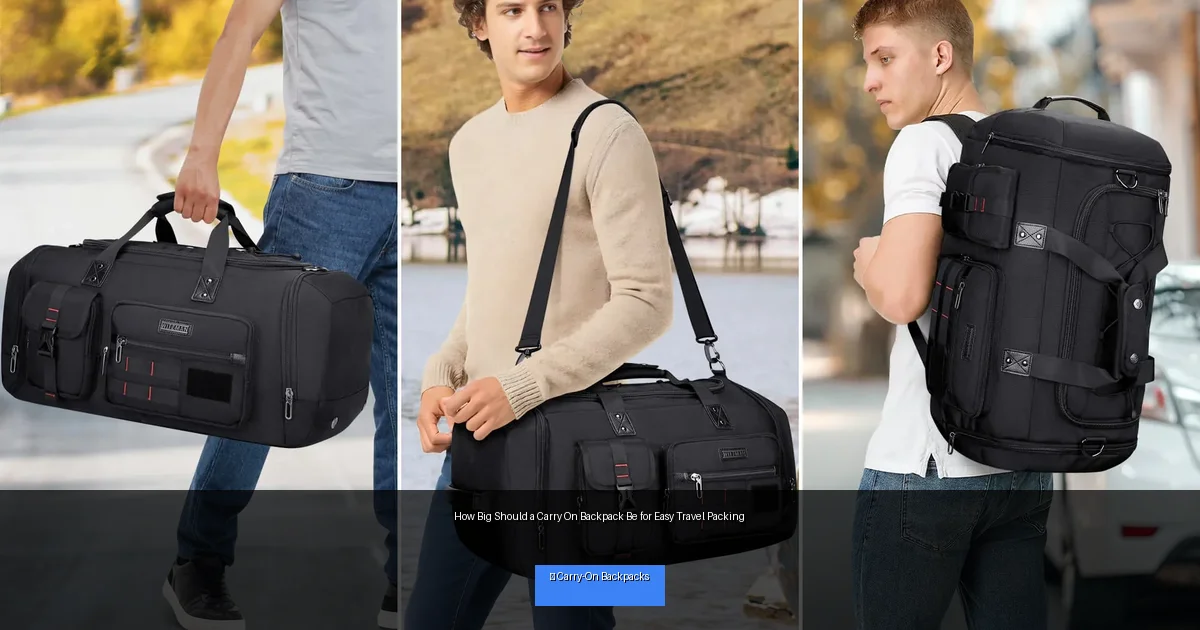
Visual guide about How Big Should a Carry On Backpack Be for Easy Travel Packing
Image source: witzman.com
Typical Size Restrictions
- Dimensions: Usually around 22 inches (height) x 14 inches (width) x 9 inches (depth).
- Volume: Roughly 35-45 liters or less.
- Weight: Often between 15-22 lbs (7-10 kg), but some airlines don’t specify weight.
Keep in mind, these sizes allow your backpack to fit in overhead bins or under the seat in front of you. Oversized bags might get gate-checked or incur fees.
How to Verify Your Airline’s Rules
- Visit the official airline website and search for “carry on baggage policy.”
- Look for maximum length, width, and height measurements.
- Check if weight limits apply to carry on items.
Step 2: Choose the Right Backpack Volume
The volume of a backpack is measured in liters. It indicates how much you can pack inside. For carry on backpacks, volume is crucial.
Ideal Volume Range
- 30-40 liters: Best for most travelers who want to pack clothes, gadgets, and essentials for trips up to a week.
- Under 30 liters: Great for minimalist packing or day trips.
- Over 40 liters: May exceed carry on size limits or become bulky.
Choosing a backpack with a volume around 35 liters gives you enough space without being too large. It’s a sweet spot for easy travel packing.
Step 3: Measure Backpack Dimensions Yourself
Don’t rely solely on volume numbers. Dimensions matter for fitting in overhead bins and under seats.
How to Measure
- Height: Measure from the bottom to the top of the backpack, including straps if they stay attached.
- Width: Measure the widest point.
- Depth: Measure from front to back at the thickest area.
Compare these measurements to your airline’s limits. If your backpack is close to the max size, be mindful that overpacking can push it over the limit.
Step 4: Consider Weight and Material
Weight affects comfort and airline compliance. A heavy empty backpack reduces the weight left for your belongings.
Lightweight Materials
- Look for backpacks made with nylon or polyester, which are durable and light.
- Avoid bulky padding or heavy hardware if you want to save weight.
- Water-resistant fabrics add protection without much weight.
Try your backpack loaded before you travel to ensure it feels comfortable and manageable.
Step 5: Use Packing Techniques to Maximize Space
Even the perfect-sized backpack needs smart packing to make the most of space.
Packing Tips
- Packing cubes: Organize clothes and accessories efficiently.
- Compression bags: Reduce bulk of clothing like jackets and sweaters.
- Roll clothes: Rolling instead of folding saves space and reduces wrinkles.
- Wear bulky items: Put heavy shoes or jackets on while traveling to save backpack space.
These methods let you fit more without expanding your backpack size.
Step 6: Choose a Backpack with Practical Features
The right features can make packing and traveling easier.
Must-Have Features
- Multiple compartments for organization
- Easy access pockets for travel documents and electronics
- Comfortable padded straps and back panel
- Durable zippers and reinforced seams
- Expandable sections, but use with care to avoid oversize packing
Try to find a carry on backpack that balances size with functionality.
Troubleshooting: What If Your Backpack Is Too Big or Small?
Backpack Too Large
- Try to downsize your belongings and repack using compression bags.
- Consider switching to a smaller backpack within airline limits.
- Check if your airline allows gate checking without fees.
Backpack Too Small
- Focus on minimalist packing and multi-use items.
- Prioritize essentials and leave non-urgent items behind.
- Use travel-sized toiletries and pack versatile clothing.
Conclusion
Choosing the right carry on backpack size is key for stress-free travel packing. Aim for a backpack around 35-40 liters with dimensions that meet airline carry on rules. Combine this with smart packing techniques and a lightweight, well-designed backpack to travel comfortably and confidently.
Remember to always check your airline’s specific size and weight restrictions before your trip. This simple step saves you time and money at the airport. With the right size backpack, you’ll enjoy easier mobility, quicker security checks, and the freedom to carry what matters most.
Happy travels!