How Can a Solo Female Traveler Create a Realistic Daily Travel Budget?
Quick Answer
A solo female traveler can create a realistic daily travel budget by pricing the trip she will actually take, not the cheapest version she can imagine. Add accommodation, food, local transportation, activities, small daily purchases, and a safety cushion, while keeping flights and other major prepaid costs separate. Before international travel, I also check current destination information through official travel guidance.
Build your daily budget in six parts
- Accommodation: Use the nightly price of a place you would genuinely feel comfortable booking alone.
- Food: Budget for normal meals, drinks, snacks, coffee, and an occasional nicer meal.
- Local transport: Include buses, trains, metro fares, taxis, rideshares, and airport transfers.
- Activities: Add admission fees, tours, classes, day trips, and other experiences you expect to book.
- Daily extras: Allow for laundry, tips, bottled water, mobile data, lockers, and small purchases.
- Safety cushion: Keep extra money available for a taxi, changed accommodation, delayed journey, or other unexpected expense.
A simple starting formula
- Daily essentials + planned experiences + flexible spending + a contingency allowance = your realistic daily travel budget.
If you’re wondering how can a solo female traveler create a realistic daily travel budget, start with your real travel habits rather than someone else’s headline number.
A $50 daily budget can sound wonderful online. It isn’t useful if it depends on a dorm you wouldn’t book, meals you wouldn’t eat, and transport you wouldn’t feel comfortable taking late at night.
I prefer a budget that gives me choices. It should cover an enjoyable normal day without making every coffee, metro ride, or taxi feel like a financial mistake.
In This Guide
- What Should a Realistic Daily Travel Budget Include?
- How Do You Calculate a Daily Travel Budget?
- Which Costs Are Different When You Travel Alone?
- How Much Should You Budget for Safety and Flexibility?
- What Does a Realistic Daily Travel Budget Look Like?
- How Can You Stay on Budget Without Ruining Your Trip?
- Frequently Asked Questions
- Final Takeaway
What Should a Realistic Daily Travel Budget Include?
A realistic daily travel budget covers the expenses you are likely to pay during an ordinary day at your destination. It should reflect your comfort level, travel style, itinerary, and personal priorities.
Definition: A daily travel budget is the average amount you plan to spend each day on accommodation, food, local transportation, activities, and flexible expenses while traveling.
I usually separate daily costs from large prepaid expenses. That keeps the number much easier to use once I arrive.
Separate fixed trip costs from daily spending
Some travel expenses happen before your first sightseeing day. Don’t hide them inside an unrealistic daily estimate.
I put these in my fixed trip costs category:
- Flights, long-distance trains, or buses to reach the destination
- Visa or entry authorization fees
- Travel insurance
- Pre-trip vaccines or health preparation when needed
- Checked baggage or other major transportation fees
- Airport parking or transportation from home
Then I build my daily spending number around costs that repeat during the trip.
- Accommodation
- Meals and drinks
- Local transportation
- Attractions and activities
- Small personal expenses
- A flexible daily allowance
Base the number on your own comfort level
There is no universal “correct” daily budget for solo female travel. Two women visiting the same city can need completely different amounts.
One may enjoy a six-bed hostel dorm and cook dinner. Another may want a private hotel room near a central metro station.
Neither budget is wrong.
Your realistic number is the one that matches the choices you’re likely to make after a tiring day, not the choices you make while trying to create the lowest spreadsheet total.
Check prices for your actual travel dates
Season matters. A room that costs $70 during a quiet month may cost much more during a festival, holiday, or peak season.
Search accommodation, transport, and major activities using your real dates. For broader destination research, resources such as Lonely Planet can help identify the types of costs you need to investigate.
Section Takeaway: Build your daily budget around the trip you would comfortably take, not the cheapest theoretically possible trip.
How Do You Calculate a Daily Travel Budget?
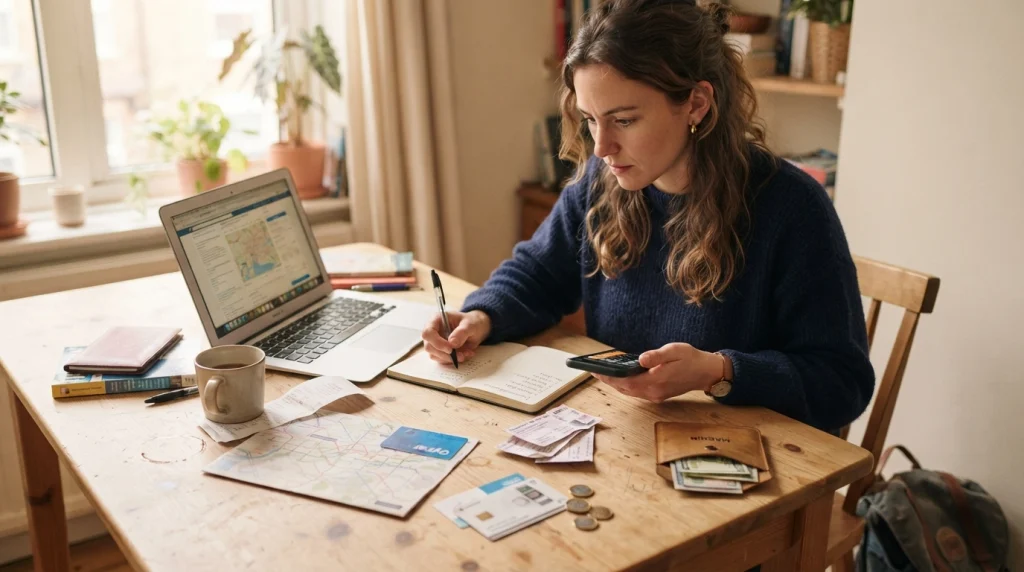
The easiest method is to calculate five normal spending categories, then add a small flexible allowance. Use current prices from your destination rather than copying another traveler’s budget.
Step 1: Price your accommodation per night
Accommodation often takes the largest share of a solo travel budget. Start here.
Search for three to five places you would genuinely book. Compare the final nightly price, including mandatory taxes or fees when they are shown.
Don’t use the cheapest listing just to lower the calculation.
I also check the property’s location against the places I expect to visit. Saving $15 on a room can be pointless if I then spend $20 each day getting across town.
Step 2: Build a normal food day
Instead of writing “food: $20,” imagine an ordinary day. This catches the small expenses that generic estimates miss.
- Breakfast: hotel breakfast, bakery, café, or groceries
- Lunch: casual restaurant, market, or takeaway
- Dinner: normal restaurant meal or groceries
- Drinks: coffee, tea, water, or other beverages
- Snacks: fruit, convenience-store items, or something between activities
If you enjoy one nicer dinner every few days, include it. A realistic budget doesn’t require pretending you will suddenly develop different habits on vacation.
Step 3: Calculate transportation from your itinerary
Local transportation depends heavily on where you stay and what you plan to do. Don’t automatically use one generic daily transit number.
Look at your likely movements first.
- Airport or station transfer
- Metro, train, tram, or bus fares
- Occasional taxi or rideshare
- Intercity transport
- Ferries or local transfers
- Parking, tolls, or fuel if driving
I often price my arrival separately because it may cost more than a normal day. A late-night arrival can also change the transportation option I choose.
Step 4: Average your activities across the trip
Your activity spending will rarely be identical each day. Average it instead.
Suppose a five-day trip includes a $60 tour, a $25 museum ticket, and a $40 cooking class. That’s $125, or an average of $25 per day.
This method creates a smoother daily target.
Step 5: Add the expenses nobody remembers
Small costs can quietly break an otherwise good budget.
- Laundry
- Luggage storage
- SIM or eSIM data
- Public bathrooms
- Tips where customary
- ATM or card fees
- City taxes
- Lockers
- Convenience purchases
- Small souvenirs
I normally add a modest “daily extras” amount instead of trying to predict every individual purchase.
Step 6: Add a flexible margin
A budget that works only when everything goes perfectly is too tight for me. I want room for changed plans.
A practical approach is to add roughly 10% to 20% to ordinary variable spending, depending on the destination and how much uncertainty the trip involves.
This is planning guidance, not a universal requirement. Expensive, remote, or logistically complicated trips may justify more flexibility.
Section Takeaway: Calculate what one normal day costs, average irregular activities across the trip, then leave breathing room for the unexpected.
Which Costs Are Different When You Travel Alone?
Solo travelers don’t automatically split rooms, taxis, rental cars, or some tour expenses with another person. That can make the per-person cost different from a couple’s or group’s budget.
Accommodation can cost more per person
A $100 hotel room costs $50 each when two people share it. Alone, the full $100 belongs in your budget.
Hostels can lower that cost, but choose them because they suit you. Don’t build a hostel budget if you know you want privacy.
Some transportation costs aren’t shareable
A taxi from the airport may cost the same whether one or three people ride inside. Rental cars, fuel, tolls, and parking behave similarly.
Public transportation can reduce this solo premium. Staying in a walkable area can also help.
Convenience may be worth budgeting for
I don’t treat every taxi as a budgeting failure. Sometimes spending more is a sensible choice.
Examples include:
- Arriving after public transportation has stopped
- Carrying luggage through an unfamiliar area
- Returning after an evening activity
- Avoiding an exhausting chain of transfers
- Changing plans when local conditions make the original route impractical
That money belongs in the plan before departure. It shouldn’t have to come from tomorrow’s food allowance.
Private experiences may carry a premium
Some tours need a minimum number of participants. Others charge more for private bookings or single occupancy.
Read the final booking terms before adding an activity to your budget. The headline price may assume two travelers or a larger group.
Section Takeaway: Solo travel can cost more per person because fewer expenses are shared, so price your trip as one traveler from the beginning.
How Much Should You Budget for Safety and Flexibility?
There isn’t one correct “safety budget.” I prefer keeping enough flexible money to change transportation, accommodation, or travel plans without depending on debt.
Your reserve should remain separate from money already allocated to meals and sightseeing.
Create two different buffers
I find it useful to distinguish between everyday flexibility and genuine emergency money.
- Flexible trip cushion: Extra money for price changes, taxis, an added meal, replacement toiletries, or minor changes.
- Emergency reserve: Money you don’t expect to use unless a significant problem occurs.
Keeping them separate prevents a normal expensive day from consuming the money meant for a serious disruption.
Don’t choose accommodation on price alone
Location can affect both convenience and cost. Research the neighborhood, transportation options, check-in process, and route back to your accommodation.
A cheaper room far from your planned activities may create repeated transportation expenses. It may also reduce your flexibility in the evening.
Include insurance in the total trip budget
Travel insurance isn’t a daily coffee-and-meals expense, so I list it under fixed costs. Still, it belongs in the overall trip calculation.
Coverage varies substantially. Read the policy terms, exclusions, medical coverage, cancellation conditions, and emergency assistance details before buying.
For international travel, the U.S. Department of State recommends considering travel medical insurance because domestic health coverage may not apply abroad. Travelers should check their own insurance arrangements and destination requirements.
Pro tip: Review current destination advisories before departure and check CDC Travelers’ Health for destination-specific health guidance. Requirements and conditions can change.
Keep backup payment separate
I don’t like having every payment method in one wallet. Losing one bag shouldn’t remove access to all my money.
A practical backup plan may include:
- A second card stored separately
- A limited amount of emergency cash
- Access to an emergency account
- Digital copies of important financial contact details
Check foreign transaction fees, ATM charges, and card acceptance before departure.
Section Takeaway: A realistic budget protects your ability to change plans. Keep everyday flexibility and true emergency money separate.
What Does a Realistic Daily Travel Budget Look Like?
A useful daily budget shows where the money goes. The example below is a planning exercise, not a claim about prices in any specific destination.
| Category | Budget Day | Midrange Day | What to Check |
|---|---|---|---|
| Accommodation | $35 | $90 | Final nightly rate, location, taxes |
| Food and drinks | $25 | $50 | Three meals, water, coffee, snacks |
| Local transport | $10 | $25 | Transit plus occasional taxi |
| Activities | $15 | $40 | Average planned activities across trip |
| Daily extras | $10 | $20 | Laundry, data, tips, small purchases |
| Base daily total | $95 | $225 | Before extra contingency money |
These numbers are deliberately generic. A destination could cost far less or far more depending on season, location, currency, and travel style.
Turn a daily figure into a trip budget
Imagine the base daily budget is $120 and you’ll travel for seven days. Seven daily budgets equal $840.
Then add costs that don’t belong inside that daily figure.
- Round-trip flight: $500
- Seven days of daily spending: $840
- Travel insurance: $70
- Pre-trip expenses: $60
- Flexible trip cushion: $150
- Separate emergency reserve: $400
The planned trip cost would be $1,620 before the emergency reserve. With that reserve accessible, the total amount available becomes $2,020.
The emergency money isn’t permission to spend another $400. It is protection against an unexpected problem.
Use averages instead of forcing every day to match
Your Tuesday might cost $70 while your Wednesday costs $180 because of a tour. That’s normal.
I care more about the trip-wide average than winning a budgeting contest every night.
Section Takeaway: Treat a daily budget as an average planning tool, then add fixed trip expenses and emergency money separately.
How Can You Stay on Budget Without Ruining Your Trip?
Staying on budget doesn’t mean choosing the cheapest option every time. It means spending deliberately on the things that matter to you.
Choose two or three priorities
Before departure, decide where you’re happy to spend more. Then save on categories you care about less.
For example:
- Spend more on a central private room but eat simple lunches.
- Choose an inexpensive hostel but reserve money for tours.
- Walk and use public transportation so you can afford better restaurants.
- Take a shorter trip rather than making every day financially uncomfortable.
A budget works better when it reflects your priorities.
Track spending in broad categories
You don’t need to record every purchase in a complicated spreadsheet while traveling. A simple daily note can be enough.
- Accommodation
- Food
- Transportation
- Activities
- Extras
At the end of each day, compare the total with your expected average. Look for patterns instead of criticizing one expensive meal.
Review your average every few days
If you spend $30 over budget today and $25 under tomorrow, little needs to change. Daily travel spending naturally moves around.
If you’re consistently overspending, identify the category causing it.
Accommodation is difficult to change once booked. Food, taxis, shopping, and unplanned activities may offer more flexibility.
Don’t cut the wrong expense
If the budget becomes tight, I would rather reduce shopping or skip a low-priority attraction than remove money needed for practical transportation or comfortable accommodation.
Cheap travel should still be workable travel.
Recheck information before an international trip
Travel conditions, entry rules, transportation disruptions, and health guidance can change after you make your first budget.
As of 2026, I still treat a budget as a living plan. I check important arrangements again before departure rather than assuming my early research remains current.
For general trip inspiration and budget-travel techniques, established travel resources such as Nomadic Matt can provide ideas, but verify safety, health, entry, and legal information with official sources.
Section Takeaway: Spend according to your priorities, monitor your trip-wide average, and protect the expenses that keep the journey comfortable and practical.
Frequently Asked Questions
How much money should a solo female traveler budget per day?
There is no universal daily amount. Calculate accommodation, food, transportation, activities, and extras using prices for your destination and dates. Then add a flexible cushion rather than relying on a generic $50, $100, or $200 daily figure.
Should flights be included in a daily travel budget?
I prefer keeping flights outside the daily budget because they are usually large, fixed expenses. Calculate them as part of your total trip cost, then use your daily budget for accommodation and expenses that occur while you’re away.
How much extra money should I take for unexpected expenses?
A 10% to 20% flexible allowance can be a useful starting point for ordinary surprises, but it isn’t a universal rule. Keep a separate emergency reserve as well, especially when traveling internationally, remotely, or somewhere with expensive transportation.
Should I budget more when traveling alone?
Sometimes. Solo travelers can’t automatically divide hotel rooms, taxis, rental cars, or other shared expenses. Price everything as a party of one before booking so your budget reflects what you will actually pay.
How can I estimate food costs before visiting a destination?
Build a sample day using menus and prices from places you could realistically visit. Include breakfast, lunch, dinner, drinks, coffee, snacks, and occasional nicer meals instead of relying only on the cheapest food estimates.
What travel expenses are easiest to forget?
Commonly missed costs include airport transfers, baggage charges, city taxes, ATM fees, mobile data, laundry, lockers, tips, bottled water, luggage storage, and small convenience purchases. Adding a daily extras category helps cover them.
Should a travel emergency fund count as part of my daily budget?
No. I prefer keeping emergency money separate from the daily spending target. Your daily budget covers the planned trip, while the emergency reserve protects you if a major disruption, medical issue, replacement ticket, or unexpected accommodation change occurs.
Create a Budget That Lets You Enjoy the Trip
A realistic solo female travel budget isn’t the smallest number you can force onto a spreadsheet. It’s a plan that matches how you genuinely expect to travel.
Start with real accommodation prices. Add normal meals, transportation, activities, everyday extras, and enough flexibility to change plans when necessary.
Then separate fixed trip expenses and emergency money from your daily spending number.
That approach gives you something much more useful than an impressive low-budget estimate: a daily figure you can actually live with once the trip begins.
Before booking, price one ordinary day in your destination. If that day feels comfortable financially and still leaves room for surprises, you’re much closer to a travel budget you can trust.