What Hidden Costs Should a Woman Include in a Solo Travel Budget?
Quick Answer
When deciding what hidden costs should a woman include in a solo travel budget, count more than flights, hotels, and meals. Budget for baggage, airport transfers, accommodation taxes, mobile data, card fees, tips, laundry, solo supplements, late-night transportation, travel insurance, and an emergency reserve. Before an international trip, I also check current entry and safety information through official travel guidance.
Hidden costs to budget for
- Arrival costs: Airport trains, taxis, luggage storage, early check-in, or a meal while waiting for your room.
- Solo-only expenses: Hotel rooms, taxis, rental cars, and some tours cost more when there is nobody to split them with.
- Safety flexibility: Leave money for a taxi, better accommodation, or changed route when the cheaper option no longer feels practical.
- Payment fees: Foreign transaction charges, ATM fees, poor exchange rates, and cash withdrawal fees can add up.
- Daily extras: Water, coffee, tips, lockers, bathrooms, laundry, sunscreen, medication, and small booking fees are easy to overlook.
- Emergency reserve: Keep backup money separate from your normal sightseeing and food budget.
My simple budgeting rule
- Price the trip you will realistically take, then keep part of your money uncommitted for changes you cannot predict.
Solo travel budgets often look wonderfully neat before departure. Then baggage fees, airport rides, bottled water, taxes, and one unexpected taxi begin nibbling at the number.
I have learned to budget for the boring expenses before I reserve the exciting ones. That makes solo travel feel far less stressful when plans change.
In This Guide
- What hidden costs belong in a solo travel budget?
- Which hidden costs appear before the trip even starts?
- Which expenses cost more when you travel alone?
- Which small daily expenses are easiest to underestimate?
- How much should you keep for safety and emergencies?
- How do you build a realistic solo travel budget?
- Frequently asked questions
What Hidden Costs Belong in a Solo Travel Budget?
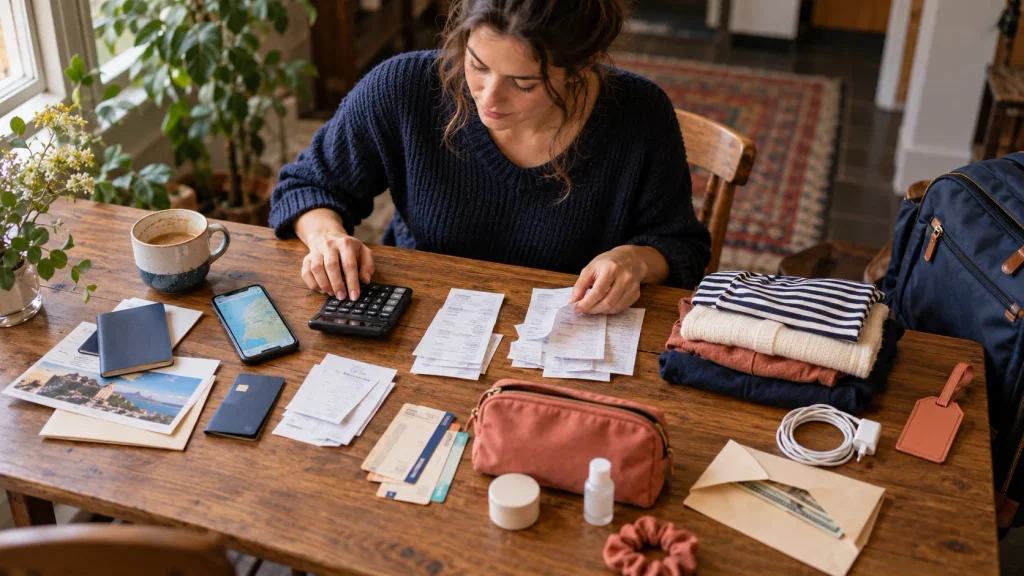
A realistic solo travel budget includes every cost required to leave home, reach your destination, function comfortably there, and return home. It should also leave room for problems you cannot predict.
Definition: A solo travel budget is the full amount available for transportation, accommodation, food, activities, trip preparation, personal safety, communication, fees, and unexpected expenses when traveling independently.
The key word is full. A $500 flight and a $700 hotel do not make a $1,200 trip.
Think in cost layers instead of one total
I divide my budget into separate layers. This makes missing expenses easier to spot.
- Pre-trip costs: Passport, visa, insurance, travel gear, medication, luggage, and transportation to the airport.
- Fixed trip costs: Flights, trains, accommodation, prepaid transfers, and reserved tours.
- Daily costs: Meals, local transportation, attractions, drinks, and personal spending.
- Solo-only costs: Expenses you cannot divide with another traveler.
- Flexibility costs: Money available when the cheapest plan no longer works.
- Emergency money: Funds reserved for genuine disruptions rather than ordinary spending.
A sample seven-day hidden-cost checklist
The numbers below are planning examples, not universal prices. Your destination, currency, season, and travel style can change them dramatically.
| Hidden cost | Example allowance | Why it gets missed |
|---|---|---|
| Baggage and seat fees | $30–$150+ | The headline fare may not include everything you need. |
| Airport and station transfers | $20–$100+ | Travelers often price only the main flight or train. |
| Mobile data | $10–$50 | An eSIM, SIM card, or roaming plan feels small until added later. |
| Tips and service charges | $20–$100+ | Customs differ by destination and type of service. |
| Laundry and toiletries | $10–$40 | Small practical purchases rarely appear on an itinerary. |
| Payment and ATM fees | $10–$60+ | Several small transaction charges can accumulate. |
| Flexibility money | Trip-specific | It is intentionally unspent unless your plans change. |
I would rather return home with unused buffer money than discover halfway through a trip that every remaining dollar already has a job.
Section Takeaway: A complete solo travel budget includes preparation, daily spending, solo-only costs, flexibility money, and a separate emergency reserve.
Which Hidden Costs Appear Before the Trip Even Starts?
Some of the easiest costs to overlook happen before you leave home. They can make an apparently affordable trip significantly more expensive.
Travel documents and entry expenses
International trips may involve passport costs, visa fees, entry permits, required photographs, document delivery, or transport to an appointment. Requirements depend on nationality and destination.
Check official government information rather than assuming an old blog post still applies. Rules and fees can change.
Travel insurance
Travel insurance is another line that disappears from optimistic budgets. The price varies by destination, trip value, age, duration, and coverage.
Read the policy rather than choosing only by price. Cancellation, delays, medical care, baggage, exclusions, and deductibles can matter differently on each trip.
Pro tip: Check official destination guidance and health information before buying coverage. The CDC Travelers’ Health section is a useful starting point for international health planning.
Getting to your departure point
The journey often begins before the flight. Include the train, bus, fuel, parking, tolls, or taxi needed to reach the airport or station.
An early departure can change the calculation. Public transportation that works at noon may not run at 4:30 a.m.
Luggage and airline extras
A cheap fare can become less cheap after you add a checked bag, cabin bag, seat selection, or food. Compare the final fare for the way you intend to travel.
- Checked baggage
- Cabin baggage charges
- Seat selection
- Priority boarding
- Oversize or overweight baggage
- Food during long travel days
Gear you buy because you are traveling
You may already own everything you need. First trips, however, often trigger several small purchases.
- Travel adapters
- Power bank
- Luggage lock
- Comfortable walking shoes
- Weather-specific clothing
- Small toiletries
- Medication or first-aid supplies
I keep this category separate from my destination budget. Otherwise, I can convince myself a $40 purchase somehow did not count because I bought it two weeks before departure.
Section Takeaway: Start tracking expenses when you begin preparing for the trip, not when the plane takes off.
Which Expenses Cost More When You Travel Alone?
Solo travel does not automatically cost more in every category. It does make certain fixed costs harder to divide.
Accommodation is the biggest example
A $140 hotel room costs $70 each when two people share it. Traveling alone means the entire $140 belongs to your budget.
Hostels can reduce that difference, but a private room may still be important to you. Budget for the accommodation you will genuinely book.
Watch for the solo supplement
A solo supplement is an extra charge sometimes applied when one person occupies accommodation or joins a trip priced around double occupancy. It is especially relevant to cruises and some organized tours.
Always compare the single-traveler total before treating the advertised per-person rate as your actual price.
Taxis and private transfers are not shared
A $40 airport taxi is $40 when you are alone. This matters more when the destination has limited public transportation.
I estimate at least one or two private rides even when I intend to use transit. Plans change after delays, bad weather, or an exhausting travel day.
Safety and convenience sometimes deserve their own budget
I do not want saving $12 to force me into a transport option I dislike late at night. I treat that extra taxi fare as flexibility rather than failure.
The same principle applies to accommodation. A central room can cost more while saving time, transportation, and mental energy.
- Late arrival: You may prefer a taxi or official airport transfer.
- Changed accommodation: You may need another room if the original option becomes impractical.
- Long walk after dark: A short rideshare can replace the cheapest route.
- Missed connection: You may need an extra hotel night or replacement ticket.
This is one reason I never spend my entire travel budget before leaving home.
Section Takeaway: Solo-only expenses are not just room prices. Transportation, tours, transfers, and flexibility can all cost more when nobody shares the bill.
Which Small Daily Expenses Are Easiest to Underestimate?
Small purchases cause more budget drift than one obvious hotel bill. They are easy to ignore because each transaction seems harmless.
Food costs beyond three meals
A daily food estimate should include what you realistically consume. Coffee, water, snacks, desserts, and convenience purchases belong in the calculation too.
- Breakfast
- Lunch
- Dinner
- Coffee or tea
- Drinking water
- Snacks
- Tips or service charges where applicable
Airport and station food can also cost more than your normal meals. I assign travel days a slightly different food budget for that reason.
Local transportation beyond the obvious rides
A transit pass may cover most journeys, but it may not cover airport trains, regional services, ferries, or special routes.
Check the transportation system you will actually use. A cheap attraction becomes less cheap when reaching it requires several extra fares.
Accommodation extras
The advertised nightly rate is not always the final amount. Depending on the property and destination, your stay may include taxes or optional services.
- Local or city taxes
- Resort or property fees
- Breakfast
- Luggage storage
- Locker charges
- Laundry
- Parking
- Early check-in or late checkout
Cash withdrawals and currency conversion
International spending can involve your bank’s foreign transaction fee, an ATM operator’s fee, and the exchange rate. Check your own card terms before departure.
I also avoid treating unfamiliar foreign currency like play money. Converting larger purchases back into my home currency helps me stay grounded.
For live exchange-rate reference, I check a recognized currency service such as XE, then remember that my bank or card may use a different final rate.
Connectivity costs
Mobile data is important to my solo travel routine because I use maps, transportation apps, messages, and reservation details throughout the day.
- eSIM or local SIM
- Roaming plan
- Phone calls
- Extra data
- Charging cables or replacement adapters
Activities have secondary costs
A $25 museum ticket might also involve transportation, a locker, an audio guide, and lunch nearby. A day tour may require tips or meals not included in the listed rate.
I read the inclusion list before deciding what an activity really costs.
Section Takeaway: Track a realistic day, not an idealized one. Water, coffee, fees, transport changes, and small conveniences belong in your budget too.
How Much Should You Keep for Safety and Emergencies?
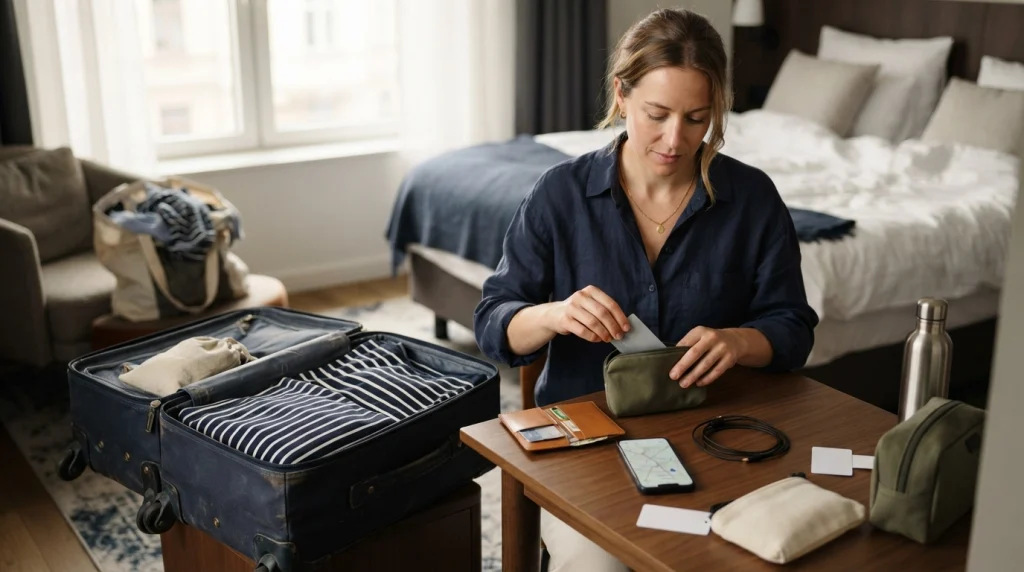
Your emergency fund should be separate from ordinary spending. There is no universal dollar amount that fits every traveler or destination.
Instead, build the reserve around the problems you may realistically need to solve.
Separate a flexibility buffer from emergency money
I use two different categories because not every unexpected expense is an emergency.
- Flexibility buffer: A taxi, changed activity, forgotten item, extra meal, or moderate price increase.
- Emergency reserve: Replacement transportation, an extra night, urgent medical needs, lost essentials, or a significant trip disruption.
For many trips, keeping roughly 15% to 25% above planned spending can provide useful flexibility. Your actual amount should reflect the destination and your financial situation.
Think about what one bad day could cost
Ask what you would need if several plans failed on the same day. That exercise produces a more useful number than choosing an arbitrary percentage.
- Could you pay for a replacement train or flight?
- Could you book one additional hotel night?
- Could you take a taxi across the city?
- Could you replace a lost charger or essential medication?
- Could you buy food for another day?
Keep backup payment separate
I prefer not to rely on one card. A backup payment method stored separately gives me another option if a card is lost, blocked, or rejected.
That does not mean carrying a large amount of cash. The right mix depends on the destination and your own financial setup.
Pro tip: For international travel, review current destination information shortly before departure. Government guidance can help you identify local laws, entry rules, disruptions, and practical risks that may affect your backup planning.
Section Takeaway: Budget enough to solve a problem without immediately sacrificing accommodation, meals, or your journey home.
How Do You Build a Realistic Solo Travel Budget?
Build the budget from the outside in. Start with the maximum amount you can comfortably spend, then give every major category a realistic allowance.
Step 1: Set your total ceiling
Choose a number that will not interfere with rent, bills, debt payments, or essential savings at home. That is your ceiling, not your target to exhaust.
Step 2: Add fixed costs first
- Round-trip transportation
- Accommodation
- Visa or entry expenses
- Travel insurance
- Required baggage
- Prepaid tours or tickets
Step 3: Calculate one realistic travel day
Estimate what an ordinary day costs instead of guessing one daily total. Research current destination prices for your actual dates.
- Three meals plus drinks
- Local transportation
- One attraction or activity allowance
- Small purchases
- Tips or service charges where relevant
Step 4: Add hidden and solo-only costs
Now use the hidden-cost categories from this guide. This is where you add transfers, data, card fees, laundry, and solo supplements.
Step 5: Add flexibility money
Keep some of your total uncommitted. I find this more useful than pretending every day will follow the spreadsheet perfectly.
Step 6: Protect your emergency reserve
Do not count emergency money as available souvenir or restaurant money. Its job is to remain untouched unless something meaningful changes.
Example: turning a $2,000 ceiling into a working budget
This example is only a planning model. It is not a recommendation for any particular destination.
| Category | Example |
|---|---|
| Main transportation | $450 |
| Accommodation | $600 |
| Food | $280 |
| Local transportation | $100 |
| Activities | $150 |
| Insurance, data, fees, and small extras | $120 |
| Uncommitted reserve | $300 |
| Total ceiling | $2,000 |
Notice that the plan does not assign every dollar to fun spending. The remaining $300 is deliberately available if reality looks different from the original spreadsheet.
As of 2026, I still find this category-based approach more dependable than using one generic daily budget from social media. Destination prices vary too much for a single universal number.
For broader destination research, resources such as Lonely Planet can help identify transportation, neighborhoods, attractions, and other costs worth researching before you finalize your numbers.
Section Takeaway: Build the trip from fixed costs, realistic daily spending, hidden expenses, flexibility money, and a protected emergency reserve.
Frequently Asked Questions About Hidden Solo Travel Costs
How much extra money should I budget for a solo trip?
There is no universal amount, but keeping roughly 15% to 25% above your planned spending can provide useful flexibility for many trips. Expensive, remote, or complicated destinations may justify a larger reserve.
What is the most commonly forgotten solo travel expense?
Airport transfers are easy to underestimate because travelers focus on the main flight. Baggage fees, mobile data, local taxes, ATM charges, tips, and late-night transportation are other common omissions.
Why can solo travel cost more than traveling with someone?
Solo travelers cannot automatically split hotel rooms, taxis, rental cars, or some private tours. Cruises and organized trips may also charge a solo supplement when prices assume two people will share accommodation.
Should emergency money be part of my normal travel budget?
It should be part of your total financial plan but separate from ordinary spending. Treat emergency funds as money for significant disruptions rather than an extra restaurant, souvenir, or optional activity fund.
Should I include shopping and souvenirs in my budget?
Yes, if you expect to buy them. Set a separate discretionary spending limit so shopping does not quietly consume money meant for meals, transportation, accommodation, or emergencies.
How can I avoid foreign transaction and ATM fees?
Check your own bank and card terms before leaving. Compare foreign transaction fees, ATM charges, withdrawal limits, and currency conversion practices so you understand the likely cost before using the card abroad.
Do I need a bigger budget as a first-time solo female traveler?
Not necessarily, but extra flexibility can make a first trip easier. Enough money for a direct ride, central accommodation, changed booking, or extra night means you do not have to force the cheapest option when circumstances change.
The best solo travel budget is not the one with the lowest possible number. It is the one that lets you enjoy your trip while still having options when the day does not go as planned.
Before booking, write down the hidden costs beside the exciting ones. If your budget still works after that, you have a far more realistic picture of what your solo trip will actually cost.