What Should a Woman Do If a Hostel Roommate Makes Her Uncomfortable?

Quick Answer
If a hostel roommate makes you uncomfortable, trust your instincts, create distance, and move to a public area or reception if you feel unsafe. Tell hostel staff what happened and request a different room or dormitory. If someone threatens, touches, follows, or prevents you from leaving, prioritize getting to safety and contact local emergency services if necessary.
What to do first
- Trust your discomfort: You don’t need to prove someone’s intentions before protecting your personal space.
- Create distance: Move somewhere other guests and staff can see you.
- Contact reception: Explain the behavior and ask for a safe room change.
- Record incidents: Keep factual notes and save relevant messages if it is safe to do so.
- Protect your belongings: Keep your phone, passport, money, and room key with you.
- Escalate serious threats: Contact security or local emergency services if you face immediate danger.
Remember
- You don’t owe a roommate friendliness, a private conversation, or another chance.
- You can request a room change even if the behavior seems difficult to explain.
Knowing what to do if a hostel roommate makes you uncomfortable can help you protect your safety without abandoning your solo trip. Shared accommodation can be affordable and sociable, but sharing a room also means navigating boundaries with people you may have just met.
When planning solo trips, I believe personal comfort deserves the same attention as location, budget, and transport. This guide explains how to respond to unwanted attention, recognize escalating behavior, approach hostel management, and decide when leaving is the safest option.
In This Guide
- 1. How do you know when a roommate’s behavior is concerning?
- 2. What should you do immediately when you feel unsafe?
- 3. How can you set boundaries without escalating the situation?
- 4. How should you report a roommate to hostel management?
- 5. Should you stay, change rooms, or leave the hostel?
- 6. How can you protect yourself during the rest of your solo trip?
- 7. Frequently asked questions
1. How Do You Know When a Roommate’s Behavior Is Concerning?
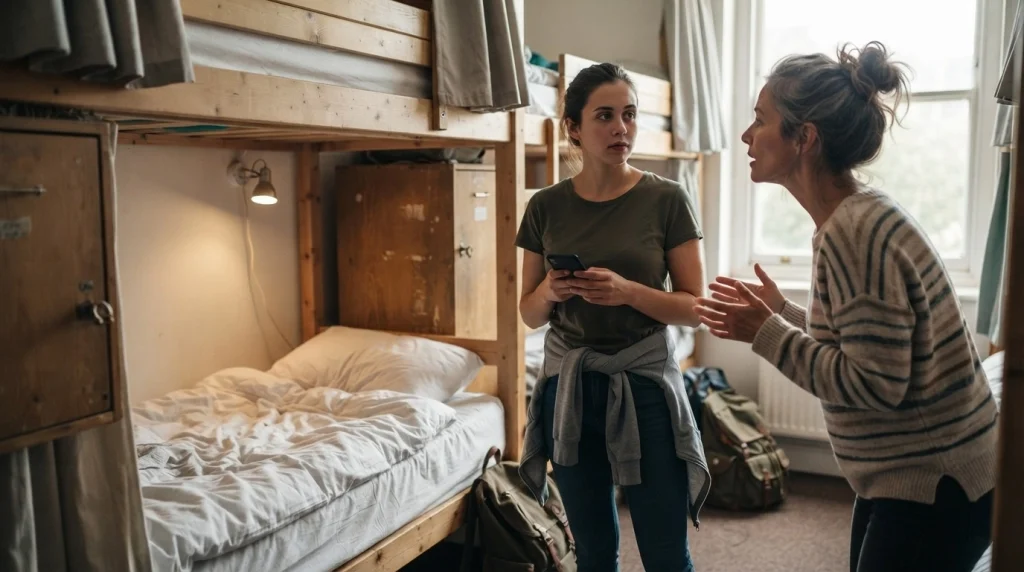
A hostel roommate’s behavior becomes concerning when it disregards your boundaries, makes you fear for your safety, or interferes with your ability to use your accommodation comfortably. You can respond to unwanted behavior without deciding whether the person intended to cause harm.
Recognize the difference between awkwardness and boundary violations
Sharing a dormitory means encountering different personalities, sleeping habits, and expectations about privacy. Someone being noisy or socially awkward doesn’t automatically make them dangerous, but repeated unwanted behavior deserves attention.
- Unwanted personal attention: Repeatedly asking intimate questions, making sexual comments, or pursuing you after you’ve declined.
- Invasion of privacy: Touching your belongings, searching your luggage, photographing you without permission, or watching you change.
- Physical boundary violations: Touching you without consent, entering your sleeping space, or ignoring requests to move away.
- Intimidation: Threatening you, shouting aggressively, following you around the property, or blocking your exit.
- Controlling behavior: Demanding to know where you are going, pressuring you to drink, or insisting that you spend time alone with them.
Pay attention to patterns as well as individual incidents. A roommate who repeatedly ignores a clear boundary may require a different response from someone who makes one awkward comment and immediately respects your request to stop.
What if you cannot explain why you feel uncomfortable?
You don’t have to wait for a serious incident before taking precautions. If you feel tense around someone, notice repeated unwanted attention, or simply don’t feel safe sleeping in the same room, you can spend time elsewhere and speak privately with reception.
Separate your safety decision from your judgment of the other person. You can acknowledge uncertainty about their intentions while still requesting a different sleeping arrangement.
Safety reminder: Being polite is optional when someone ignores your boundaries. You are allowed to leave a conversation, refuse contact, or ask staff for help without offering a detailed explanation.
Section takeaway: You don’t need proof of malicious intent to take reasonable precautions. Repeated boundary violations, intimidation, unwanted touching, and threats warrant particular attention.
2. What Should You Do Immediately When You Feel Unsafe?
Your first priority is to create a safer situation, not to confront your roommate or settle a disagreement. If you feel threatened, move toward reception, a staffed common area, or another public place where you can ask for assistance.
Follow these steps in order of urgency
- Move away if you can. Leave the room when it is safe to do so, especially if the person is aggressive, intoxicated, or refusing to respect your space.
- Take essential belongings. Bring your phone, room key, identification, and other immediately necessary items if they are within easy reach.
- Contact hostel staff. Explain that you feel unsafe sharing the room and request immediate assistance or alternative accommodation.
- Tell someone you trust. Share your location and a brief description of what happened with a friend or family member.
- Seek emergency help when necessary. If someone threatens violence, assaults you, confines you, or prevents you from leaving, contact local emergency services as soon as you safely can.
Don’t delay leaving an unsafe situation to collect every possession or gather evidence. Your passport and luggage matter, but your immediate safety matters more.
What if the roommate is still in the room?
If the person is behaving aggressively, avoid a private confrontation. Wait for a safe opportunity to leave, seek help from nearby guests or staff, and ask someone trustworthy to accompany you if possible.
If the person is making you uncomfortable without threatening you, you can still move to a common area and ask reception to speak with you privately. You don’t have to return to the room alone while staff assess the situation.
For additional preparation, the U.S. Department of State’s lodging safety guidance recommends contacting the front desk about suspicious activity and understanding accommodation security arrangements.
How can you protect your phone and personal information?
- Keep your phone charged and accessible.
- Save the hostel’s address and contact details somewhere you can access offline.
- Share your location with a trusted person if doing so is safe.
- Keep your passport, bank cards, and room key secure.
- Avoid revealing your next destination, room number, or travel plans to someone you distrust.
If you have already left the room, remain somewhere staffed and populated until you have a clear plan. Don’t return alone simply because your roommate has sent an apologetic message.
Section takeaway: Create distance, get support, and secure essential belongings. If danger is immediate, leave first and deal with the practical details afterward.
3. How Can You Set Boundaries Without Escalating the Situation?
Clear boundaries can help when a roommate’s behavior is inappropriate but you don’t believe an immediate confrontation would put you at risk. Keep your words short, calm, and specific rather than debating whether your feelings are justified.
What can you say to an uncomfortable roommate?
Choose language that fits the situation and your comfort level. You don’t need to sound friendly, apologize, or provide a long explanation.
- For personal questions: “I’d prefer to keep my personal life private.”
- For unwanted conversation: “I don’t want to continue this conversation.”
- For touching or entering your space: “Don’t touch me or my belongings.”
- For unwanted invitations: “No, thank you. I’m not interested.”
- For repeated behavior: “I’ve already asked you to stop. I’m going to speak with reception.”
Once you’ve communicated your boundary, you don’t need to keep defending it. Repeated arguments can drain your energy and may increase tension in a shared room.
When should you avoid confronting the person?
Skip direct confrontation if the roommate has threatened you, behaved violently, blocked your movement, or appears too intoxicated or agitated to respond safely. In these situations, prioritize leaving and contacting staff or security.
You should also avoid confronting someone alone if you fear retaliation. A hostel employee can help manage a room change or address a complaint without requiring you to negotiate directly with the person involved.
What if the roommate says you’re overreacting?
You don’t need the other person’s agreement to maintain a boundary. If they dismiss your concerns, laugh at you, or accuse you of being rude, end the discussion and seek help if necessary.
For example, a roommate might insist that unwanted touching was only a joke. You can still say that the behavior was unwelcome and request not to share a room with them again.
Remember that a boundary is about what you will accept and what you will do next. It isn’t a demand that the other person admit wrongdoing before you can protect yourself.
Section takeaway: Use direct language when it is safe, but don’t treat confrontation as a requirement. You can skip the conversation entirely and ask hostel staff to intervene.
4. How Should You Report a Roommate to Hostel Management?
Contact reception, the hostel manager, or the designated safety staff as soon as practical when a roommate’s behavior makes you uncomfortable. Explain the specific conduct, describe any immediate risk, and clearly state what you need to feel safe.
What information should you give reception?
You don’t need to prepare a formal complaint before asking for help. Start with the most important details and explain more when you are somewhere private and safe.
- Identify the situation: Give your room number and explain that you feel unsafe or uncomfortable with your current roommate.
- Describe the behavior: State what happened, when it happened, and whether it has happened more than once.
- Explain the risk: Mention threats, unwanted touching, intimidation, property interference, or other serious behavior.
- Make a specific request: Ask for a different room, a different dormitory, staff accompaniment, or help arranging alternative accommodation.
- Ask about next steps: Find out who will handle the report and how staff will protect your privacy.
What if you need help explaining the problem?
You can use a short statement such as this:
“I’m uncomfortable sharing my room because of my roommate’s behavior. Specifically, [briefly describe what happened]. I don’t feel safe continuing to share this space, and I’d like to move to another room. Please tell me what you can arrange and how we can handle this discreetly.”
If the behavior involved a threat or assault, state that directly rather than minimizing it as a personality conflict. Ask staff to record the incident according to their procedures, and request a written acknowledgment of your complaint when available.
What if the hostel dismisses your complaint?
If the first employee doesn’t help, escalate the issue to the manager or property owner. Explain why the proposed solution doesn’t address your safety concerns and ask for a clear alternative.
Document the response if it is safe to do so. Keep relevant messages, booking details, and factual notes about incidents, but don’t put yourself at risk trying to obtain recordings or confront the roommate for proof.
If management refuses to address a credible threat, consider leaving for safer accommodation and contacting the booking platform about the property’s response. For assault, stalking, credible threats, or other possible crimes, you can also seek assistance from local authorities or an appropriate victim-support service.
Be cautious about any proposed mediation that requires you to meet privately with the roommate. You can ask for separate conversations, a staff member present, or no direct contact.
Section takeaway: Make a clear, specific request and escalate if staff dismiss the problem. A room change is a reasonable request when you no longer feel safe in shared accommodation.
5. Should You Stay, Change Rooms, or Leave the Hostel?
The right choice depends on the seriousness of the behavior, whether it has stopped, and whether staff can provide a safe alternative. You don’t need to preserve your original booking if doing so would leave you feeling threatened or trapped.
Use this comparison to think through your options without treating any single solution as mandatory.
| Option | When it may fit | What to consider |
|---|---|---|
| Stay with boundaries | The issue is minor, no threat is present, and you genuinely feel safe. | You can change your mind if the behavior continues or worsens. |
| Change rooms | You want distance, privacy, or a safer sleeping arrangement. | Ask staff to confirm the new room’s security and access arrangements. |
| Move to a private room | You prefer greater privacy and can afford the additional cost. | Confirm the room is available and has suitable security features. |
| Leave the property | You face threats, repeated harassment, or inadequate staff support. | Arrange a safe destination and transport if possible, without delaying departure during immediate danger. |
How do you find alternative accommodation safely?
If you decide to leave, use a verified booking platform or contact a reputable property directly. Check the location, recent reviews, reception availability, access controls, and transport options before committing when time allows.
Don’t share your new accommodation details with the roommate. If you suspect they are following you or know where you are going, ask staff or trusted contacts for help planning your departure.
When budget is a concern, ask the hostel whether it can offer a complimentary room change or help arrange another property. You can also ask your booking provider about relocation options and refund policies, although the outcome depends on the booking terms and circumstances.
Section takeaway: Choose the safest workable option, not necessarily the cheapest one. If you face immediate danger, prioritize reaching safety over negotiating refunds or resolving the booking.
6. How Can You Protect Yourself During the Rest of Your Solo Trip?
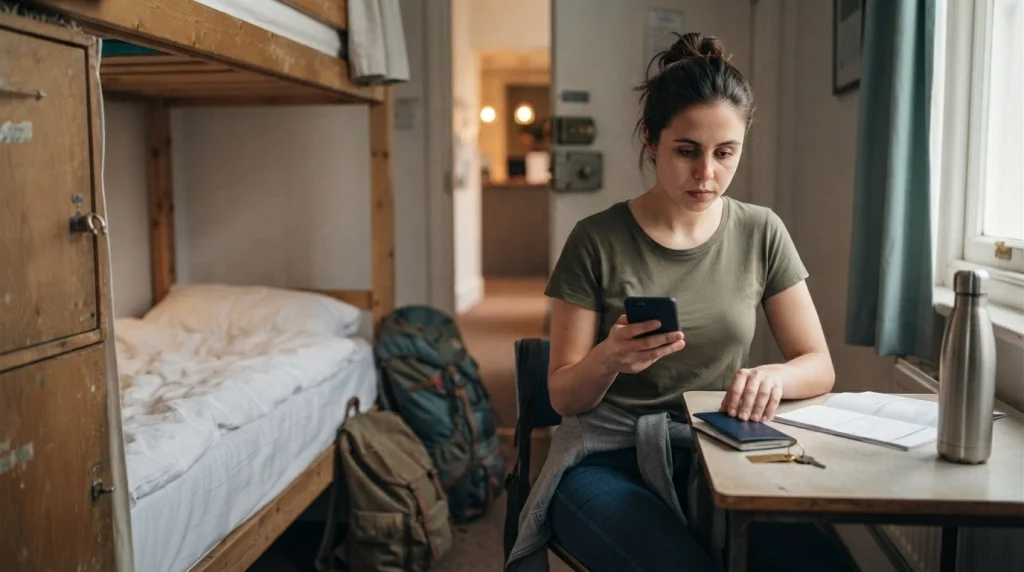
After dealing with an uncomfortable roommate, give yourself time to feel settled before continuing your plans. You can adjust your accommodation choices, tell someone you trust what happened, and make practical changes without allowing one bad experience to define solo travel.
Choose accommodation that supports your comfort
When booking your next stay, look beyond the nightly price. Consider whether the property offers room options that match your comfort level and has a clear process for reporting problems.
- Female-only dormitories: These may offer a more comfortable environment if you prefer sharing with women, although they cannot guarantee that every guest will behave appropriately.
- Private rooms: These provide more separation from strangers, but check door locks, access arrangements, and reception availability.
- Staffed reception: Properties with accessible staff make it easier to report concerns and request help.
- Recent guest reviews: Look for recurring reports about harassment, security, room access, or management’s response to complaints.
- Flexible booking terms: Understand cancellation and modification rules before paying, particularly when booking several nights.
These checks can reduce uncertainty, but no accommodation type eliminates every risk. A female-only dormitory or highly rated hostel still requires reasonable safety precautions.
Keep a simple hostel safety routine
Small habits can make it easier to respond quickly when something feels wrong. Build these checks into your arrival routine rather than waiting until a problem develops.
- Locate reception, emergency exits, and the nearest staffed common area.
- Check that your room door and any individual storage lockers work properly.
- Keep valuables and essential documents secure.
- Avoid sharing personal information or travel plans with people you don’t trust.
- Tell a trusted contact where you’re staying, especially when changing accommodation unexpectedly.
For more guidance, read the UK government’s solo and independent travel advice. It covers accommodation precautions and emphasizes contacting local police if you fear for your safety or are in danger.
What if the experience affects your confidence?
Feeling anxious after an uncomfortable encounter is understandable. You might question your judgment, feel embarrassed about speaking up, or worry that other hostels will be the same.
Try separating what happened from what you can control next. You can review your accommodation choices, seek support from someone you trust, and take a break from shared dormitories while you regain confidence.
You also don’t owe anyone a detailed account of the incident. Share only what you’re comfortable discussing, and seek professional support if the experience leaves you distressed or struggling to feel safe.
In my approach to solo travel planning, flexibility is an important part of feeling prepared. Having enough money for an unexpected night elsewhere, keeping accommodation details accessible, and knowing whom to contact can make a difficult situation easier to manage.
Section takeaway: Prepare for flexibility rather than expecting every stay to go perfectly. Choosing a different room type or property is a sensible travel decision, not a failure.
7. Frequently Asked Questions
Should I tell my hostel roommate that they make me uncomfortable?
You can tell them directly if you feel safe doing so. Use clear language, explain the specific behavior you want to stop, and avoid getting drawn into an argument. If the person is aggressive, threatening, or repeatedly ignores your boundaries, leave the conversation and seek help from hostel staff instead.
Can I ask for a room change even if nothing serious has happened?
Yes. You can request a room change because you feel uncomfortable, need more privacy, or don’t feel safe sharing your sleeping space. The hostel may have limited availability or different booking conditions, but you don’t have to wait for harassment or a serious incident before asking about alternatives.
What should I do if hostel staff don’t believe me?
Ask to speak with the manager or property owner and describe the behavior in specific, factual terms. Request a room change or another practical safety measure, and keep a record of your complaint if safe. If you face a credible threat and staff won’t help, consider leaving and contacting local authorities or your booking provider.
Is a female-only hostel dormitory always safer?
Not necessarily. A female-only dormitory may make some travelers more comfortable, but it cannot guarantee that every guest will respect boundaries. Check recent reviews, room access arrangements, reception availability, and the property’s response to complaints before booking.
Should I leave the hostel immediately if my roommate makes me uncomfortable?
Leave immediately if you face a threat, assault, confinement, or another urgent safety risk. If the issue is less urgent, you can first move to a public area, speak with staff, and request a room change. You can still leave if the proposed solution doesn’t make you feel safe.
What if my roommate touches me without permission?
Move away and seek a safe place as soon as possible. Tell hostel staff or security, and contact local emergency services if you’re in danger or need urgent assistance. You can document what happened and seek medical or victim-support services if appropriate, but you don’t need to gather evidence before asking for help.
Will complaining about my roommate ruin my solo trip?
Reporting a problem doesn’t mean you’ve failed at solo travel. You may need to change accommodation, adjust your plans, or take time to recover, but these are reasonable responses to an uncomfortable situation. Your safety and peace of mind matter more than preserving a booking or sticking to an itinerary.
Pro tip: Emergency numbers, reporting procedures, and available support services vary by destination. Check your destination’s official government travel advice and local emergency guidance before traveling.
Final Takeaway: Your Comfort and Safety Come First
If a hostel roommate makes you uncomfortable, you don’t have to tolerate the behavior to be polite, save money, or avoid inconveniencing other guests. Create distance, explain your concerns to staff, and request a different sleeping arrangement when needed.
Most importantly, don’t wait for a situation to become dangerous before taking reasonable precautions. If you feel threatened or the hostel cannot provide a safe solution, leave when you can do so safely and seek appropriate assistance.
Solo travel should give you the freedom to explore at your own pace. Protecting your boundaries is part of that freedom, and changing your plans when necessary is a practical sign of good judgment.
Plan your next stay with confidence
Before your next hostel booking, check recent reviews, confirm how to reach staff after hours, and identify an alternative place to stay. A simple backup plan can help you respond calmly if your accommodation doesn’t feel right.
Affiliate Disclosure: This article is for informational purposes and may contain links to external resources. Some links on this website may be affiliate links, which means we may earn a commission if you make a qualifying purchase, at no additional cost to you. This article does not constitute legal advice or a guarantee of personal safety.