What Should a Solo Female Traveler Do If Her Hotel Room Feels Unsafe?
Quick Answer
If your hotel room feels unsafe while traveling alone, trust your instincts and move to a secure, staffed public area if you can do so safely. Contact hotel management, request a different room or alternative accommodation, and call local emergency services if you face an immediate threat. The U.S. Department of State’s lodging safety guidance also recommends checking room locks, reporting suspicious activity, and learning emergency exits.
What to do first
- Assess immediate danger: If someone is threatening you, attempting to enter, or following you, prioritize getting to safety rather than investigating.
- Secure your position: Lock the door if it works, keep your phone accessible, and avoid opening the door to unexpected visitors.
- Contact reception: Ask for a manager, a verified staff escort, or a room change away from the source of concern.
- Document the problem: Record relevant details and photograph a faulty lock or other issue only when it is safe.
- Leave if necessary: Move to a safer location and arrange trusted transport if the hotel cannot resolve the concern.
- Tell someone you trust: Share your location and update them when you reach a secure place.
Remember
- You don’t need proof of danger before requesting another room or leaving.
- If you cannot leave safely, stay behind a locked door when appropriate and contact emergency services or hotel security for help.
When a hotel room feels unsafe, even a small concern can make it difficult to relax, sleep, or think clearly. As a woman traveling alone, you deserve accommodation where you can protect your privacy and feel comfortable asking for help.
This guide explains how to respond to suspicious activity, faulty locks, unwanted visitors, and unsettling interactions with hotel staff. You’ll also learn when to change rooms, when to leave the property, and how to protect yourself without escalating a potentially dangerous situation.
In This Guide
Why Might a Hotel Room Feel Unsafe?
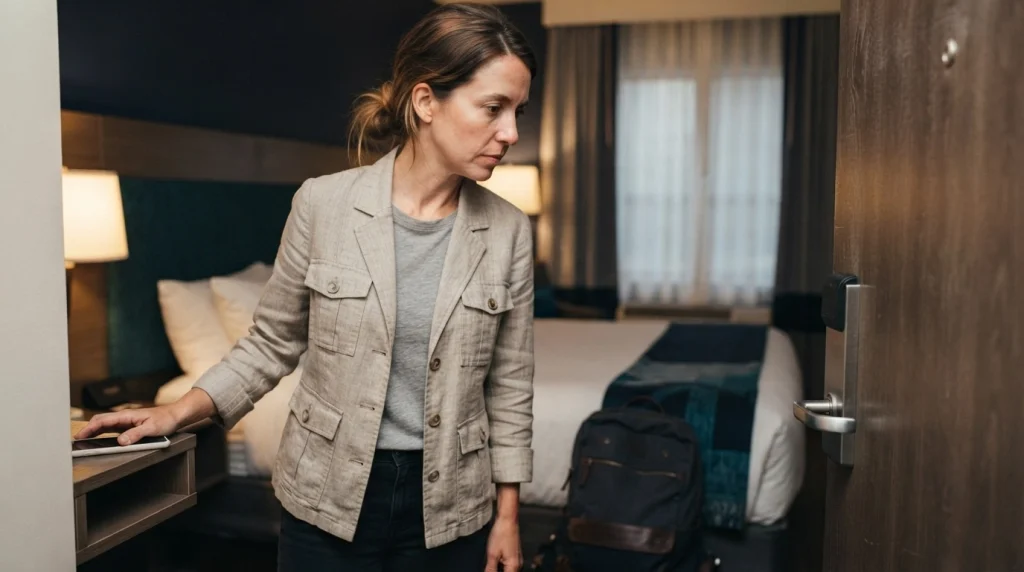
A hotel room feels unsafe when something raises a reasonable concern about your physical safety, privacy, security, or ability to leave quickly. You don’t need to identify the exact cause before taking sensible precautions.
Common hotel room safety concerns
Some warning signs are obvious, while others involve small details that make you uncomfortable. Pay particular attention to the following situations:
- Broken locks: Your door won’t latch, the deadbolt doesn’t work, or the window cannot close securely.
- Unexpected entry: Someone opens your door without permission or repeatedly tries to enter.
- Suspicious behavior: An unfamiliar person lingers outside your room, watches you enter, or repeatedly approaches you.
- Privacy concerns: Curtains won’t close, your room number is announced publicly, or someone appears to know your room details without a clear reason.
- Unusual room conditions: You notice an unexplained access point, damaged door frame, or unfamiliar device that raises a specific privacy concern.
- Fire or building hazards: Emergency exits appear blocked, smoke alarms are missing or damaged, or you notice a strong gas-like smell.
One unusual detail doesn’t automatically mean someone intends to harm you. However, a faulty lock or an unexplained attempt to enter your room deserves prompt attention.
Is it intuition or a genuine safety warning?
Solo female travel safety includes responding to both observable hazards and personal discomfort. Your instincts can prompt you to pause, seek help, and reassess a situation before you know exactly what’s wrong.
For example, imagine arriving late at night and finding your door doesn’t lock properly. You don’t need to prove that someone could enter before asking for another room.
Use a simple rule: investigate only when it’s safe, and never put yourself at risk to confirm a suspicion. If the concern involves an immediate threat, skip troubleshooting and seek help.
Section takeaway: A safety concern is enough reason to pause your stay and request assistance. You don’t have to dismiss discomfort simply because the hotel looks reputable.
What Should You Do First If Your Hotel Room Feels Unsafe?
Your first priority is to create distance from the immediate danger, maintain access to communication, and reach a place where you can ask for help. Choose the safest action for the situation rather than following a rigid checklist.
Follow these steps in order of priority
- Check for immediate danger. If someone is forcing the door, threatening you, or attempting to assault you, contact local emergency services as soon as possible and move away from the threat if a safe route exists.
- Secure the room if staying temporarily is safer. Lock the door and use a functioning deadbolt or privacy latch if available. Don’t rely on a defective lock, and don’t open the door to confront anyone.
- Keep essentials within reach. Have your phone, room key, identification, medication, and a payment method accessible. Take only what you can safely carry if you need to leave quickly.
- Contact hotel reception or security. Use the room phone or call the published hotel number if safe. Explain the problem clearly and request immediate assistance.
- Move to a safer location when appropriate. If the hallway or lobby is safe, go to a staffed public area. If leaving the room would expose you to someone threatening you, remain secured while contacting help.
- Notify a trusted contact. Share the hotel name, your general location, and your next step. Arrange a check-in once you’ve reached safety.
Don’t spend valuable time searching online for reviews while a threat is unfolding. Your immediate safety matters more than proving that your concern is justified.
What if you’re unsure whether to leave the room?
Think about whether staying behind the locked door or moving into a public area creates less immediate risk. A suspicious person outside your door may make remaining inside safer, while a defective lock and a clear route to a staffed lobby may favor leaving.
If you smell smoke or suspect a fire, follow the building’s emergency instructions and use a safe exit route. Never assume an elevator is safe during a fire.
Section takeaway: Choose the safest available route to help, keep communication accessible, and avoid confronting a threatening person alone.
How Should You Handle Hotel Staff and Unwanted Visitors?
Contact hotel management promptly when staff behavior, an unexpected visitor, or a security failure makes your room feel unsafe. You can ask for help firmly without revealing unnecessary personal information or confronting someone privately.
What should you say to hotel reception?
Keep your request factual and specific. You don’t need to provide a long explanation or persuade the receptionist that your concern is serious.
For example, you could say:
“I’m not comfortable staying in this room because of a security concern. I need a secure alternative room or assistance arranging accommodation elsewhere. Please have the manager or security staff assist me.”
If you suspect someone has entered your room without permission, mention that directly. Ask management to document the incident and explain what steps they will take to address it.
What if hotel staff dismiss your concerns?
You don’t have to accept reassurance that doesn’t solve the actual problem. If the receptionist minimizes a broken lock or refuses to address unwanted entry, escalate the issue to the duty manager or hotel security.
- Request a room change with a working lock and a secure entrance.
- Ask to speak with the manager in a staffed public area rather than an isolated office.
- Request written confirmation of the complaint and any promised remedy.
- Contact your booking platform or travel insurer if the hotel cannot provide safe accommodation.
- Leave for a safer property if the situation remains concerning and you can depart safely.
If you believe an employee poses a threat, don’t meet that person alone to resolve the matter. Ask for another staff member, a trusted companion on the phone, or appropriate local assistance.
What if someone knocks or claims to be hotel staff?
Keep the door locked until you can reasonably verify the person’s identity and the purpose of the visit. Call reception using a number you already trust rather than relying solely on the visitor’s explanation.
Legitimate maintenance work or housekeeping doesn’t require you to ignore your boundaries. You can ask staff to return later or arrange assistance when another employee is present.
If someone attempts to force entry or refuses to leave, treat the behavior as a potential emergency. Contact security or local emergency services instead of opening the door to argue.
Section takeaway: Ask for verifiable help, keep conversations in public areas when possible, and escalate unresolved safety concerns. Courtesy should never take priority over personal security.
Should You Change Rooms or Leave the Hotel?
Request a room change when the problem appears limited to your room and management can provide a credible solution. Leave the property when the risk persists, the staff cannot resolve the problem, or you no longer feel safe remaining there.
Compare your options before deciding
| Situation | Best next step | What to check |
|---|---|---|
| Broken lock with no immediate threat | Request another room | Test the new door lock and window security. |
| Unwanted entry or repeated suspicious activity | Seek security assistance and consider leaving | Whether management can address the source of the risk. |
| Staff member makes you feel threatened | Avoid private contact and escalate | Whether a manager or independent authority can help. |
| Repeated refusal to fix serious security problems | Arrange safer accommodation | Transport, payment, and a confirmed alternative stay. |
| Immediate threat or attempted forced entry | Contact emergency services and seek safety | A safe exit or secure place to remain while help arrives. |
How do you change rooms without creating another risk?
Ask management to confirm the new room assignment privately. If you suspect someone knows your current room number, request that staff not disclose your new room details to other guests or callers.
Before settling in, check the replacement room’s door, window locks, curtains, telephone, smoke alarm, and emergency exit information. Don’t assume that a room change automatically resolves every security concern.
If you need help collecting your belongings, request a verified staff escort or security assistance. Don’t return to a room where a threatening person may still be present simply to retrieve nonessential items.
What if it’s late and nearby hotels are expensive?
Cost and convenience matter, but they shouldn’t force you to remain somewhere you believe is dangerous. A safe, temporary alternative may be more important than preserving the original booking.
- Call another hotel directly to confirm availability before traveling there.
- Ask your booking platform to help relocate you and explain the security issue.
- Use a trusted taxi service or reputable rideshare option where available.
- Tell someone you trust when you’re leaving and when you arrive.
- Keep receipts and booking messages if you later seek a refund or insurance reimbursement.
Refunds and relocation assistance depend on the booking terms, local consumer protections, and the circumstances. Don’t assume a refund is guaranteed, and don’t delay leaving a dangerous situation while negotiating payment.
Section takeaway: Change rooms when a credible fix addresses the problem. If safety remains uncertain, prioritize leaving over saving money or avoiding an awkward conversation.
How Should You Handle Emergencies and Document Concerns?
Contact local emergency services if someone threatens you, attempts forced entry, assaults you, or creates another immediate danger. For nonurgent problems, report the incident to hotel management and seek help from an appropriate local authority when necessary.
Know who to contact
Emergency numbers vary by country, so identify the correct number before or soon after arrival. Save it in your phone and keep a written backup in case your device becomes unavailable.
- Hotel security or management: For room access problems, suspicious behavior, and unresolved security failures.
- Local emergency services: For immediate threats, forced entry, assault, fire, or other urgent dangers.
- Local police: For reporting suspected criminal conduct and obtaining a report where appropriate.
- Your embassy or consulate: For consular assistance if you’re abroad and need help understanding available local support.
- Booking platform or travel insurer: For relocation assistance, alternative accommodation, and questions about coverage.
Embassies generally cannot guarantee your personal safety or settle hotel disputes. However, consular staff may explain local procedures and help you locate relevant resources.
For U.S. citizens, the U.S. Department of State’s crisis response guidance explains how to seek assistance during emergencies abroad. Travelers of other nationalities should consult their own government’s official travel advice.
How should you document a hotel safety incident?
Keep records once you are in a safe position. Clear documentation can help hotel management, police, your booking platform, or your insurer understand what happened.
- Write down the date, time, room number, and a factual description of the incident.
- Save messages, booking confirmations, complaint reference numbers, and relevant receipts.
- Photograph visible damage or faulty equipment if doing so doesn’t expose you to further danger.
- Record the names or descriptions of relevant staff and witnesses when safe and appropriate.
- Ask for a written incident report or confirmation of your complaint.
Don’t put yourself at risk to obtain evidence, and avoid confronting a suspected person to get a photograph. Recording laws vary, so check local requirements before making audio or video recordings.
If you experience assault, stalking, or another crime, consider seeking medical attention or specialist victim support where appropriate. You can decide what to report, subject to any applicable local legal requirements.
Section takeaway: Get safe first, report urgent threats promptly, and preserve factual records afterward. Documentation supports your next steps, but it should never delay emergency assistance.
How Can You Prevent Hotel Safety Problems on Future Solo Trips?
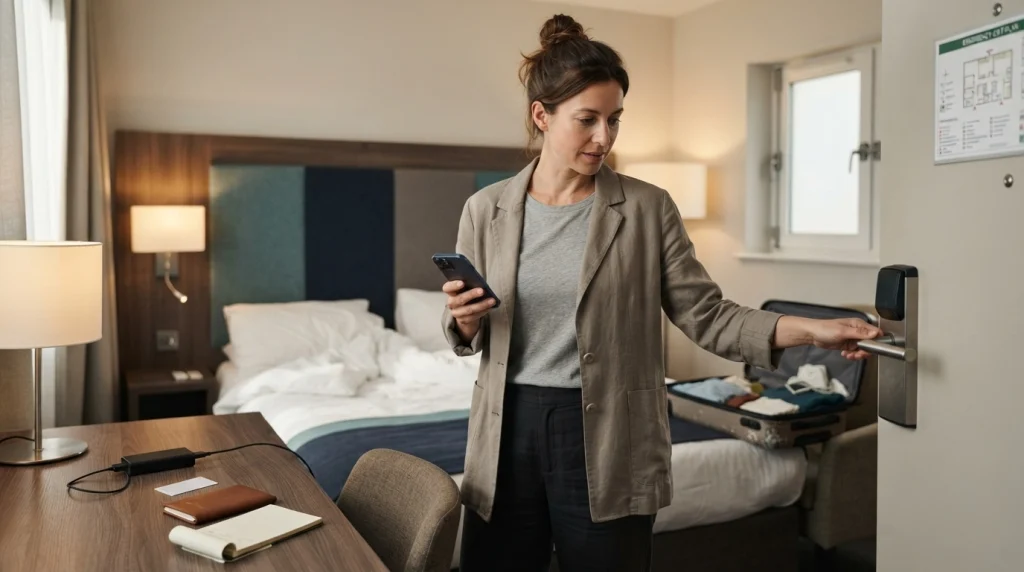
Hotel safety planning means choosing accommodation carefully, checking basic security on arrival, and preparing for a quick response if something goes wrong. These habits reduce avoidable risks without requiring you to feel suspicious of everyone you meet.
What should you check before booking?
Look beyond attractive photos and low prices. Review the property’s location, recent guest feedback, available security measures, and access to reliable transportation.
- Research the area: Check official travel advice and learn about local transport, neighborhood conditions, and any relevant safety concerns.
- Check reception arrangements: Find out whether staff are available overnight and how guests contact security.
- Review access controls: Look for clear information about room keys, building entry, and visitor policies.
- Choose practical transport: Consider how you’ll reach the property after dark and whether reputable transport options are available.
- Prepare a backup: Identify one or two alternative accommodation options before traveling, particularly for late arrivals.
Guest reviews can reveal recurring complaints about room access or staff conduct, but a single review doesn’t establish that a hotel is dangerous. Look for specific, consistent patterns and verify important details directly with the property.
What should you inspect when you arrive?
Take a few minutes to check your room before unpacking or heading out. The official lodging safety checklist provides additional guidance on locks, alarms, emergency exits, and room privacy.
- Check that the main door locks and latches securely.
- Confirm that windows and connecting doors close and lock properly.
- Make sure curtains provide adequate privacy.
- Locate the nearest emergency exit and read the posted evacuation plan.
- Check that the room phone works or save the hotel’s verified contact number.
- Notice unusual room conditions and report specific concerns to management.
If something important fails, request a repair or room change before settling in. A few minutes of checking can help you make a more informed decision.
How can you prepare without carrying too much?
You don’t need a large collection of gadgets to travel more confidently. Focus on tools that help you communicate, access your essentials, and leave safely.
- Keep your phone charged and carry a suitable charging cable or power bank.
- Save hotel contact details, your booking confirmation, and local emergency numbers offline.
- Share your accommodation details and a check-in plan with someone you trust.
- Keep essential medication, identification, payment options, and your room key accessible.
- Consider a personal alarm or portable door-security device where legal and suitable for your accommodation.
Portable door devices are supplementary precautions, not replacements for a working lock or a safe exit. Some hotels restrict devices that interfere with fire safety or emergency access, so check the rules before using one.
For destination-specific guidance, consult your government’s official travel advisory. U.S. travelers can also review Travel.State.Gov for country information and safety planning resources.
Section takeaway: Choose accommodation thoughtfully, inspect the room early, and prepare a realistic backup plan. Confidence comes from having options, not from assuming every hotel is perfectly safe.
Frequently Asked Questions
Should I leave my hotel room if I feel unsafe?
Leave if you believe staying creates a serious risk and you have a safe way to reach help or alternative accommodation. If someone is threatening you outside the door, leaving immediately may be more dangerous; secure yourself and contact hotel security or emergency services instead.
What should I do if my hotel room door doesn’t lock?
Contact reception immediately and request a room with a functioning lock. Don’t rely on a chair or improvised barrier as a substitute for proper security. If the hotel cannot provide a safe solution, arrange alternative accommodation and keep records of the problem.
Can I ask for a different hotel room because I feel uncomfortable?
Yes. You can ask hotel management for a room change when a security problem or specific concern makes you uncomfortable. Explain the issue briefly and request a room with working locks and adequate privacy. The hotel’s obligation to provide a refund or other remedy depends on applicable rules and booking terms.
What if someone tries to enter my room at night?
Keep the door closed and locked, and don’t confront the person alone. Call hotel security or reception to verify the situation. If someone forces entry, threatens you, or refuses to leave and you face immediate danger, contact local emergency services and seek safety using an available safe route.
Should I tell family or friends if my hotel room feels unsafe?
Yes, if doing so is safe. Share your location, explain the concern, and tell them what you’re doing next. Arrange a follow-up message when you reach a secure place. A trusted contact can help you think clearly and contact appropriate assistance if communication stops unexpectedly.
Will my hotel refund me if I leave because of safety concerns?
A refund isn’t guaranteed. It may depend on the nature of the security problem, the hotel’s response, your booking conditions, local consumer laws, and the platform used to reserve the room. Keep evidence of the issue, submit your complaint in writing, and contact your booking provider or insurer to understand your options.
How can I feel safer in a hotel when traveling alone?
Research the property, arrange reliable transport, inspect the room locks and windows, identify emergency exits, and keep your phone and essentials accessible. Share your itinerary with someone you trust. If something feels wrong during your stay, address it early rather than forcing yourself to remain uncomfortable.
Pro tip: Before traveling, review your destination’s official government travel advice and save the local emergency number. U.S. citizens can consult the U.S. Department of State, while travelers of other nationalities should use their own government’s equivalent resources.
Final Takeaway: Your Safety Comes First
When a hotel room feels unsafe, you don’t need to wait for a situation to become an emergency before taking action. Assess the immediate risk, contact the right people, and request a room change or leave when necessary.
Solo travel should give you independence, not pressure to tolerate unsafe accommodation. Trust yourself, make practical decisions, and remember that protecting your safety matters more than avoiding inconvenience or disappointing hotel staff.
Before your next solo trip, save your hotel’s contact information, identify local emergency services, and choose a backup place to stay. A simple plan can make a stressful situation easier to manage.