What Should a Solo Female Traveler Do If Her Hotel Is Overbooked?
Quick Answer
If your hotel is overbooked while you’re traveling alone, stay calm, ask the manager to arrange comparable alternative accommodation, and contact your booking platform immediately if you booked through one. Don’t cancel your reservation yourself before understanding the consequences, and don’t pay for a replacement room without documenting the hotel’s refusal and asking who will cover the additional cost. Your refund and compensation rights depend on local law, your booking terms, and how the reservation was made.
What to do first
- Confirm the problem: Ask whether the hotel has any room available and request a clear explanation.
- Request a solution: Ask for a comparable room at another property, including transport if needed.
- Contact your platform: Use its app or official support channel while you’re still at the hotel.
- Protect your safety: Check the replacement property’s location, reviews, access arrangements, and transport options before agreeing.
- Keep evidence: Save your confirmation, messages, receipts, and the names of staff you speak with.
One important precaution
- If staff cannot resolve the issue and you feel unsafe, move to a staffed public area and arrange verified accommodation through official channels. If you’re in immediate danger, contact local emergency services.
Discovering that your hotel is overbooked can turn an ordinary check-in into a stressful solo travel problem, especially after a late flight or a long day of sightseeing. I’ll explain how to handle the conversation, protect your personal safety, understand your options, and avoid unnecessary expenses when your planned room isn’t available.
The key is to solve two problems at once: securing a suitable place to sleep and preserving your ability to seek a refund or other remedy afterward.
In This Guide
- What should you do first when your hotel is overbooked?
- How should you talk to hotel staff when traveling alone?
- How do you choose safe alternative accommodation?
- Can you get a refund or compensation if a hotel is overbooked?
- What should you do if the hotel and booking platform disagree?
- How can you reduce the risk of hotel overbooking on future solo trips?
- Frequently asked questions
What should you do first when your hotel is overbooked?
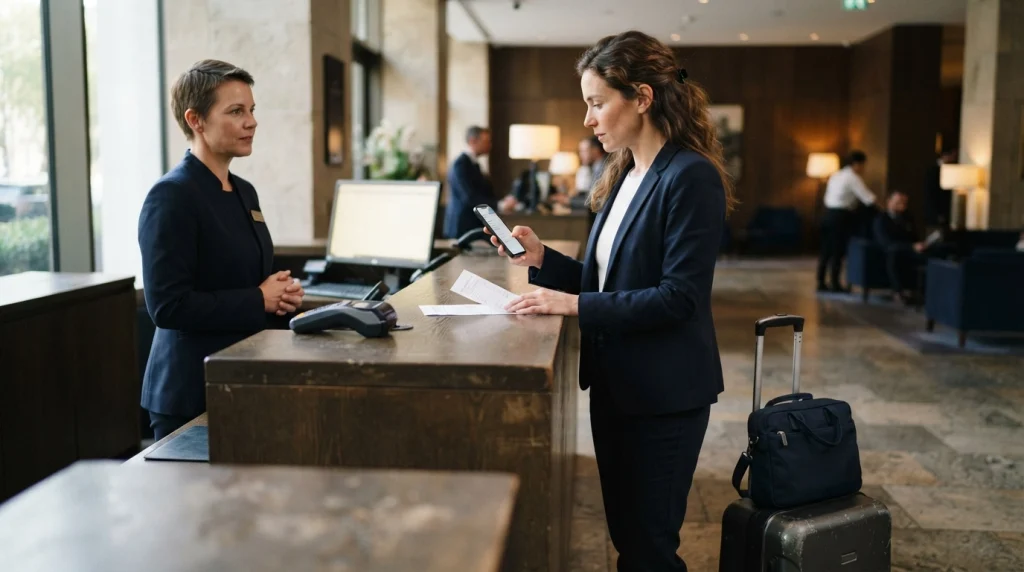
A hotel overbooking occurs when a property accepts more reservations than it can accommodate in the available rooms. If your confirmed reservation cannot be honored, ask the hotel to resolve the problem before making a new booking yourself.
Don’t assume the situation is your fault. A reservation can be affected by a booking-system error, an unexpected room outage, or the hotel’s decision to accept more bookings than it can fulfill.
Follow these steps at the front desk
- Show your confirmation. Open your booking email or app and verify the dates, guest name, property, room type, and confirmation number.
- Ask what is available. Check whether the hotel has another suitable room, even if the room type differs from your original booking.
- Request the manager. If the receptionist cannot help, ask for the duty manager or another person authorized to approve alternative accommodation.
- Ask for a concrete solution. Request a comparable nearby hotel and clarification about the room cost, taxes, and transport.
- Contact your booking provider. If you booked through a third-party website or app, report the issue through its official support channel before accepting an expensive alternative.
Keep your luggage with you while the issue remains unresolved. If you need to step away from the desk to make calls, choose a staffed, well-lit public area.
If the hotel offers another room in the same building, check whether it meets your essential needs. A room with a working lock, reasonable cleanliness, and safe access may be preferable to an unfamiliar property across town.
Section takeaway: Confirm the booking, request a manager, and seek a clear solution before paying for another room. Your immediate priority is secure accommodation, backed by a record of what happened.
How should you talk to hotel staff when traveling alone?
Be calm, direct, and specific about what you need. You don’t have to argue or disclose personal details to ask a hotel to honor a reservation or explain its proposed alternative.
When you’re alone, a clear request can also reduce the time you spend negotiating at the desk. Focus on practical outcomes rather than debating how the overbooking occurred.
Use a firm but polite script
What to say at check-in
“I have a confirmed reservation for tonight, but you’ve told me there isn’t a room available. Please explain my options and arrange comparable accommodation if you cannot provide the room I booked. Before I agree to anything, I need confirmation of the total cost, transport arrangements, and who is responsible for the difference.”
This wording establishes the problem without making threats. It also asks the hotel to address the practical details that matter most.
What if the staff member refuses to help?
Escalate the request in a measured way. Ask for the manager’s name, the reason your reservation cannot be honored, and the hotel’s proposed resolution in writing.
If the hotel still refuses, contact the booking platform or the hotel’s central customer service team. Explain that you’re physically at the property and need an immediate solution, not simply a future refund decision.
Avoid handing over your passport or phone unnecessarily. Staff may need to verify your identity, but you can ask why a document is required and keep your belongings in sight.
When should you stop negotiating?
If someone becomes aggressive, pressures you to follow them somewhere private, or insists you travel in an unverified vehicle, stop the conversation and move to a staffed public space.
Ask a trusted person to stay on the phone while you arrange your next step if that helps you feel safer. You can also share your live location when your phone and chosen messaging service support that feature.
Section takeaway: Stay polite, request specific remedies, and keep a written record. Your safety matters more than winning an argument at the front desk.
How do you choose safe alternative accommodation?
The best replacement hotel is not automatically the closest or cheapest option. It should offer a suitable room, a manageable journey, and access arrangements that let you arrive and settle in safely.
When you’re traveling alone, assess the replacement as carefully as you would a hotel you were choosing from scratch. Don’t let the pressure of a late check-in make the decision for you.
Check these details before accepting a replacement
- Location: Check the address on a reliable map and confirm that it works for your itinerary, transport needs, and arrival time.
- Recent reviews: Look for consistent comments about check-in, room cleanliness, security, and whether the property matches its listing.
- Room arrangements: Confirm that you will receive a private room if that’s what you originally booked, along with the required bathroom and bed arrangements.
- Entry and reception: Ask whether reception is staffed when you arrive and how you will enter the building after hours.
- Transport: Confirm the destination, estimated fare if applicable, and who will pay for the journey.
- Total price: Ask whether taxes, resort fees, deposits, and other mandatory charges are included.
If the proposed property is far away, compare the added journey with the benefits of staying there. A replacement that saves money but requires an unfamiliar late-night transfer may not be the right choice.
Should you accept a lower-standard room?
Not without understanding the difference and your options. If the replacement has fewer facilities, a less convenient location, or a lower room category, ask whether the hotel will provide a more suitable alternative or adjust the price.
Your legal entitlement to a price reduction, refund, or other remedy depends on the country, booking contract, and circumstances. Don’t assume every hotel must pay for any replacement you choose independently.
Use this comparison to evaluate the offer before agreeing:
| Option | Potential benefit | What to confirm |
|---|---|---|
| Another room at the original hotel | No additional journey or new property to assess | Room type, facilities, and price adjustment if applicable |
| Comparable nearby hotel | May preserve your plans and reduce disruption | Safety, total cost, transport, and payment responsibility |
| Higher-priced alternative | May offer better facilities or a more convenient location | Written approval for any additional expense before booking |
| Independent rebooking | Gives you direct control when urgent accommodation is needed | Refund eligibility, reimbursement terms, and receipts |
For a replacement arranged by the hotel, ask for the new property’s name and address in writing. Confirm the booking directly with the receiving property before leaving the original hotel.
Pro tip: For destination-specific safety advice, check your government’s official travel advisory and the destination’s official emergency guidance. Use verified hotel contact details rather than relying solely on a message from an unfamiliar person.
Section takeaway: Accept a replacement only after checking its safety, room standard, location, and cost. A comparable, confirmed room is more useful than a vague promise of accommodation.
Can you get a refund or compensation if a hotel is overbooked?
You may be entitled to a refund, alternative accommodation, a price adjustment, or compensation for certain additional expenses. However, the outcome depends on local consumer law, the booking terms, and whether the hotel, an intermediary, or a package holiday provider arranged your stay.
There is no single worldwide rule that guarantees every solo traveler a free replacement hotel. Treat the hotel’s offer and your legal rights as separate questions.
Understand the difference between a refund and compensation
- Refund: Money returned for accommodation the provider cannot supply, where the applicable terms or law entitle you to it.
- Price adjustment: A reduction when an agreed replacement has a lower value, if the applicable rules or agreement provide for it.
- Additional expenses: Costs such as replacement accommodation or transport that you may be able to recover under applicable law or an agreed resolution.
- Travel insurance: A separate possible source of cover, subject to the policy’s exclusions, limits, and claim requirements.
For example, imagine you reserved a room for $90 per night, but the hotel cannot accommodate you. A suitable replacement costs $125, and the hotel refuses to arrange it directly.
The extra $35 is a potential claim to discuss with the hotel, booking provider, or insurer. It is not automatically payable in every country, so document the reason for the higher cost and seek written approval when possible.
What do consumer protection rules say?
Rules differ between countries, but official guidance can help you understand your position. Ireland’s Competition and Consumer Protection Commission explains accommodation cancellation, alternative arrangements, refunds, and the importance of not cancelling a booking yourself when the provider cannot fulfil it.
Read the Irish CCPC’s accommodation guidance for an example of how those issues are handled under Irish consumer guidance.
Australia’s consumer advice also discusses accommodation overbooking and possible remedies. See the CHOICE guide to hotel accommodation rights for information relevant to Australian consumer law.
These resources are jurisdiction-specific. If you’re visiting another country, check the local consumer protection authority rather than assuming Irish or Australian rules apply to your booking.
Should you cancel the reservation yourself?
Be careful. If the hotel tells you to cancel through the app, ask it to record that the property cannot provide the room and explain the correct cancellation procedure.
When you cancel voluntarily, the platform may treat the transaction differently from a property-initiated cancellation. That could complicate your refund or alternative accommodation request.
If you have to leave to secure a room elsewhere, keep your claim open where possible. Ask the hotel and booking platform to confirm in writing how they will handle the original reservation.
Section takeaway: Request a remedy, retain evidence, and check the rules that apply to your booking. Never assume that a refund or extra-cost reimbursement is guaranteed simply because the hotel is overbooked.
What should you do if the hotel and booking platform disagree?
Contact both parties and explain the same facts consistently. The hotel may control room availability, while the booking platform may control parts of the payment, cancellation, or customer-support process.
Don’t let the two sides send you back and forth without creating a written record. Ask each party to identify the next action it will take.
If you booked through a website or app
- Open the original booking. Use the reservation’s official help or support feature, not an unverified phone number from a search result or message.
- Report the failed check-in. State that you arrived at the property, presented your confirmed reservation, and were told no room was available.
- Request an approved solution. Ask the platform to arrange comparable accommodation or confirm the refund process.
- Ask about payment responsibility. Clarify whether the hotel or platform will pay for the replacement and whether you must pay upfront.
- Keep the case reference. Save the support conversation, case number, and any promised response time.
If you booked directly, contact the hotel’s management or central customer service team. If your accommodation forms part of a package holiday, contact the package organizer as well, because its responsibilities may differ from those of a standalone hotel booking.
What evidence should you save?
Build a small evidence folder on your phone while the details are fresh. Keep copies of:
- The original booking confirmation and payment receipt.
- Screenshots of the room description, booking conditions, and cancellation policy.
- Messages explaining the overbooking and the hotel’s proposed solution.
- The replacement property’s details and proof of any additional payment.
- Transport receipts, timestamps, and the names or roles of staff you spoke with.
Ask for a written explanation if the hotel will not provide a room. A short message confirming the date, reservation number, and refusal can help establish what happened.
For a US-related complaint, USA.gov’s travel complaint guidance explains how travelers can escalate unresolved hotel or travel-service issues to relevant organizations.
What if nobody resolves the issue that night?
Prioritize finding a safe place to sleep, then pursue the complaint. If you need to book independently, choose a reasonable option you can afford where possible, and keep proof of why the urgent expense was necessary.
Contact your travel insurer if you have a policy that might cover accommodation disruption. Ask what documentation it requires before submitting a claim, and don’t assume a standard policy covers every overbooking situation.
Section takeaway: Contact the hotel and the booking provider through official channels, keep a case number, and save evidence of every additional expense. If the dispute continues, escalate it through the relevant consumer protection process.
How can you reduce the risk of hotel overbooking on future solo trips?
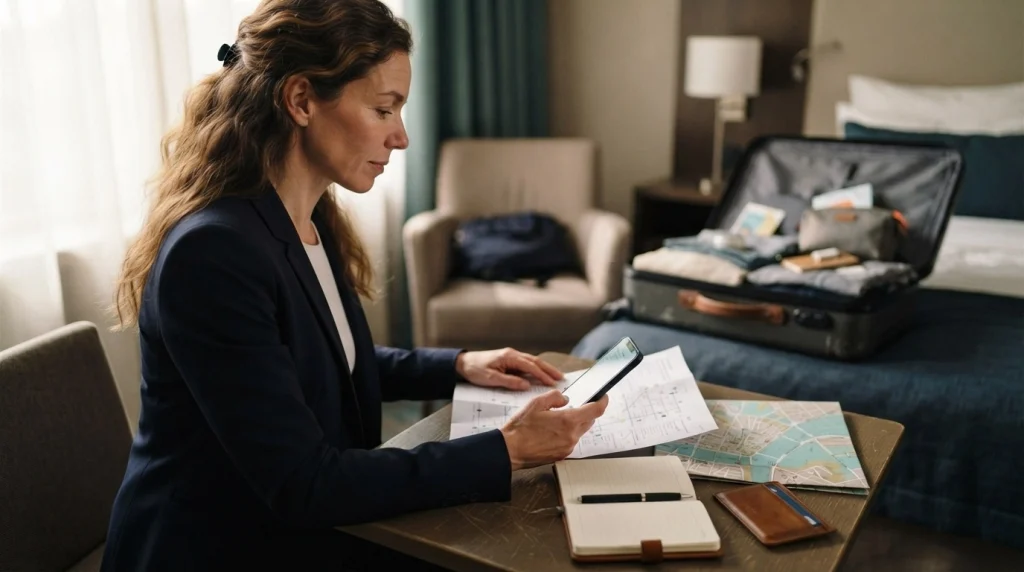
You cannot completely prevent a hotel from becoming overbooked, but you can make the disruption easier to manage. A few checks before arrival can reduce uncertainty, especially when you’re landing late or visiting an unfamiliar destination.
Before you travel
- Confirm directly: Contact the property a day or two before arrival and ask it to confirm your reservation and expected check-in time.
- Save offline details: Keep your confirmation, address, telephone number, and booking reference accessible without an internet connection.
- Understand the terms: Check the cancellation policy, payment arrangements, late-arrival rules, and customer-support process.
- Plan a backup: Identify a few reputable nearby properties before departure, without making unnecessary duplicate non-refundable bookings.
- Prepare your transport: Know which official taxi, ride-hailing, or public transport options operate at your arrival time.
- Keep emergency funds: If your budget allows, maintain access to enough money for urgent transport and one night of alternative accommodation.
How should you prepare for a late-night arrival?
Late arrivals can make hotel disruption harder because fewer transport options and staffed services may be available. If your flight or train is delayed, notify the property and ask whether your reservation remains secure.
Keep your phone charged and your essential documents easy to reach. If you travel internationally, check your destination’s official emergency number and save it before leaving home.
Consider travel insurance that explicitly addresses accommodation disruption, but read the exclusions and claim conditions. Insurance can reduce financial uncertainty, although it cannot guarantee immediate replacement accommodation.
Finally, trust your judgment when an alternative feels wrong. You can request another option, contact platform support, or choose a verified property yourself rather than agreeing to an arrangement that compromises your safety.
Section takeaway: Confirm your reservation, prepare offline records, and identify backup transport and accommodation options. Good preparation won’t prevent every disruption, but it gives you more control when plans change.
Frequently asked questions
Can a hotel refuse my confirmed reservation because it is overbooked?
A hotel may tell you it cannot provide the reserved room, but that does not automatically eliminate its contractual or legal responsibilities. Your available remedies depend on the country, booking terms, and circumstances. Ask for a documented explanation and contact the booking provider if the hotel cannot resolve the issue.
Should I pay for another hotel if my original hotel is full?
First ask the original hotel or booking platform to arrange and approve alternative accommodation. If you must book independently to secure a safe place to sleep, retain receipts and written evidence of the refusal. Whether you can recover the cost depends on applicable law, your contract, and any insurance coverage.
Does booking through a third-party website change my options?
It can change how you request help, but it does not automatically remove all your rights. Contact the hotel and the booking platform, because each may have a role in resolving the problem. Check the platform’s terms and the consumer protection rules that apply to the transaction.
What if the hotel offers a cheaper or less safe replacement?
Explain which essential features the alternative lacks and ask for a comparable option. Don’t accept a replacement that creates an unreasonable safety concern just to end the discussion. Request written clarification about any price difference or other remedy available under your booking terms and local law.
Can I claim compensation for transport and extra accommodation costs?
Possibly. Some consumer protection rules or booking agreements allow recovery of reasonable additional expenses caused by a provider’s failure to deliver the service. Keep receipts, explain why each expense was necessary, and check local rules and insurance terms before assuming reimbursement is available.
What if my hotel is overbooked late at night in an unfamiliar city?
Stay in a staffed public area while you contact the hotel manager and booking platform. Arrange accommodation through verified channels, confirm the address before travelling, and use trusted transport. If you feel threatened, move to a safer public location and contact local emergency services if necessary.
How can I complain if the hotel refuses a refund?
Send a written complaint to the hotel or relevant booking provider, including your reservation number, a timeline of events, and supporting receipts. If the response is unsatisfactory, contact the consumer protection authority or dispute-resolution service responsible for your booking’s jurisdiction, and check whether your insurer can assist.
Final takeaway: Put your safety first and keep your options open
When a hotel is overbooked, you don’t have to solve everything in a single conversation. Confirm your reservation, ask for a comparable replacement, contact the booking provider, and document any additional costs before pursuing a refund or complaint.
As a solo female traveler, you should never feel pressured to accept an unfamiliar property or questionable transport simply because you’re tired or standing alone at reception. Choose a verified place where you feel comfortable, then follow up on the financial side once you’re safe.
A little preparation can make a difficult check-in manageable. Save your booking details, know how to reach official support, and remember that protecting your safety is more important than resolving a dispute on the spot.