
How Can a Solo Female Traveler Choose a Safe Hostel?
Quick Answer
A solo female traveler can choose a safer hostel by checking recent guest reviews, researching the neighborhood, confirming secure entrances and individual lockers, and choosing a room that matches her comfort level. Female-only dorms and private hostel rooms can offer additional comfort, but attentive management and reliable security matter more than room labels. Before booking, review the official lodging safety guidance and prepare a backup accommodation plan.
What to check before booking
- Recent reviews: Look for specific comments about security, staff behavior, cleanliness, and room access.
- Secure facilities: Check for working lockers, controlled entrances, and clearly marked emergency exits.
- Practical location: Choose a convenient neighborhood with reliable transport and a manageable route back after dark.
- Room choice: Compare female-only dorms, smaller mixed dorms, and private rooms according to your needs.
- Staff availability: Confirm how to reach reception or emergency assistance, especially overnight.
- Clear policies: Check how the hostel handles unauthorized visitors, harassment, and room changes.
One final precaution
- Save the hostel’s address offline, arrange your arrival transport, and identify another accommodation option before you travel.
Choosing a safe hostel as a solo female traveler starts with looking beyond attractive photos and low prices. The right accommodation should help you sleep comfortably, protect your belongings, and explore your destination without unnecessary stress.
In this guide, I’ll explain how to assess hostel listings, compare room types, recognize warning signs, and prepare for your first night. These practical checks apply whether you’re planning a weekend city break or a longer international solo trip.
In This Guide
- What makes a hostel safe for solo female travelers?
- How do you check hostel reviews and security before booking?
- Which hostel room is best for a woman traveling alone?
- How do you compare hostel location, price, and facilities?
- What are the warning signs of an unsafe hostel?
- What should you do after checking into a hostel?
- Frequently asked questions
What Makes a Hostel Safe for Solo Female Travelers?
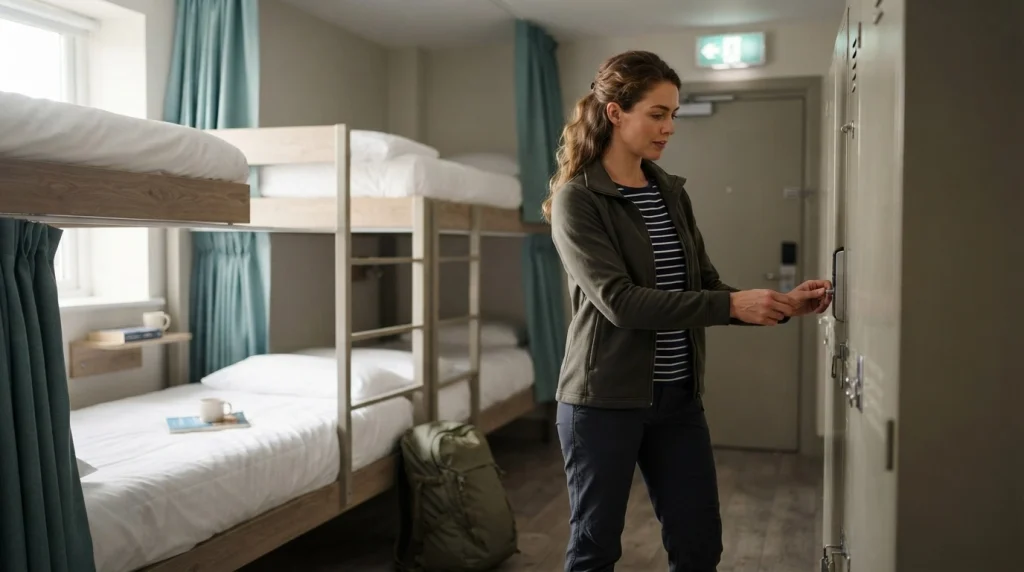
A safe hostel combines sensible building security, responsible management, secure storage, and a location that suits your travel plans. No property can eliminate every risk, but several good safeguards can make a stay more comfortable.
Understand what hostel safety really means
A hostel is accommodation where travelers typically book individual beds and share facilities such as bedrooms, bathrooms, kitchens, or common rooms. Some hostels also offer private bedrooms while keeping their shared social spaces.
For women traveling alone, safety includes more than preventing theft. It also means having privacy, getting help when needed, and being able to leave or change rooms if a situation becomes uncomfortable.
When evaluating a property, look for these practical features:
- Controlled access: Sleeping areas should have reasonable restrictions on entry by people who aren’t registered guests.
- Individual lockers: Each guest should have a secure place for a passport, electronics, and other valuables.
- Available staff: Reception or an emergency contact should be reachable when problems arise.
- Working locks: Bedroom and bathroom doors should close properly and provide the privacy advertised.
- Fire safety: Emergency exits, evacuation instructions, and alarms should be visible and accessible.
- Clear guest policies: The property should explain how it manages visitors, complaints, and inappropriate behavior.
Does a higher rating automatically mean better security?
No. A high overall rating can reflect friendly staff, attractive décor, or a lively atmosphere without telling you much about security.
Read the actual comments behind the score. A slightly lower-rated hostel with consistently positive reports about staff responsiveness and working facilities may suit you better than a stylish property with repeated complaints about unauthorized visitors.
As you plan your trip in 2026, check recent feedback rather than relying on old recommendations that may predate a change in ownership or management.
Section takeaway: Choose evidence of good management and functioning security over attractive marketing, a high rating, or a bargain price alone.
How Do You Check Hostel Reviews and Security Before Booking?
Check reviews from the past three to six months, compare more than one booking platform when possible, and ask the hostel direct questions about security. Specific, repeated feedback is more useful than a single glowing recommendation.
Read reviews with a safety checklist
I recommend searching reviews for practical details rather than simply sorting properties by popularity. Pay particular attention to comments from solo travelers and women who stayed in the same room type you’re considering.
Look for information about:
- Room access: Do guests mention key cards, secure doors, or strangers entering sleeping areas?
- Staff response: Do reviewers describe staff resolving problems promptly and respectfully?
- Lockers: Are lockers available, functional, and large enough for your important belongings?
- Cleanliness: Are shared bathrooms and bedrooms maintained consistently?
- Noise and nightlife: Does the hostel host late parties or attract guests who regularly disturb others?
- Harassment concerns: Are there repeated reports of intrusive behavior or ignored complaints?
- Neighborhood access: Do guests describe the route from public transportation as convenient and comfortable?
One negative review doesn’t automatically make a hostel unsafe. However, several recent accounts describing the same unresolved problem deserve serious attention.
Contact the hostel before paying
A short message can help you confirm details that a listing doesn’t explain. It also gives you a chance to assess whether staff answer reasonable questions clearly.
Ask these questions before booking:
- Is reception staffed overnight, or is there an emergency contact?
- Can only registered guests enter the sleeping areas?
- Does each guest receive an individual locker, and do I need my own padlock?
- Can I reserve a female-only dorm or a smaller room?
- What procedures do staff follow when a guest reports harassment?
- Can guests request a room change if they feel uncomfortable?
- How does late check-in work, and will someone be available if my transport is delayed?
Don’t assume every hostel offers a 24-hour front desk or provides locks. Confirm the arrangements that matter to you before making a nonrefundable booking.
Check the listing against the real property
Look at recent guest photos and compare them with the official listing. Check whether the advertised lockers, curtains, bathrooms, and entrance arrangements appear consistent with the property you intend to book.
If the listing leaves important questions unanswered, ask for clarification. A vague response isn’t proof of danger, but you can choose a property that communicates more clearly.
Pro tip: Before international travel, consult your government’s current destination advice. The Australian government’s advice for women traveling overseas also provides general accommodation and personal-safety guidance.
Section takeaway: Verify the details behind the listing, and treat repeated unresolved security complaints as a reason to look elsewhere.
Which Hostel Room Is Best for a Woman Traveling Alone?
A female-only dorm, a smaller mixed dorm, or a private hostel room can each be a sensible choice. The best option depends on your comfort level, budget, privacy needs, and the quality of the individual property.
Female-only dorms: more privacy from male roommates
A female-only dorm is a shared bedroom reserved for women under the hostel’s room policy. It can be a reassuring starting point if you’re new to hostel stays or prefer not to share a sleeping area with men.
Consider this option if you:
- Feel more comfortable sleeping in a room with other women.
- Want to make friends with other female travelers.
- Prefer a women-only sleeping area when changing or getting ready.
- Want to ease into shared accommodation during your first solo trip.
Remember that a female-only label doesn’t guarantee secure entry, helpful staff, or freedom from theft. Check the room and building’s security just as carefully as you would anywhere else.
Mixed dorms: flexible and often available
A mixed dorm accommodates guests of different genders in the same shared bedroom. It can be a reasonable option when you trust the property’s management and feel comfortable with the arrangement.
For greater comfort, look for a smaller dorm with privacy curtains, individual lights, and secure lockers. If sharing a room with unfamiliar men makes you anxious, there’s no need to force yourself into that arrangement to save money.
Private hostel rooms: privacy without losing the social atmosphere
A private room offers your own sleeping space while allowing you to use communal kitchens, lounges, tours, and other hostel facilities. It can be a useful middle ground if you enjoy meeting people but want more control over your downtime.
Confirm whether the room has a lock, whether the bathroom is private or shared, and how staff handle access when you’re away. Private rooms vary, so don’t assume their security matches that of a conventional hotel.
Use this comparison to narrow down your choice.
| Room type | Privacy | Typical cost | Best fit |
|---|---|---|---|
| Female-only dorm | Limited to moderate | Usually lower than a private room | Women who prefer female roommates |
| Mixed dorm | Limited to moderate | Often a budget-friendly option | Travelers comfortable sharing with different genders |
| Private hostel room | High when the room is properly secured | Usually higher than a dorm bed | Travelers who want privacy and social spaces |
| Traditional hotel room | Generally high | Varies widely by destination and property | Travelers prioritizing private accommodation |
These are general comparisons, not guaranteed prices or security rankings. Room rates, facilities, and access controls vary by destination and property.
Section takeaway: Start with the room type that makes you feel comfortable enough to rest well, then evaluate the actual security measures.
How Do You Compare Hostel Location, Price, and Facilities?
The best hostel is one that fits your budget without making transportation, privacy, or security unnecessarily difficult. Compare the full cost of staying there, not just the advertised price per bed.
Choose a location that works after dark
A hostel near public transportation, shops, and busy streets may make getting around easier. However, a central address alone doesn’t prove that the surrounding area is safe.
Before booking, check the map and investigate these details:
- Transport access: Check walking distances to train stations, bus stops, and reliable taxi pickup points.
- Nighttime routes: Look for a straightforward route that avoids isolated streets when possible.
- Arrival times: Confirm that transport operates when your flight or train arrives.
- Essential services: Identify nearby pharmacies, convenience stores, and places where you can seek assistance.
- Local guidance: Review current travel advice and ask reputable accommodation staff about transport options.
For example, imagine two hostels have similar reviews, but one requires a long walk along poorly lit streets after the metro closes. The other costs slightly more and offers a straightforward taxi journey from a well-used pickup point.
I’d compare the extra transport cost against the savings before choosing the cheaper bed. A low nightly rate isn’t always the best value.
Calculate the total cost of your stay
Hostel prices change with season, local demand, room type, and booking conditions. Compare actual listings for your dates rather than relying on general claims about how much a hostel should cost.
Use this example to see how additional expenses can change your decision.
| Expense for one night | Hostel A | Hostel B |
|---|---|---|
| Bed or room | $18 | $23 |
| Estimated additional transport | $10 | $4 |
| Total illustrative cost | $28 | $27 |
These figures are illustrative, not live hostel prices. They show why a slightly more expensive room can cost less overall when transport expenses are lower.
Check which facilities are included
Facilities affect both convenience and your ability to protect your belongings. Verify the details instead of assuming every hostel provides the same amenities.
- Lockers: Check their size, location, and whether you need to bring a padlock.
- Bed curtains: These offer some visual privacy but don’t replace room security.
- Bathrooms: Check whether facilities are shared, gender-specific, or private.
- Reception hours: Find out how to contact staff outside regular check-in hours.
- Luggage storage: Ask whether the hostel offers secure storage before check-in or after checkout.
- Cancellation terms: Understand the refund policy in case you need to change accommodation.
Free Wi-Fi, breakfast, and social events can be useful, but I would prioritize essential security and location features first.
Section takeaway: Compare location, transport, room security, and cancellation terms alongside the nightly rate to find accommodation that offers better overall value.
What Are the Warning Signs of an Unsafe Hostel?
Repeated reports of unauthorized access, broken locks, ignored harassment complaints, or unresponsive staff are strong reasons to reconsider a booking. You don’t need proof that a property is dangerous before deciding it doesn’t meet your safety requirements.
Warning signs to look for before booking
Pay attention to patterns in reviews and to how the property responds when guests raise concerns.
- Repeated security complaints: Several recent guests describe thefts, unsecured entrances, or missing locker facilities.
- Poor staff responses: Reviews repeatedly describe serious complaints being dismissed or ignored.
- Unclear access policies: The hostel cannot explain who may enter sleeping areas.
- Misleading listings: Advertised room types or security features don’t match recent guest reports.
- Unsafe arrival arrangements: Late-night access is unclear, and no one can explain how to reach the property safely.
- Pressure to pay: Staff demand unexpected payments or pressure you to ignore the stated booking terms.
A single complaint may have an innocent explanation, and online reviews can sometimes be inaccurate. Look for corroborating details and ask questions before drawing conclusions.
Trust your judgment when something feels wrong
Suppose you arrive and discover that your assigned room doesn’t have the working locker promised in the listing. Or perhaps staff cannot explain why unfamiliar people have access to the sleeping area.
You can ask for clarification, request a different room, or leave if the problem remains unresolved. Your budget matters, but you don’t have to accept conditions that make you feel unsafe.
Before traveling, identify a backup hostel or hotel with a suitable location and clear booking terms. Save the address and contact details so you won’t have to search from scratch under pressure.
If you experience a credible threat, move to a safer public area and contact local emergency services when necessary. Don’t stay to resolve a payment dispute while an immediate safety concern remains.
Section takeaway: Repeated security problems and poor responses deserve serious attention, and you can change accommodation when the situation warrants it.
What Should You Do After Checking Into a Hostel?
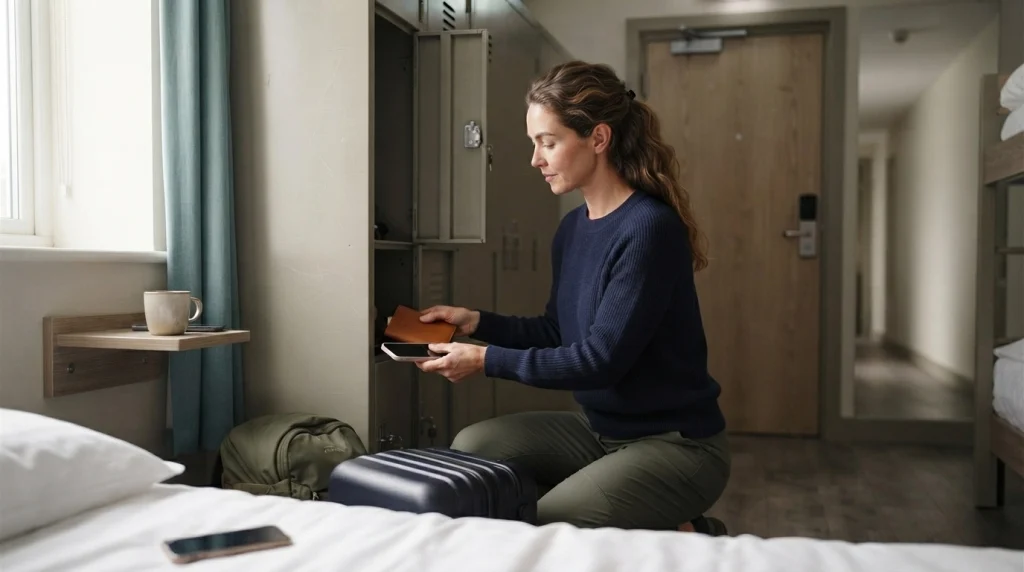
Inspect your room, locate emergency exits, secure your valuables, and learn how to reach staff as soon as you arrive. A few minutes of preparation can help you spot problems before settling in for the night.
Complete a quick arrival checklist
After checking in, take these steps before heading out to explore:
- Inspect the room: Check that doors, windows, and available lockers work as expected.
- Secure valuables: Store your passport, spare bank card, and electronics in a suitable locker.
- Locate exits: Find the nearest emergency exit and read the posted evacuation instructions.
- Find reception: Save the staff contact number or learn the property’s emergency procedure.
- Check your surroundings: Identify the bathroom, drinking water facilities, and the route back to your bed.
- Save essential details: Keep your booking confirmation, accommodation address, and local emergency number accessible.
If something doesn’t match the listing, report it promptly and request a reasonable solution. For example, you can ask staff to fix a faulty locker or move you to a room with functioning security features.
Protect your privacy and belongings
Hostel common areas make meeting other travelers easy, but you can decide how much personal information to share. Being friendly doesn’t mean giving strangers unrestricted access to your plans or belongings.
- Keep your passport and valuables secured when you’re away from your bed.
- Avoid announcing your room number or exact itinerary to people you barely know.
- Use a secure bag when carrying essential items around the city.
- Keep your phone charged and maintain access to your booking information.
- Tell someone you trust where you’re staying, particularly during a longer solo trip.
Be thoughtful about invitations to visit private rooms or unfamiliar locations with people you’ve just met. You can socialize in the common lounge, join an organized group activity, or meet for coffee in a public place instead.
Know when to change rooms or leave
If another guest repeatedly ignores your boundaries, report the behavior to staff and request a room change. If you feel threatened, prioritize reaching a safer location rather than confronting the person alone.
If the hostel cannot address a serious concern, use your backup accommodation plan. Keep receipts and booking records in case you need to request a refund later.
Pro tip: For destination-specific risks and emergency information, consult your government’s official travel advice before departure and during longer trips. The U.S. Department of State travel website is one official resource for international travelers.
Section takeaway: Check your room and exits immediately, keep valuables secure, and act promptly if a security problem cannot be resolved.
Frequently Asked Questions About Choosing a Safe Hostel
Is it safe for a woman to stay in a hostel alone?
Yes, a hostel can be a suitable option for a woman traveling alone when the property has responsible management, secure access, reliable storage, and positive recent reviews. Safety varies between properties, so assess the individual hostel and choose a room that matches your comfort level.
Are female-only dorms safer than mixed dorms?
Female-only dorms can offer greater comfort and privacy for women who prefer not to share a sleeping room with men. However, they don’t guarantee safety. Working locks, secure entrances, responsible staff, and the overall quality of management remain important regardless of room type.
How many people should share a hostel dorm?
There is no universal room size that guarantees safety. A four- or six-bed dorm may feel easier to manage than a much larger room, especially for a first-time solo traveler. Compare room access, lockers, privacy features, and recent reviews before choosing.
What should a woman pack for hostel safety?
Consider bringing a compatible padlock, a charged phone, a power bank, a small flashlight, and a secure day bag. Keep your passport, essential medication, and emergency contact information accessible. Check the hostel’s facilities first so you only pack items you actually need.
Should I book a hostel before arriving at my destination?
Booking ahead is often helpful, particularly when you need a female-only dorm, expect to arrive late, or are visiting during a busy period. Reserve accommodation with clear check-in instructions and suitable cancellation terms. Having a confirmed place to sleep reduces the pressure of searching after arrival.
What should I do if I feel unsafe after checking in?
Move to a safer area if necessary, contact hostel staff, and request a room change or assistance. If staff cannot resolve a serious concern, leave for alternative accommodation when you can do so safely. Contact local emergency services if you face an immediate threat.
Is a hostel or hotel better for a first solo trip?
A hostel may suit you if you want affordable accommodation and opportunities to meet other travelers. A hotel may be preferable if you value a private room and more personal space. A private hostel room offers a middle ground, combining a separate sleeping space with access to communal facilities.
Final Takeaway: Choose the Hostel That Lets You Travel With Confidence
Choosing a safe hostel as a solo female traveler doesn’t mean finding a property with zero risks. It means making an informed decision based on reliable reviews, practical location details, security features, and your own comfort level.
Before booking, compare at least two or three suitable properties, verify the facilities you care about, and check the cancellation policy. After arrival, inspect your room, secure your belongings, and learn how to contact staff.
Most importantly, don’t let the cheapest price or pressure to be adventurous override your judgment. A well-chosen hostel should support your independence, give you space to rest, and make it easier to enjoy the destination on your own terms.
Start with a shortlist of reputable hostels, compare the room types available for your dates, and choose the option that balances security, comfort, location, and budget. A little preparation can make your next solo trip feel more manageable from the very first night.
