
How Can a Woman Change Hotels Safely During a Solo Trip?
Quick Answer
A woman can change hotels safely during a solo trip by booking a verified replacement, arranging reliable transportation, protecting her belongings, and keeping someone she trusts informed. If the current hotel feels unsafe, move to a secure public area first and prioritize leaving over recovering every possession. The U.S. Department of State’s lodging safety guidance is a useful starting point.
Steps for a safer hotel change
- Secure your next stay: Confirm the new hotel’s address, reservation, check-in time, and recent reviews before departing.
- Choose safe transport: Use a reputable taxi service, licensed transfer, or established ride-hailing app where available.
- Protect essentials: Keep your passport, phone, money, medication, and room keys in your personal bag.
- Share your plans: Send a trusted contact your destination, estimated arrival time, and transport details.
- Check the new room: Confirm that doors, windows, locks, and emergency exits work before settling in.
- Document problems: Save receipts, booking confirmations, and messages if you need a refund or insurance claim.
If you feel threatened
- Move to a staffed lobby, reputable nearby business, or other secure public place if you can do so safely.
- Contact local emergency services if there is an immediate threat, and ask hotel management or trusted contacts for help with the move.
Changing hotels alone can feel stressful, especially when you’re in an unfamiliar city and don’t have another traveler to share the decisions with. A clear plan makes the move easier to manage without sacrificing your safety, privacy, or budget.
In this guide, I’ll explain how to decide when to leave, choose replacement accommodation, arrange transportation, handle your luggage, and settle into a new room with greater confidence.
In This Guide
- When should you change hotels during a solo trip?
- How do you choose and book a safer replacement hotel?
- How can you leave and travel between hotels safely?
- How do you protect your belongings and privacy during the move?
- What should you do after arriving at the new hotel?
- How do you handle extra costs and booking problems?
- Frequently asked questions
When Should You Change Hotels During a Solo Trip?
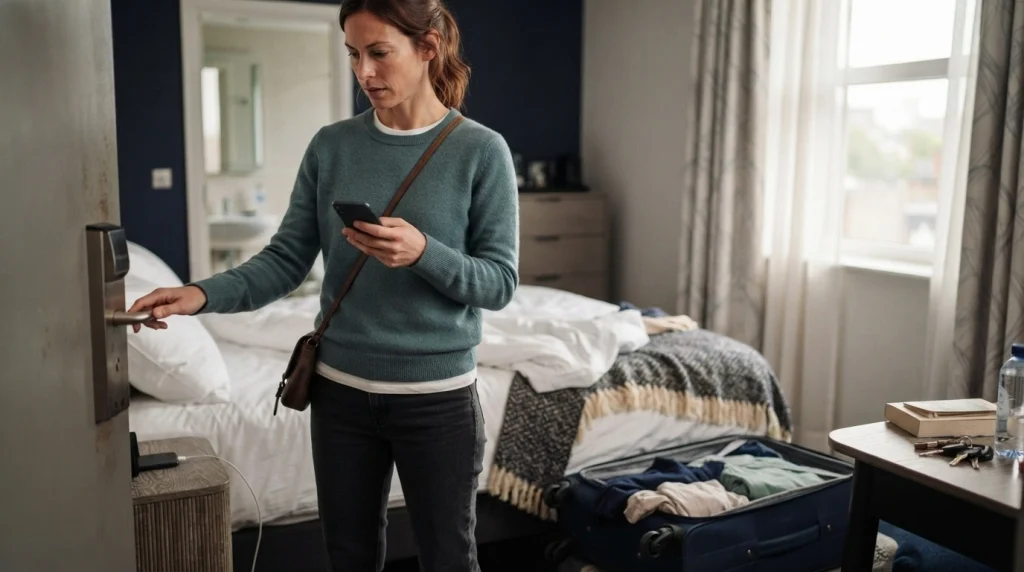
You should change hotels when the accommodation no longer meets your safety needs, creates an ongoing problem, or makes you uncomfortable enough that staying isn’t worth the risk. You don’t need to prove that a place is dangerous before deciding to leave.
Recognize the difference between inconvenience and danger
A noisy room, broken air conditioner, or disappointing breakfast may justify requesting a room change rather than leaving immediately. However, an unsecured entrance, repeated unwanted visits, threatening behavior, or a staff member sharing your room details without permission deserves more serious attention.
Consider these situations and the most practical response:
- Minor maintenance issue: Ask for a different room or a repair, provided you feel safe dealing with staff.
- Persistent discomfort: Request a room change, speak with a manager, or arrange alternative accommodation if the problem continues.
- Privacy violation: Tell management what happened, request a secure room or refund, and leave if you no longer trust the property’s procedures.
- Immediate threat: Get to a safer location and contact local emergency services when necessary; don’t delay leaving to negotiate a refund.
Trust specific warning signs, not just anxiety
Solo travel can make ordinary uncertainties feel larger because you’re managing everything yourself. Instead of dismissing your concern or assuming the worst, identify what triggered it and whether you can reduce the risk.
For example, a room that doesn’t lock properly presents a concrete security problem. A hotel that looks different from its listing may call for further checks, while someone trying your door handle at night requires a more urgent response.
If you suspect that someone is watching you, following you, or attempting to enter your room, avoid confronting that person alone. Move toward staffed public areas and ask for assistance.
Decide whether to leave immediately or prepare first
When there is no immediate danger, take a few minutes to arrange a confirmed room and safe transportation. When danger is immediate, your priority is reaching safety, even if you must leave luggage behind temporarily.
Section takeaway: Your comfort matters, but immediate threats change the order of priorities. Secure yourself first, then handle accommodation changes, evidence, and refunds.
How Do You Choose and Book a Safer Replacement Hotel?
The safest replacement is one you can verify, reach using reliable transportation, and enter without unnecessary uncertainty. Before leaving your current accommodation, confirm that the new property can accept you and that its location suits your needs.
Check the property and its location
Don’t choose a replacement based on price or attractive photos alone. Review the address, recent guest feedback, check-in arrangements, and access to transport or essential services.
Prioritize these details when comparing options:
- Staff availability: Look for a staffed reception or a clearly documented, dependable check-in process.
- Building access: Check whether the entrance is controlled and how guests reach their rooms.
- Location: Prefer an area where you can reach the property without a long walk through isolated streets.
- Recent reviews: Look for recurring concerns about unauthorized entry, poor security, harassment, or unreliable check-in.
- Transport access: Confirm that a driver can reach the entrance and that you can identify the correct building easily.
- Communication: Make sure you can contact the property directly if your arrival is delayed.
These checks don’t guarantee safety, but they help you avoid replacing one stressful situation with another.
Confirm the booking before moving
Whenever possible, book through the property’s official website or a reputable accommodation platform. Save the confirmation and verify the total cost, cancellation terms, and expected arrival time.
Ask the property to confirm three things before you set off:
- Your reservation is active and a room will be available when you arrive.
- The reception or host will be available to let you in.
- The address and entrance instructions match the location you plan to visit.
If you must book at short notice, contact the property directly through verified contact details. Avoid paying an unfamiliar person through an irreversible method simply because they promise an immediate room.
Compare your accommodation options
A hotel isn’t always the only sensible replacement. The right option depends on how urgently you need to leave, what you can afford, and whether you need staff assistance.
| Option | Potential advantage | What to verify |
|---|---|---|
| Established hotel | Reception and a formal booking record | Staffing hours, entry controls, room locks |
| Serviced apartment | More space and self-catering facilities | Verified host, entry procedure, local support |
| Private hostel room | Potentially lower cost and shared facilities | Room privacy, locker access, reception hours |
| Trusted contact’s accommodation | Personal assistance if genuinely available | Address, access arrangements, practical suitability |
The table compares practical features, not guaranteed safety levels. A well-reviewed property still needs to meet your own requirements.
Pro tip: Review your destination’s official travel advice for current local security concerns and emergency contacts. The U.S. Department of State’s lodging safety guidance also explains what to check before and during a stay.
Section takeaway: A confirmed, reachable room is more useful than a cheaper room you can’t reliably access. Verify the booking, entrance, and arrival plan before moving whenever circumstances allow.
How Can You Leave and Travel Between Hotels Safely?
Plan the journey between properties before carrying your bags outside. Choose a transport option that minimizes waiting, unnecessary stops, and time spent navigating unfamiliar streets alone.
Choose transport that matches your situation
The best option depends on the destination, time of day, distance, and your comfort level. For a short move, walking may be reasonable in a familiar, well-lit area; for a late-night transfer, a verified door-to-door service may be preferable.
- Hotel-arranged transfer: Ask reception to arrange a reputable driver and confirm the vehicle details before boarding.
- Licensed taxi: Use an official taxi stand or a trusted dispatch service, and agree on the fare or meter arrangement where appropriate.
- Ride-hailing service: Match the registration plate, vehicle model, and driver details shown in the app before getting in.
- Public transportation: Consider it when the route is straightforward, services are operating, and the stops and walking sections feel appropriate for the time of day.
- Walking: Choose a direct route with good lighting and active public spaces, rather than shortcuts through isolated areas.
Don’t assume a familiar transport option is automatically safe everywhere. Check local travel guidance and choose a service that is reputable in your destination.
Share your route and arrival time
Tell a trusted friend or family member that you’re changing accommodation. Send the new property’s name and address, your expected arrival time, and transport details when available.
Agree on a simple check-in arrangement, such as messaging when you leave and again after entering the new room. If you miss the agreed time, your contact should know how to reach you and when to seek further help.
Keep your phone charged and your mobile data working if possible. Save the address offline in case the connection fails.
What if you need to change hotels at night?
A nighttime move requires extra planning because reception desks, transport services, and nearby businesses may have limited availability. If your current room is safe enough to remain in temporarily, arrange a confirmed destination and transport before leaving.
If you face an immediate threat, don’t remain in an unsafe room simply because it’s late. Go to a secure public place if possible and contact local emergency services or trusted assistance.
Use these precautions for an after-dark transfer:
- Confirm that someone will admit you at the replacement property.
- Request a vehicle that can collect you directly from a safe entrance.
- Keep your luggage together and your phone accessible.
- Avoid announcing your destination or travel plans to strangers unnecessarily.
- Tell your trusted contact when you arrive and lock the door behind you.
Pro tip: The UK government’s solo and independent travel guidance covers accommodation planning, personal security, and precautions for travelers staying alone.
Section takeaway: Reduce uncertainty at every stage of the transfer. Confirm your ride, share your route, and avoid leaving yourself stranded between properties.
How Do You Protect Your Belongings and Privacy During the Move?
Keep essential documents, communication devices, money, and medication under your control throughout a hotel change. Your luggage can follow a separate plan, but the items you need to stay safe should remain with you.
Pack a personal essentials bag first
Before packing your suitcase, gather the items that would be difficult or dangerous to lose. Keep them in a small bag that stays with you rather than in a taxi trunk or with hotel staff.
- Passport or other identification and any essential travel documents.
- Phone, charging cable, power bank, and any necessary authentication details.
- Payment cards and enough accessible money for transport or an unexpected booking.
- Prescription medication and other essential personal items.
- Keys, reservation confirmation, travel insurance information, and emergency contacts.
If you’re leaving because someone has threatened you, don’t spend extra time collecting nonessential belongings. Leave first if necessary and ask local authorities or appropriate support staff about retrieving property safely.
Pack and move luggage discreetly
If you have time, pack calmly and keep your bags zipped. Avoid leaving valuables unattended in the lobby, on a luggage trolley, or in a vehicle while you check directions.
If hotel staff help carry your bags, remain present and keep your essential bag with you. For a taxi or rideshare, check that all luggage is loaded and retrieved before the vehicle leaves.
Don’t share photos of your room key, booking details, or travel documents publicly. Such images may expose personal information or details about where you’re staying.
Protect your room number and new address
At the new property, ask staff not to announce your room number aloud or disclose your room details to other guests. If someone at the previous hotel knows where you’re going and that worries you, avoid sharing your destination with that person.
Consider these privacy steps:
- Ask the new property to use your name discreetly during check-in.
- Keep your room key separate from paperwork displaying your room number.
- Review location sharing on your phone if you believe someone may be tracking you without permission.
- Share your new address only with people who need it for safety or practical reasons.
- Change account passwords from a trusted device if you suspect someone accessed your accounts.
If you think your phone or accounts have been compromised, use a trusted device to contact someone who can help. Avoid making changes that could alert a threatening person before you’re in a safer situation.
Section takeaway: Keep your essentials close and your destination private where needed. A secure transfer includes protecting both your physical belongings and your personal information.
What Should You Do After Arriving at the New Hotel?
Once you reach the replacement hotel, verify that the room and its surroundings meet your basic safety needs before unpacking. Don’t assume a successful check-in means every security concern has been resolved.
Complete a quick room safety check
I recommend making this a routine whenever I arrive somewhere new, even if the property has good reviews. A short check helps you identify problems while you can still request another room or move elsewhere.
- Test the door: Confirm that the main lock and any additional security device work properly.
- Check windows: Make sure accessible windows and balcony doors close and lock securely.
- Locate emergency exits: Read the fire escape instructions and identify the nearest usable exit.
- Check the phone: Find out how to reach reception or local emergency services.
- Look for basic safety equipment: Check for smoke alarms and other required safety features.
- Protect your privacy: Close curtains and check that the room offers the privacy you expect.
If a lock doesn’t work or you discover a serious safety problem, contact management and request a different room. If the response is inadequate and you feel unsafe, consider leaving for another verified property.
Tell someone you’ve arrived
Send your trusted contact a short message confirming that you’ve reached the new hotel. If appropriate, share the room number privately with that person rather than posting it publicly.
Update your itinerary and keep the new booking confirmation accessible. This is especially helpful if your next activity, airport transfer, or planned check-in depends on the new address.
Settle in before making further decisions
After the immediate safety checks, take a few minutes to organize your essentials and review your next steps. If the move was stressful, you don’t need to resume sightseeing immediately.
Give yourself time to eat, hydrate, contact your support network, and decide whether you need to report the original hotel’s behavior. If you still feel threatened, seek assistance rather than treating the change of accommodation as the end of the problem.
Section takeaway: Verify the room, confirm your arrival, and give yourself time to recover. Your new accommodation should support both your practical needs and your peace of mind.
How Do You Handle Extra Costs and Booking Problems?
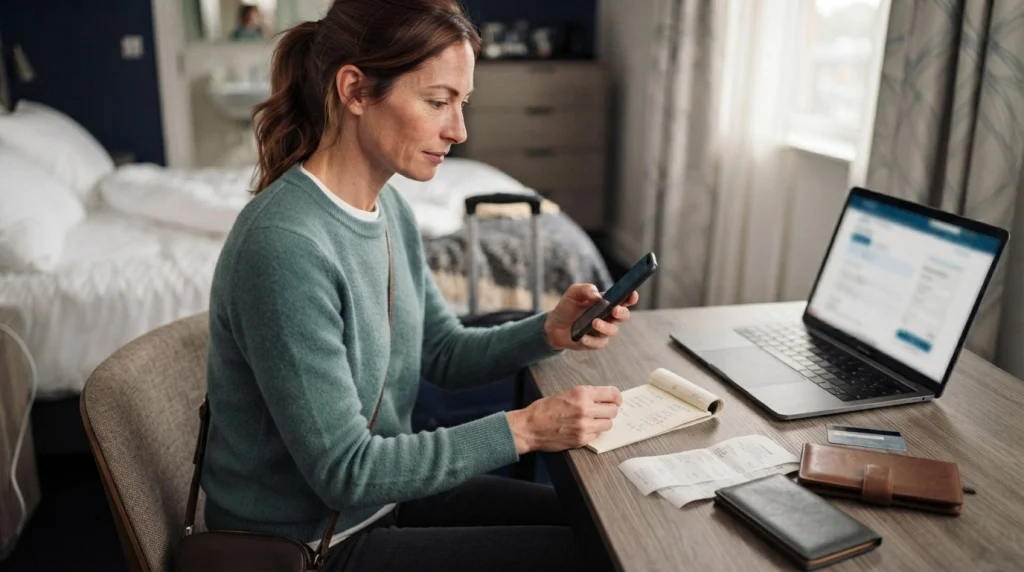
Changing hotels may involve an extra night’s payment, transport charges, cancellation penalties, or a dispute over a refund. Keep records from the beginning so you can explain why you moved and what expenses you incurred.
Ask about a refund without delaying your departure
If the original property caused the problem, explain the issue clearly and request an appropriate remedy. You can negotiate a refund after reaching safety if discussing the problem in person feels uncomfortable.
Save the following evidence when it is safe to do so:
- Your original booking confirmation and cancellation policy.
- Messages exchanged with hotel staff or the booking platform.
- Photos or videos of maintenance or security problems, provided taking them doesn’t expose you to danger.
- Receipts for replacement accommodation and transportation.
- A brief written timeline describing what happened and when you reported it.
Evidence can support a complaint, but it doesn’t guarantee a refund. The outcome depends on the booking terms, the circumstances, applicable consumer protections, and the platform’s policies.
Contact the booking platform or payment provider
If you booked through a third-party platform, contact its support team and explain why you need to leave. Ask whether it can help find replacement accommodation, document the complaint, or assess refund eligibility.
If you paid directly, contact the property or its management company. If you suspect fraud or an unauthorized payment, contact your payment provider promptly and follow its dispute procedures.
Build a realistic emergency accommodation budget
There isn’t one universal cost for changing hotels because prices depend on the destination, season, room availability, and booking terms. Instead of relying on a fixed estimate, prepare a small contingency budget based on your own itinerary.
| Expense | What to budget for | How to limit surprises |
|---|---|---|
| Replacement room | The full rate for the nights needed | Check the final price, taxes, and fees |
| Transportation | Taxi, transfer, or other suitable transport | Confirm fares and avoid unnecessary detours |
| Original booking | Possible cancellation or unused-night charges | Read the terms and request an exception where justified |
| Incidentals | Meals, luggage storage, or extra communication | Keep a separate reserve for unexpected needs |
Check your travel insurance policy before assuming that it covers a hotel change. Some policies cover specific disruptions or safety-related circumstances, while others exclude voluntary changes or require prior approval.
Pro tip: Review the official foreign travel advice pages for your destination. For a serious incident, follow local emergency instructions and contact your insurer or travel provider when it’s safe.
Section takeaway: Protect your budget without making money the deciding factor in an unsafe situation. Keep receipts, review your policy, and handle disputes after you’ve secured suitable accommodation.
Frequently Asked Questions
Is it safe for a woman to change hotels alone at night?
It can be possible, but the safest approach depends on local conditions, transport availability, and the reason for leaving. Confirm the replacement room and arrange reliable transportation before departing when possible. If you face an immediate threat, prioritize reaching a secure location and contacting local emergency services.
Should I tell my current hotel why I’m leaving?
You can explain the reason if you feel comfortable and safe doing so. If you suspect staff involvement, harassment, or a privacy breach, you don’t need to confront anyone alone before leaving. Document the issue and communicate with management or the booking platform afterward.
What if I can’t afford another hotel?
Contact a trusted person, your booking platform, travel insurer, or a suitable local support organization to discuss available options. Ask your current hotel about a safer room only if staying is reasonable. If you’re in immediate danger, seek emergency assistance rather than remaining in a threatening situation because of cost.
Should I leave my luggage behind if I feel unsafe?
Yes, if retrieving your belongings would expose you to immediate danger. Take your phone, identification, medication, and other essentials if you can reach them safely, but don’t delay your escape for a suitcase. Ask local authorities or appropriate staff about recovering the remaining property later.
How can I avoid being followed to my new hotel?
Keep your new address private from anyone you distrust, use a reputable transport service, and share your route with a trusted contact. If you believe someone is following you, avoid leading them directly to your accommodation. Move to a staffed public place and contact local authorities if you feel threatened.
Will travel insurance pay for a replacement hotel?
Coverage depends on the policy, the reason for changing accommodation, and any applicable exclusions or approval requirements. Review your policy and contact the insurer as soon as practical. Keep booking records, receipts, and relevant communications to support a potential claim.
What should I do if the new hotel also feels unsafe?
Take specific warning signs seriously, such as a door that won’t lock or unwanted attempts to enter your room. Request another room or leave for a verified alternative if necessary. If you face a threat, move to a safer public area and contact emergency services or trusted local assistance.
Final Takeaway: Make Your Safety the Priority
Learning how to change hotels safely during a solo trip gives you more control when accommodation plans go wrong. You don’t have to remain somewhere that feels unsafe simply because you booked it in advance or paid for several nights.
Confirm a replacement when possible, choose reliable transport, keep essential belongings close, and tell someone you trust where you’re going. Once you arrive, check the room, protect your privacy, and document any problems with the original booking.
Most importantly, remember that a successful solo trip isn’t one where everything goes according to plan. It’s one where you can respond to unexpected situations, make informed decisions, and put your well-being first.
