
How Can a Woman Handle an Early Hotel Checkout Alone?
Quick Answer
A woman traveling alone can handle an early hotel checkout by preparing her belongings the night before, confirming the front desk’s opening hours, settling her bill, and arranging safe transportation in advance. If she must leave before reception opens, she should confirm the property’s key-return procedure and payment arrangements beforehand. For additional precautions, review the U.S. Department of State’s hotel and lodging safety guidance.
Your early checkout checklist
- Pack the night before: Keep your passport, phone, wallet, medications, and travel documents accessible.
- Confirm reception hours: Ask whether staff will be available when you leave and how to return your key.
- Check your bill: Request an itemized statement and clarify any outstanding charges or deposits.
- Arrange transport: Book a reputable taxi, hotel transfer, or other suitable option before departure.
- Protect your privacy: Keep valuables secure and avoid announcing your travel plans to strangers.
- Share your itinerary: Tell a trusted person when you expect to leave and arrive at your next destination.
One important precaution
- If you need to leave before sunrise, verify the route, pickup location, transport availability, and building access before going to bed.
Early hotel checkout can feel stressful when you’re traveling alone, especially when your flight leaves before dawn or you need to catch the first train of the day. A little preparation makes the process more manageable and helps you protect your belongings, budget, and personal safety.
In this guide, I’ll explain how to organize an early departure, handle hotel staff and payment questions, choose safer transportation, and manage unexpected problems without unnecessary panic. Whether you’re checking out at 4 a.m. or leaving a few hours before the standard checkout time, you can follow a clear plan.
In This Guide
- Why does early hotel checkout need extra planning?
- How should you prepare the night before?
- How do you check out when reception is closed?
- How can you stay safe when leaving early?
- How should you handle payment and checkout problems?
- What is the best early checkout checklist?
- Frequently asked questions
Why Does Early Hotel Checkout Need Extra Planning?
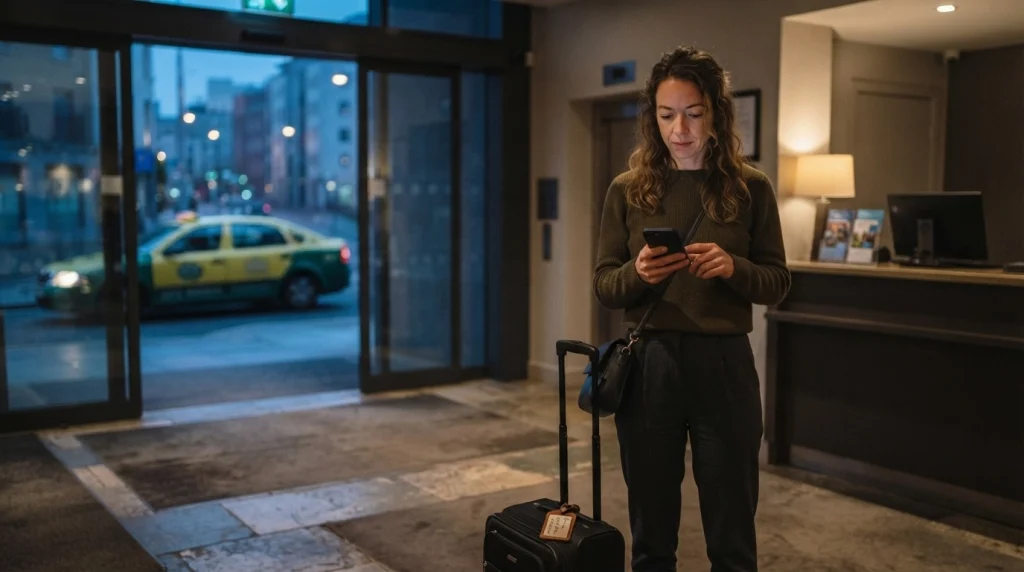
Early hotel checkout means leaving your accommodation before its usual checkout time or departing when the front desk operates with limited staffing. For a woman traveling alone, it also means organizing luggage, payment, access, and transportation without relying on a companion.
The biggest challenge isn’t usually handing over a room key. It’s coordinating several small tasks when you’re tired, the streets are quiet, and your transportation schedule leaves little room for mistakes.
What makes an early departure different?
A normal daytime checkout often gives you access to reception, luggage storage, shops, and public transportation. Before sunrise, some of those services may be unavailable or operate on reduced schedules.
These are the most common issues to plan around:
- Limited reception hours: A small guesthouse may not have someone at the desk overnight.
- Transportation gaps: Buses, trains, and ride services may run less frequently in the early morning.
- Payment questions: A pending deposit, minibar charge, or billing error can delay your departure.
- Forgotten belongings: Rushing increases the chance of leaving a charger, passport, or medication behind.
- Reduced visibility: Dark entrances and quiet streets can make finding a pickup point more difficult.
How early should you leave for the airport or station?
Work backward from your transport departure time instead of guessing when you should leave the hotel. Account for the journey, check-in or boarding requirements, security queues, and a reasonable delay buffer.
For example, if your flight departs at 7 a.m., your airline’s check-in and airport arrival guidance should determine your schedule. A short taxi ride does not automatically mean a late hotel departure is safe or practical.
Allow extra time when traveling from an unfamiliar neighborhood, using a large airport, or crossing a city during morning traffic. Confirm the actual travel time with a reliable mapping service and your transportation provider.
Section takeaway: Early checkout is easier when you plan backward from your departure time and account for limited services, transportation delays, and personal safety.
How Should You Prepare the Night Before?
The most effective way to manage an early hotel checkout alone is to complete nearly every task before going to sleep. That leaves only a few simple actions for the morning, when you may be tired or in a hurry.
1. Confirm the checkout procedure with the hotel
Contact reception or speak to a staff member the evening before your departure. Explain your planned checkout time and ask exactly what you need to do before leaving.
Confirm these details:
- Whether the front desk will be staffed when you depart.
- Whether you can settle your bill the previous evening.
- Where to return your key or access card if reception is closed.
- Whether an express checkout or key-drop box is available.
- Whether the hotel can arrange a taxi or an early-morning transfer.
- Whether luggage storage is available if you need to leave bags temporarily.
Never assume every hotel follows the same procedure. A staffed city hotel, a small family-run guesthouse, and a self-service apartment may have completely different checkout arrangements.
2. Pack strategically and protect important belongings
Pack everything you won’t need overnight, then check the room systematically before sleeping. Keep essential items together rather than scattering them across bedside tables, bathroom counters, and luggage pockets.
Use this final packing checklist:
- Travel documents: Passport, identification, tickets, booking details, and any required travel documents.
- Money and payment: Wallet, payment cards, and a small amount of appropriate local currency.
- Communication: Charged phone, charging cable, and a portable battery if you use one.
- Health essentials: Necessary medication, glasses, and any items you need during the journey.
- Room essentials: Keys, access cards, and anything you borrowed from reception.
Keep your passport, phone, wallet, and medication in your personal bag. Don’t put essential documents into luggage that might be stored in a taxi trunk or checked separately.
3. Set up a practical morning routine
Make your departure routine simple enough to follow while half-awake. Place your clothes, shoes, bags, and transport details where you can find them easily.
Before sleeping, charge your phone, set two alarms if needed, and save your destination address offline. Check that your transport booking shows the correct date, pickup location, and local time.
If you’re leaving before dawn, arrange your ride ahead of time rather than depending entirely on finding a driver at the last minute. Confirm whether the driver will meet you at the hotel entrance, lobby, or another designated point.
4. Check your bill before checkout day
Ask whether the hotel can provide a preliminary or final bill the night before. Review room charges, taxes, meals, parking, and any other services you used.
Some hotels require a final transaction after checkout, so an evening review may not include every last charge. Still, identifying discrepancies early gives you time to resolve them before reception becomes busy or closes.
Section takeaway: Confirm the procedure, settle what you can, pack essential items separately, and arrange transportation before going to bed.
How Do You Check Out When Reception Is Closed?
You can often leave a hotel before the front desk opens, provided the property allows it and you’ve followed its checkout instructions. The key is to confirm the process directly rather than leaving your key in an unapproved location or assuming your bill is settled.
Ask about express checkout or key drop-off
Some properties offer express checkout, a secure key-return box, or a mobile checkout option. Ask where to leave the key and whether you need to complete a form or notify staff before departing.
If the hotel uses a key-drop box, verify that it’s an official, secure location. Don’t leave a key unattended on the reception counter or hand it to someone whose role you cannot verify.
For a physical room key, follow the hotel’s specific instructions. For an electronic access card, ask whether you should return it or simply leave it in the room.
What if the hotel requires an in-person checkout?
Explain your departure time to reception the evening before and ask whether someone can assist you. If the property requires a staff member to inspect the room or close your account, arrange a suitable alternative in advance.
If no one is available, contact the manager or the hotel’s official telephone number for instructions. Keep a record of any written confirmation about your departure arrangements.
Don’t force your way through a locked exit, prop open a security door, or leave through an unfamiliar route. Your safety matters more than saving a few minutes.
Should you leave without a receipt?
If you paid the previous evening, ask for a receipt showing the payment and a statement of any remaining balance. If final charges will be processed later, request confirmation of that arrangement and ask when you’ll receive the final folio.
A folio is the hotel’s itemized record of your charges and payments. Keep a digital copy for your travel records, reimbursement needs, or a possible billing dispute.
If your checkout is contactless, retain the booking confirmation and any checkout message. Check your email afterward for the final receipt, but don’t assume a card authorization or preliminary bill proves that every charge has been finalized.
Section takeaway: An unattended checkout can work well when the hotel explicitly approves it and you know how to return the key, settle charges, and obtain proof of payment.
How Can You Stay Safe When Leaving Early?
When checking out alone before sunrise, prioritize a predictable route, secure luggage, and verified transportation. You don’t need to feel frightened, but you should avoid making important decisions at the last minute in an unfamiliar setting.
Choose transportation before leaving your room
Arrange a licensed taxi, a hotel-booked transfer, or a reputable ride service that operates in your destination. Confirm the pickup point and expected fare or pricing method before you leave.
When using an app-based ride, check the vehicle details and driver information against the booking. Verify the registration number before getting in, and share the trip details with someone you trust when practical.
Consider these options when planning an early departure:
- Hotel transfer: Useful when you want a pickup coordinated directly through the property.
- Prebooked taxi: Helpful when you need a specific departure time and a confirmed pickup arrangement.
- Ride-hailing service: Convenient where reputable services operate reliably at your departure time.
- Public transportation: Appropriate when services are running, the route is practical, and you can reach the stop safely.
Avoid walking a long, unfamiliar route with several bags simply to save a small transport fee. If your planned option falls through, wait in a secure, staffed area while arranging an alternative.
Keep your personal information private
You can be polite to hotel staff without sharing more information than necessary. Tell the appropriate staff member that you’re checking out, but you don’t need to explain your full itinerary or whether someone is waiting for you elsewhere.
When discussing transport, focus on practical details such as your destination, pickup time, and luggage. Avoid announcing your departure plans to strangers in the lobby or posting your live location publicly.
Before leaving the room, check that your passport and wallet are secure. Keep your phone accessible without holding it loosely while managing multiple bags.
Stay aware in the lobby and outside the hotel
Use well-lit entrances and staffed areas whenever possible. If a person you don’t know offers unsolicited transport or insists on helping you with your bags, you can politely decline.
If a driver or pickup arrangement feels wrong, don’t get into the vehicle just because you’re running late. Return to reception or another staffed location and contact your hotel or transport provider to verify the booking.
For broader precautions, the Las Vegas Metropolitan Police Department’s hotel safety guidance covers practical ways to protect belongings and respond to suspicious activity while staying in accommodation.
Share your departure plan with someone you trust
Send a trusted friend or family member your expected departure time, transport details, and destination. Let them know when you expect to arrive, especially if you’ll be traveling between cities or taking an early airport transfer.
Keep your phone charged and make sure you can contact your hotel, transport provider, or local emergency services if needed. Save important booking details offline in case you lose mobile data access.
Pro tip: Check your destination’s current official travel advice before departure, particularly if local transport, curfews, demonstrations, or security conditions could affect your route.
Section takeaway: Choose verified transport, keep important belongings close, and have a backup plan if your pickup or departure route changes unexpectedly.
How Should You Handle Payment and Checkout Problems?
Payment problems are easier to manage when you understand what the hotel has charged and what remains outstanding. Before leaving early, establish whether your account is settled, whether a deposit remains pending, and how the property will handle any final charges.
What if the hotel says you still owe money?
Ask for an itemized bill showing the disputed charge, its date, and the reason for the amount. Compare it with your booking confirmation, receipts, and any payment records you have.
If you recognize the charge, ask how to pay and request confirmation. If you don’t recognize it, explain the discrepancy calmly and ask a staff member or manager to review it before you leave, if time permits.
Don’t pay the same amount twice simply because you’re in a hurry. Check your bank or card app for completed payments, while remembering that pending authorizations don’t always represent final charges.
What if your deposit hasn’t been returned?
A hotel may place a temporary authorization on your payment card to cover incidental expenses. The timing of its release can depend on the hotel, payment processor, and card issuer.
Ask the hotel whether the authorization has been released or whether a separate refund is due. Request written confirmation and a reference number when available, then contact your card issuer if the amount remains unresolved beyond the stated timeframe.
Don’t assume that a pending authorization means the hotel has permanently taken the money. Equally, don’t assume a verbal promise means the transaction has already been reversed.
What if you need to leave immediately?
Sometimes a flight change, family emergency, or unexpected transport disruption makes an early departure unavoidable. Tell the hotel what has changed and ask for the safest practical checkout option.
If you cannot resolve a billing disagreement before leaving, keep the communication factual and request an itemized statement by email. Preserve your receipts and contact the hotel through its official channel afterward.
If you feel unsafe, prioritize reaching a secure location and arranging appropriate assistance. You can follow up about ordinary billing issues once you’re safe.
What if the hotel refuses to help?
Ask to speak with the duty manager or property manager and explain the specific problem. If the issue concerns a prepaid reservation, a disputed fee, or a missing receipt, show the relevant confirmation rather than relying on memory.
For unresolved problems, contact the booking platform if you reserved through one. Its support team may be able to review the reservation terms, payment records, and messages between you and the property.
Keep screenshots and emails until the issue is resolved. Avoid sharing complete payment-card details or sensitive identity documents through unverified messages.
Section takeaway: Review charges carefully, obtain written payment records, and separate routine billing disputes from urgent safety concerns.
What Is the Best Early Checkout Checklist?
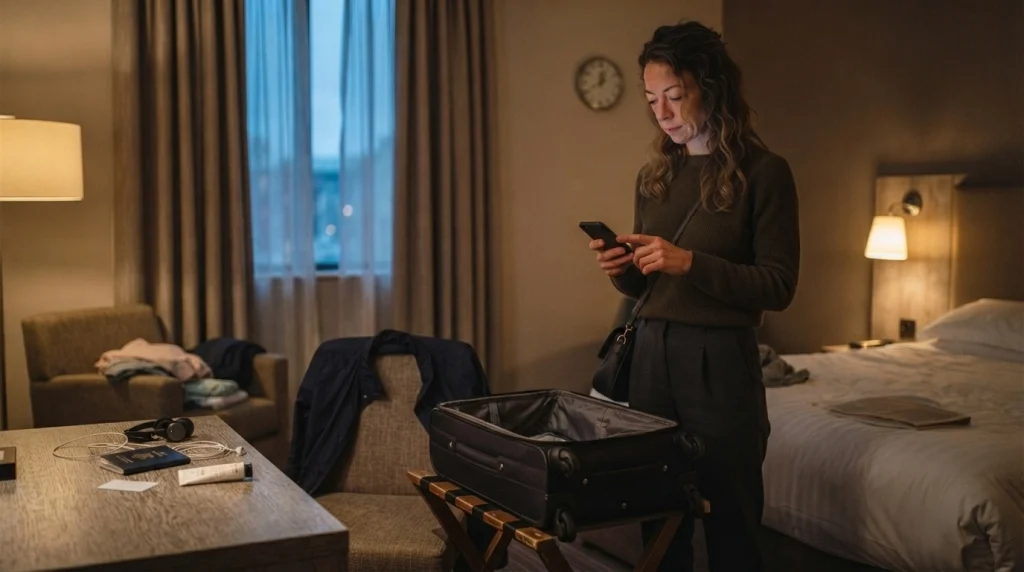
A reliable checklist reduces forgotten items and helps you leave on time without rushing. Use this schedule as a starting point, then adjust it to your hotel’s checkout procedure and your transport departure.
The night before checkout
- Confirm the hotel’s early checkout instructions and reception hours.
- Ask about final payment, deposits, receipts, and key return.
- Book or verify transportation and confirm the pickup point.
- Pack your luggage and check the next day’s itinerary.
- Charge your phone and portable battery.
- Save the hotel address, destination address, and booking details offline.
- Tell a trusted person your departure and expected arrival times.
Ten to fifteen minutes before leaving
Use a final room sweep rather than relying on memory alone. Check each area in the same order every time.
- Bedside area: Check chargers, phones, watches, and small personal items.
- Bathroom: Check toiletries, medication, cosmetics, and anything hanging behind the door.
- Closet and drawers: Check clothing, accessories, and stored documents.
- Safe: Retrieve your passport, cash, jewelry, and other stored valuables.
- Room surfaces: Check desks, shelves, outlets, and luggage storage areas.
Before exiting, make sure you have all bags, the correct keys, and access to your transport details. Follow the hotel’s instructions for returning the key and leave the room in accordance with its checkout policy.
Compare your checkout options
The best option depends on the property’s staffing, your departure time, and how much assistance you need. Confirm availability directly instead of assuming a service operates at every hotel.
| Checkout method | Best suited for | What to confirm |
|---|---|---|
| In-person checkout | Travelers who need staff assistance | Reception hours and final bill |
| Express checkout | Travelers with straightforward accounts | How to submit the checkout request and receive a receipt |
| Secure key drop | Guests leaving before reception opens | Approved drop location and payment status |
| Mobile checkout | Guests whose hotel supports app-based checkout | Checkout confirmation, key instructions, and final statement |
As of 2026, hotels still vary widely in how they handle early departures. A property’s written instructions are more reliable than assuming all hotels offer contactless checkout or overnight reception.
Section takeaway: Use a written checklist, select a checkout method approved by your hotel, and verify that your belongings, payment, and onward transport are all accounted for.
Frequently Asked Questions About Early Hotel Checkout
1. Can a woman check out of a hotel alone at 4 a.m.?
Yes. A woman can usually check out alone at 4 a.m. if the property permits early departure and she follows its key-return and payment procedures. Confirm reception hours, arrange safe transportation, and keep essential documents and valuables secure before leaving.
2. Do I need to tell the hotel why I’m leaving early?
No, you generally don’t need to explain your personal reasons for leaving early. You should communicate your departure time and ask about the required checkout steps. If your reservation has special terms or an early-departure fee, check those conditions before leaving.
3. Can I check out without speaking to reception?
Often, yes, if the hotel offers express checkout, mobile checkout, or an approved key-drop procedure. Ask the property in advance, follow its instructions, and make sure you understand how final charges and receipts will be handled.
4. Should I pay my hotel bill the night before?
You can ask to settle your bill the previous evening if the hotel allows it. Review the itemized charges and keep the receipt. Some properties may need to process additional charges after departure, so confirm whether your account is fully settled or whether a final statement will follow.
5. What should I do if my taxi doesn’t arrive?
Stay in a secure, staffed area and contact the original transport provider to verify the booking. If necessary, arrange another reputable taxi or ride service. Avoid accepting unsolicited rides from strangers, especially when you’re carrying luggage or waiting outside an unfamiliar hotel.
6. Can I leave my luggage at the hotel after checkout?
Some hotels offer luggage storage after checkout, but availability, hours, and fees vary. Ask reception about the service before your departure and obtain a claim ticket or other confirmation. Keep valuables, medication, travel documents, and essential electronics with you rather than in stored luggage.
7. What should I do if I forget something after checking out?
Contact the hotel using its official phone number or email and describe the missing item and room details. Ask whether staff have found it and how they handle collection or shipping. Don’t send sensitive personal information or payment details through an unverified contact.
Pro tip: For general international travel preparation, consult your country’s official travel advisory service and check local emergency procedures before your trip.
Make Your Early Departure Calm and Confident
Handling an early hotel checkout alone doesn’t need to become the most stressful part of your trip. When you confirm the hotel’s procedure, prepare your bags the night before, and arrange reliable transportation, the morning becomes much easier to manage.
My biggest practical recommendation is to avoid leaving important decisions until the last few minutes. A confirmed pickup, a clear payment record, and a quick room checklist can save time while helping you feel more in control.
Most importantly, don’t let a tight schedule pressure you into an unsafe choice. If something unexpected happens, pause in a secure place, contact the appropriate staff or service, and adjust your plan as needed.
Solo travel is about building confidence through preparation, not eliminating every uncertainty. With a little planning, you can check out early, protect your belongings, and continue your journey with greater peace of mind.
