What Hotel Floor Is Best for a Solo Female Traveler?
Quick Answer
For a solo female traveler, a hotel room on the third to sixth floor is often a sensible starting point. It keeps you above most ground-level access points without placing you excessively high in the building, although the safest choice depends on the hotel’s security, fire exits, and room layout. Prioritize a secure, well-managed hotel over a particular floor number, following official hotel lodging safety guidance.
What to prioritize when choosing your floor
- Avoid easy access: Prefer a room above ground level and away from windows or balconies accessible from public areas.
- Check emergency access: Choose a floor with clearly marked, usable evacuation routes.
- Assess hotel security: Look for controlled guest access, a staffed reception, and working elevators or access controls.
- Consider room location: A room in a busy, well-maintained interior corridor may be preferable to one opening directly onto an isolated exterior walkway.
- Trust your judgment: Request a different room if the location, locks, or surrounding area make you uncomfortable.
Before settling in
- Check the door locks, window locks, and peephole, and locate the nearest emergency exits as soon as you arrive.
- Don’t assume a higher floor is automatically safer; consider fire safety, access to assistance, and the building’s actual security arrangements.
Choosing the right hotel floor can make a solo trip feel more comfortable, especially when you’re arriving in an unfamiliar city or checking in after dark. I recommend looking beyond the floor number and assessing how the room, corridor, elevators, and emergency exits work together.
This guide explains which floors are worth requesting, when to avoid particular room locations, and how to balance personal security with emergency preparedness. You’ll also find practical questions to ask before booking and a checklist for your first few minutes in the room.
In This Guide
- What hotel floor is best for a solo female traveler?
- How do different hotel floors compare for safety?
- Where should you request a room on your chosen floor?
- What hotel security features matter more than floor number?
- How can you request a safer hotel room before arrival?
- What should you check when you enter your hotel room?
- Frequently asked questions
What hotel floor is best for a solo female traveler?
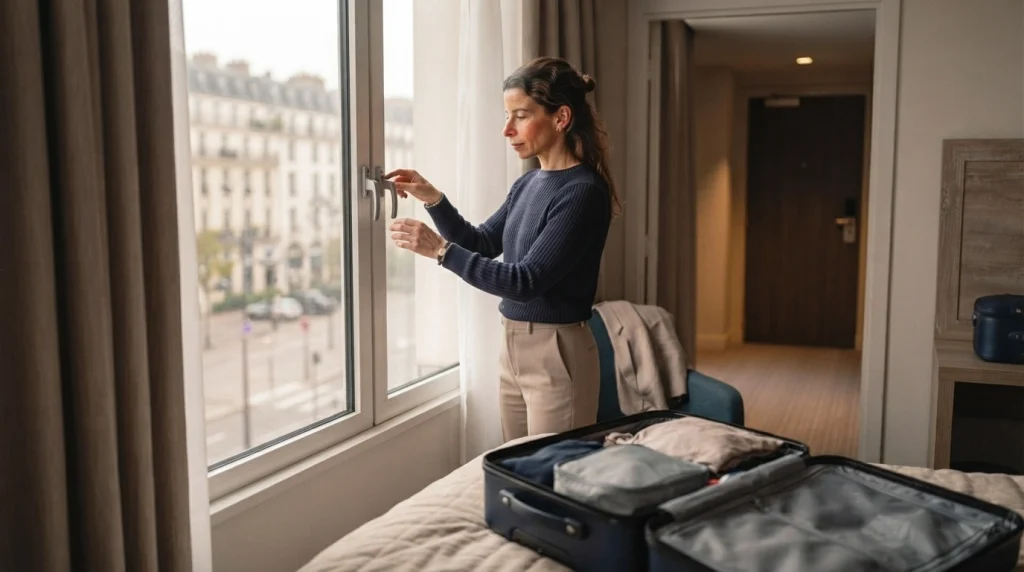
The third to sixth floor is a practical range to consider when the building’s layout and emergency arrangements support it. A room above street level can reduce easy access through ground-floor windows, but no floor guarantees personal safety.
Solo female travel means exploring or staying somewhere without a travel companion, so you make your own decisions about accommodation, transport, and personal security. Choosing a suitable hotel room is one small but useful part of that planning.
Why the middle floors can be a sensible choice
Middle floors often offer a reasonable compromise between street-level access and the challenges of being high above the ground. They may also make it easier to reach the lobby or use stairs if an elevator becomes unavailable.
However, the ideal range varies by building. A well-secured room on the second floor may be a better option than a poorly maintained room on the fifth floor with a balcony accessible from an adjoining roof.
- Ground floor: Consider carefully because windows, patio doors, and exterior entrances may be easier to reach.
- Second floor: Can be a reasonable choice when windows are secure and access from outside is restricted.
- Third to sixth floors: A useful starting range for many conventional hotels, provided evacuation arrangements are suitable.
- Higher floors: May offer privacy from street activity, but require careful consideration of stairs, fire procedures, and building design.
Is a higher floor always safer?
No. A higher room may reduce exposure to some street-level risks, but it doesn’t automatically protect you from unauthorized access, unsafe corridors, or poor hotel management.
Think about the entire journey from the street to your room. If anyone can enter the building, ride the elevator without authorization, and walk along an unmonitored corridor, the floor number alone offers limited reassurance.
I’d use the third floor as an initial preference rather than a strict rule. If a hotel’s second-floor rooms have better locks, a secure interior corridor, and a clear evacuation route, those features may outweigh the extra height of another room.
Section takeaway: Start by considering a middle floor above ground level, then judge the actual room and building. Security and emergency access matter more than a precise floor number.
How do different hotel floors compare for safety?
Each floor has trade-offs involving accessibility, privacy, outside access, and evacuation. Compare the room’s actual features instead of assuming that every hotel follows the same safety pattern.
| Floor location | Potential advantages | What to check |
|---|---|---|
| Ground floor | Easy access to reception and exits; convenient with heavy luggage. | Accessible windows, patio doors, exterior entrances, and street-facing rooms. |
| Second floor | May offer a balance of convenience and separation from street level. | Nearby roofs, ledges, balconies, fire escapes, and outside stairways. |
| Third to sixth floors | Often a useful middle-floor option with less direct access from the street. | Working locks, secure elevator access, usable stairs, and posted evacuation instructions. |
| Higher floors | Can offer more separation from street-level activity and greater privacy. | Evacuation plans, elevator dependence, stairwell access, and building-specific emergency arrangements. |
These comparisons are general planning guidance, not measured crime-risk rankings. Building design, maintenance, staff practices, and the surrounding area can change the assessment considerably.
When should you avoid a ground-floor room?
Consider requesting another floor when the room has windows opening onto a public path, an unguarded patio entrance, or doors that are difficult to secure. A ground-floor room with direct access to a secluded garden deserves particular scrutiny.
Ground-floor rooms aren’t automatically unsafe. Some hotels have secure courtyards, reinforced windows, controlled access, and strong security procedures, while upper floors can have their own weaknesses.
When might a higher floor make sense?
A higher floor may suit you if you prefer less street noise, have no mobility concerns, and the hotel has clear evacuation procedures. Ask staff how guests should leave during a fire or elevator outage before making the decision.
Don’t assume firefighters can reach every upper-floor room from outside. Your primary evacuation plan should follow the building’s designated routes and official instructions.
Section takeaway: Use floor comparisons to identify questions, not to assign an absolute safety score. Choose the room whose access points, locks, and emergency arrangements you can verify.
Where should you request a room on your chosen floor?
Once you’ve chosen a floor, pay attention to the room’s position within it. A secure room in a well-lit corridor with controlled access may be preferable to a room beside an isolated entrance or an unsecured exterior walkway.
Should you choose a room near the elevator?
A room within easy reach of the elevator can be convenient, particularly when you’re carrying luggage or returning late. However, a room directly beside a busy elevator may expose you to more hallway noise and passing guests.
I would look for a room that’s easy to find from the main guest corridor without sitting directly beside a busy gathering point. The corridor should have good lighting, and the route to reception should feel straightforward.
Consider these room-location preferences when making your request:
- Interior corridor: Prefer a room that opens into a secure hotel hallway rather than directly onto a public parking area.
- Working access controls: Check whether guests need a key card to enter the building or reach guest floors.
- Secure windows: Avoid rooms with windows or balconies accessible from nearby roofs, terraces, or walkways.
- Reasonable distance from help: Choose a location that lets you reach staffed areas without navigating an isolated section of the building.
- Limited connecting access: If possible, request a room without a connecting door to another guest room.
Should you avoid rooms beside stairwells?
Not necessarily. Stairwells are essential emergency routes, so you should know where they are and how to reach them.
Some travelers prefer not to sleep directly beside a stairwell because it can be quieter or less frequently monitored than a main corridor. However, there is no universal rule that rooms beside stairs are unsafe.
Check whether the stairwell door closes properly, whether access is controlled, and whether the route is clearly marked. Don’t choose a room that makes you feel isolated simply because it has a preferred floor number.
Is a room in the middle of the corridor safer?
A middle-corridor room may provide a practical balance between accessibility and privacy, but the position alone doesn’t guarantee greater security. A room near a well-staffed area can be useful, while a poorly maintained corridor remains a concern wherever your room sits.
Also consider noise, privacy, and your comfort walking to and from the room. A hotel stay should feel manageable, not like a constant exercise in avoiding other people.
Section takeaway: Choose a room with secure access, good lighting, and a straightforward route to help. Corridor position matters, but the building’s actual design matters more.
What hotel security features matter more than floor number?
Reliable hotel security can matter more than whether your room is on the third, fifth, or tenth floor. Before choosing accommodation, look for controlled access, dependable locks, available staff, and clear emergency procedures.
Which hotel security features should you check?
Use this checklist when comparing hotels in 2026. You don’t need every possible security feature, but you should be comfortable with the property’s basic arrangements.
- Reception coverage: Check how you can contact staff during the night and whether someone handles urgent requests.
- Guest-only access: Ask whether the building and guest floors have controlled entry.
- Functional room locks: Look for a reliable main lock and a working secondary lock where provided.
- Room privacy: Make sure curtains close properly and windows or balcony doors secure.
- Emergency information: Confirm that evacuation instructions are available and exit routes are clearly marked.
- Staff response: Read recent reviews for specific accounts of how management handles security concerns.
- Communication: Know how to contact reception or security if something feels wrong.
The U.S. Department of State’s lodging safety guidance recommends researching accommodation, checking room locks, and identifying emergency exits. Those precautions are useful regardless of your room’s floor.
How important are hotel reviews?
Recent reviews can reveal practical concerns that room photographs won’t show. Look for repeated, specific reports about unsecured entrances, broken locks, unresponsive staff, or strangers accessing guest corridors.
One negative review doesn’t establish that a hotel is dangerous. Patterns across multiple recent reviews deserve closer attention, particularly when management repeatedly fails to address the same problem.
Compare reviews with the hotel’s own information rather than relying on a single source. You can also consult official guidance on solo and independent travel for broader accommodation precautions.
Does a women-only floor make a hotel safer?
A women-only floor can offer additional privacy or a greater sense of comfort for some travelers. However, the label alone doesn’t establish how securely the floor is managed.
Ask whether access is restricted to authorized guests and how the hotel handles visitors. Also check the location of the floor’s emergency exits and whether reception can respond promptly if you need assistance.
Don’t assume that every hotel offers women-only accommodation or that such a floor eliminates the need for ordinary security precautions.
Section takeaway: Look for dependable access controls, working locks, responsive staff, and clear evacuation procedures. A hotel’s actual security arrangements are more informative than its floor number or marketing claims.
How can you request a safer hotel room before arrival?
Make your room preferences known before you arrive, especially if you’re reaching the hotel late at night. A clear, polite request gives the property an opportunity to explain its layout and available options.
What should you ask the hotel?
Contact reception directly if the booking website doesn’t provide enough detail. Ask practical questions rather than requesting a room based on a floor number alone.
- Can you provide a room above ground level, preferably on a middle floor?
- Do guest floors have controlled access?
- Will reception or security be available when I arrive?
- Can I request a room without a connecting door or an accessible exterior balcony?
- Where are the emergency stairs, and how do guests evacuate during a fire?
- Can I change rooms if the locks or room location don’t meet reasonable security expectations?
You can ask for a room away from isolated exterior entrances and request that staff keep your room number private. Availability varies, so treat your preferred floor as a request rather than a guarantee.
How should you compare hotels before booking?
Don’t compare properties on price and floor height alone. A slightly more expensive hotel may offer a simpler arrival, better-controlled access, and more convenient transport.
| Booking factor | What to compare | Why it matters |
|---|---|---|
| Room floor | Available floors and exterior access | Helps identify potential access concerns. |
| Arrival | Late check-in and transport options | Reduces uncertainty when you arrive tired or after dark. |
| Security | Guest access, locks, and reception coverage | Helps you evaluate the property’s real arrangements. |
| Location | Transport links, lighting, and nearby services | Makes getting back to the hotel more practical. |
| Flexibility | Cancellation terms and room-change policies | Helps you respond if the room doesn’t meet expectations. |
If you want to explore this process further, read this guide on comparing hotels before traveling alone. It can help you weigh location, reviews, and practical features together.
What if the hotel cannot provide your preferred floor?
Ask what alternative rooms are available and compare their actual features. A secure second-floor room may be preferable to a sixth-floor room with an unsecured balcony or a poorly maintained entrance.
If the hotel cannot offer a room that feels secure, consider another property when practical. Check the cancellation policy, preserve your booking details, and prioritize a safe alternative over a floor preference.
Section takeaway: Request your preferences early and ask direct questions about access, locks, and emergency procedures. Keep your decision flexible enough to accommodate a better room or property.
What should you check when you enter your hotel room?
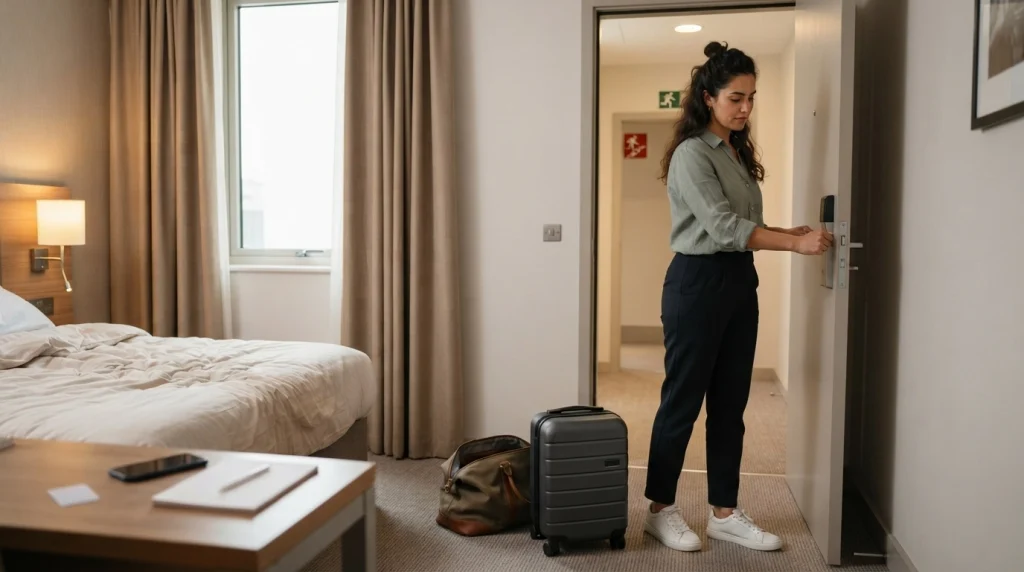
Before unpacking, take a few minutes to confirm that your room is secure and that you understand how to leave in an emergency. This quick check is more useful than spending your entire stay worrying about the floor number.
Your first five-minute hotel safety checklist
- Inspect the entrance: Close the door, test the main lock, and engage the available secondary lock.
- Check windows: Confirm that windows and balcony doors close and lock properly.
- Inspect connecting doors: If your room has one, make sure it is secured from your side.
- Protect your privacy: Close the curtains and keep your room number out of public view.
- Locate the stairs: Identify the nearest emergency exit and read the posted evacuation instructions.
- Test communication: Find out how to reach reception or security and make sure your phone is charged.
- Notice problems: Report broken locks, damaged doors, or suspicious circumstances before settling in.
The U.S. Department of State also advises travelers to check room safety features and understand the emergency exit plan. You can review its recommendations before leaving home so you know what to look for.
What if something seems wrong?
Don’t ignore a defective lock or an entry point you cannot secure. Contact reception and ask for immediate assistance or a different room.
If you suspect someone is inside the room, don’t investigate alone. Leave if you can do so safely, move to a staffed public area, and contact hotel security or local emergency services as appropriate.
For an unexpected knock, keep the door locked and verify the visitor through reception. You don’t need to open the door simply because someone claims to be a hotel employee.
For more practical steps, see this guide on what to check when entering a hotel room alone.
Keep an emergency plan simple
Before sleeping, make sure your phone, room key, and essential items are accessible. Know where the stairs are and how to contact staff without opening your door.
Share your accommodation details with someone you trust, and update them if you change hotels. For destination-specific advice, check the relevant government’s travel guidance before departure.
Pro tip: Read official accommodation and destination safety guidance before your trip, then follow the hotel’s posted emergency instructions once you arrive.
Section takeaway: A brief room inspection, secure locks, and a clear exit plan can help you settle in with greater confidence. If something important is wrong, ask for a different room rather than accepting an avoidable problem.
Frequently asked questions
Is the third floor the safest hotel floor for a solo female traveler?
The third floor is a reasonable starting preference in many conventional hotels because it is above street level without being extremely high. However, there is no universally safest floor. Assess building access, window security, room locks, and emergency routes before deciding.
Should solo female travelers avoid ground-floor hotel rooms?
Ground-floor rooms deserve extra attention when windows or doors open onto public spaces or unsecured outdoor areas. A well-secured ground-floor room may still be suitable, but consider an upper room if outside access cannot be adequately controlled.
Are higher hotel floors safer than lower floors?
Higher floors can reduce some forms of direct street-level access, but they don’t guarantee better security. Consider emergency evacuation, stair access, elevator controls, and the room’s windows or balconies. A well-managed building matters more than height alone.
Is it better to stay near the elevator or the stairs?
Neither location is automatically safer. A room near the elevator may offer convenience but more hallway traffic, while a room near a stairwell may have different noise and access considerations. Choose a well-lit location with secure access and clear emergency routes.
Should I request a room near reception?
A room with convenient access to staffed areas can be reassuring, particularly for a first solo trip. However, reception proximity doesn’t guarantee security. Check whether the guest corridors are controlled, the room locks work, and staff can respond to problems.
What should I do if the hotel gives me an unsafe room?
Explain the specific concern to reception and request a repair or room change. If the hotel cannot resolve a serious security issue, consider leaving for another property. If you face an immediate threat, prioritize getting to safety and contacting local emergency services.
Does a hotel floor number matter more than the neighborhood?
No. The surrounding area, transport options, hotel access controls, staff response, and room security all affect your stay. Choose a suitable neighborhood and a well-managed property first, then select the most appropriate available floor within that building.
Final takeaway: Choose a secure room, not just a higher floor
For many solo female travelers, the third to sixth floor is a sensible range to consider, provided the hotel has suitable security and emergency arrangements. Treat that range as a preference rather than a guarantee.
Before booking, research the location and ask about guest access, room locks, and evacuation procedures. Once you arrive, inspect the room, protect your room number, and make sure you know how to contact help.
The best hotel room is one where you can secure your belongings, maintain your privacy, and leave safely in an emergency. Choose the room that meets those needs, even if it isn’t on your originally preferred floor.