What Should a Woman Check When Entering a Hotel Room Alone?
Quick Answer
When entering a hotel room alone, a woman should check that the room is empty, test every door and window lock, inspect any connecting doors, locate emergency exits, and confirm that the room phone works. She should also check curtains, bathroom privacy, smoke alarms, and unusual electronics before unpacking. These steps reflect the U.S. State Department’s lodging safety guidance.
Your first hotel room safety checks
- Check the room: Look behind curtains, inside closets, and around the bathroom before settling in.
- Test every lock: Check the main door, deadbolt, security latch, windows, and connecting doors.
- Find emergency exits: Identify the nearest usable stairwell and a second escape route where available.
- Protect your privacy: Close the curtains and avoid sharing your room number with strangers.
- Check communication: Test the room telephone and ensure your mobile phone can contact help.
- Trust warning signs: Leave and request assistance if something seems unsafe or has been tampered with.
One rule worth remembering
- Inspect before unpacking: It’s easier to request another room when your belongings are still together.
One of the first things I think about when arriving at a hotel alone isn’t the view or the comfortable bed. It’s whether I can settle into that room without worrying about something I’ve overlooked.
Knowing what a woman should check when entering a hotel room alone can make a new place feel less uncertain. This guide covers a practical room inspection, hotel security habits, warning signs, and what to do when something feels wrong.
In This Guide
- What Should You Check in the First Five Minutes?
- How Can You Tell Whether Your Hotel Room Door Is Secure?
- What Privacy and Surveillance Warning Signs Should You Look For?
- How Should You Prepare for an Emergency?
- What Safety Habits Matter During Your Hotel Stay?
- What Should You Do If Your Hotel Room Feels Unsafe?
- Frequently Asked Questions
What Should You Check in the First Five Minutes?
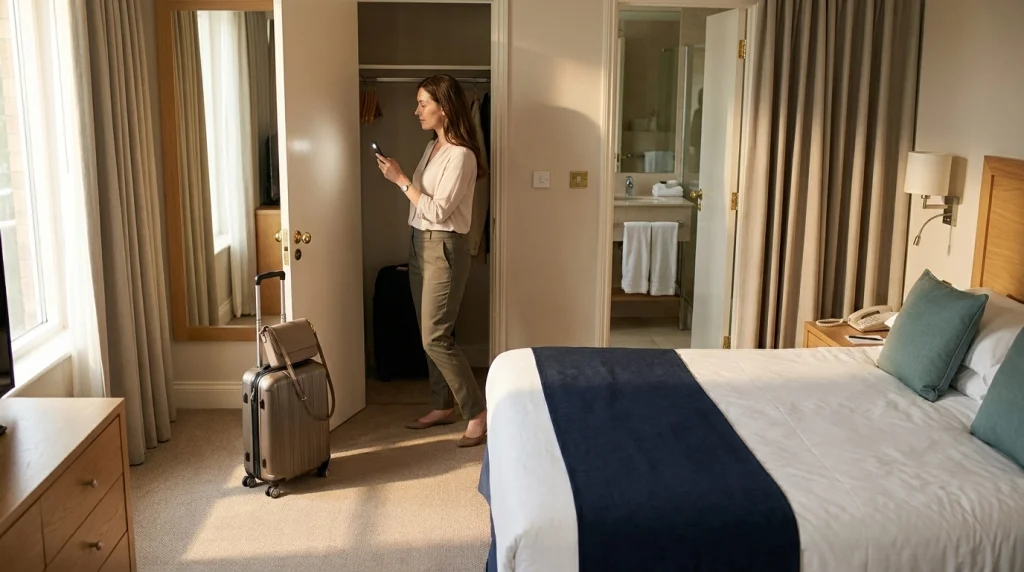
The first five minutes should focus on confirming that the room is empty, secure, and suitable for your stay. You don’t need expensive equipment or a complicated routine.
Think of this as a hotel room safety check: a short inspection of entry points, privacy, and emergency features before using the room.
1. Look around before closing yourself into the room
When I enter an unfamiliar hotel room, I prefer to keep my luggage together until I’ve checked the space. That way, I can leave easily if I notice a problem.
Start near the entrance and visually check the room. Don’t investigate anything that suggests an immediate threat.
- Look around the bed and underneath it where practical.
- Check behind curtains and inside open or easily accessible closets.
- Look inside the bathroom and shower area.
- Check whether balcony doors or connecting doors appear closed.
- Notice damaged furnishings, signs of forced entry, or unfamiliar belongings.
If you suspect someone is inside, leave immediately instead of continuing your inspection. Move to a staffed public area and ask for help.
2. Make sure your room number stays private
A hotel room number is personal information. You don’t need to share it with drivers, people you meet, or other guests.
At reception, you can ask staff to write the room number rather than announce it. Keep your key card separate from any sleeve displaying your room number.
3. Check the room’s location
Before unpacking, consider whether the room is somewhere you feel comfortable returning to at night. A poorly lit corridor or isolated entrance may make your stay harder.
Check these details:
- Is the corridor adequately lit?
- Is the room reasonably accessible from reception or staffed areas?
- Can you identify an emergency stairwell?
- Does the entrance require a working key card where expected?
- Is there a connecting door you didn’t anticipate?
A different room may be worth requesting if the location leaves you uncomfortable. Room availability and building layouts vary.
4. Check the bathroom and basic room condition
A hotel room should offer working facilities and reasonable privacy. Check that the bathroom door closes properly and the shower area has adequate privacy.
Look for water leaks, exposed wiring, broken fixtures, or damaged glass. Report maintenance problems before using the affected equipment.
5. Verify that communication works
Test the hotel phone using the posted reception number. You should know how to contact staff without opening your door.
Also check your mobile signal and phone battery. Save the hotel’s address so you can give your location accurately in an emergency.
Section Takeaway: Your arrival inspection should answer three questions: Is the room empty, can I secure it, and can I get help quickly?
How Can You Tell Whether Your Hotel Room Door Is Secure?
A secure hotel room door should close completely, latch reliably, and support the locking features provided by the property. Test those features before getting comfortable.
The front door deserves special attention because it’s the main entrance to your private space.
Test the main door and deadbolt
Close the door and check that the latch engages. With the door closed, test the handle without using excessive force.
Check that the deadbolt and secondary latch engage as intended. If any lock fails, ask reception for a repair or a different room.
- Confirm the door closes without needing to be forced.
- Check the deadbolt from inside.
- Test the security chain or swing-bar latch if installed.
- Look for obvious damage around the strike plate and door frame.
- Verify that your key card operates correctly.
A working electronic key card doesn’t replace the need for dependable physical door hardware. Both matter.
Inspect connecting doors and balcony access
Some hotels have connecting rooms with internal doors between them. These doors should be secured from your side.
If you can hear unexpected activity or cannot secure a connecting door, contact reception. Don’t assume an unfamiliar adjoining room is unoccupied.
Check balcony doors and accessible windows too. If a window doesn’t close or lock properly, request assistance.
Do you need a portable hotel door lock?
A portable door lock is an additional device intended to restrict door opening from inside. A doorstop alarm may also make noise if a door moves.
Neither guarantees protection, and not every device fits every door. Improper installation can damage hardware or interfere with emergency evacuation.
| Security feature | What it helps with | What to remember |
|---|---|---|
| Deadbolt | Provides a built-in additional lock | Check that it engages fully |
| Swing-bar latch or chain | Adds a secondary restraint | Inspect for loose or damaged hardware |
| Portable door lock | May supplement an existing lock | Fit and hotel rules vary; keep exits usable |
| Doorstop alarm | May alert you when a door moves | Depends on floor surface, battery, and placement |
| Peephole or door viewer | Lets you check who’s outside | Doesn’t confirm someone’s identity |
For most stays, I would prioritize a properly functioning hotel lock over buying several gadgets. If a room has defective security hardware, changing rooms is the better response.
Section Takeaway: Test every entry point, including connecting doors and windows. Extra devices should never replace working hotel security or obstruct escape.
What Privacy and Surveillance Warning Signs Should You Look For?
Start by checking ordinary privacy features and looking for anything visibly unusual. You don’t need to assume every unfamiliar object is surveillance equipment.
Hotels have legitimate sensors, electronics, and safety devices. An unusual object warrants questions, not immediate conclusions.
Make sure curtains and windows offer privacy
Close the curtains fully and check for obvious gaps. Pay attention to windows facing hallways, balconies, or neighboring rooms.
If people outside can see directly into the room, ask whether blackout curtains or a different room are available. Avoid opening accessible windows while you sleep.
What should you do if you suspect a hidden camera?
Look for devices that seem out of place, especially near private areas. Examples include unfamiliar electronics or objects with unexplained openings facing the bed or bathroom.
A visual check can identify obvious concerns, but it cannot prove that a room is free of surveillance devices. Phone-based camera detection tricks are not reliable guarantees.
- Check for unfamiliar objects in unusually private locations.
- Notice electronics that appear altered or poorly installed.
- Don’t dismantle smoke alarms, sprinklers, or hotel equipment.
- Photograph a suspicious object from a safe position if appropriate.
- Leave the room and report credible concerns to hotel management.
If you believe unlawful recording is taking place, consider contacting local authorities. Avoid handling suspected evidence unnecessarily.
Protect your digital privacy too
A hotel room can be physically secure while your digital information remains exposed. Treat shared hotel networks as networks you don’t control.
Before using hotel Wi-Fi, confirm the official network name with reception. Prefer encrypted websites and avoid entering sensitive information into suspicious login pages.
Don’t leave passports, identification documents, or valuables visible near an open door. Use the hotel safe if you trust its operation, or choose another secure storage arrangement.
How Should You Prepare for an Emergency?
Read the room’s emergency evacuation instructions and identify the nearest usable exit. You should know your options before an alarm sounds.
This is one of the most overlooked parts of a solo hotel safety routine. It’s particularly important in an unfamiliar building.
Find two possible escape routes
Locate the stairwell nearest your room. Identify another route if the building provides one.
Check the evacuation diagram on or near your room door. The exact route depends on the building’s layout and emergency plan.
- Locate the nearest emergency stairwell.
- Identify an alternate stairwell when available.
- Notice where fire alarm pull stations are located.
- Check that evacuation information is posted and readable.
- Follow the hotel’s evacuation procedures during an actual emergency.
Don’t assume that a window or balcony provides an escape route. Upper-floor windows may offer no safe exit at all.
Check smoke alarms and carbon monoxide safety
Look for installed smoke alarms and any carbon monoxide detectors. Never cover, disable, or interfere with these devices.
Carbon monoxide is an odorless gas that can be dangerous in buildings with fuel-burning equipment. Ask hotel staff about detector arrangements if you’re concerned.
If you suspect carbon monoxide exposure or an alarm activates, follow emergency instructions and leave for fresh air. Seek urgent medical assistance when appropriate.
Keep essential belongings ready
I prefer to keep my phone, room key, and a pair of shoes in a consistent place. This reduces confusion if I need to leave quickly.
Your essentials should be easy to reach without cluttering your path to the door.
- A charged mobile phone
- Your room key card
- Shoes suitable for walking down stairs
- Necessary medication
- Identification and essential contact information
Never delay evacuation to gather luggage or valuables. Follow emergency personnel’s directions.
Know the local emergency number
Emergency telephone numbers differ by country. Research the destination’s emergency services before arriving.
Save the hotel’s full address and reception number as well. If you need emergency assistance, giving a clear location saves valuable time.
Pro tip: Check your destination’s official guidance through U.S. State Department travel advisories or the relevant government travel authority. Confirm local emergency numbers and procedures before your trip.
Section Takeaway: Your emergency plan should be simple enough to follow while tired or frightened. Know the exits, keep your phone accessible, and follow official evacuation instructions.
What Safety Habits Matter During Your Hotel Stay?
Hotel room safety doesn’t end after check-in. Small habits help maintain privacy and prevent avoidable problems throughout your stay.
You can enjoy traveling alone without treating every interaction as a threat. The goal is to have sensible boundaries.
Never open your door without verifying unexpected visitors
If someone knocks and claims to be a hotel employee, keep the door closed until you’ve confirmed their identity. A uniform or name badge isn’t enough on its own.
Call reception using a number you’ve already verified. Ask whether staff sent someone and why they need access.
If you didn’t request maintenance or housekeeping, you can ask the person to return later. You aren’t required to open the door immediately.
Be careful with unsolicited phone calls
Someone calling your room might claim to work at reception or in hotel billing. Don’t disclose your payment card number, passport details, or passwords because of an unexpected call.
Contact the front desk using a verified number to confirm the request. A legitimate issue can be resolved through official channels.
Choose sensible housekeeping arrangements
Ask reception about housekeeping hours and privacy procedures. You can usually request service at a convenient time, depending on hotel policy.
Keep valuables secured before staff enter. If you prefer not to receive housekeeping during a short stay, communicate that preference.
Stay discreet about traveling alone
You don’t need to tell strangers that no one else is staying with you. This includes people you meet in the lobby, elevator, or nearby restaurants.
Try these straightforward boundaries:
- Avoid discussing your room number in public.
- Don’t post your exact hotel room location in real time.
- Meet new acquaintances in public spaces rather than your room.
- Share your hotel details privately with a trusted contact.
- Use established transportation providers when returning at night.
Australian government solo traveler safety guidance also recommends keeping accommodation details private and checking room security.
Check the door each time you return
Before entering, look for obvious damage or anything that suggests unauthorized access. Don’t enter if the door is unexpectedly open or appears forced.
Instead, return to a safe public area and contact hotel security or local authorities. Don’t confront anyone you suspect might be inside.
Once inside, secure the door and check that your belongings are where you left them. Report unexplained problems promptly.
Section Takeaway: Privacy, verified visitors, and consistent locking habits matter more than elaborate travel tricks. Keep your routine simple and repeatable.
What Should You Do If Your Hotel Room Feels Unsafe?
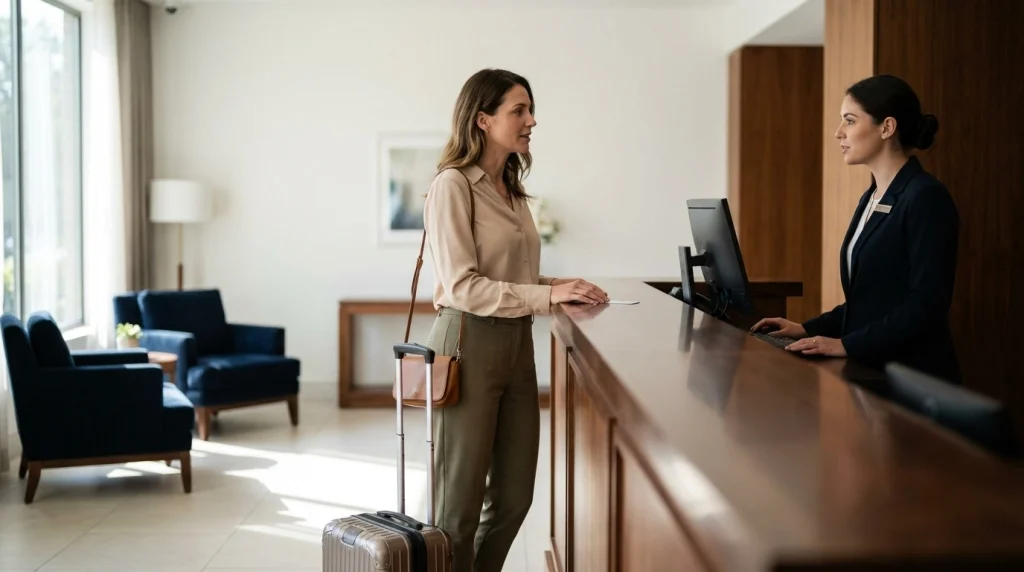
If your hotel room feels unsafe, leave the room when you can do so safely and contact reception from a public area. Don’t remain in an insecure room just because you’ve already paid.
It’s reasonable to request another room when a serious maintenance or security problem remains unresolved.
Recognize problems that justify changing rooms
Some inconveniences can be fixed quickly. Other conditions warrant leaving immediately or asking for reassignment.
- A door or window that cannot be locked.
- An unsecured connecting door.
- Evidence of forced entry or unauthorized access.
- A credible concern about someone hiding inside.
- Suspected unauthorized recording equipment.
- Threatening behavior directed at you.
- Fire hazards or other serious building safety concerns.
If you face an immediate threat, prioritize leaving and contacting emergency services. Don’t stop to collect belongings or argue with anyone.
Ask for a different room clearly
Tell the front desk exactly what’s wrong. You don’t need an elaborate explanation to report a defective lock or unsafe condition.
You might say:
“I’m traveling alone, and the security latch on my room doesn’t work. I’d like another room with functioning locks, please.”
Request a room where you feel comfortable with the location, access, and security features. Ask a staff member to confirm that the replacement room is ready.
What if the hotel refuses to help?
If staff cannot resolve a serious safety concern, consider finding other accommodation. Use a reputable booking platform or a known hotel when possible.
Keep records of the problem, including photographs and written communication when safe. These may help with a refund or booking dispute later.
If you’re abroad and need assistance, consult your government’s consular resources. For broader preparation, the Australian government’s guidance for women traveling overseas covers accommodation security and travel precautions.
Trust your judgment without feeling pressured to investigate
Not every uneasy feeling indicates danger. Fatigue, an unfamiliar environment, and travel stress can all make a new room feel strange.
Still, you don’t have to prove a threat exists before requesting assistance. A damaged lock or unwanted attention is enough reason to raise a concern.
I find it useful to separate ordinary discomfort from specific warning signs. Check what you can verify, then take proportionate action.
Section Takeaway: Leave immediately when there is a credible threat. For unresolved security problems, request another room or alternative accommodation.
Frequently Asked Questions
Should a woman inspect her hotel room before unpacking?
Yes. Before unpacking, check the main door lock, windows, connecting doors, privacy features, and emergency information. A short visual inspection also helps identify maintenance problems early, when requesting a replacement room is easier.
Is it safe for a woman to stay in a hotel alone?
Many women stay in hotels alone without problems, but no property can guarantee complete safety. Research accommodation reviews, choose a suitable location, confirm security features, and keep your room details private. Personal circumstances and destination conditions also matter.
Should a solo female traveler avoid ground-floor hotel rooms?
Ground-floor rooms can have additional access and privacy concerns, particularly when windows open onto public areas. Higher floors may reduce some access risks but create different evacuation considerations. Choose a room with secure entry points and a clear emergency escape route.
How can I check my hotel room for hidden cameras?
Look for unfamiliar or suspicious devices, especially around private areas. Avoid dismantling hotel electronics or relying on phone apps as proof that a room is camera-free. If you find a credible warning sign, leave, document it safely, and seek assistance.
Should I use the hotel room’s security latch while sleeping?
Yes, use the functioning locks and security restraints provided for your room, following hotel instructions. Make sure you can still open your door quickly from inside during an emergency. Report broken or unreliable hardware to hotel management.
What if someone knocks on my hotel door late at night?
Keep the door locked and ask who is there without opening it. If the visitor claims to be hotel staff, call reception through a verified number to confirm. Contact security or emergency services if someone acts threateningly or attempts forced entry.
What should I do if I return to find my hotel door open?
Don’t enter or investigate alone. Move to a safe public location and contact hotel reception or security. If you suspect a break-in or someone is inside, contact local police or emergency services as appropriate.
Final Thoughts: Make Hotel Room Safety a Simple Routine
Knowing what to check when entering a hotel room alone gives you a useful plan instead of leaving everything to chance. The most important steps are checking the room, securing entry points, protecting privacy, and knowing how to get help.
Solo travel should offer independence, not constant worry. A calm inspection before unpacking can help you spend less time thinking about security and more time enjoying your destination.
Before your next trip, save this hotel room safety checklist on your phone. It’s a practical reminder for those first few minutes in an unfamiliar room.