What Should a Solo Female Traveler Do If Her Rental Car Breaks Down?
Quick Answer
If your rental car breaks down while traveling alone, prioritize your safety before worrying about the vehicle or your itinerary. Move to a safe stopping place if possible, switch on your hazard lights, assess whether you should remain inside or exit away from traffic, and contact roadside assistance through your rental company. Follow the official roadside breakdown safety guidance for your location, and call local emergency services if you’re in immediate danger.
Your immediate priorities
- Get out of danger: Pull completely off the road if possible without risking a collision, and turn on your hazard lights.
- Choose where to wait: Follow local road guidance about remaining inside or exiting away from traffic.
- Call for help: Contact the rental company’s roadside assistance number or local emergency services if necessary.
- Share your location: Send your GPS location, nearby road signs, or a mile marker to a trusted contact.
- Confirm the recovery plan: Ask about towing, a replacement vehicle, transport, and any additional charges.
- Keep a record: Save call details, incident numbers, photographs taken safely, and receipts.
One important precaution
- Don’t accept an unsolicited tow, enter a stranger’s vehicle, or attempt roadside repairs in dangerous traffic. Arrange assistance through verified channels whenever possible.
A rental car breakdown can feel intimidating when you’re traveling alone, especially on an unfamiliar road or far from the nearest town. A clear plan helps you protect yourself, communicate with the right people, and avoid unnecessary expenses.
In this guide, I’ll explain what to do first, how to handle roadside assistance, how to recognize suspicious offers of help, and how to continue your journey safely. The advice applies to solo female travelers in different countries, although road rules, emergency numbers, and rental policies vary by destination.
In This Guide
- What should you do first when your rental car breaks down?
- Where should you wait for help when traveling alone?
- How should you contact the rental company and roadside assistance?
- How can you stay safe around strangers during a breakdown?
- How can you arrange replacement transport and manage costs?
- How can you prepare for a rental car breakdown before your trip?
- Frequently asked questions
What should you do first when your rental car breaks down?
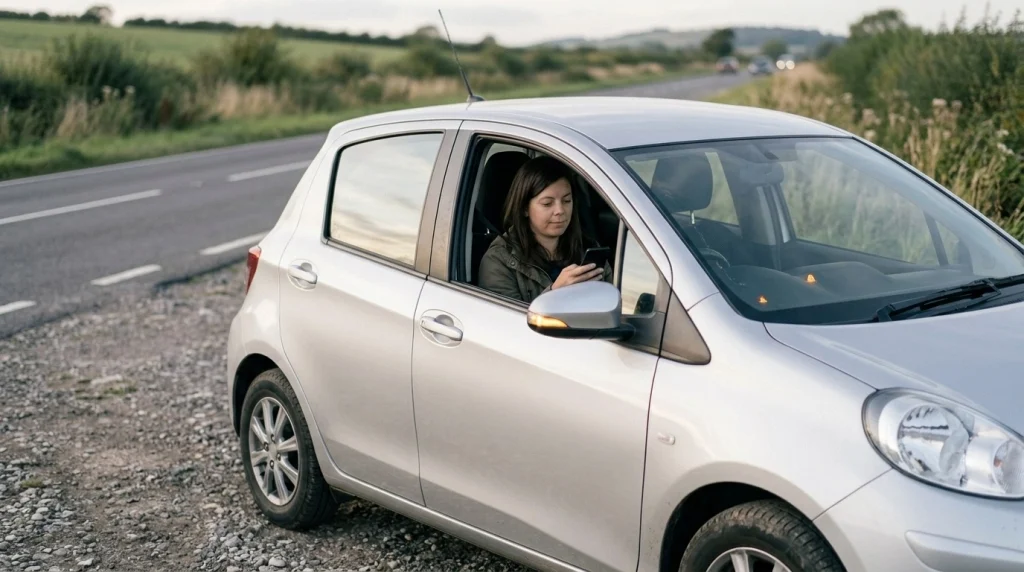
If your rental car develops a mechanical problem, your first task is to reach the safest available stopping place. Protect yourself from moving traffic before diagnosing the problem or calling the rental company.
1. Recognize the warning signs
A breakdown doesn’t always begin with a car that stops completely. Warning lights, overheating, sudden power loss, unusual noises, smoke, or a flat tire can signal a problem.
If the vehicle still moves, don’t continue driving simply to reach your destination. If you can safely reach a nearby exit, service area, or parking lot, do so before the problem worsens.
If the car loses power in a live lane, follow local emergency procedures and use your hazard lights. Don’t make sudden movements that could put you or other drivers at risk.
2. Stop as safely as possible
Move away from moving traffic whenever you can do so safely. On a highway, use a designated emergency area, shoulder, or other permitted stopping place if reaching it doesn’t create greater danger.
Once stopped, apply the parking brake, switch on the hazard lights, and turn off the engine if appropriate. If you see flames, heavy smoke, or another immediate threat, prioritize getting clear of the danger and contacting emergency services.
3. Decide whether to remain inside or exit
There isn’t one rule for every road. Your safest option depends on traffic speed, road layout, barriers, weather, and the type of breakdown.
- On an exposed highway: Follow local highway guidance. If you can exit safely away from traffic and reach a protected area behind a barrier, that may be safer than remaining beside the vehicle.
- In a live traffic lane: If exiting would expose you to moving vehicles, remain belted inside when that is the safer option and contact emergency services immediately.
- In a parking lot or quiet street: Stay in a well-lit, visible place and assess whether you can safely wait inside the locked vehicle.
- Near fire or another immediate hazard: Move away from the vehicle as quickly as safety allows and follow emergency responders’ instructions.
Never walk into traffic to place a warning triangle or inspect a tire. Don’t attempt repairs beside fast-moving vehicles.
Section takeaway: Get to a safe stopping place first, then decide where to wait. A delayed itinerary is far better than a preventable roadside injury.
Where should you wait for help when traveling alone?
Choose your waiting location based on the immediate hazards, not simply on whether the place feels comfortable. The safest choice is usually one that separates you from moving traffic and allows verified assistance to reach you.
When is it safer to stay in the car?
A locked car can provide shelter, privacy, and protection from weather when you’re stopped in a safe location. It can also make it easier to keep your belongings together while you contact assistance.
However, a vehicle parked close to fast traffic may be dangerous to occupy. Follow local highway guidance, and leave the vehicle only when you can reach a safer area without exposing yourself to traffic.
If you remain inside, keep your phone accessible and doors locked where appropriate. Don’t run the engine in an enclosed space, and switch it off if you notice smoke, fire, or another reason to evacuate.
When should you move to a safer location?
If your car is safely parked in a public area, consider waiting at a staffed service station, an open business, or another monitored location once you can reach it safely. Avoid walking along a highway or crossing dangerous roads just to find a more comfortable place.
For a remote breakdown, ask roadside assistance whether the recovery operator can transport you with the vehicle. If the operator cannot, arrange a verified taxi or another legitimate transport option rather than accepting an unfamiliar lift.
How should you share your location?
Give the rental company and a trusted contact enough information to locate you without repeated calls. GPS coordinates can help, but a recognizable landmark or road marker provides useful backup.
- Share your live location through a trusted messaging or mapping app if your connection allows it.
- Send the road name, direction of travel, nearest exit, or visible marker number.
- Tell your contact the rental company’s name and your estimated assistance arrival time.
- Update them if the recovery vehicle is delayed or your waiting location changes.
Don’t assume your phone will always have a signal. Download offline maps before remote drives and learn how to identify roadside markers in the country you’re visiting.
Pro tip: Before driving abroad, check the destination’s official road-safety guidance and emergency procedures. The UK Highway Code’s breakdown guidance is one useful example, but local rules take priority wherever you’re driving.
How should you contact the rental company and roadside assistance?
Contact the rental company through the number or assistance channel listed in your rental agreement. The company can explain its recovery process, confirm approved service providers, and tell you what to do with the vehicle.
Find the correct contact information
Use the rental agreement, booking confirmation, official company app, or verified website. If you’re using a number provided by someone at the roadside, independently check it before sharing payment information or agreeing to expensive services.
Tell the representative that you’re traveling alone and explain whether your location is unsafe, remote, or difficult to access. This helps them understand why a prompt and clearly communicated recovery plan matters.
What information should you provide?
Prepare a short, factual description so the representative can arrange the appropriate assistance. You don’t need to diagnose the vehicle yourself.
- Your location: Road name, direction, nearest exit, GPS pin, or landmark.
- Vehicle details: Registration number, make, model, and rental agreement number if requested.
- Symptoms: Whether the car stopped, a tire went flat, a warning light appeared, or smoke developed.
- Immediate risks: Traffic exposure, poor visibility, extreme weather, or an unsafe waiting area.
- Your needs: Towing, a replacement vehicle, transport to a safe location, or help contacting emergency services.
What should you ask before agreeing to a recovery plan?
Get clear answers before authorizing non-emergency services whenever the situation allows. If you’re in immediate danger, don’t delay emergency assistance to resolve billing questions.
- Is roadside assistance included in my rental agreement?
- Which towing or recovery provider should I use?
- Will I need to pay upfront, and what charges might apply?
- Can the recovery operator take me to a safe location?
- Will the company provide a replacement vehicle, and where can I collect it?
- What should I do with the keys, luggage, and rental paperwork?
- Do I need an incident reference number or written authorization?
Record the representative’s name, the time of your call, the expected arrival window, and any reference number. If your phone battery is low, prioritize communicating your location and essential needs before taking additional photographs.
Section takeaway: Use verified contact channels and obtain a clear recovery plan. Written confirmation can prevent confusion about towing, replacement vehicles, and unexpected charges.
How can you stay safe around strangers during a breakdown?
Being alone with a disabled rental car can make unsolicited help feel especially tempting. Accepting assistance isn’t automatically unsafe, but you should remain in control of who approaches you, where you wait, and how you arrange recovery.
How should you handle someone who offers help?
A passerby may genuinely want to help, and you don’t need to assume every stranger has bad intentions. You can thank someone for checking on you while keeping your distance and using your own phone to contact assistance.
For example, imagine your car stops on an unfamiliar rural road just before sunset. A driver pulls over and offers to take you to the nearest town.
Instead of getting into their vehicle, you could say, “Thank you, I’ve contacted roadside assistance, and they’re arranging help.” You can accept practical information without handing over control of your situation.
Use these precautions:
- Keep your phone with you: Don’t hand it to a stranger to make a call or navigate an unfamiliar website.
- Protect your belongings: Keep your passport, wallet, keys, and other essentials under your control.
- Stay in a visible place: Avoid moving to an isolated location with someone you don’t know.
- Verify recovery vehicles: Ask for the provider’s name, vehicle details, or identification, then confirm the information with your rental company when possible.
- Trust your discomfort: You don’t owe anyone an explanation for declining a lift, entering a vehicle, or sharing personal information.
What if someone pressures you to accept help?
Repeated pressure, demands for cash, attempts to separate you from your belongings, or insistence that you abandon the official recovery process are reasons to disengage. Move toward a staffed public place if you can do so safely, and contact local authorities if you feel threatened.
Don’t confront an aggressive person or argue about their intentions. Your priority is creating distance and getting help.
How can you reduce risk after dark?
Nighttime brings extra challenges, including reduced visibility, fewer open businesses, and potentially longer recovery waits. Tell the rental company if you don’t feel safe at your current location and ask whether it can arrange transport to a staffed, public destination.
Keep your phone charged and your location shared with someone you trust. If the breakdown occurs somewhere remote, avoid walking toward distant lights unless the route is safe and you can reach them without entering traffic or an isolated area.
Remember that road safety and personal security are separate concerns. A location can be away from traffic but still feel isolated, so consider both when deciding where to wait.
Section takeaway: Stay polite but firm, verify anyone claiming to represent the rental company, and don’t let urgency push you into an arrangement that feels unsafe.
How can you arrange replacement transport and manage costs?
Once you’re safe and assistance is underway, focus on how you’ll continue your journey. Your options may include a replacement rental car, a taxi, public transportation, or an overnight stay if recovery takes several hours.
Which transport option makes the most sense?
The best choice depends on your location, the time of day, the remaining distance, and the cost of changing your plans. Ask the rental company about its replacement policy before paying for a new vehicle or booking non-refundable transport.
| Option | Best suited for | What to check |
|---|---|---|
| Replacement rental car | Continuing a road trip with several stops | Availability, approval, pickup location, and added fees |
| Licensed taxi or rideshare | Reaching a hotel, station, or nearby town | Driver identity, destination, fare, and local service availability |
| Public transportation | Travel between connected towns or cities | Last departure, transfers, luggage, and arrival arrangements |
| Hotel near a staffed location | Overnight delays or unsafe late-night travel | Room cost, safe arrival, cancellation terms, and reimbursement eligibility |
These options have different trade-offs rather than fixed prices. A replacement vehicle may preserve your itinerary but require a long transfer, while a hotel stay may be the simplest choice if recovery is delayed until morning.
Who pays for towing and other expenses?
Responsibility depends on your rental agreement, the cause of the breakdown, the coverage you purchased, and local rules. Don’t assume that every roadside call, tow, replacement vehicle, or extra hotel night is automatically covered.
Before paying for non-emergency services, ask the rental company to confirm the provider and explain any expected charges. If you must pay to resolve an immediate safety problem, keep the receipt and document why the expense was necessary.
Check the following sources for possible reimbursement:
- Rental agreement: Review roadside assistance, breakdown exclusions, excess charges, and replacement-vehicle terms.
- Travel insurance: Check whether the policy covers additional transport, accommodation, trip interruption, or other relevant expenses.
- Credit card benefits: Confirm whether your card offers applicable rental-car protection and which exclusions apply.
- Motor insurance: If you have separate coverage, check whether it applies to rental vehicles and driving abroad.
For international trips, the U.S. Department of State’s travel insurance guidance explains why travelers should review overseas coverage and policy limitations. It is a useful starting point for eligible U.S. travelers, but your own insurer’s terms determine your coverage.
What if you need to change your itinerary?
Tell your accommodation provider or tour operator if the delay could affect a booking. Ask about changing arrival times before paying for a new reservation, and save messages confirming any agreed changes.
If you have a solo road trip itinerary with several destinations, identify which stops can be skipped or reached by public transportation. You don’t need to recreate the original plan at any cost.
**Section takeaway:** Compare replacement transport with a safe overnight stay, and verify coverage before accepting unnecessary charges. Keep every receipt and confirmation until the rental and insurance issues are resolved.
How can you prepare for a rental car breakdown before your trip?
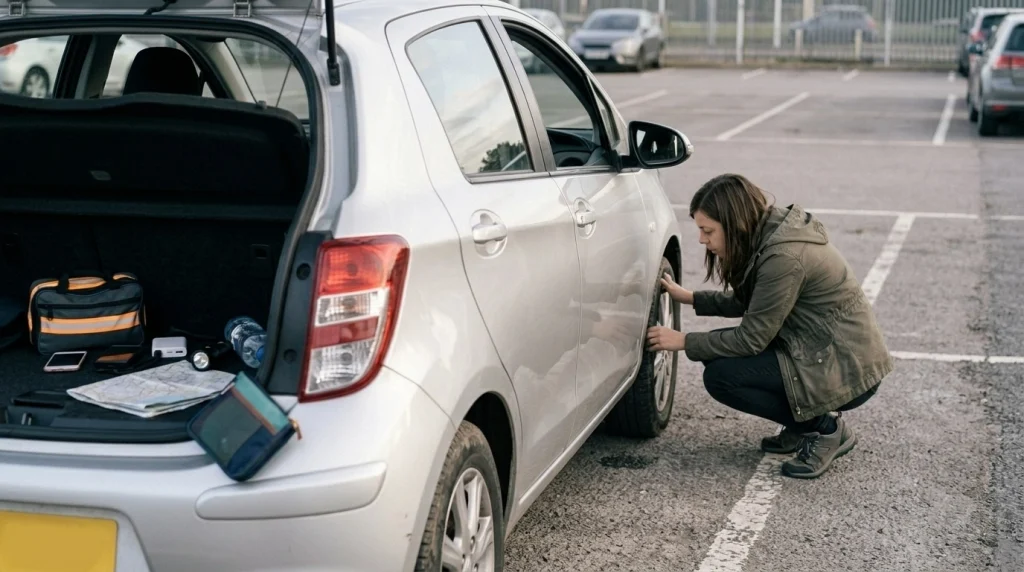
You can’t prevent every mechanical failure, but a little preparation can make a breakdown easier to manage. Before setting off, make sure you know whom to contact, how to describe your location, and what your rental agreement covers.
What should you check when collecting the rental car?
Spend a few minutes reviewing the vehicle and its emergency arrangements before leaving the rental lot. If something looks unsafe or the car displays a warning, ask the rental company to address it before you start driving.
- Vehicle condition: Check the tires, lights, visible damage, and dashboard warnings.
- Emergency contacts: Save the rental company’s roadside assistance number and the local emergency number.
- Vehicle controls: Locate the hazard-light switch, fuel-door release, spare tire or repair kit, and any emergency equipment supplied.
- Rental paperwork: Keep the agreement, registration details where provided, and insurance information accessible.
- Fuel and charging: Understand the fuel type, refueling requirements, or charging arrangements if renting an electric vehicle.
Photograph the vehicle’s existing damage and dashboard condition before departure. These records can help distinguish pre-existing issues from problems that arise later.
What should you keep with you on a solo drive?
A compact emergency kit helps you stay prepared without filling the car with unnecessary equipment. Adapt it to the climate, driving conditions, and local regulations.
- A charged mobile phone and suitable charging cable or power bank.
- Offline maps and a written copy of important contact numbers.
- Drinking water and a small amount of food for unexpected delays.
- A flashlight and weather-appropriate clothing.
- A reflective vest and other locally recommended safety equipment.
- Essential medication, identification, and payment methods.
Store essentials where you can reach them without unloading your luggage beside traffic. Keep your passport, money, and phone in a small bag that stays with you if you must leave the vehicle.
How can you reduce breakdown risks on unfamiliar roads?
Plan fuel stops, charging points, rest breaks, and overnight accommodation before entering remote areas. Check weather forecasts and road conditions, and avoid pushing on when you’re tired or a warning light indicates a potential problem.
Before a long drive, check tire condition and pressure when practical, confirm that the vehicle has sufficient fuel or charge, and review the rental company’s instructions for reporting mechanical problems. Don’t attempt repairs beyond your ability or the conditions allow.
For electric rentals, identify compatible charging locations and keep enough battery reserve to reach a suitable charging point. In remote areas, account for stations that may be unavailable or out of service.
What should you do before driving in another country?
Learn the local emergency number, basic road rules, toll procedures, and roadside recovery process. Also check whether your driving licence, insurance, and rental agreement permit travel across regional or national borders.
Travel insurance and rental-car protection aren’t necessarily the same thing. Read both policies carefully, especially if your itinerary includes rural roads, border crossings, or activities excluded by standard coverage.
Pro tip: Review the official travel advice for your destination and confirm the rental company’s emergency procedure before departure. Keep essential contact details available offline in case mobile service fails.
Section takeaway: Preparation gives you more choices when something goes wrong. Save emergency contacts, understand your coverage, and plan for communication gaps before leaving a populated area.
Frequently asked questions
Should I call the police if my rental car breaks down?
Call local emergency services if the breakdown creates an immediate danger, blocks a hazardous traffic lane, involves an injury, or includes a threat to your personal safety. For a routine mechanical problem in a safe location, contact the rental company’s roadside assistance first unless local procedures require otherwise.
Should I get out of my car if it breaks down on a highway?
It depends on the traffic, road layout, and local safety guidance. If you can exit safely away from traffic and reach a protected area, do so when appropriate. If exiting would expose you to moving vehicles, remain belted inside when that is safer and call for assistance.
What if my phone has no signal during a breakdown?
Use a roadside emergency phone if one is available and safe to reach, or seek assistance through an established emergency communication system. If you prepared offline maps, use them to identify your location. Don’t walk along a dangerous road simply to find mobile reception.
Will the rental company pay for a replacement car?
Not necessarily. Replacement vehicles depend on your rental agreement, the circumstances of the breakdown, available vehicles, and the company’s policies. Ask for written confirmation of eligibility, pickup arrangements, and any additional charges before making alternative bookings.
Can I accept a ride from someone who stops to help?
You can decide what feels safe, but you aren’t obligated to accept a stranger’s ride. Whenever possible, arrange transport through the rental company or a verified taxi or rideshare service. If you feel threatened, move toward safety and contact local authorities.
Does travel insurance cover a rental car breakdown?
Coverage varies by policy. Some policies may cover certain additional travel expenses or trip interruptions, while mechanical repairs, towing, rental-car damage, and replacement transport may fall under different terms or exclusions. Check your policy documents and contact your insurer before assuming a cost will be reimbursed.
Should I continue driving if the car seems to be working again?
Don’t resume your journey until you understand whether the vehicle is safe to drive. Overheating, brake problems, tire damage, smoke, or persistent warning lights can signal serious risks. Contact the rental company for instructions and request professional inspection or recovery when necessary.
Final takeaway: Put your safety before your itinerary
A rental car breakdown doesn’t have to derail your entire solo trip. The most important steps are to stop safely, choose a suitable place to wait, contact verified roadside assistance, and communicate your location to someone you trust.
Once you’re safe, confirm your recovery options, protect your belongings, and document any expenses. If continuing the journey would put you under pressure or leave you traveling alone late at night, changing your plans is a sensible decision.
Before your next road trip, save the rental company’s emergency number, check your coverage, and prepare a small roadside emergency kit. A little planning can help you respond calmly and make better decisions when an unexpected problem occurs.