How Can a Woman Choose Safe Parking on a Solo Road Trip?
Quick Answer
A woman can choose safe parking on a solo road trip by prioritizing busy, well-lit locations with visible staff, legal parking spaces, and easy exits. Prefer established service stations, staffed rest areas, reputable hotel lots, and official visitor parking over isolated roadside pull-offs. Before leaving your vehicle, check your surroundings, secure valuables, and keep your next destination in mind. For broader driving precautions, review the official guidance on driving and transportation safety abroad.
What to look for in a parking location
- Good visibility: Choose a space near entrances, occupied businesses, or staffed facilities rather than behind buildings or dense landscaping.
- Reliable lighting: Look for working lights that illuminate the parking space and the route back inside.
- Nearby people: Favor places with legitimate customer activity without unnecessary crowding or congestion.
- Easy departure: Park where you can leave without being boxed in by other vehicles or blocked by barriers.
- Legal access: Check signs, opening hours, overnight rules, and any restrictions on stopping or sleeping.
- Secure belongings: Keep bags, electronics, travel documents, and other valuables out of sight before arriving.
One important rule
- If a parking area feels isolated, poorly maintained, or uncomfortable, leave while you can do so safely and choose a better alternative. You don’t need to justify changing your mind.
Choosing safe parking as a solo female traveler is about more than finding an empty space. The location affects how comfortably you can use a restroom, eat a meal, check directions, or rest before continuing your drive.
When planning a solo road trip, I would treat parking as part of the route rather than an afterthought. This guide explains how to assess a parking area, choose between common stopping places, protect your vehicle, and respond when a location doesn’t feel right.
In This Guide
- What makes a parking location safe for a solo woman?
- Where should a woman park during a solo road trip?
- How can you evaluate a parking area before stopping?
- How can you secure your car and belongings?
- How should you choose parking for an overnight stop?
- What should you do if a parking area feels unsafe?
- Frequently asked questions
What makes a parking location safe for a solo woman?
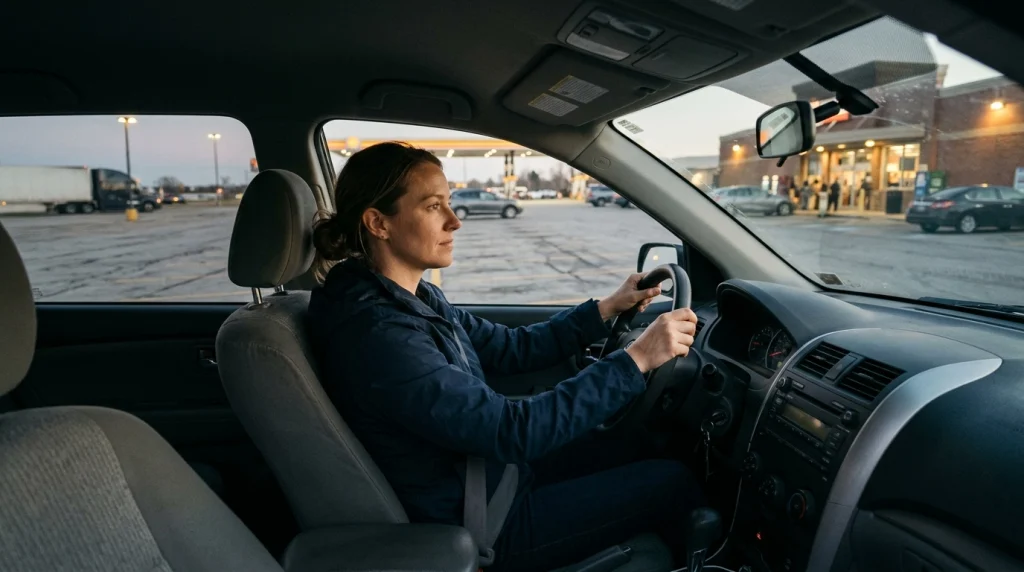
A safer parking location combines visibility, legitimate activity, suitable lighting, legal access, and a clear way out. No single feature guarantees safety, so assess the entire setting before committing to a stop.
Prioritize visibility over convenience
A parking space beside a busy entrance may be more practical than an isolated corner that happens to be closer to the restroom. Look for clear sightlines between your vehicle, the building entrance, and areas where staff or customers are present.
Avoid spaces hidden behind large vehicles, tall hedges, storage sheds, or the far side of a building. These obstructions can make it harder to see approaching people or notice what’s happening around your car.
Check the lighting and surroundings
During daylight, consider what the same parking area will look like after sunset. A location that appears open and comfortable at 3 p.m. may have dark corners or closed facilities at 8 p.m.
Check for working overhead lights, visible entrances, and a reasonably short walking route. If you’re arriving after dark, choose a different location when the available lighting doesn’t adequately cover the parking space.
Look for legitimate activity and access
Staffed businesses and established facilities can offer practical advantages because help may be available if you need it. However, a busy location isn’t automatically safe, and an empty space doesn’t prove that anything is wrong.
Consider these questions before parking:
- Is this an authorized place to stop or park?
- Are the business or facility hours clearly posted?
- Can I reach the entrance without walking through an isolated area?
- Is there a safe, unobstructed route back to my vehicle?
- Can I leave promptly if the situation changes?
**Section takeaway:** Choose a location that offers several practical safety advantages at once. Don’t rely on lighting, crowds, or your first impression alone.
Where should a woman park during a solo road trip?
Established service stations, staffed travel centers, reputable hotel parking areas, and official visitor facilities are useful starting points. The best option depends on your destination, time of day, local conditions, and whether you’re stopping briefly or staying overnight.
Use the following comparison to weigh common choices rather than assuming every location of a particular type is suitable.
| Parking option | Potential advantages | What to check |
|---|---|---|
| Staffed travel center | Restrooms, food, regular customer activity | Lighting, parking rules, crowding, available staff |
| Established service station | Fuel, basic supplies, short breaks | Whether the shop is open and the parking area is visible |
| Reputable hotel lot | Convenient access to overnight accommodation | Guest authorization, access controls, lighting, fees |
| Official visitor or park parking | Designated spaces and clear visitor information | Closing times, remoteness, cellular coverage, local warnings |
| Shopping center lot | Potentially convenient during business hours | Private parking rules, closing times, isolated sections |
| Remote roadside pull-off | May offer a brief stop where legally permitted | Traffic exposure, isolation, terrain, visibility, emergency access |
Choose established rest stops for planned breaks
A designated rest area or established travel center is generally a better starting point than an improvised stopping place. You can often plan around restroom access, opening hours, and the availability of other facilities.
Still, inspect the specific location. A remote rest area late at night may have limited staff, weak cellular coverage, or very little activity.
Use hotel parking when the overnight plan is clear
If your road trip includes a hotel stay, confirm where guests should park before you arrive. Ask about access after hours, whether the lot is monitored, and how far you’ll need to walk with your luggage.
Don’t assume a hotel’s lot is available to non-guests or that a security camera guarantees protection. Follow posted rules and the property’s instructions.
Be selective with scenic stops
Scenic overlooks, trailheads, and rural viewpoints can be wonderful during daylight, but some are isolated or close early. Check official visitor information before making them part of your route.
If you want to take photographs, pick a designated area with a legal parking space and enough room to enter and exit without stepping into traffic. Skip the stop if access, weather, or local conditions make it unsuitable.
Section takeaway: Choose the best available location for the specific stop, not simply the first empty space. For longer breaks, prioritize usable facilities, legitimate access, and a clear exit.
How can you evaluate a parking area before stopping?
Evaluate a parking area before turning into it whenever possible. Use your route planner, current road information, and a brief visual assessment to identify a suitable stopping place before fatigue makes the decision urgent.
Plan stops before you need them
For a long driving day, identify several possible stopping locations along your route. As a practical planning example, on a four-hour drive, you might mark two or three alternatives rather than depending on one particular gas station or rest area.
Those numbers are planning suggestions, not a universal safety rule. Adjust your breaks for fatigue, road conditions, weather, restroom needs, and local distances between facilities.
Before setting off, check:
- Opening hours and overnight restrictions.
- Recent notices about road closures or facility access.
- Available parking and basic amenities.
- Whether your phone is likely to have service in remote areas.
- A second option in case your preferred stop is closed or uncomfortable.
Use maps and reviews as supporting information
Map applications can help you identify businesses, designated rest areas, entrances, and alternative routes. Recent visitor comments may reveal practical issues, such as a closed restroom or a poorly lit section of a lot.
However, map listings and reviews don’t reliably establish that a parking area is secure right now. Treat them as clues, then verify operating hours, posted rules, and current conditions when you arrive.
Make a quick arrival assessment
When approaching your chosen location, slow down safely and scan the surroundings before entering. Never use your phone while driving to investigate a parking area.
Once you can stop safely, check for:
- Visible activity: Staff, customers, or other legitimate users nearby.
- Working lighting: Especially around entrances and walking routes after dark.
- Clear access: An open route in and out without awkward reversing.
- Normal operation: No closure notices, unusual restrictions, or obvious signs of damage.
- Comfortable surroundings: No immediate reason to remain concerned about your personal safety.
Trust observable conditions over a location’s reputation. A well-reviewed place can be unsuitable at a particular hour.
Check the exit before you park
A good parking space should allow you to leave without unnecessary maneuvering. Avoid blocking emergency access, parking on soft shoulders, or placing the vehicle where passing traffic creates an obvious hazard.
Where permitted, choose a space that makes it easy to pull out forward. This can reduce the time spent maneuvering if you decide to leave unexpectedly.
Section takeaway: Plan backup stops, check current details, and assess the actual surroundings on arrival. Your parking decision should account for both the space itself and how easily you can leave.
How can you secure your car and belongings?
Secure your vehicle before you reach the parking area, not after you arrive. Preparing early helps you avoid sitting in a parking space while sorting through bags, displaying valuables, or searching for documents.
Keep valuables out of sight
Visible electronics, luggage, shopping bags, and travel documents can attract unwanted attention. Put them away before leaving your previous stop, ideally in a secure compartment or trunk where appropriate.
If your vehicle has a separate trunk, avoid opening it in the parking lot to reveal luggage just before walking away. Keep passports, wallets, spare keys, and other essential items with you in a secure, practical arrangement.
Lock up and check your vehicle
Before walking away, take a few seconds to confirm the vehicle is secure. Don’t leave the engine running or the keys inside while you visit a restroom or pay for fuel.
- Lock the doors and close the windows.
- Take your keys, phone, wallet, and essential documents.
- Remove bags from passenger seats and other visible areas.
- Check that you haven’t left a spare key somewhere obvious.
- Remember where you parked, especially in large lots.
Follow your vehicle manufacturer’s instructions for security features and keyless entry. Don’t assume that a vehicle has locked simply because you pressed a button or walked away.
Stay aware when returning to the car
Before approaching your vehicle, look around the parking space and notice whether anything seems unusual. Have your keys ready without holding your phone in a way that distracts you from your surroundings.
If someone is standing unusually close to your car and makes you uncomfortable, you don’t have to approach immediately. Return to a staffed area and seek assistance if necessary.
Use technology as a backup
Vehicle alarms, built-in location services, and a charged phone can support your safety plan. A dashcam may also document certain incidents, depending on its features, settings, and local recording laws.
Technology isn’t a substitute for good judgment. Cameras don’t guarantee that someone will intervene, and a phone’s location-sharing feature won’t help if nobody knows how to respond to an emergency.
Before departure, consider sharing your route and estimated arrival time with a trusted person. Agree on when you’ll check in and what they should do if you become unexpectedly unreachable.
Section takeaway: Secure your belongings before arrival, lock your vehicle, and keep essential items accessible. Technology can help, but your main priorities are awareness, preparation, and a practical exit plan.
How should you choose parking for an overnight stop?
For an overnight stop, choose an authorized place where you can rest legally and access help if needed. A booked hotel or reputable accommodation with confirmed parking is often a more straightforward option than searching for somewhere to sleep in your car after dark.
Confirm overnight parking rules
Never assume that a parking lot allows overnight stays just because other vehicles are present. Private property owners, municipalities, parks, and transport facilities can have different restrictions.
Before relying on a location, verify:
- Whether overnight parking or sleeping in a vehicle is permitted.
- Whether you need a reservation, permit, or payment.
- When gates close and whether vehicles can exit after hours.
- Whether restrooms and other facilities remain open.
- How to contact staff or local emergency services if necessary.
If the rules are unclear, contact the operator or choose a different place. A ticket, locked gate, or unexpected request to leave can become a stressful problem when you’re tired.
Choose accommodation with convenient parking
When booking a hotel, check the parking arrangements before paying. Look at whether parking is on-site, in a separate garage, or on a nearby street, and confirm any additional charges.
For a late arrival, ask about reception hours, entry arrangements, and the route between the parking area and your room. A well-lit, direct entrance may be more practical than a cheaper option requiring a long walk through an unfamiliar area.
Should you sleep in your car?
Sleeping in a vehicle can be permitted in some locations and prohibited in others. Even where it is legal, a parking space designed for short visits may not provide the conditions needed for a comfortable overnight rest.
If you plan to sleep in your car, choose a location that explicitly permits it and consider local weather, ventilation, traffic, personal security, and access to assistance. Don’t rely on an isolated pull-off simply because you’re too tired to continue.
If you’re struggling to stay alert, stop driving somewhere safe and arrange an appropriate rest option. Fatigue can impair driving, and continuing to search for the perfect parking spot while exhausted creates its own risks.
Prepare for remote routes
Remote roads require extra planning because facilities may be far apart and phone coverage can be limited. Before leaving a populated area, check your fuel level, weather forecast, route, and likely stopping points.
On a route with long stretches between services, tell your trusted contact which road you’ll take and when you expect to arrive. Carry water, a charged phone, a vehicle charger, and basic emergency supplies suited to the journey.
Pro tip: For international driving, review your destination’s official travel advisory and local road regulations before departure. U.S. travelers can start with the U.S. Department of State travel advisories; travelers of other nationalities should also consult their own government’s guidance.
Section takeaway: Make overnight parking part of your accommodation plan. Confirm permission, access, and facilities in advance instead of making a tired decision late at night.
What should you do if a parking area feels unsafe?
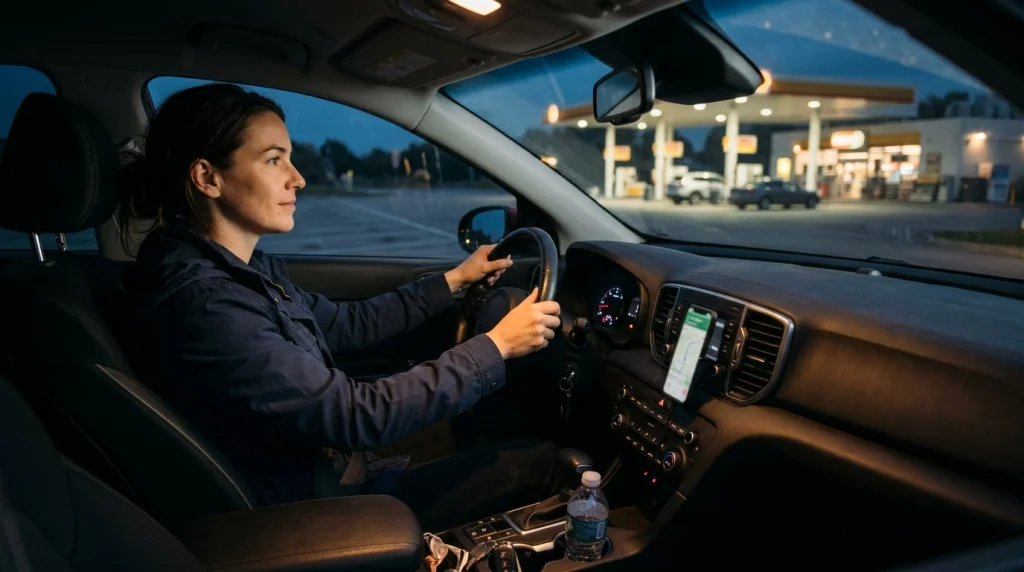
If a parking area makes you uncomfortable, you can leave and choose another location. You don’t need proof of danger to change your plans, and you shouldn’t feel obligated to stay because you’ve already driven there.
Leave when you can do so safely
If you’re still driving and notice a concerning location, continue to a more suitable place where stopping is legal and safe. Don’t pull over abruptly, make a dangerous turn, or put yourself at risk to avoid a parking area.
If you’ve already parked, assess whether you can depart normally. If someone is blocking your vehicle, threatening you, or behaving aggressively, avoid confrontation and seek help from staff or emergency services as appropriate.
What if someone approaches your car?
An unfamiliar person approaching a parked vehicle isn’t necessarily a threat. However, if their behavior makes you uncomfortable, keep the doors locked and the windows mostly closed while you decide what to do.
- Don’t feel obliged to open the door or explain your travel plans.
- If it’s safe to leave, drive to a populated, staffed location.
- If the person blocks your vehicle or threatens you, contact local emergency services when safe.
- If you cannot safely leave, remain in the locked vehicle if it offers protection and seek assistance.
- Don’t drive recklessly or attempt dangerous maneuvers to escape.
If you suspect that another vehicle is following you, don’t drive directly to your accommodation or a remote destination. Head toward a staffed public location or appropriate police facility and contact emergency services if you believe you’re in immediate danger.
What if the vehicle breaks down in an isolated place?
A mechanical problem can leave you with fewer choices, so focus on reducing exposure to traffic and obtaining reliable assistance. If the vehicle is unsafe to drive, don’t continue merely to reach a more attractive parking location.
Use the following approach:
- Move out of moving traffic if you can do so safely and legally.
- Turn on hazard lights and follow local roadside-emergency guidance.
- Contact roadside assistance or emergency services according to the severity of the situation.
- Share your location with a trusted contact when possible.
- Be cautious about unsolicited assistance, but don’t refuse legitimate emergency help solely because it comes from a stranger.
On high-speed roads, follow local guidance about whether to remain in the vehicle or move to a safer position away from traffic. The safest action depends on the road layout, traffic, weather, and immediate hazards.
Don’t let embarrassment override your judgment
Solo travel means making decisions without a companion to share the responsibility. It’s reasonable to feel disappointed when a planned stop doesn’t work out, but your itinerary should never take priority over your safety.
For example, if you planned to watch the sunset at a remote viewpoint but arrive to find the lot empty, poorly lit, and difficult to exit, skip the stop. Find a legitimate alternative and enjoy the view another time.
Section takeaway: Leave when it’s safe, seek help when necessary, and don’t confront someone to prove you’re capable of handling the situation. A flexible itinerary is a useful safety tool.
Frequently asked questions
Where is the safest place to park when traveling alone as a woman?
Look for legal, well-lit parking near a staffed business or established facility with visible activity and a clear exit. A reputable hotel lot or operating travel center can be a useful choice, but always assess the specific location and current conditions.
Is it safe for a woman to park at a gas station alone at night?
It can be a practical option if the station is open, well-lit, and has legitimate customer activity. Check the parking area and restroom access before stopping, keep your doors locked when appropriate, and leave if the setting makes you uncomfortable.
Should I park near the entrance or farther away from other cars?
A visible space near an open entrance is often a sensible choice, particularly after dark. Avoid isolated corners and spaces where another vehicle could block your exit, but don’t park so close to entrances that you obstruct pedestrians or other drivers.
Can I use a shopping center parking lot overnight?
Only if the property allows overnight parking. Shopping centers may close their lots, restrict parking to customers, or tow unauthorized vehicles. Check posted signs and ask the property operator for permission before planning an overnight stop.
What should I do if I feel unsafe after I’ve parked?
If you can leave safely, return to a staffed, populated location. If someone threatens you, blocks your vehicle, or prevents you from leaving, avoid confrontation and contact local emergency services when safe. You don’t need to wait for a situation to escalate before seeking help.
Should I share my location during a solo road trip?
Sharing your route or live location with a trusted person can provide an additional layer of reassurance. Agree on check-in times, tell them about significant route changes, and establish what they should do if you miss a check-in and cannot be reached.
How can I find safe parking when traveling in another country?
Use official visitor information, reputable accommodation guidance, current maps, and local road regulations to plan stops. Check your government’s travel advice and destination-specific driving rules, since parking restrictions, emergency numbers, and roadside procedures vary by country.
Pro tip: Save important local emergency numbers before your trip, and don’t assume that every country uses the same emergency number. Confirm current details through official government or emergency-service sources.
Make safe parking part of your solo road-trip plan
Choosing safe parking on a solo road trip becomes easier when you plan ahead, recognize useful safety features, and remain flexible. Look for good visibility, adequate lighting, legitimate activity, legal access, and a clear way to leave.
Before your next drive, mark a few potential stops, confirm overnight rules, secure your belongings, and share your general itinerary with someone you trust. Those small preparations can make breaks less stressful and help you focus on the journey itself.
Most importantly, give yourself permission to change plans. The best parking choice is not always the closest or most scenic one; it’s the option that fits your needs and the conditions you encounter.