How Can a Woman Plan Fuel Stops on a Solo Road Trip?
Quick Answer
A woman can plan fuel stops on a solo road trip by identifying reliable gas stations along her route, refueling before the tank gets low, and choosing well-lit locations near main roads. Check station hours, fuel availability, restroom access, and mobile coverage before leaving. Build a backup stop into every long driving leg, and review official travel safety guidance when driving in unfamiliar areas.
Fuel-stop planning essentials
- Refuel early: Plan to stop around half a tank in remote areas rather than waiting for the fuel warning.
- Choose established stations: Favor busy, well-lit locations with visible pumps, a staffed shop, and accessible restrooms.
- Check opening hours: Confirm that stations will be open when you expect to arrive, especially outside towns.
- Save alternatives: Identify at least one backup station before entering a long or unfamiliar stretch.
- Protect your privacy: Share your route with a trusted contact without publicly posting your real-time location.
- Keep essentials ready: Carry water, a charged phone, a charging cable, and an appropriate payment method.
One rule worth remembering
- If a planned station looks unsafe, is closed, or feels uncomfortable, leave for a safer public location while you still have enough fuel.
Planning fuel stops is about more than keeping your car moving. When you’re driving alone, each stop also affects your comfort, schedule, budget, and peace of mind.
In this guide, I’ll explain how to map fuel stops, estimate how much fuel you’ll need, choose safer stations, and handle unexpected changes. The goal is a flexible plan that helps you enjoy the drive without worrying about your next refill.
In This Guide
How should you map fuel stops before leaving?
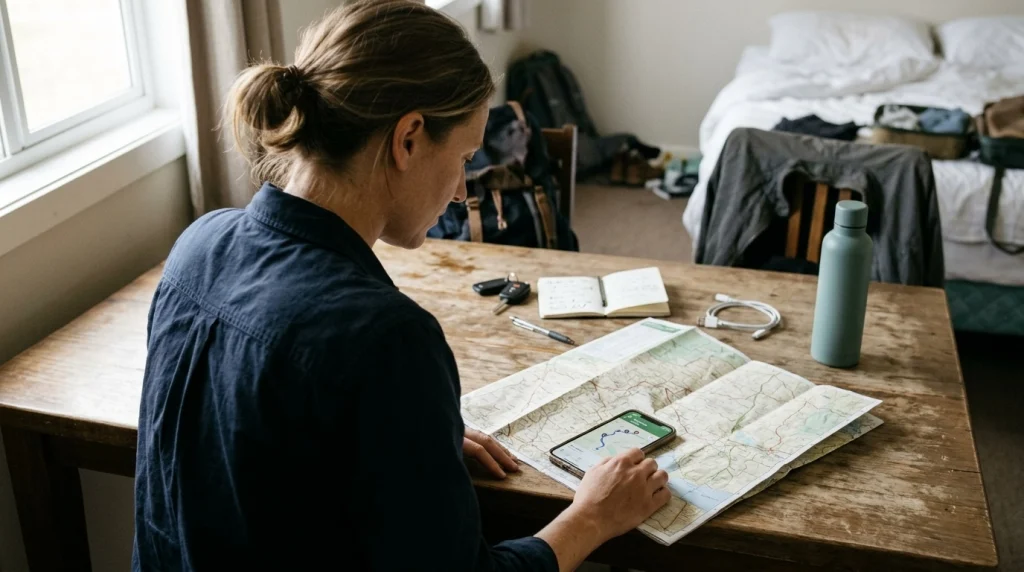
The easiest way to plan fuel stops is to map the full route first, then mark suitable stations along each driving segment. Choose stops based on distance, opening hours, amenities, and backup options rather than selecting the cheapest fuel alone.
Start with your complete driving route
Enter your starting point, overnight accommodation, major stops, and final destination into a navigation app. Review the route before departure so you can spot long stretches with few services.
Don’t assume that a station appearing on a map will be open or have fuel available. Check recent business information, posted hours, and official road or park guidance where relevant.
For each major driving leg, identify the following:
- Primary fuel stop: Your preferred station at a convenient point along the route.
- Backup station: Another suitable location in case the first is closed or unavailable.
- Comfort stop: A place with restrooms, refreshments, and somewhere to take a proper break.
- Last reliable station: The final dependable refueling opportunity before a remote stretch.
These locations don’t all need to be separate. A well-equipped station near a main road may cover several needs at once.
How far apart should fuel stops be?
Plan around your vehicle’s real-world fuel consumption and the distance between reliable stations. A stop every 100–150 miles may suit some highway trips, but remote routes can require earlier refueling.
Use that distance only as a planning example, not a universal rule. Your vehicle, weather, traffic, elevation, road conditions, and station availability determine the safer interval.
For instance, imagine you’re planning a 300-mile drive. If your car typically travels about 350 miles on a full tank under similar conditions, you shouldn’t assume that the entire range will remain available throughout the journey.
Instead, choose a station well before your estimated range becomes tight. Leave room for detours, traffic delays, and unexpected closures.
Download maps for areas with weak mobile coverage
Download an offline map before entering rural areas, mountains, deserts, or national parks. Save station addresses and telephone numbers where possible, because a route displayed on your phone may not remain accessible without data.
Keep a charging cable in the car and consider carrying a paper map for especially remote journeys. A second navigation method can be valuable if your phone loses power or reception.
Section takeaway: Map a preferred station and a backup for each long driving segment. Check conditions before departure, and never depend entirely on mobile coverage.
How do you calculate fuel range and budget?
Estimate your fuel needs using the total driving distance, your vehicle’s expected fuel economy, and the price of fuel along the route. Then add a financial and fuel reserve so that one detour or price increase doesn’t disrupt your plans.
Estimate your usable driving range
Your vehicle’s advertised range is a starting point, not a promise. For planning, use fuel economy you’ve observed in comparable driving conditions and allow a margin for uncertainty.
For a vehicle using miles and gallons, divide the fuel available by the expected consumption per mile, or multiply usable gallons by miles per gallon. For a vehicle using liters and kilometers, divide usable liters by liters consumed per kilometer.
Here’s a simple example using US measurements:
- Fuel tank capacity: 14 gallons.
- Typical highway economy: 30 miles per gallon.
- Illustrative full-tank range: 420 miles.
- Half-tank planning point: approximately 210 miles of estimated range.
These are hypothetical figures, not a recommendation to drive 210 miles between stops. If conditions reduce fuel economy or stations are sparse, refuel earlier.
Also, don’t plan around using every gallon in the tank. Your fuel gauge and remaining-range display provide estimates, and road conditions can change how quickly the vehicle consumes fuel.
Build a realistic fuel budget
Estimate the total fuel cost before leaving, then divide it into daily or route-specific allowances. Prices can vary significantly between regions, so use current local prices when they’re available.
For example, a 600-mile trip at 30 miles per gallon requires about 20 gallons under the assumed conditions. At an illustrative price of $3.50 per gallon, the estimated fuel cost is $70.
This calculation excludes detours, idling, lower fuel economy, and price changes. A practical budget should accommodate those differences.
Use this simple formula:
Estimated fuel cost = planned distance ÷ expected miles per gallon × price per gallon.
If you use metric measurements, calculate liters needed from distance and fuel consumption, then multiply by the price per liter.
Compare convenient stops with cheaper stations
The cheapest station isn’t always the best choice. A small saving may not justify a long detour, arriving after dark, or entering an unfamiliar area without reliable services.
| Planning factor | Preferred approach | Why it helps |
|---|---|---|
| Fuel price | Compare nearby stations | Keeps costs predictable without unnecessary detours. |
| Distance | Choose a stop on or near your route | Reduces extra mileage and fuel use. |
| Operating hours | Confirm hours before arrival | Helps prevent last-minute detours. |
| Amenities | Choose suitable restrooms and refreshments | Makes longer drives more comfortable. |
| Backup options | Identify another station nearby | Provides flexibility if the planned stop fails. |
Section takeaway: Estimate your fuel needs, but preserve a margin for real-world conditions. Compare the full cost and convenience of a stop rather than fuel prices alone.
How can you choose a safer gas station?
A suitable fuel stop should feel comfortable, offer the services you need, and let you return to your route without unnecessary detours. Look for visible lighting, active customer areas, clear entrances and exits, and a location close to established roads.
No station is guaranteed to be safe, and a busy location isn’t automatically risk-free. Use the surroundings and your own judgment rather than relying on one feature alone.
What should a woman look for at a fuel stop?
Before pulling in, take a quick look at the station and its surroundings. You can often identify whether a stop meets your needs without getting out of the car.
- Lighting: Check whether the pumps, parking spaces, and entrances are adequately illuminated, especially after sunset.
- Visibility: Favor locations where you can see the shop, other customers, and the way back to the main road.
- Staff presence: A staffed shop may make it easier to ask for assistance if something goes wrong.
- Public activity: Look for a maintained station with ordinary customer activity rather than an isolated, poorly maintained site.
- Useful facilities: Confirm that restrooms, food, and other services are available if you need them.
- Easy exit: Choose a parking position that lets you leave without reversing into a tight or confusing space.
These are practical selection criteria, not guarantees about crime or personal safety. If something feels wrong, keep moving to another suitable public location while your fuel level allows.
Should you stop for fuel after dark?
When possible, schedule refueling during daylight, particularly on unfamiliar or remote routes. Daylight can make it easier to assess your surroundings, locate facilities, and find an alternative if a station is closed.
If you need fuel after dark, choose an established, well-lit station near a main road. Avoid driving far off-route to save a small amount of money.
Park near the main customer area when practical, lock your doors while waiting, and keep your phone accessible. If someone makes you uncomfortable, return to your vehicle and leave when you can do so safely.
How should you handle unsolicited help or unwanted attention?
You don’t owe anyone a conversation, an explanation of your itinerary, or details about whether you’re traveling alone. A brief, polite response is enough when you want to end an interaction.
If someone persists, move toward a staffed public area or leave for another suitable location. If you believe you’re being followed, avoid driving to your accommodation or another private destination; head toward an appropriate public place where you can seek assistance.
Keep your planned destination and accommodation details private from strangers. Share them with someone you trust instead.
Section takeaway: Choose fuel stops based on their surroundings, facilities, and ease of exit. Trust your judgment, and don’t stay somewhere that makes you uncomfortable just because it was on your original route.
When should you refuel on a solo road trip?
Refuel before your tank gets low, and set an earlier target for remote routes where the next reliable station may be far away. A half-tank reminder is a useful starting point, but the right threshold depends on the route and your vehicle.
Use a flexible fuel-stop rule
Rather than waiting for the low-fuel warning, make refueling part of your regular route planning. This reduces the chance that a closed station or unexpected detour will leave you searching for fuel under pressure.
Use these practical guidelines:
- Urban routes: Refuel when convenient, while keeping enough fuel for traffic delays and route changes.
- Highway routes: Choose a station before your remaining range becomes uncomfortable, especially if exits are widely spaced.
- Remote routes: Consider refueling around half a tank or earlier when stations are scarce.
- Night driving: Top up before dark when practical, rather than relying on an unfamiliar station late in the evening.
- Bad weather: Preserve a larger margin if storms, snow, flooding, or road closures could delay you.
These are planning guidelines, not fixed fuel requirements. Follow local road advice and adjust your plan to actual conditions.
Schedule fuel, food, and rest together
A fuel stop is a convenient opportunity to stretch, drink water, use the restroom, and check your route. Combining these needs can reduce the number of stops while helping you avoid fatigue.
For example, on a five-hour driving day, you might plan a main break after roughly two hours and choose a suitable station or service area. The exact timing should reflect your concentration, road conditions, and comfort rather than a rigid schedule.
Don’t continue driving simply because your next scheduled fuel stop is still some distance away. If you’re tired, distracted, or uncomfortable, find an appropriate place to stop sooner.
Allow extra time for unexpected delays
Navigation estimates don’t always include every delay. Traffic, construction, weather, road closures, and long queues at fuel pumps can affect your arrival time.
Build a time buffer into each driving day, especially when you need to reach accommodation before reception closes. If a delay pushes a fuel stop into darkness, consider a different station or an earlier overnight stop.
Pro tip: Before departure, check official road-condition and weather updates for your route. In the United States, the National Weather Service and state transportation agencies can help you identify conditions that may affect your plans.
Section takeaway: Refuel while you still have comfortable range remaining. Keep your schedule flexible enough to prioritize rest, daylight, and changing road conditions.
How can you manage fuel costs and personal comfort?
Plan fuel expenses alongside rest breaks and essential supplies, rather than treating fuel as an isolated cost. A good stop should support the next leg of your journey as well as your budget.
Use fuel-price apps without depending on them completely
Fuel-price apps and navigation tools can help you compare nearby stations and estimate costs. However, prices, opening hours, and fuel availability can change after a listing is updated.
Use them to shortlist options, then confirm important details before relying on a station in a remote area. If the savings require a long detour, calculate whether the extra distance is worthwhile.
For example, saving five cents per gallon on a 12-gallon refill saves only 60 cents. A detour that adds several miles may consume much of that saving and use valuable daylight.
Choose stops with the facilities you need
For many women traveling alone, restroom access and a comfortable place to take a break matter as much as the fuel price. Identify service areas or established stations with facilities that match your needs.
Before a long driving segment, consider packing:
- Drinking water and a few nonperishable snacks.
- A charging cable and a fully charged power bank.
- Tissues, hand sanitizer, and any personal care essentials.
- A small flashlight for unexpected delays.
- A payment card and a modest backup payment option.
- Weather-appropriate clothing in case you need to wait for assistance.
Keep these items somewhere accessible without unpacking your luggage at a fuel pump. A small day bag can make breaks easier to manage.
Prepare for different payment systems
Not every station accepts the same payment methods, and unattended pumps may require a card or local payment option. If you’re traveling internationally, check how fuel payments work in the country before driving.
Keep a backup payment method separate from your primary card. Never assume a foreign card, mobile wallet, or contactless payment method will work at every pump.
When renting a car, confirm the correct fuel type before your first refill. If the dashboard or rental agreement is unclear, consult the vehicle manual or ask the rental provider before fueling.
Keep someone informed without sacrificing privacy
Share your general route, planned overnight stops, and expected arrival times with a trusted contact. Agree on a simple check-in routine so they know when to expect an update.
If your plans change significantly, send a brief update when safely parked. You don’t need to broadcast your movements on public social media or tell strangers where you’re staying.
For additional preparation, review the National Highway Traffic Safety Administration’s road-trip safety guidance, which covers route planning and roadside emergency supplies.
Section takeaway: Budget for fuel, facilities, and a backup payment option. Keep your route information available to a trusted person without sharing unnecessary details publicly.
What should you do if a fuel stop fails?
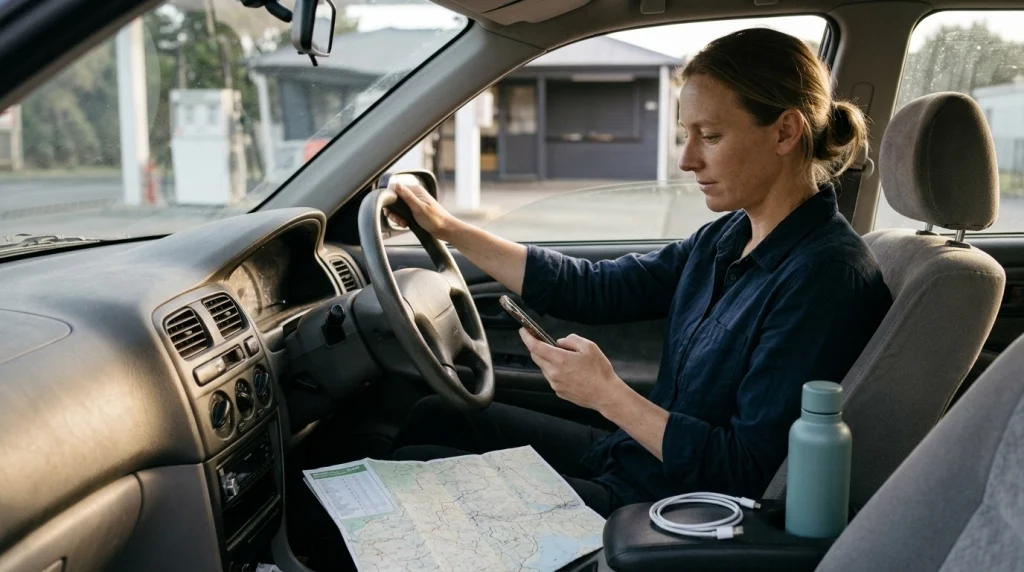
If your planned station is closed, out of fuel, or uncomfortable, use your backup plan rather than pushing your remaining range. Check your navigation app for another suitable station and reassess the route before continuing.
What if the station is closed or has no fuel?
First, check how much fuel remains and whether the next station is comfortably within your estimated range. Use current navigation information, but allow for detours and reduced fuel economy.
If you’re already running low, avoid driving toward a distant station based only on an optimistic range estimate. Contact roadside assistance if you cannot confidently reach a suitable refueling point.
Before leaving a station that cannot serve you, identify your next destination while parked safely. This prevents you from making hurried navigation decisions while driving.
What if your car runs out of fuel?
If the engine loses power, prioritize getting out of traffic and reaching a safe stopping position. Follow the vehicle’s instructions and local road rules, switch on hazard lights when appropriate, and contact roadside assistance.
On a high-speed road, don’t walk along traffic lanes or attempt to cross a busy highway to reach a station. Whether you should remain inside the vehicle or move away from it depends on the road layout and immediate hazards, so follow local emergency guidance.
Give the assistance provider your location, direction of travel, nearest exit or landmark, and vehicle details. If you feel threatened or face immediate danger, contact the local emergency service.
What if a person or situation makes you feel unsafe?
Leave if you can do so safely and head toward a suitable public location with staff or other people nearby. Don’t remain at a station merely because you planned to refuel there.
If you cannot safely leave, stay in a secure position, lock the doors when appropriate, and call for assistance. Avoid confronting anyone who is threatening you.
If another vehicle appears to follow you, don’t drive directly to your accommodation. Consider a staffed service area, police station, or another appropriate public place, and contact emergency services if the threat is immediate.
What should you keep in your car for fuel-related emergencies?
A small emergency kit can help you manage delays while waiting for help. Pack items suited to the climate, road conditions, and distances between services.
- A charged mobile phone, charging cable, and power bank.
- Roadside assistance contact details and your rental company’s emergency number, if applicable.
- Drinking water and shelf-stable snacks.
- A flashlight and weather-appropriate clothing.
- A basic first-aid kit.
- A paper map or downloaded offline maps.
- Reflective safety equipment appropriate to local regulations and conditions.
Before a long drive, check your tires, lights, fluid levels, and fuel level. The UK government’s journey-preparation guidance also emphasizes planning refueling stops, allowing for delays, and preparing for changes in road conditions.
Section takeaway: A failed fuel stop should trigger a calm reassessment, not a race against the fuel gauge. Keep emergency contacts accessible and choose the safest available response for the conditions around you.
Fuel-stop planning FAQs
How often should a woman stop for gas on a solo road trip?
There is no single distance that works for every vehicle and route. Plan refueling around your vehicle’s real-world fuel range and station availability, and consider topping up near half a tank when entering remote areas or facing uncertain conditions.
Is it safe to stop for gas alone at night?
When practical, refuel during daylight, particularly on unfamiliar routes. If you need fuel at night, choose an established, well-lit station with visible customer areas and an easy exit, and leave if the surroundings make you uncomfortable.
Should I fill my gas tank before leaving town?
Yes, starting with a full tank is a useful precaution before a long drive or remote stretch. It gives you more flexibility if a planned station is closed, a detour appears, or road conditions change unexpectedly.
How do I find gas stations along an unfamiliar route?
Use a navigation app to locate stations along your route, then check their operating hours, services, and recent information. Save a primary stop and a backup, download offline maps, and confirm fuel availability before entering an area with limited services.
How much extra money should I budget for fuel?
Estimate your fuel cost using the trip distance, expected fuel economy, and current local prices. Add a reserve based on your route and budget, allowing for detours, traffic, weather, and price changes rather than relying on the initial estimate alone.
What should I do if I feel unsafe at a gas station?
If you can leave safely, drive to another suitable public location with better conditions. Avoid confrontation, keep your phone accessible, and contact local emergency services if you face an immediate threat or cannot safely get away.
How can I plan fuel stops when driving through remote areas?
Identify reliable stations before leaving populated areas, refuel earlier than you would on a city route, and save offline maps and emergency contacts. Check road closures and weather conditions, and avoid starting a remote driving segment unless your remaining fuel comfortably covers the planned distance with a margin.
Final takeaway: Make fuel stops part of your safety plan
Planning fuel stops before a solo road trip helps you protect your time, budget, and peace of mind. Choose suitable stations, refuel before your range becomes tight, and keep a backup option for every remote stretch.
Most importantly, give yourself permission to change the plan. A slightly more expensive stop, an earlier refill, or an overnight break can be a sensible choice when it helps you continue safely.
Before your next trip, map your main fuel stops, save the alternatives, check your vehicle, and share your general itinerary with someone you trust. With those basics covered, you’ll have more freedom to enjoy the journey on your own terms.