How Can a Woman Use Public Transportation Safely While Traveling Alone?

Quick Answer
A woman can use public transportation more safely while traveling alone by researching local transit, choosing reputable services, planning her route before leaving, protecting her belongings, and staying aware of her surroundings. The safest option depends on the destination, time of day, and transport provider, so check current official guidance and arrange a reliable alternative for unfamiliar late-night journeys.
Essential public transportation safety tips
- Plan your route: Confirm stops, transfers, operating hours, and your final walk before departing.
- Choose busy areas: Wait near other passengers, staff, or designated help points when available.
- Secure your belongings: Keep your phone, passport, wallet, and bag under your control.
- Stay connected: Share your itinerary and check-in times with someone you trust.
- Trust your instincts: Change carriages, leave a stop, or switch transport options if a situation feels unsafe.
- Prepare a backup: Save a licensed taxi or reputable ride-hailing option and keep enough money for an alternative.
Before your next journey
- Check the latest destination-specific advice from the U.S. Department of State’s women travelers guidance, or your own government’s travel service.
- Know how to contact local emergency services and identify a staffed, public place where you can seek help.
Traveling alone gives me the freedom to explore at my own pace, but transportation deserves a little extra planning. Knowing how can a woman use public transportation safely while traveling alone makes unfamiliar cities easier to navigate with confidence.
This guide covers practical solo female travel safety strategies for buses, trains, metros, trams, ferries, and other local transit. You’ll learn how to choose safer routes, handle unwanted attention, protect your belongings, and make sensible decisions when plans change.
Table of Contents
In This Guide
- 1. How should a woman plan public transportation before traveling alone?
- 2. Which public transportation options are safer for solo female travelers?
- 3. How can you stay safe while riding buses, trains, and metros?
- 4. How can women handle harassment, pickpockets, and uncomfortable situations?
- 5. How can a woman travel safely at night or arrive in an unfamiliar city?
- 6. What should a solo female traveler do if something goes wrong?
- 7. Frequently asked questions
1. How Should a Woman Plan Public Transportation Before Traveling Alone?
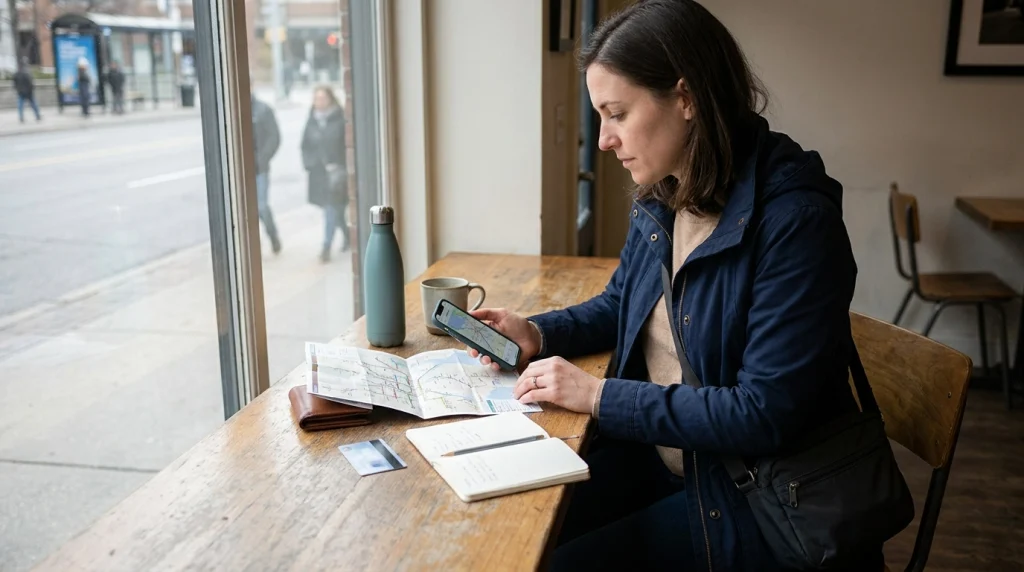
The safest public transportation journey often starts before you reach the station. Research the local system, understand the route, and decide what you’ll do if your original plan stops working.
Research local transportation and safety conditions
Public transportation is the network of shared services that move passengers along established routes, including buses, trains, metro systems, trams, and ferries. Solo female travelers use it to explore independently while managing costs, schedules, and personal safety.
However, a transport system that feels straightforward in one city may be confusing or unsuitable for solo travel in another. Service quality, harassment risks, station staffing, accessibility, and nighttime conditions vary by location.
Before arriving, investigate these details:
- Official routes: Find the transport authority’s route maps, journey planner, and service notices.
- Operating hours: Check the last departure and any overnight service restrictions.
- Safety arrangements: Look for staffed stations, emergency intercoms, security personnel, and women-only carriages where available.
- Payment methods: Learn whether you need a travel card, mobile ticket, cash, or contactless payment.
- Local concerns: Read current government travel advice and credible local guidance about crime, harassment, strikes, and service disruptions.
For international trips, the U.S. Department of State’s international travel guidance offers destination information for American travelers. Travelers of other nationalities should consult their own government’s equivalent service, alongside local transport authorities.
Map the entire journey, not just the main route
A route is only as practical as its least comfortable segment. A convenient metro ride can still leave you facing an isolated station exit or an unfamiliar walk after dark.
Check the complete trip from your accommodation to your destination, including transfers and the final stretch on foot. If the last section looks poorly lit, isolated, or difficult to navigate, identify another exit or arrange a suitable pickup.
My planning checklist for an unfamiliar journey is simple:
- Save the departure station, destination stop, and transfer points.
- Take a screenshot of the route in case mobile data disappears.
- Check the scheduled arrival time and the last return service.
- Identify a staffed station, busy business, or other public place along the route.
- Save an alternative transport option before leaving.
Prepare your phone, tickets, and emergency contacts
Keep your phone charged and your ticket ready before reaching the boarding area. Searching through an open bag while distracted can make it harder to notice your surroundings.
Download offline maps when possible, save your accommodation’s address, and learn the local emergency number. Keep your passport secure rather than repeatedly taking it out in public.
Share your approximate route and expected arrival time with someone you trust. Agree on a simple check-in message, particularly for a late arrival or a journey involving multiple transfers.
Section takeaway: Plan the whole journey, including the final walk and return trip. A backup route and charged phone can reduce stress when schedules change.
2. Which Public Transportation Options Are Safer for Solo Female Travelers?
No single transport option is safest in every destination. The best choice is usually a reputable service with predictable operations, clear passenger information, and a route that suits the time and conditions of your journey.
Compare your transportation choices
Use this comparison as a starting point rather than a universal safety ranking. Local conditions, operator standards, passenger density, and your arrival time can change which option makes the most sense.
| Transport option | Potential advantages | What to check |
|---|---|---|
| Metro or urban train | Fixed routes, predictable stops, and staffed stations on some systems. | Crowding, station exits, late-night service, and harassment reporting options. |
| Official city bus | Frequent stops and broad coverage in many cities. | Route changes, stop locations, onboard crowding, and service hours. |
| Intercity train or coach | Reserved seats and scheduled departures may simplify longer trips. | Station access, luggage security, overnight stops, and arrival transfers. |
| Licensed taxi or reputable ride-hailing service | Direct travel and less walking between a stop and your accommodation. | Driver identity, vehicle registration, licensing, fare, and trip-sharing features. |
| Informal minibus or unregistered vehicle | May be common on certain local routes. | Operator legitimacy, route transparency, local warnings, and available alternatives. |
Choose the service that matches your circumstances
For a daytime trip across a well-served city, an official metro or bus may be a sensible choice. For a late arrival with luggage, a prearranged licensed transfer may reduce the need to navigate unfamiliar streets alone.
Don’t assume that a taxi is automatically safer than a bus, or that a crowded train is always dangerous. Compare the actual service, route, timing, and local advice instead.
Some cities provide women-only carriages, designated waiting areas, or other measures intended to improve passenger comfort. Use these where available and appropriate, but don’t rely on them as a substitute for general safety precautions.
Know when to change your original plan
Flexibility is an important part of solo female travel safety. If a service is unexpectedly cancelled, a station closes, or local authorities advise against using a particular route, reassess before continuing.
For example, if your last train arrives after the connecting bus has stopped running, don’t assume a long walk through an unfamiliar area will be fine simply because your map shows a short distance. Compare a verified taxi, a staffed station’s assistance options, or a change of accommodation if necessary.
Section takeaway: Compare real local conditions instead of ranking transport types universally. Choose a reputable operator, a suitable route, and a realistic backup.
3. How Can You Stay Safe While Riding Buses, Trains, and Metros?
Once you’re on board, stay aware of your surroundings without feeling that you must watch everyone constantly. Keep your belongings secure, choose your position thoughtfully, and know where you can seek help.
Where should you sit or stand?
Choose a location that allows you to move away easily if another passenger makes you uncomfortable. Depending on the system, this may mean sitting near other passengers, a staffed area, or a visible help point.
- On trains: Consider a carriage with other passengers and functioning lights, particularly during quieter hours.
- On buses: Choose a seat that allows you to exit without having to squeeze past someone who is making you uncomfortable.
- On platforms: Wait in designated passenger areas, away from platform edges and isolated corners.
- On ferries: Stay in authorized passenger areas and locate the crew or information desk.
- During transfers: Follow official signs and avoid following strangers into restricted or isolated areas.
There’s no universally safest seat or carriage. Prioritize visibility, a clear exit, and access to assistance over rigid rules about where you must sit.
How can you protect your phone, money, and luggage?
Pickpockets often take advantage of distraction and crowded conditions. Keep your essentials in a closed bag that stays within your control, rather than in an exposed outer pocket.
These habits help reduce opportunities for theft:
- Wear a crossbody bag with its opening facing inward when practical.
- Keep your phone secured when you’re not using it, especially near open train doors or street-facing bus windows.
- Store your wallet and passport in separate secure locations.
- Keep a hand on your day bag when standing in a crowded carriage.
- Place larger luggage where you can monitor it without blocking aisles or emergency exits.
- Avoid displaying large amounts of cash or expensive jewelry.
Be especially careful when someone creates a sudden distraction, such as spilling something, asking for directions, or crowding you near a door. Most strangers are simply going about their day, but you don’t need to surrender control of your belongings to be polite.
Should you use your phone while traveling?
Yes, but use it deliberately. Your phone can help with maps, tickets, translation, and emergency communication, yet constant screen time makes it harder to notice a missed stop or a change in your surroundings.
Check your route before boarding and again when necessary. Keep your screen brightness and volume at a level that lets you remain aware of what’s happening around you.
For an unfamiliar journey, save the destination’s name in the local language when possible. A screenshot of the address can help if you lose internet access or need assistance from a station employee.
What should you do when a journey becomes unexpectedly crowded?
Move to another area if you can do so comfortably and safely. If the crowd makes movement impossible, keep your bag close and position your arms to protect your personal space without escalating a confrontation.
Don’t force yourself onto an already dangerously crowded vehicle just to stay on schedule. Waiting for another departure can be the better decision, especially when luggage or mobility limitations make boarding difficult.
Section takeaway: Stay aware, keep essentials secured, and choose positions that preserve your ability to move. If crowding becomes unsafe, wait for a better option.
4. How Can Women Handle Harassment, Pickpockets, and Uncomfortable Situations?
Women traveling alone may encounter staring, unwanted conversations, intrusive questions, harassment, or unwanted physical contact on public transportation. Your priority is to reach a safer situation, not to prove that you can handle an uncomfortable encounter.
How should you respond to unwanted attention?
Start with the response that best fits the situation. You don’t owe a stranger a conversation, your personal information, or an explanation for wanting to be left alone.
If someone approaches you and you feel uncomfortable, you can:
- Give a brief, neutral response or decline to engage.
- Move toward other passengers or a staffed area.
- Change seats or carriages when it is safe to do so.
- Ask a nearby passenger or transport employee for assistance.
- Use a firm, audible statement such as, “Please leave me alone,” if doing so feels safe.
Not every uncomfortable interaction requires confrontation. If a person appears aggressive, intoxicated, or persistent, prioritize creating distance and reaching help instead of arguing.
What if someone follows you or keeps approaching you?
If you suspect someone is following you, avoid leading them directly to your accommodation. Move toward a staffed station, an open business, a security desk, or another busy public place.
Tell an employee or trusted person what is happening, and contact local emergency services if you feel threatened. If you’re on a vehicle, alert the driver or crew when possible and ask for assistance reaching a safer location.
Avoid getting off at an isolated stop simply because the person does. If you need to leave the vehicle, choose a place where help is available and consider asking transport staff to assist you.
What if someone touches or threatens you?
Unwanted touching is not something you must tolerate to avoid making a scene. If it is safe to do so, move away and clearly tell the person to stop.
If the behavior continues, attract attention, alert staff, or contact the police. When immediate danger exists, focus on escaping to safety rather than collecting evidence or confronting the person.
When you can safely report the incident, record useful details such as the route, time, vehicle number, station, and a description of the behavior. These details may help the operator or authorities investigate.
Harassment is not your fault, regardless of what you wear, whether you were alone, or how you responded in the moment.
How can you recognize common theft and transport scams?
Be cautious when someone asks to handle your luggage, offers an unexpected shortcut, insists on taking your phone, or pressures you to leave an official transport area. These behaviors are not always criminal, but they justify slowing down and verifying the situation.
- Unofficial tickets: Buy tickets through authorized machines, counters, or verified apps.
- Fake assistance: Ask uniformed staff or use the official information desk rather than handing over your documents.
- Fare disputes: Check published fares and use authorized payment methods where possible.
- Distraction theft: Keep your bag secure when someone suddenly draws your attention elsewhere.
- Unrequested rides: Decline unsolicited offers and arrange transport through a trusted provider.
For destination-specific risks, review official travel advice rather than relying solely on social media anecdotes. The UK Foreign, Commonwealth & Development Office travel advice is one source of information about crime, transport risks, and local conditions.
Section takeaway: You don’t need to be confrontational to protect yourself. Create distance, seek help early, and report serious incidents when it is safe to do so.
5. How Can a Woman Travel Safely at Night or Arrive in an Unfamiliar City?
Nighttime travel needs more preparation because services may run less frequently, stations may have fewer staff, and the final walk can be harder to assess. Whenever possible, arrange your arrival so you can reach your accommodation without rushing or navigating unfamiliar streets alone late at night.
Should you use public transportation after dark?
That depends on the destination and the specific route. Some cities operate reliable, well-used night services, while other places have limited coverage or particular routes that official authorities advise travelers to avoid.
Before traveling after dark, check:
- Whether the route and connecting services are operating normally.
- Whether stations and stops have lighting, staff, and clear passenger information.
- How far you’ll need to walk after getting off.
- Whether local advisories recommend avoiding the service or area.
- Whether a licensed taxi or prearranged transfer would be a more suitable alternative.
Don’t assume that a busy station is always safe or that a quiet one is automatically dangerous. Use the available local information to assess the actual circumstances.
How can you make airport and station arrivals safer?
First arrivals are often the most stressful part of a solo trip. You’re tired, unfamiliar with the area, and may be carrying luggage while trying to find your accommodation.
Make the transition easier by arranging the details in advance:
- Confirm the terminal, station, or coach stop where you’ll arrive.
- Check the official transport options available at that location.
- Arrange a licensed pickup in advance if the arrival time or destination makes it sensible.
- Keep your accommodation address and booking details accessible offline.
- Tell your trusted contact when you arrive and when you expect to reach your accommodation.
At an airport, follow official signs to authorized transport desks and pickup zones. Avoid accepting unsolicited offers from people who approach you inside the terminal or claim to be your driver without verifiable details.
How do you verify a ride-hailing car or taxi?
When using a ride-hailing service, verify the driver and vehicle before getting in. The booking information should match what you see, and the pickup should take place in a safe, authorized location.
- Check the registration plate, vehicle model, and driver photo where provided.
- Confirm the driver or booking identity using the app’s approved method.
- Share the trip details with a trusted contact if the service supports it.
- Keep the route visible and check that the journey is progressing as expected.
- Cancel and move away if the vehicle or driver does not match the booking.
Never enter a vehicle simply because the driver knows your name. If something doesn’t match, return to an official pickup area or ask staff for help.
What if your accommodation is far from the stop?
Check the final walking segment before booking a hotel or hostel. A property near a major transit hub can be convenient, but the actual route from the station matters more than straight-line distance.
Consider accommodation with a straightforward entrance, reliable reception arrangements, and a route you can comfortably navigate with your luggage. If a late-night walk feels unsuitable, budget for a licensed transfer rather than treating it as an unexpected expense.
Travel plans can also change because of weather, strikes, or cancellations. Keep enough flexibility in your schedule to choose a safer alternative instead of rushing to catch the last service.
Section takeaway: Plan late arrivals around actual local conditions. Verify every pickup, assess the final walk, and pay for a reliable alternative when the circumstances justify it.
6. What Should a Solo Female Traveler Do If Something Goes Wrong?
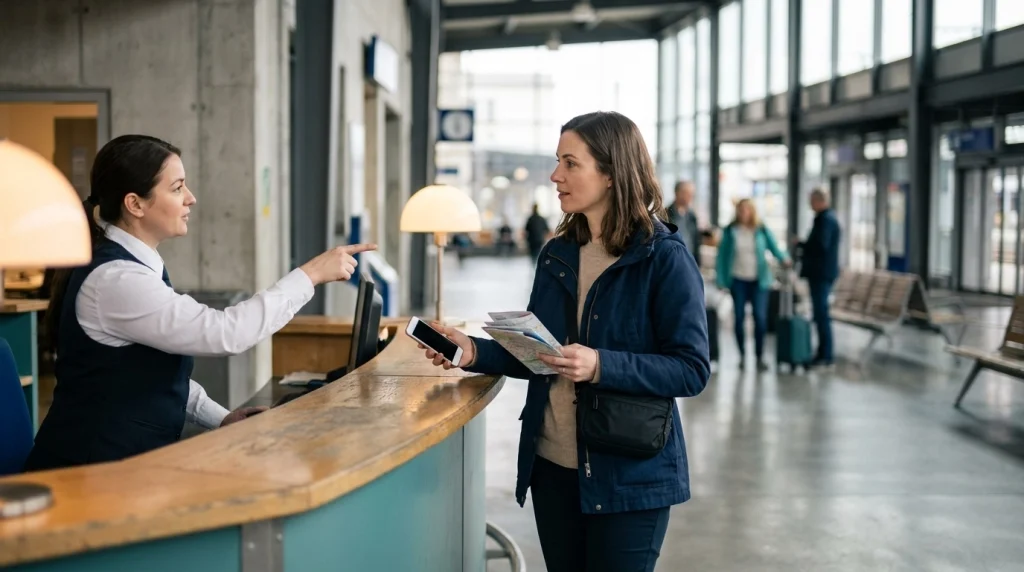
A practical backup plan gives you options when your phone dies, your route changes, you lose an item, or another passenger makes you feel unsafe. Prepare the essentials before leaving rather than trying to solve everything during a stressful situation.
Create a simple transportation safety checklist
Use this checklist before each unfamiliar or longer journey. You don’t need elaborate equipment; the goal is to make important information easy to access.
- Phone charged, with offline directions saved where possible.
- Emergency number and local transport assistance contacts available.
- Accommodation address saved in writing and on your phone.
- Ticket, payment method, and a backup payment option ready.
- Essential documents stored securely, with copies available separately.
- Trusted contact informed of your plans when appropriate.
- Alternative route or licensed transport option identified.
For longer trips, consider a portable charger and a small amount of emergency cash. Keep both accessible without placing every valuable item in one bag.
What should you do if you miss your stop or lose your route?
Stay calm and move to a safe, public location before working out the next step. Check the official route information or ask a transport employee for directions.
A missed stop is usually a manageable inconvenience, not an emergency. Avoid accepting an unsolicited ride or following someone into an unfamiliar area just because you want to get back on schedule.
If your phone battery is running low, use your saved directions and prioritize reaching a staffed transport point. Contact your accommodation or trusted person if you need help confirming the next leg of your journey.
What should you do if your phone or wallet is stolen?
Move to safety first and contact local authorities or transport security when appropriate. If your phone is missing, use another trusted device to secure your accounts and arrange a way to contact your accommodation or emergency contact.
If your payment cards are stolen, contact your bank to freeze or cancel them. Report missing travel documents to the relevant authorities and your embassy or consulate when necessary.
Keep digital and paper copies of essential documents stored separately from the originals. Copies won’t replace official documents, but they may help you provide the details needed to arrange replacements.
How should you respond to a transport emergency?
If you face an immediate threat, move toward safety and alert the driver, conductor, station staff, security personnel, or police as appropriate. Use an emergency intercom or alarm only according to the local system’s instructions.
Learn the local emergency number before you travel. Emergency numbers and response arrangements differ by country, and your home country’s emergency number may not work abroad.
For U.S. citizens, the Department of State’s Smart Traveler Enrollment Program (STEP) allows eligible travelers to register trips and receive relevant updates from the nearest U.S. embassy or consulate. Travelers from other countries should check their own government’s registration and consular support options.
After reaching safety, write down the time, location, route, and relevant details while you can remember them. Seek medical assistance if you’ve been injured or assaulted, and contact someone you trust for support.
When should you abandon the original journey?
Change your plan if local authorities warn against the route, the operator appears unsafe, a person threatens you, or you cannot reach your destination without taking a risk you’re uncomfortable with. There is no prize for sticking to an itinerary at all costs.
Sometimes the best decision is to wait in a staffed location, book another service, or stay overnight somewhere suitable. Protecting your safety is a legitimate reason to spend more than you originally budgeted.
Section takeaway: Keep essential contacts, directions, and backup transport options accessible. When something goes wrong, prioritize safety first and logistics second.
7. Frequently Asked Questions
Is public transportation safe for women traveling alone?
Public transportation can be a practical option for women traveling alone, but safety varies by destination, operator, route, and time. Research local conditions, use reputable services, secure your belongings, and choose an alternative when current official advice or the circumstances indicate greater risk.
Where should a woman sit on a bus or train when traveling alone?
Choose a seat or standing position that offers a clear exit and reasonable access to other passengers or staff. If possible, select a well-lit, occupied carriage or a designated safe area. Move if someone makes you uncomfortable, and follow local transit guidance rather than relying on a universal seating rule.
Is it safe to wear headphones on public transportation?
Headphones are not automatically unsafe, but loud music or noise cancellation can make it harder to notice announcements, approaching passengers, or changes around you. Keep the volume low enough to remain aware, and remove your headphones when navigating unfamiliar stations or responding to a potentially unsafe situation.
What should a woman do if someone harasses her on public transportation?
Move away when possible, seek help from nearby passengers or transport staff, and use a clear verbal boundary if doing so feels safe. If someone threatens or follows you, prioritize reaching a staffed public place and contacting local emergency services rather than confronting the person alone.
How can a woman stay safe while traveling on public transportation at night?
Check current local safety advice, confirm service hours, and plan the final walk before departing. Prefer reputable operators and well-used routes when appropriate, keep your phone charged, share your plans with someone you trust, and arrange a licensed alternative if the journey or arrival conditions feel unsafe.
Should a solo female traveler use a taxi instead of a bus or train?
Not necessarily. An official bus or train may be a suitable choice in one destination, while a licensed taxi or verified ride-hailing service may be preferable for a late arrival or an isolated final stop. Compare the operator, route, timing, and local safety advice before deciding.
What are the most important public transportation safety essentials for solo female travelers?
The most important essentials are a charged phone, offline directions, secure storage for valuables, emergency contacts, and a backup transport plan. Keep your accommodation address accessible, know the local emergency number, and make sure someone you trust knows your plans when appropriate.
Final Takeaway: Travel Independently, With a Plan
Learning how to use public transportation safely while traveling alone is about making informed choices, not avoiding every unfamiliar experience. A little research, a clear route, and a willingness to change plans can make independent travel more manageable.
Before your next trip, choose one journey you’d like to make, check the official transport information, and map the entire route. Save your backup options and decide what you’ll do if the service is delayed or your surroundings become uncomfortable.
Most importantly, remember that you are allowed to change your mind. You can take the metro instead of a bus, leave a carriage, ask for assistance, or pay for a different ride when that feels like the right decision.
Solo travel should give you more freedom to explore, not pressure you to ignore your own judgment. Prepare well, stay flexible, and let your safety plan support the adventure.
Pro tip: Before departure, review your destination’s current official travel advisory, local transport authority notices, and emergency contact information. Guidance can change, so check again shortly before traveling.