How Can a Woman Protect Her Belongings in Crowded Places? A Solo Travel Safety Guide
Quick Answer
A woman can protect her belongings in crowded places by carrying a secure, zipped crossbody bag in front of her body, keeping her phone and wallet out of accessible pockets, and separating essential valuables. She should stay alert during distractions, avoid displaying expensive items, and prepare a backup plan for theft or loss. These precautions follow the general principles in the U.S. State Department’s guidance for women travelers.
Six practical ways to protect your belongings
- Secure your bag: Choose a zipped crossbody bag and position its opening toward your body.
- Split your valuables: Keep your main cards, backup money, and passport in separate secure locations.
- Protect your phone: Avoid leaving it on restaurant tables or holding it loosely near traffic.
- Watch distractions: Check your belongings discreetly after unexpected bumps or confusing interactions.
- Plan before walking: Review directions before entering busy stations, markets, or tourist attractions.
- Prepare for emergencies: Save document copies, enable phone tracking, and know how to block stolen cards.
The most important rule
- Prioritize personal safety: Never physically confront a thief or chase someone into an unfamiliar area to recover property.
Crowded places can be exciting, but they also make it easier to lose track of personal belongings. For women traveling alone, protecting a phone, wallet, and passport can make the difference between a smooth afternoon and a complicated emergency.
I prefer a simple approach: carry less, organize carefully, and make valuable items difficult to access. This guide explains the practical habits that help women enjoy busy destinations without constantly worrying about theft.
In This Guide
- Why Are Belongings More Vulnerable in Crowded Places?
- What Type of Bag Is Safest for Crowded Places?
- How Can Women Secure Their Phone, Wallet, and Passport?
- How Can You Stay Safe in Markets, Public Transport, and Events?
- Which Everyday Habits Help Prevent Pickpocketing?
- What Should You Do If Something Gets Stolen?
- Frequently Asked Questions
Why Are Belongings More Vulnerable in Crowded Places?
Crowded places make theft easier because people have less personal space and more distractions. Pickpockets may exploit confusion, close contact, and moments when travelers concentrate on something else.
This does not mean every crowded destination is dangerous. It means that your belongings need more protection when you cannot easily monitor everything around you.
How do pickpockets take advantage of crowds?
Pickpocketing is the theft of personal items from someone’s clothing or belongings without their permission. It may happen without the victim noticing the missing item immediately.
Busy stations and popular attractions offer opportunities for this type of theft. Travelers may be focused on directions, tickets, photographs, or their companions.
Common situations worth watching include:
- Unexpected physical contact: Someone bumps into you or presses against your bag.
- Coordinated distractions: One person starts a confusing conversation while another approaches your belongings.
- Boarding congestion: Passengers crowd around train doors or bus entrances.
- Street performances: Spectators concentrate on an attraction instead of their possessions.
- Payment distractions: Travelers expose cash or cards while searching through an open bag.
These situations are warning signs, not proof of criminal intent. Crowds naturally involve accidental contact, and most people nearby may simply be going about their day.
Are women traveling alone at greater risk?
Women traveling alone can face specific challenges because they must manage navigation, luggage, payments, and personal safety without a companion. That does not mean every solo woman is more likely to experience theft.
The main concern is divided attention. Handling several tasks at once can make an unsecured pocket or open bag easier to overlook.
When I think about crowded-place safety, I focus on creating simple routines. A consistent place for each essential item makes unexpected situations easier to manage.
Which belongings deserve the most protection?
Not every possession requires the same security. Items that affect your identity, finances, communication, or ability to continue traveling deserve priority.
- Passport: Essential for international identification and border crossings.
- Phone: Often contains travel bookings, banking access, maps, and emergency contacts.
- Wallet: Holds payment cards, cash, and sometimes identification.
- Accommodation keys: May provide access to your room or personal storage.
- Medication: Important medicine may be difficult to replace during a trip.
Section Takeaway: Crowds require greater awareness, but fear should not control your travel experience. Protect essential items first and build habits that reduce opportunities for theft.
What Type of Bag Is Safest for Crowded Places?
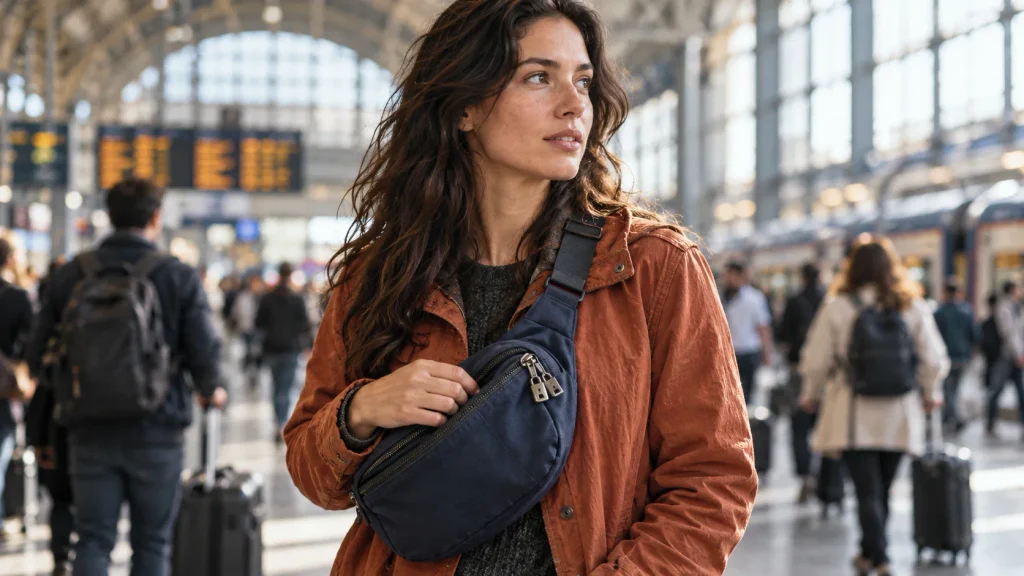
A secure crossbody bag with a reliable zipper is a practical choice for many crowded destinations. It keeps important belongings close and leaves your hands available for navigation or payments.
No bag guarantees protection from theft. The way you carry and organize it matters as much as its design.
Are crossbody bags safer than backpacks?
A crossbody bag offers a useful advantage: you can position it where you can see and control the opening. A backpack usually sits behind you, making its compartments harder to monitor in crowds.
However, a well-secured backpack can still be suitable for everyday travel. The important factors are closure quality, access points, and how much you carry.
| Bag Type | Main Advantage | Main Limitation | Best Use |
|---|---|---|---|
| Zipped crossbody bag | Easy to keep in front | Limited carrying space | Markets and sightseeing |
| Anti-theft backpack | Protected compartments and more storage | Less visible when worn behind | Full-day excursions |
| Waist bag | Compact and close-fitting | Visible access points | Short outings |
| Small shoulder purse | Convenient access | May slip or be grabbed | Low-crowd activities |
| Money belt | Conceals backup essentials | Inconvenient for frequent access | Emergency cash and documents |
Which anti-theft features are worth considering?
Some travel bags include additional features intended to make unauthorized access more difficult. These can help, although no product is completely theft-proof.
- Lockable zipper pulls: Make casual opening less convenient.
- Cut-resistant straps: Add protection against some strap-cutting attempts.
- Hidden compartments: Separate valuable items from frequently used belongings.
- Durable closures: Help prevent accidental openings.
- Comfortable adjustable straps: Make it easier to position a bag securely.
Do not assume that expensive means safer. A modest-looking bag with dependable closures may serve you better than a luxury purse.
How should you carry your bag in a crowd?
Wear your crossbody strap diagonally and position the bag across your front or slightly toward your side. Keep its zipper closed and facing inward when practical.
Avoid wrapping straps tightly around your wrist or attaching yourself to fixed objects. If someone forcefully grabs your bag, being trapped by the strap could cause an injury.
Before entering a crowded train, move a backpack to your front if space permits. You will protect its pockets while making more room for passengers behind you.
Section Takeaway: Choose a bag that stays close to your body and closes securely. Use practical organization rather than relying only on advertised anti-theft features.
How Can Women Secure Their Phone, Wallet, and Passport?
Keep essential belongings in separate, predictable locations instead of placing everything inside one wallet or pocket. This reduces the impact if one item disappears.
I recommend setting up this system before leaving your accommodation. Organizing valuables in a busy street is harder than preparing them in a quiet room.
How can you keep your phone from being stolen?
Phones are especially important during solo trips because they handle navigation, bookings, and communication. Losing one can create problems beyond the phone’s replacement cost.
These precautions make sense in crowded locations:
- Carry your phone in a zipped compartment when not using it.
- Avoid leaving it on restaurant tables or café counters.
- Step away from moving crowds before checking directions.
- Use a wrist strap or phone tether if it suits your activities.
- Enable device tracking and a strong screen lock.
- Back up essential photos and travel information.
A phone tether offers some protection against accidental drops and opportunistic grabs. However, it is not a reason to resist someone attempting a forceful robbery.
Before international travel, I also recommend saving offline maps and emergency contacts. These become useful when mobile data is unreliable.
Where should you keep cash and bank cards?
Carry only the cash you reasonably expect to need during the outing. Keep a backup payment card somewhere separate from your everyday wallet.
For example, you might organize your money like this:
- Daily wallet: One payment card and enough cash for planned purchases.
- Secondary compartment: A small emergency cash reserve.
- Accommodation safe or secure storage: A backup card and additional money, when reliable storage is available.
Avoid counting large amounts of money in public. Prepare small notes or coins before approaching ticket machines, market stalls, or transit counters.
Check whether your bank allows instant card freezing through its app. Knowing this beforehand can make a stressful incident easier to handle.
Should you carry your passport everywhere?
Carry your passport when required by local law, identification rules, transportation arrangements, or hotel procedures. Otherwise, evaluate whether a secure storage option is available.
Requirements differ between countries, so never assume a photocopy automatically replaces an original passport. Review local identification obligations before deciding.
Keep a digital copy in protected storage and a separate physical copy where practical. Neither substitutes for a valid original when authorities require one.
A money belt may help conceal essential documents during transfers. However, avoid repeatedly opening it in public, which defeats its discreet purpose.
How much should you carry during a day of sightseeing?
The simplest rule is to pack for the outing, not your entire trip. Carrying fewer valuable items reduces what you must monitor.
My suggested daily essentials are:
- A securely stored phone.
- One everyday payment card.
- A small amount of local currency.
- Required identification.
- Accommodation details and emergency contacts.
- Necessary medication.
- A compact portable charger when needed.
Section Takeaway: Protect the items that affect your identity, money, and communication. Separating daily and backup essentials can help you recover from a loss.
How Can You Stay Safe in Markets, Public Transport, and Events?
The safest approach changes depending on where you are. A crowded market creates different challenges from a busy subway station or outdoor festival.
Instead of using one rigid rule everywhere, adapt your bag position and attention to the situation.
How do you protect belongings in crowded markets?
Markets demand attention because you may be examining products, negotiating prices, and making payments. Keep your everyday wallet accessible without exposing other valuable items.
Before entering a busy shopping area:
- Close every bag compartment.
- Move your wallet into a protected pocket.
- Keep shopping cash separate from backup money.
- Check local customs for respectful photography and bargaining.
- Choose a quieter spot before rearranging your belongings.
When browsing stalls, keep your bag attached to your body. Avoid placing it on a nearby chair, bench, or merchandise counter.
Be polite when people approach you, but maintain control over your personal space. You do not have to continue conversations that make you uncomfortable.
What should women do on crowded buses and trains?
Public transportation requires extra attention when boarding, exiting, and standing near doors. These transitions can create confusion and unwanted physical contact.
The U.S. State Department’s advice for women travelers specifically highlights crowded transit as a concern for theft and harassment.
Use these precautions during your journey:
- Check your route and stop before boarding.
- Move backpacks forward when the carriage becomes crowded.
- Keep bags zipped during entry and exit.
- Avoid displaying money, jewelry, and expensive electronics.
- Stand where you can move comfortably when possible.
- Change carriages or seek staff assistance if someone behaves inappropriately.
If a carriage feels unsafe, leave at a staffed station when you can do so safely. Your comfort and physical safety matter more than staying on schedule.
How should you handle festivals and tourist attractions?
Festivals, parades, and famous attractions may produce dense crowds where movement becomes difficult. Plan how to leave before you enter the busiest area.
Arriving slightly earlier can sometimes reduce congestion, although this depends on the event. Check the organizer’s entry rules and any current crowd-control instructions.
For large events, consider these preparations:
- Identify official entrances and exits.
- Check whether large bags are permitted.
- Keep your phone charged.
- Avoid isolated shortcuts after the event.
- Choose a well-lit meeting point if traveling with new acquaintances.
- Move away if crowd pressure becomes uncomfortable.
For a day of sightseeing in Rome, Paris, or Barcelona, I would prioritize a front-worn zipped bag and offline directions. Those are practical examples rather than guarantees of safety in any city.
Pro tip: Before visiting a destination, check current guidance from the U.S. State Department and the destination’s official tourism or transport authorities.
Section Takeaway: Adjust your precautions to the environment. Boarding points, checkout counters, and dense viewing areas deserve special attention.
Which Everyday Habits Help Prevent Pickpocketing?
Small, repeated habits often provide more practical protection than carrying extra security equipment. The goal is to reduce easy opportunities for theft without feeling constantly tense.
Use a quick belongings check
Before leaving a café, train seat, or shopping stall, confirm that your essentials are still with you. A simple check can prevent accidental loss as well as detect missing items early.
I suggest checking these three things:
- Phone: Confirm that it is in its secure compartment.
- Wallet: Check the correct pocket without displaying its contents.
- Bag: Confirm the zipper is closed and the strap sits comfortably.
Do this discreetly rather than repeatedly patting hidden pockets in front of strangers. You do not want to advertise where every valuable item is stored.
Avoid looking distracted when navigating
Using maps is normal, especially in unfamiliar cities. However, stopping suddenly in a packed walkway can leave you less aware of nearby movement.
Move to the side before reviewing directions. Download your route beforehand whenever practical, and identify the correct exit before leaving a station.
Keep one hand free when navigating crowded stairs or platforms. Being able to maintain balance is more important than gripping every possession.
Be cautious with unsolicited help
Helpful strangers are common, and many interactions while traveling are entirely genuine. Still, unexpected assistance should not require surrendering your phone, wallet, or bag.
If someone insists on handling your belongings, decline politely and move toward a staffed location. Ask official personnel for help when the situation feels uncertain.
Use technology as backup protection
Technology cannot prevent every theft, but it can make lost items easier to locate or secure. Set it up before your trip rather than after something goes missing.
- Device tracking: Enable your phone’s built-in location service.
- Strong authentication: Protect sensitive apps with secure sign-in methods.
- Remote lock: Learn how to secure a missing device from another device.
- Bluetooth luggage tracker: Consider one for checked luggage or a travel bag.
- Secure cloud backup: Store important travel documents where you can recover them.
Location trackers are recovery aids, not guarantees. Their accuracy and usefulness depend on device compatibility, connectivity, and local conditions.
Never follow a tracking signal into a potentially dangerous location. Share useful information with local authorities instead.
Keep a simple emergency information card
A phone can become unavailable because of theft, damage, or battery failure. Having basic information on paper creates a useful backup.
Keep a small card with:
- Your accommodation’s name and contact number.
- A trusted emergency contact.
- Your insurer’s emergency assistance number.
- Relevant medical information you may need to communicate.
- The location of your nearest embassy or consulate, when applicable.
For additional preparation, consult the State Department’s travel crime prevention guidance.
Section Takeaway: Consistent routines reduce avoidable mistakes. Keep valuables organized, use digital safeguards, and prepare an offline backup for emergencies.
What Should You Do If Something Gets Stolen?
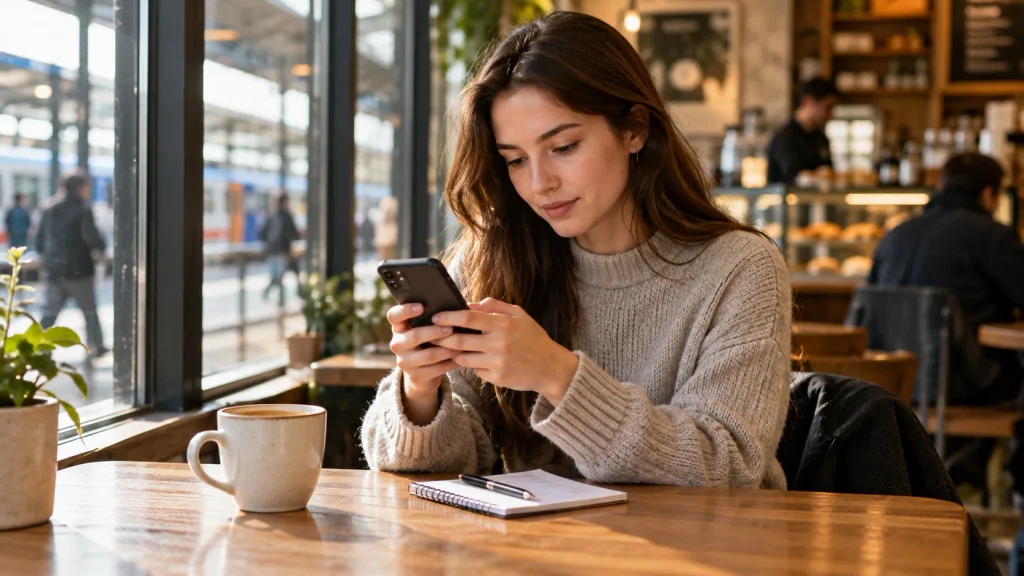
If something is stolen, move somewhere safe before taking any other action. Recovering your property is never worth risking an injury or confrontation.
Once you are safe, focus on protecting accounts, reporting the incident, and replacing important documents.
What are the first steps after a theft?
Try to remain calm and work through the essentials in order. Acting quickly is useful, but personal safety comes first.
- Move to safety: Enter a staffed business, transport office, or other secure public location.
- Assess the loss: Identify which belongings are missing.
- Secure your accounts: Freeze stolen payment cards and lock affected devices.
- Report the incident: Contact local police and request documentation when appropriate.
- Contact your insurer: Ask what evidence and deadlines apply to a possible claim.
- Request replacement documents: Contact your embassy or consulate if your passport is missing.
- Tell someone you trust: Share your situation and confirm that you are safe.
If you witness an attempted robbery, avoid physical resistance. Follow local emergency instructions and seek medical attention if anyone is injured.
What happens if your passport is stolen abroad?
Contact the relevant embassy or consulate for instructions about replacing your passport. Emergency travel documents may be available, depending on your nationality and circumstances.
You may need identification details, a photograph, a police report, or additional documentation. Exact requirements vary, so follow official consular instructions.
Keep your travel arrangements flexible until you know which document you can obtain. An emergency document may not permit every planned transit or destination.
What if your phone is stolen while traveling alone?
Use another trusted device to activate remote locking where available. Contact your mobile provider to protect the SIM or mobile account.
Prioritize financial and email accounts if the device could provide access to them. Your email account is especially important because it may control password recovery.
Do not attempt to retrieve the phone personally from an unknown address. Inform the police if the tracking information could assist an investigation.
Can travel insurance cover stolen belongings?
Some travel insurance policies cover theft of personal property, subject to exclusions, limits, and documentation requirements. Coverage differs significantly between policies.
Review these terms before departure:
- Single-item reimbursement limits.
- Restrictions for phones, electronics, and jewelry.
- Requirements for police reports.
- Rules about unattended belongings.
- Deductibles and claim deadlines.
Insurance may provide financial help, but it cannot eliminate the disruption caused by losing essential belongings.
Pro tip: Find your embassy’s emergency assistance instructions before departure. U.S. citizens can also review the official Smart Traveler Enrollment Program (STEP).
Section Takeaway: Respond to theft by protecting yourself first, securing financial and digital access, and contacting the proper authorities. Preparation makes recovery easier.
Frequently Asked Questions
1. What is the safest way for a woman to carry money in crowded places?
Keep daily spending money in a zipped wallet inside a secure bag. Store backup cash and cards separately. Avoid carrying large amounts of money or revealing the location of hidden valuables while making purchases.
2. Are anti-theft backpacks worth buying for solo travel?
An anti-theft backpack can be useful if it has dependable closures, comfortable straps, and protected compartments. However, good carrying habits remain essential. A regular backpack worn carefully may suit some travelers better than an expensive specialized option.
3. Should I wear my backpack in front on public transportation?
Wearing your backpack in front can help you monitor its openings during crowded journeys. It also prevents the bag from pressing against passengers behind you. Keep it secure without blocking exits or restricting your movement.
4. How can I protect my phone while taking pictures in busy tourist areas?
Use a secure grip or suitable phone strap, and choose a stable position away from moving crowds. Return the phone to a zipped compartment after taking photographs. Avoid standing close to traffic while concentrating on your screen.
5. Is a money belt safer than a purse?
A concealed money belt can be useful for emergency cash and important documents. A zipped crossbody purse is usually more convenient for everyday purchases. Many travelers benefit from using both for different purposes rather than relying on either alone.
6. What should I do if someone tries to grab my bag?
Prioritize your physical safety and do not struggle over the bag. Move away from danger when possible, seek assistance, and contact local authorities. Property can sometimes be replaced, but resisting a forceful theft can result in serious injury.
7. Can I enjoy crowded tourist attractions safely while traveling alone?
Yes. You can reduce common risks by securing valuables, preparing directions, staying aware of your surroundings, and avoiding uncomfortable crowd conditions. No destination is completely risk-free, so check local guidance and adjust your plans when needed.
Final Takeaway: Stay Prepared Without Letting Fear Control Your Trip
Protecting your belongings in crowded places does not require expensive gadgets or complicated routines. A zipped bag, organized essentials, and a little preparation can make everyday travel more manageable.
As a solo traveler, you deserve to experience lively markets, famous landmarks, and busy city streets with confidence. Keep your valuables secure, trust your judgment, and give yourself permission to leave situations that feel unsafe.
Before your next outing, take five minutes to organize your bag, check your phone’s security settings, and save important contacts. Small preparations can help you spend more of your trip enjoying the destination.