What Should a Solo Female Traveler Do If Someone Keeps Asking Personal Questions?
Quick Answer
If someone keeps asking personal questions while you’re traveling alone, give short, vague answers or politely refuse to answer. Never feel pressured to reveal your accommodation, daily schedule, relationship status, or whether anyone expects you. If the person ignores your boundaries, end the conversation and move toward a staffed, public place. The U.S. State Department’s guidance for women travelers also recommends firm boundaries and planning ahead for unsafe situations.
Five things to do immediately
- Keep answers general: Share broad travel details instead of exact locations or plans.
- Set clear boundaries: Say you prefer not to discuss personal information.
- Watch their reaction: Repeated pressure after a refusal deserves caution.
- Leave when uncomfortable: Move toward employees, families, or a busy public area.
- Get help if needed: Ask staff for assistance or contact local emergency services when threatened.
Remember
- You don’t owe strangers personal information. Your safety matters more than maintaining a friendly conversation.
Traveling alone has introduced me to wonderful conversations, unexpected friendships, and people who genuinely want to help. But some conversations become uncomfortable when a stranger keeps asking where I’m staying, who I’m meeting, or why I’m alone.
Knowing how to handle intrusive questions is an important part of solo female travel safety. This guide explains what to say, which warning signs matter, and how to leave without making an uncomfortable situation worse.
In This Guide
- Why Can Personal Questions Be a Safety Concern?
- How Should You Respond to Intrusive Questions?
- What Personal Information Should You Avoid Sharing?
- How Can You Tell When Questions Become a Warning Sign?
- How Can You Leave an Uncomfortable Conversation Safely?
- How Can You Protect Your Privacy While Traveling Alone?
- Frequently Asked Questions
Why Can Personal Questions Be a Safety Concern?
Personal questions aren’t automatically suspicious. Travelers regularly meet curious locals, friendly guides, fellow tourists, and people interested in other cultures.
The concern begins when someone pushes for private details or refuses to accept your boundaries. A casual conversation can become a privacy risk when it reveals where you can be found.
Friendly curiosity versus intrusive questioning
Someone asking which country you’re from may simply want to start a conversation. Asking repeatedly for your hotel room number, however, serves a different purpose.
I use a simple distinction: friendly people generally accept a vague answer. Someone who keeps pushing after I’ve declined has given me a reason to disengage.
| Question or behavior | Possible concern | Safer response |
|---|---|---|
| “Where are you from?” | Usually ordinary conversation | Share your country if comfortable. |
| “Which hotel are you staying at?” | Reveals your accommodation | “Somewhere nearby.” |
| “Are you traveling completely alone?” | May reveal limited immediate support | “I’m meeting people later.” |
| “What time will you be back?” | Reveals your movements | “I haven’t decided.” |
| Repeats questions after refusal | Disregards your boundaries | End the interaction and leave. |
Why traveling alone changes the situation
Solo travel gives you freedom, but you also make decisions without a companion beside you. That makes protecting your location and movements especially useful.
Privacy protection means controlling who learns your whereabouts, travel plans, and identifying details. It doesn’t require assuming every unfamiliar person is dangerous.
For example, a stranger might ask about your next destination while you’re waiting at a train station. You can discuss the country without sharing your exact train or departure time.
Section Takeaway: Judge the whole interaction, not one question. Repeated pressure, unwanted attention, and disregard for boundaries matter more than ordinary curiosity.
How Should You Respond to Intrusive Questions?
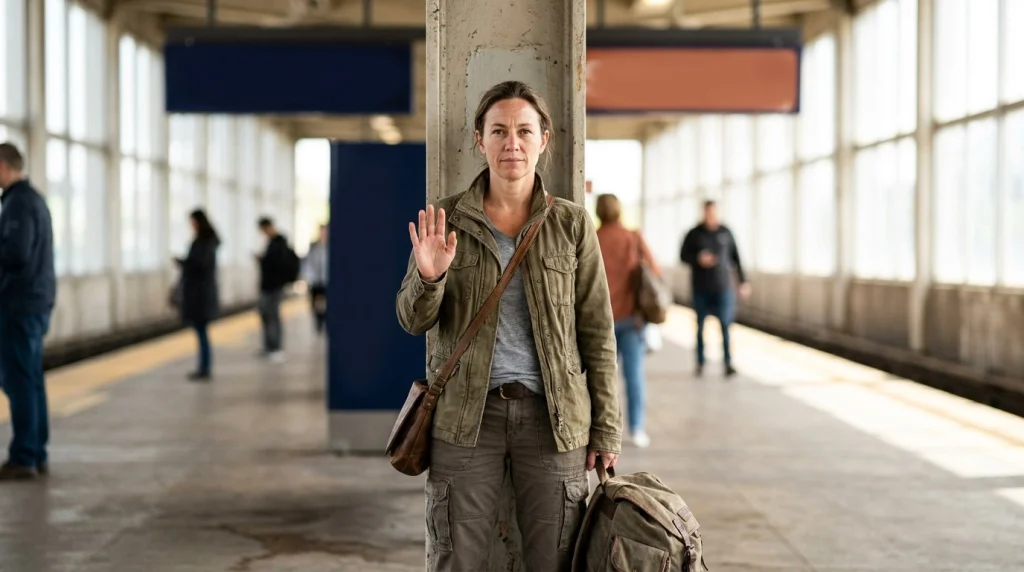
Start with a calm, short response that protects your privacy. If the questions continue, become more direct and end the conversation.
You don’t need to invent an elaborate story. A simple boundary is often easier to maintain.
Use short, general answers
Brief answers reduce the information you reveal. They also give you more control over whether the conversation continues.
- “Where are you staying?” — “Around the city center.”
- “Are you here alone?” — “I’m meeting some people later.”
- “What’s your plan tomorrow?” — “I’m still figuring it out.”
- “Do you have a boyfriend?” — “I keep my personal life private.”
- “What’s your room number?” — “I don’t share that information.”
- “Can I have your phone number?” — “No, thank you.”
If you’re uncomfortable implying that you’re meeting someone, simply say you prefer not to answer. You have no obligation to provide any explanation.
Set a firm boundary when questions continue
A boundary is a clear statement about what you will or won’t discuss. It doesn’t need to sound angry or apologetic.
These phrases work in many everyday travel situations:
- “I’d rather not share that.”
- “That’s personal.”
- “I’m not comfortable answering.”
- “I’ve already said no.”
- “I’m ending this conversation now.”
- “Please leave me alone.”
Use whichever phrase feels safest in the moment. A polite tone may help in a harmless misunderstanding, but firmness is appropriate when someone ignores you.
Stop explaining yourself
One common mistake is giving longer explanations to avoid seeming rude. That can create more opportunities for follow-up questions.
For example, saying you can’t share your hotel because you’re traveling alone reveals information you meant to protect. “I don’t share where I’m staying” closes the topic more effectively.
You also don’t need to apologize repeatedly. State your boundary once, repeat it if useful, and leave when possible.
What if you don’t speak the local language?
Learn a few basic phrases before arriving at a destination. Focus on refusing politely, asking for help, and requesting that someone stop following you.
- “No, thank you.”
- “Please stop.”
- “I need help.”
- “Please call the police.”
- “Where is the nearest staffed information desk?”
A translation app can help, but keep situational awareness while using your phone. Don’t remain in an unsafe conversation just to translate every sentence.
Section Takeaway: Short answers protect your privacy. Clear boundaries, followed by action when necessary, are more useful than detailed excuses.
What Personal Information Should You Avoid Sharing?
A solo female traveler should generally avoid sharing precise accommodation details, real-time movements, personal contact information, and financial information with strangers. These details can make you easier to locate or contact later.
Your accommodation and room information
Keep your hotel’s name, street address, room number, and access details private unless someone legitimately needs them. This applies to hotels, hostels, guesthouses, and vacation rentals.
For a hostel, a shared accommodation property, don’t assume everyone in a common area needs to know your room or bed assignment. Speak to reception privately when discussing access problems.
Your exact daily itinerary
It’s fine to say you’re exploring museums or visiting nearby neighborhoods. Avoid sharing exact departure times, transport bookings, or places where you expect to be alone.
Be especially careful when someone presses for your return time. There is rarely a good reason for an unfamiliar person to know when your accommodation will be empty.
Your relationship status and travel companions
You don’t have to answer whether you’re single, married, or traveling without friends. These questions may be harmless in some conversations, but they’re still personal.
Give a neutral response instead of debating why someone wants to know. “I keep that private” works without revealing anything else.
Your social media and contact information
A social media account can reveal more than your first name. Public posts may expose your lodging, future plans, workplace, and contacts.
Before accepting a new connection, consider whether the account shows your current location. Decline requests that make you uncomfortable.
Your financial details and documents
Don’t disclose how much money you’re carrying, your travel budget, or where you keep your passport. Never show private booking confirmations to satisfy someone’s curiosity.
- Keep bank cards and payment information out of casual conversations.
- Show identification only when there is a legitimate requirement.
- Protect booking reference numbers and reservation details.
- Keep passport photographs and identification scans secure.
- Never share passwords, verification codes, or account access.
Hotel staff and legitimate authorities may sometimes need specific personal information. Verify their identity and the reason for the request before sharing it.
Section Takeaway: Share general experiences, not information that reveals where you sleep, where you’ll be, or how someone can access your accounts.
How Can You Tell When Questions Become a Warning Sign?
Questions become more concerning when someone repeatedly ignores your refusal, tries to isolate you, or follows your movements. No single behavior proves harmful intent, but patterns deserve attention.
They keep asking after you’ve refused
Someone who respects your privacy can accept an answer such as “I’d rather not say.” Repeating the same question after that answer shows disregard for your boundary.
You don’t need to determine their motive before leaving. Their refusal to stop is sufficient reason to end the conversation.
They ask questions designed to locate you
Be cautious if someone seeks a detailed schedule or wants to know exactly where you’ll be staying. The concern increases when several location-related questions appear together.
For example, asking about your hotel, room floor, and breakfast time in succession creates a more intrusive pattern than asking which part of town you’re visiting.
They try to separate you from other people
An unfamiliar person may suggest moving somewhere quiet to continue talking. If you’re uneasy, stay in a public setting and decline.
Be particularly cautious about accepting an unexpected ride or invitation to an isolated area. Choose transport and meeting places independently.
They react badly when you say no
Anger, insults, threats, or attempts to guilt you into answering are warning signs. You don’t need to win an argument or persuade the person that your boundary is reasonable.
If their behavior escalates, move toward help immediately. Prioritize distance over continuing the discussion.
They follow you or block your exit
Repeatedly appearing wherever you go, following after you’ve asked someone to stop, or physically blocking your way warrants immediate action. Move toward employees or a populated area rather than returning directly to your accommodation.
Tell someone exactly what is happening. “That person is following me, and I need help” is clearer than a vague request for assistance.
Pro tip: Before traveling, review official U.S. travel advisories or equivalent government guidance for your destination. Check local emergency contacts and reporting procedures.
Section Takeaway: You don’t need proof that someone intends harm. Repeated boundary violations, unwanted following, and attempts to isolate you justify leaving and seeking help.
How Can You Leave an Uncomfortable Conversation Safely?
End the interaction and move to a location where you can get support. The safest exit depends on whether the person is merely persistent, threatening, or actively following you.
Step 1: End the conversation clearly
Use a short statement such as “I need to go now.” Avoid lengthy explanations or revealing your destination.
If the person blocks your exit, don’t try to negotiate indefinitely. Seek nearby help and call local emergency services if you’re in danger.
Step 2: Move toward a staffed public place
Look for a hotel lobby, open business, transport information desk, or another place with employees. A crowded area can help, but direct assistance from staff is often more useful.
Don’t walk toward your hotel or rental if you believe someone is following you. That could reveal the location you’ve been trying to protect.
Step 3: Ask for specific assistance
Identify a staff member and describe what you need. Clear requests reduce confusion, especially when you don’t speak the same language fluently.
- “Someone keeps following me. Can I stay here while you call security?”
- “That person won’t leave me alone. Could you help me contact the police?”
- “I don’t feel safe leaving alone. Can you help arrange a licensed taxi?”
- “Please don’t tell anyone I’m here or where I’m staying.”
Step 4: Contact someone you trust
If it is safe, message a trusted contact with your location and a brief explanation. Share your live location through a trusted app when useful.
Make clear whether you’re simply asking someone to check on you or need them to contact emergency services. Agree on an immediate next step.
Step 5: Get emergency help when necessary
If someone threatens you, blocks your escape, attempts to force you somewhere, or continues following you, contact local emergency services. Follow the instructions of the responding authorities.
Emergency numbers differ across destinations. Check the number before your trip and save it where you can access it offline.
If an assault occurs, prioritize getting somewhere safe and obtaining medical care. You can also seek assistance from your embassy or consulate when abroad.
What if the person is your taxi driver?
Don’t share where you’re staying unless your driver needs an accurate destination. You may choose a nearby public drop-off point if that is safe and practical.
If the driver makes you uncomfortable, don’t argue while the vehicle is moving. Ask to stop at a busy, well-lit, staffed location and seek assistance.
Use the ride application’s emergency or trip-sharing features when available. If you’re in immediate danger, contact local emergency services.
What if the person works at your hotel or hostel?
Hotel employees sometimes need legitimate booking details, but repeated questions about your relationships or personal movements aren’t necessary for routine service. You can decline them.
If a staff member behaves inappropriately, ask for a manager or another employee. Consider changing accommodation when you no longer feel safe.
Document concerning conduct when it is safe to do so. Keep any messages, names, or booking records that could help you make a report.
Section Takeaway: Don’t prioritize politeness over leaving. Find staffed assistance, protect your accommodation location, and seek emergency help when threats or following occur.
How Can You Protect Your Privacy While Traveling Alone?
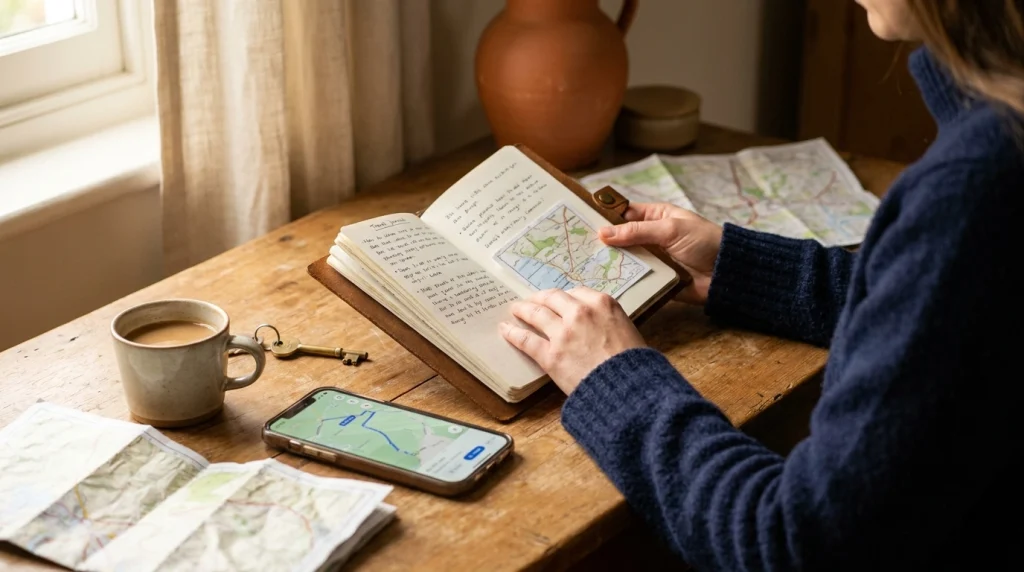
A few simple habits can help you handle unwanted questions without withdrawing from enjoyable travel experiences. The goal is to maintain boundaries while still enjoying appropriate social connections.
Prepare your responses before leaving
Decide which subjects you’re comfortable discussing with new people. Practice two or three short answers until they feel natural.
My preferred approach is to have a friendly answer, a firm answer, and an exit phrase ready. That gives me options without needing to improvise under pressure.
- Friendly: “I’m keeping my plans flexible.”
- Firm: “I don’t share personal details.”
- Exit: “I’m leaving now. Take care.”
Choose your social settings thoughtfully
Hostel activities, guided tours, cooking classes, and group outings can offer opportunities to meet people. Choose reputable organizers and public meeting locations.
Meeting someone through a structured activity doesn’t automatically make them trustworthy. Keep the same privacy boundaries you would use elsewhere.
Limit real-time location sharing
Posting photos while you’re still at a quiet location can reveal where someone might find you. Consider posting after you’ve left instead.
Review social media privacy settings before your trip. Check whether location tags, account biographies, or public stories reveal more than you intend.
Create a simple safety check-in plan
Choose one trusted contact who knows your general itinerary and accommodation details. Agree on how frequently you’ll check in and what they should do if they can’t reach you.
For example, you might arrange one message each evening. A missed message shouldn’t automatically trigger panic, so agree on follow-up steps beforehand.
Know who to contact at your destination
Save your accommodation’s main contact number, local emergency services, and your country’s embassy or consulate information. Keep an offline copy in case your phone loses service.
The UK government’s foreign travel advice provides country-specific guidance about safety, local risks, and practical travel preparation.
For U.S. citizens, the Smart Traveler Enrollment Program (STEP) offers a way to receive destination updates and help the embassy contact you during emergencies.
Stay open to genuine connections
Protecting your privacy doesn’t mean refusing every conversation. Some of my favorite parts of solo travel come from exchanging stories with people I meet along the way.
The difference is choice. You can be friendly without disclosing personal details, and you can leave when a conversation stops feeling comfortable.
Section Takeaway: Prepare boundaries, protect real-time location details, and make a reliable check-in plan. Good safety habits should support your independence, not take away the joy of traveling alone.
Frequently Asked Questions
Is it rude to refuse personal questions while traveling alone?
No. You have the right to keep your accommodation, relationships, finances, and travel plans private. A brief response such as “I’d rather not share that” is reasonable. If someone becomes upset or keeps pressuring you, you can end the conversation without further explanation.
Should I tell strangers I’m traveling with friends even if I’m alone?
You can choose a vague or protective response when it feels safer, but you don’t need to invent a complicated story. “I’m meeting people later” or “I keep my plans private” may be sufficient. Focus on leaving if the person becomes persistent or threatening.
What if someone asks for my hotel name or room number?
Don’t give your room number or exact accommodation details to an unfamiliar person. You can say you’re staying nearby without naming the property. If someone continues asking, stop responding and move somewhere you can get assistance.
How do I know whether someone is being friendly or suspicious?
Look at their behavior rather than one question. Friendly curiosity usually allows you to change subjects or decline politely. Repeated pressure, attempts to isolate you, demands for precise location details, or following you after refusal are reasons to disengage.
What should I do if someone follows me after asking personal questions?
Don’t lead them directly to your accommodation. Move toward a staffed public location and tell someone you’re being followed. Ask for security or police assistance, and contact local emergency services if you’re threatened or unable to get away safely.
Should I give a stranger my Instagram instead of my phone number?
Not necessarily. A public social media profile can reveal your location, travel schedule, personal relationships, and identifying information. Check your privacy settings before sharing an account. You can also decline to exchange contact details entirely.
Can I still meet new people safely as a solo female traveler?
Yes. You can enjoy conversations, group tours, social activities, and new friendships while keeping sensitive details private. Choose comfortable public settings, respect your own boundaries, and avoid feeling obligated to continue interactions that make you uneasy.
Final Takeaway: Your Privacy Is Worth Protecting
If someone repeatedly asks personal questions during a solo trip, you don’t need to prove they’re dangerous before setting a boundary. Give a short answer, refuse details you want to keep private, and leave if the pressure continues.
Traveling alone should give you freedom to explore on your own terms. Protecting your information helps you enjoy that freedom with greater confidence.
Before your next solo trip, choose three phrases you feel comfortable using when a stranger becomes intrusive. Practice them, save your emergency contacts, and remember that you’re always allowed to end a conversation.