How Should a Woman Handle Catcalling While Traveling Alone?
Quick Answer
How should a woman handle catcalling while traveling alone? Prioritize your safety rather than trying to correct the harasser. You can ignore unwanted comments, respond firmly when safe, or move toward a busy, staffed location. If someone follows, blocks, threatens, or touches you, seek immediate help. Review the U.S. State Department’s guidance for women travelers before your trip.
What to do immediately
- Keep moving: Don’t feel obligated to stop, smile, explain yourself, or answer.
- Assess your surroundings: Notice nearby businesses, staff, crowds, and safe exits.
- Set boundaries: Use a short, firm response if speaking feels safe.
- Find support: Approach a shop employee, hotel receptionist, transit worker, or security officer.
- Escalate when necessary: Seek emergency assistance if someone follows, threatens, grabs, or traps you.
Remember
- Catcalling isn’t your fault. Your clothing, friendliness, nationality, and decision to travel alone never justify harassment.
One difficult part of solo female travel is handling unwanted attention when nobody you know is nearby. Even a short walk from a train station can feel uncomfortable when a stranger starts shouting personal comments.
I approach these situations with one priority: getting somewhere safe without feeling pressured to prove anything. This guide explains how to respond, recognize escalation, ask for help, and protect your confidence while traveling alone.
In This Guide
- What Counts as Catcalling While Traveling Alone?
- How Should You Respond to Catcalling in the Moment?
- What Should You Do if Catcalling Becomes Threatening?
- How Can You Handle Catcalling in Different Travel Settings?
- Can You Reduce Unwanted Attention While Traveling Solo?
- How Can You Recover Your Confidence After Harassment?
- Frequently Asked Questions
What Counts as Catcalling While Traveling Alone?
Catcalling is unwanted attention directed at someone in a public place, often through whistles, sexual remarks, gestures, or shouted comments. It becomes street harassment when the behavior is intrusive, degrading, intimidating, or persistent.
For a woman traveling alone, the uncertainty can be especially stressful. You might not understand the language or know how bystanders will react.
What Does Street Harassment Look Like?
Not every uncomfortable encounter looks the same. Some people make one remark and disappear, while others continue despite obvious disinterest.
- Whistling: A stranger whistles repeatedly or makes kissing sounds as you pass.
- Sexual comments: Someone shouts about your body or appearance.
- Unwanted questions: A person repeatedly asks whether you’re alone, where you’re staying, or if you have a boyfriend.
- Obstructive behavior: Someone steps into your path or tries to prevent you from leaving.
- Following: A person continues approaching or moving behind you after you’ve disengaged.
- Nonconsensual contact: Someone touches, grabs, or corners you.
The last three examples deserve particular attention. They may indicate a situation that needs immediate help rather than an ordinary boundary-setting response.
Is Catcalling Different From Friendly Conversation?
The difference often comes down to respect, context, and whether the person accepts your lack of interest. A polite question from a shopkeeper isn’t automatically harassment.
However, repeated personal questions after you’ve declined engagement are different. You don’t need to decide whether someone had bad intentions before walking away.
Why Can Catcalling Feel More Intimidating Abroad?
Travel removes many familiar reference points. You may not know which businesses are open, which streets connect, or whom to contact.
Language barriers can also make intentions harder to judge. That uncertainty can increase stress even when an encounter never becomes physically threatening.
There’s another complication: cultural expectations about friendliness and public interaction vary. Understanding those differences can help you interpret situations without excusing harassment.
My rule is simple. You can respect local customs while maintaining your boundaries.
How Should You Respond to Catcalling in the Moment?
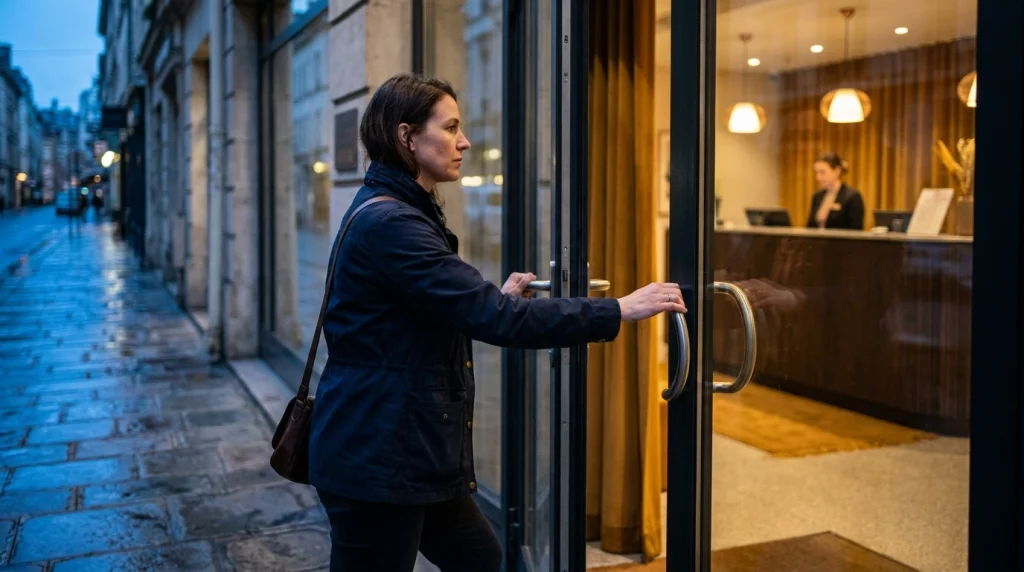
The safest response to catcalling depends on the person’s behavior, your surroundings, and your ability to leave. Ignoring a comment is often reasonable, but there isn’t one universally safe reaction.
I prefer choosing from several responses rather than relying on a single script. That flexibility matters when you’re traveling without a companion.
1. Ignore the Comment When Disengagement Feels Safe
If someone calls out from across a busy street, you may decide to continue walking. You aren’t required to acknowledge what they said.
Keep a comfortable pace and remain aware of your route. Avoid becoming so focused on appearing unaffected that you miss changes around you.
Ignoring someone isn’t a promise that they will stop. If their behavior escalates, change your response.
2. Use a Firm Boundary When It Feels Safe
Sometimes a brief statement makes your intentions clear. Keep it short and avoid turning the exchange into a debate.
- “No, thank you.” Useful for persistent but nonthreatening invitations.
- “Please leave me alone.” A direct request to stop engaging.
- “Stop following me.” A clear statement when someone continues behind you.
- “Don’t touch me.” A firm boundary when someone reaches toward you.
- “I need help.” A direct request to nearby staff or bystanders.
You don’t have to deliver these phrases with perfect confidence. A brief response followed by moving toward safety is enough.
3. Move Toward a Safer Public Place
When attention feels threatening, prioritize reaching a location with staff and other people. A hotel lobby or staffed store can provide a place to request assistance.
Choose a location where someone can actively help you. A crowded street alone doesn’t guarantee protection.
If you’re concerned about being followed, avoid heading directly to your accommodation or entering an isolated alley. Instead, approach a staffed location and explain what is happening.
4. Ask a Specific Person for Help
A clear request can be more useful than expecting everyone nearby to recognize the situation. Identify an employee, security guard, or other person positioned to assist.
For example, say, “That person is following me. Can I stay here while you call security?”
Support organizations such as Right To Be describe ways witnesses can respond to harassment. Their approach includes getting help from someone with authority rather than confronting a harasser unnecessarily.
Which Response Should You Choose?
Use this comparison as a practical decision aid, not a guarantee of safety. Your judgment about the immediate situation matters most.
| Situation | Possible response | Main priority |
|---|---|---|
| One shouted remark | Disengage and continue walking when safe | Avoid unnecessary interaction |
| Repeated unwanted questions | Decline briefly and move toward others | Maintain boundaries |
| Someone walks behind you persistently | Enter a staffed location and request help | Get support and avoid isolation |
| A person blocks your path | Avoid confrontation where possible; seek an exit and help | Create distance |
| Threats, grabbing, or attempted assault | Call for immediate assistance and emergency services | Immediate physical safety |
Section Takeaway: You don’t owe a harasser a response. Choose whichever action offers the clearest path to safety.
What Should You Do if Catcalling Becomes Threatening?
If catcalling turns into following, threats, unwanted touching, or blocked movement, treat it as a possible safety emergency. Stop focusing on social politeness and prioritize getting help.
Don’t assume that every verbal remark will lead to violence. Still, take changes in behavior seriously.
What if Someone Starts Following You?
Someone walking in the same direction doesn’t automatically mean they’re following you. However, persistent attempts to approach after you’ve disengaged deserve caution.
Use the following steps when you suspect deliberate following:
- Stay on a populated route: Avoid deserted shortcuts and poorly lit passages.
- Head toward staff: Enter a hotel, restaurant, or shop where you can request help.
- Avoid revealing your accommodation: Don’t lead a suspected follower directly to your room or rental.
- Ask for assistance: Tell staff what’s happening and request security or local emergency help.
- Contact someone you trust: Share your location when doing so is safe.
If you’re already in immediate danger, don’t delay emergency assistance to complete every step. The priority is reaching safety.
What if Someone Grabs or Touches You?
Unwanted touching is not something you need to excuse as a cultural misunderstanding. Move away when possible and clearly seek help.
Shout a direct phrase such as “Don’t touch me!” if that helps attract attention. If necessary, focus on escaping rather than arguing.
Once safe, consider medical care, police assistance, and support from your embassy or consulate. Those options may be especially important after an assault.
Should You Record a Harasser?
Recording may help document an incident, but it can also increase danger. Local privacy and recording laws differ between countries.
Never risk your immediate safety to obtain video evidence. If you’re safe afterward, you can write down details such as:
- The date, approximate time, and location.
- A description of the person or vehicle.
- Any threats or relevant statements.
- The names of witnesses or staff members who helped.
- Available evidence, preserved without public posting.
If you report the incident, ask the appropriate local authority how to provide evidence. Avoid uploading identifiable footage publicly without understanding applicable laws and privacy risks.
Who Can Help in an Emergency Abroad?
Local emergency services are normally the first point of contact when you’re in immediate danger. Your accommodation, transport operator, or embassy may provide additional assistance.
Before traveling, save these contact details:
- Local police or emergency service number.
- Accommodation’s reception and emergency contact.
- Your country’s nearest embassy or consulate.
- A trusted contact at home.
- Your travel insurer’s emergency assistance line, if applicable.
The U.S. State Department provides destination-specific travel guidance and consular information. Its emergency procedures and available services depend on your circumstances and nationality.
Pro tip: Verify emergency numbers and reporting procedures through official destination advisories before departure. Don’t assume that the emergency number used at home will work abroad.
Section Takeaway: Following, threats, blocked exits, and physical contact call for a different response than an isolated comment. Seek help promptly rather than waiting for further escalation.
How Can You Handle Catcalling in Different Travel Settings?
Your surroundings affect which responses are practical. A busy train, quiet road, and hotel entrance each present different choices.
I recommend having one simple exit strategy for each setting on your itinerary. You don’t need an elaborate plan, just a realistic next move.
On Public Transportation
Trains and buses can create uncomfortable situations because movement is limited. Your goal is to reach a safer position without becoming trapped in an argument.
- Move closer to other passengers or staff when possible.
- Use any official reporting or emergency communication system provided.
- Change seats or carriages if you can do so safely.
- Ask a transit worker or driver for assistance.
- Report threatening behavior to transit security or police.
Some transport networks provide women-only spaces or dedicated reporting channels. Check official operator information rather than assuming these facilities exist everywhere.
In Markets and Tourist Areas
Markets often involve sales pitches, bargaining, and personal questions. That can make unwanted attention harder to distinguish from ordinary commercial interaction.
You’re allowed to decline a conversation without explaining yourself. A simple “No, thank you” followed by walking away may be sufficient.
Avoid sharing your accommodation address, full itinerary, or whether you’re completely alone. A stranger doesn’t need those details to sell you a souvenir.
If a vendor becomes aggressive, seek help from market management or nearby staff. Don’t feel pressured to purchase something to end an uncomfortable interaction.
While Walking Alone at Night
Nighttime can make finding help more difficult, especially when shops have closed. Plan your return route and transportation before going out.
- Choose routes with functioning lighting and open businesses.
- Consider a reputable booked ride when walking feels unsafe.
- Check the vehicle and driver information before entering.
- Share ride details with a trusted person when useful.
- Keep enough phone battery to navigate and contact help.
Don’t assume a busy nightlife district is always safe. Crowds can provide witnesses, but they can also make it harder to identify a particular person.
Inside Taxis or Ride-Hailing Vehicles
Unwanted comments from a driver can feel especially uncomfortable because you’re inside their vehicle. You may also be unfamiliar with the route.
Use in-app safety features when available, including trip sharing and emergency support. Don’t rely on an app feature without confirming it’s offered locally.
If you feel unsafe, request a stop at a staffed, public location when practical. If the driver threatens you or refuses to let you leave, seek emergency assistance.
Near Your Hotel or Hostel
A secure accommodation entrance is useful, but sharing your room number or check-in details with strangers creates avoidable exposure. Keep those details private.
If someone repeatedly waits near your accommodation, tell reception or management. Ask whether they can assist with a safe entrance, transport, or contacting authorities.
You may also request a room change or alternative accommodation if the situation makes you feel unsafe. Your comfort and security matter more than maintaining the original booking.
Section Takeaway: Match your response to the setting. Know where staff, exits, and official assistance are before you need them.
Can You Reduce Unwanted Attention While Traveling Solo?

You can take precautions that improve your safety options, but you cannot guarantee that strangers won’t harass you. Responsibility always belongs to the person choosing to harass.
The aim of preparation isn’t to make you invisible. It’s to make getting support and leaving an uncomfortable situation easier.
Research Local Customs Without Blaming Yourself
Before visiting a destination, learn about public behavior, clothing expectations, transport, and local attitudes toward solo travelers. These details can help you avoid misunderstandings and plan comfortably.
The UK Foreign, Commonwealth & Development Office travel advice provides country-specific safety guidance and information about local laws and customs.
Clothing choices should reflect your comfort, the weather, and any relevant legal or cultural requirements. No outfit makes someone responsible for another person’s harassment.
Choose Accommodation With Practical Safety Features
A comfortable solo stay involves more than attractive photos. Consider how easily you can reach your accommodation and get assistance.
- Reception access: Check whether staff are available during your expected arrival hours.
- Transportation: Look at airport connections and late-night options.
- Entrance security: Review information about locks and building access.
- Recent guest reviews: Look for consistent feedback on location and staff responsiveness.
- Arrival planning: Arrange clear directions before reaching an unfamiliar neighborhood.
A lower room rate isn’t always worth complicated late-night access. Sometimes paying for a more convenient location improves the entire trip.
Prepare Helpful Local Phrases
Knowing a few simple phrases can make asking for assistance easier. Save accurate translations on your phone for offline use.
- “Please leave me alone.”
- “I don’t need help.”
- “Where is the nearest police station?”
- “Please call security.”
- “This person is following me.”
- “I need help now.”
Practice their pronunciation if you’ll be somewhere you don’t speak the local language. You can also show the translated phrase to staff.
Build a Simple Safety Plan Before Going Out
A useful plan should take only a few minutes. It should cover where you’re going, how you’ll return, and whom you’ll contact.
- Save your accommodation’s location offline.
- Identify a reliable return transport option.
- Check whether the route passes through isolated areas.
- Charge your phone and carry a suitable power bank.
- Save local emergency and accommodation contact details.
- Share your general plans with someone you trust when appropriate.
You don’t need to broadcast your live location continuously or post every movement online. Choose a privacy-conscious check-in routine that fits your trip.
Should You Carry Personal Safety Devices?
A whistle or personal alarm may help draw attention in some situations. Neither guarantees protection or replaces awareness and access to emergency help.
Before packing defensive equipment, check destination and airline restrictions. Products such as pepper spray may be illegal or restricted in certain places.
Pro tip: Confirm local regulations and current advisories using official government sources. As of 2026, don’t assume online advice from an older trip report still reflects current rules.
Section Takeaway: Prevention means preparing practical options, not controlling another person’s behavior. Research, accessible support, and a flexible itinerary can make difficult moments easier to manage.
How Can You Recover Your Confidence After Harassment?
Feeling angry, shaken, embarrassed, or frightened after harassment is understandable. Even when an encounter ends quickly, it may affect your confidence for the rest of the day.
Solo travel should provide freedom, not constant pressure to appear fearless. You can change your plans and still enjoy a meaningful trip.
Give Yourself Space to Feel Upset
You don’t need to pretend an incident was harmless. Take time in a place where you feel secure before continuing.
A quiet café, accommodation lounge, or supportive phone conversation may help. Focus first on feeling physically safe.
It’s also common to replay your response afterward. You may wonder whether you should have shouted, ignored the person, or asked for help sooner.
Remember that you were making decisions with limited information. You don’t need to judge yourself against an imagined perfect response.
Talk to Someone You Trust
Sharing what happened can help you process the experience. You might contact a friend, relative, travel companion, or trusted member of a solo travel community.
You can be specific about the support you need. For example, you may want someone to listen rather than offer solutions immediately.
If the incident involved assault or you’re struggling with persistent distress, consider professional support. Your travel insurer or accommodation may help identify available services.
Change Your Plans Without Feeling Defeated
You don’t have to revisit the same street or complete an activity because it appears on your itinerary. Your plans can change with your comfort level.
Consider a guided excursion, daytime visit, or trusted transportation service instead. These alternatives can let you continue exploring without forcing an uncomfortable situation.
For example, imagine you’ve planned a 30-minute evening walk through an unfamiliar district. After an upsetting encounter, choosing a daytime guided tour is a reasonable adjustment.
The original plan isn’t more important than your well-being. Flexibility is a useful solo travel skill.
Can You Still Enjoy Solo Travel After Being Catcalled?
Yes, although you may need time to regain confidence. One uncomfortable encounter doesn’t define every person or every experience in a destination.
At the same time, don’t pressure yourself to dismiss repeated harassment. If a place consistently feels unsafe, changing accommodation or leaving early can be appropriate.
Try smaller, manageable outings when you’re ready. A familiar café or well-reviewed daytime activity may help rebuild your sense of independence.
Section Takeaway: Your reaction deserves respect, and you control how your trip continues. Adjusting your itinerary can be a confident decision rather than a setback.
Frequently Asked Questions
1. Should a woman ignore catcalling while traveling alone?
Ignoring catcalling can be reasonable when the person makes a passing remark and disengagement feels safe. However, ignoring someone isn’t always enough. If the behavior becomes persistent, threatening, or physically intrusive, move toward a staffed location and seek assistance.
2. Is it safe to confront someone who catcalls you?
Confrontation can sometimes escalate a situation, especially in an unfamiliar location. A brief boundary may be appropriate when you feel safe, but you aren’t required to confront anyone. Prioritize your ability to leave, access support, and avoid unnecessary conflict.
3. What should I do if a man follows me while traveling alone?
Move toward a populated, staffed location and ask for help. Avoid leading a suspected follower to your accommodation or entering an isolated area. Contact local emergency services if you face threats, blocked movement, or immediate danger.
4. Does dressing modestly prevent catcalling abroad?
No clothing choice can guarantee freedom from harassment. Understanding local clothing norms may help you plan appropriately, especially where particular dress requirements exist. However, responsibility for catcalling always rests with the person engaging in the behavior, never the traveler.
5. Should I report street harassment while traveling?
Reporting may be appropriate when someone threatens, follows, touches, or assaults you. Procedures and legal definitions vary by country. If you choose to report, document the incident when safe and contact local authorities or your embassy for guidance.
6. How can I ask for help if I don’t speak the local language?
Use offline translations of short emergency phrases and approach staff at a hotel, shop, or transport station. Show a written message describing the problem. Before your trip, save emergency contacts and learn how to request police or security assistance locally.
7. Can repeated catcalling affect solo travel confidence?
Yes. Repeated unwanted attention may cause anxiety, frustration, or reluctance to explore alone. Give yourself time to recover and discuss the experience with someone supportive. Changing your itinerary or seeking professional help when needed doesn’t make you less independent.
Final Thoughts: Your Safety Matters More Than Being Polite
Handling catcalling while traveling alone isn’t about finding the perfect response. It’s about recognizing your choices and protecting your ability to move safely.
Sometimes that means ignoring a remark. Other times, it means setting a clear boundary, entering a staffed business, or contacting emergency services.
You can be curious, friendly, and open to new experiences while remaining firm about personal boundaries. Solo travel should never require you to tolerate harassment to prove you’re adventurous.
Before your next outing, save your emergency contacts, review your route, and identify where you could ask for help. With a practical plan, you’ll be better prepared to respond confidently when something unexpected happens.