What Personal Information Should a Woman Avoid Sharing With Strangers While Traveling?
Quick Answer
A woman traveling alone should avoid sharing her hotel name or room number, exact location, daily itinerary, transportation details, financial information, identity documents, and personal contact information with strangers. She should also be careful about revealing that nobody knows where she is or when she will return. The U.S. State Department’s women traveler guidance recommends keeping accommodation details private.
Personal information to protect
- Accommodation details: Never reveal your room number, access code, or exact sleeping location to someone you’ve just met.
- Travel schedule: Keep future destinations, departure times, and daily movements private.
- Live location: Avoid public real-time location updates or identifiable hotel photographs.
- Financial information: Protect your banking details, card numbers, passwords, and available cash.
- Personal identity: Don’t send passport photographs, identification numbers, or your home address to casual acquaintances.
- Private contacts: Be selective about sharing your personal phone number, social profiles, and family information.
One rule to remember
- Share details based on need, not friendliness: Give verified service providers necessary information, trusted contacts your safety plan, and new acquaintances only what feels appropriate.
Knowing what personal information a woman should avoid sharing with strangers makes solo travel safer without making every conversation suspicious. I think of privacy as a way to stay independent while still enjoying the people I meet.
The challenge is deciding where friendly conversation ends and unnecessary exposure begins. This guide explains which details deserve protection, how to answer intrusive questions, and what to do after oversharing.
In This Guide
- What Personal Information Should You Keep Private?
- Why Does Personal Privacy Matter for Solo Female Travelers?
- How Can You Answer Personal Questions Without Being Rude?
- What Should You Avoid Sharing on Social Media?
- Who Should Know Your Real Travel Details?
- What Should You Do If You’ve Shared Too Much?
- Frequently Asked Questions
What Personal Information Should You Keep Private?
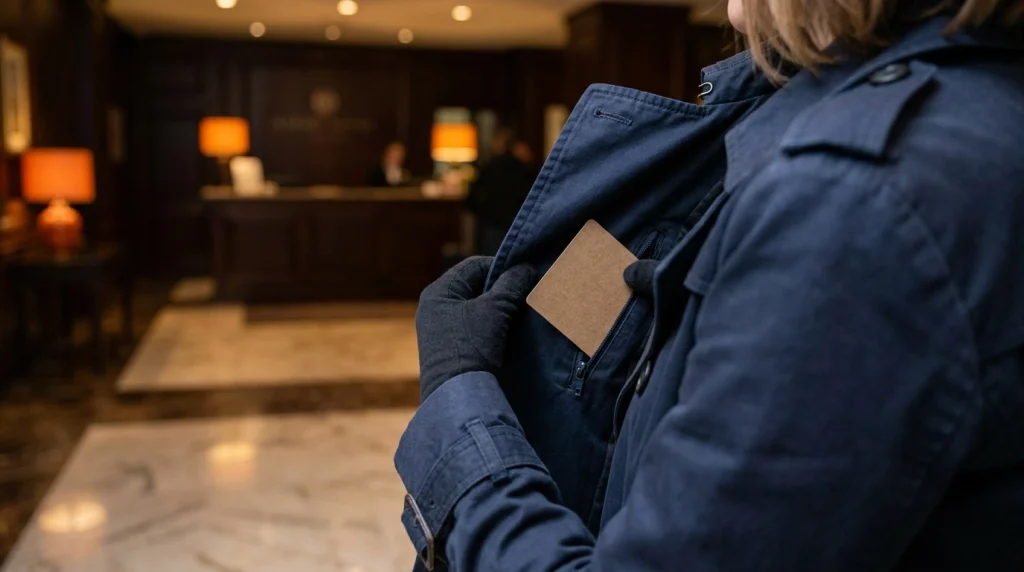
The most important information to protect is anything that helps an unfamiliar person locate, identify, contact, or financially exploit you. That includes seemingly harmless details when someone combines them.
You don’t need to hide everything about yourself. The goal is to avoid giving strangers enough information to predict your movements or bypass your boundaries.
1. Your hotel name, room number, and accommodation address
Where you sleep deserves greater privacy than where you spend an afternoon sightseeing. A stranger generally doesn’t need to know your hotel’s name, room number, or apartment entrance code.
Be especially careful when someone asks whether you’re staying in a private room. You can enjoy a conversation without discussing your sleeping arrangements.
- Don’t show strangers your room key packet or door-access code.
- Avoid saying your room number aloud in a crowded lobby.
- Meet new acquaintances in public areas rather than your room.
- Ask reception to protect your room information if someone inquires about you.
- Never give a casual acquaintance permission to collect a replacement room key.
Hotels and verified accommodation providers may legitimately need your identity and booking details. That doesn’t make the same information appropriate to share with another guest.
2. Your exact itinerary and future travel plans
Strangers don’t need a complete description of your next three days. Sharing exact departure times, routes, and destinations can make your movements predictable.
Imagine chatting with another traveler over coffee. Saying you’re exploring local museums is different from naming your next hotel and the train you’ll take tomorrow morning.
- Keep specific flight and train numbers private unless there’s a practical reason to share them.
- Avoid revealing when your accommodation will be empty.
- Don’t share the exact route you’ll walk alone at night.
- Keep upcoming transfers and meeting locations between you and relevant people.
You can discuss destinations generally. Someone doesn’t need your reservation confirmation to recommend a good restaurant.
3. Your home address and family information
Your home address connects your travel identity to your life outside the trip. There’s rarely a good reason to give it to someone you’ve just met.
Be similarly cautious about personal details involving children, partners, relatives, or your household.
- Don’t reveal your complete residential address.
- Avoid explaining exactly when your home will be unoccupied.
- Keep family members’ phone numbers private.
- Don’t disclose where children attend school or stay during your trip.
- Be cautious about discussing household security or valuable possessions.
Saying which country you’re from is usually enough for a friendly introduction. Your exact street address adds nothing useful.
4. Your financial details and valuable belongings
Money-related information can attract scams, theft, or manipulation. Keep your financial arrangements separate from casual travel conversations.
- Bank account and payment-card numbers
- Passwords, banking PINs, and one-time verification codes
- How much cash you’re carrying
- Where you’ve hidden emergency money
- The location of expensive electronics or jewelry
- Your complete financial backup plan
A legitimate booking agent may require payment details through a secure process. That doesn’t justify sending your card photograph through an informal messaging conversation.
5. Passport details and identification documents
Your passport contains information that can support identity fraud if misused. Treat its photograph and personal-data page as sensitive documents.
Some hotels, airlines, and government authorities must inspect identification. Verify the service and use its legitimate registration process.
- Don’t send passport scans to people you meet socially.
- Never post a photograph displaying your passport number.
- Avoid sharing identification documents through unfamiliar links.
- Keep booking confirmations with personal details out of public photographs.
If an accommodation requests documents before arrival, confirm the request using its independently verified contact information.
6. Your relationship status and whether you’re completely alone
You are not obligated to explain your relationship status or travel companionship. These questions sometimes arise naturally, but context matters.
Saying you’re traveling solo isn’t automatically dangerous. However, you can withhold that detail when someone’s behavior makes you uncomfortable.
I prefer neutral responses that reveal little about my personal situation. A vague answer is often enough to move the conversation elsewhere.
7. Your personal phone number and private social accounts
A phone number or private account can provide a stranger with ongoing access to you. Your contact details may also reveal more information than you intended.
Some social profiles expose your surname, workplace, relatives, location history, or hometown. Review those details before accepting requests from new acquaintances.
- Don’t feel pressured to exchange phone numbers immediately.
- Consider using a separate travel contact method when practical.
- Avoid sharing accounts that reveal private family photographs.
- Block unwanted contact instead of repeatedly explaining your boundaries.
Section Takeaway: Protect details that identify where you sleep, where you’ll be next, how someone can contact you, and what they could use to impersonate you.
Why Does Personal Privacy Matter for Solo Female Travelers?
Personal privacy helps a solo traveler control access to her time, location, and identity. It reduces unnecessary opportunities for unwanted contact and targeted scams.
As of 2026, travel safety also includes digital exposure. A public photograph can reveal information that once required someone to follow you physically.
Small details can create a larger picture
One innocent answer may reveal very little. Several answers can show exactly where someone will be and when.
Consider a hypothetical conversation where a traveler reveals the following:
- She’s staying near a particular railway station.
- She’s traveling alone and knows nobody locally.
- She returns from sightseeing at approximately 9 p.m.
- She’s leaving for another city on Friday.
Each detail sounds ordinary. Together, they create a more specific profile than the traveler may realize.
Information privacy is not the same as distrust
Most social interactions during a trip don’t involve malicious intentions. Someone asking about your itinerary may simply be curious.
However, your privacy doesn’t depend on proving that another person is dangerous. You can choose what to share without making any judgment about their character.
What is the difference between harmless and sensitive information?
Sensitive travel information is information that could expose your location, identity, finances, relationships, or ability to get help. Its sensitivity depends partly on who receives it.
| Conversation topic | Lower-risk response | Information to avoid |
|---|---|---|
| Accommodation | “I’m staying nearby.” | Exact hotel, room, and access code |
| Itinerary | “I’m exploring the city.” | Future routes and departure times |
| Home | Your country or general region | Residential address and household details |
| Money | “I’m traveling on a budget.” | Cash amounts, card details, account balances |
| Social contact | Chatting in a public venue | Private accounts and family contact details |
The key distinction is specificity. General conversation allows you to connect without disclosing the details someone could misuse.
Section Takeaway: You can be friendly and private simultaneously. The safest answer is often true but less specific than the question requests.
How Can You Answer Personal Questions Without Being Rude?
You can respond to intrusive questions with short, neutral statements and redirect the conversation. You don’t owe strangers detailed explanations for withholding personal information.
Sometimes the hardest part of solo travel safety is social pressure. Many women worry that declining a question will make them appear unfriendly.
Use short answers instead of detailed explanations
A long explanation can invite follow-up questions. A brief response gives you more control over the conversation.
- “Where are you staying?” — “Somewhere central. It’s been convenient.”
- “Are you traveling completely alone?” — “I’m enjoying my trip and have my plans sorted.”
- “What’s your room number?” — “I keep that private.”
- “What time will you return tonight?” — “I haven’t decided.”
- “Can I have your phone number?” — “I’d rather keep my contact details private.”
- “Where exactly do you live?” — “I’m from the United States,” or another truthful general location.
You don’t have to invent an elaborate story. Being selective is usually simpler than maintaining an unnecessary lie.
Change the subject naturally
Most casual conversations move easily when you ask a different question. You might shift toward restaurants, sightseeing, local transportation, or a shared activity.
Someone who respects your boundaries usually accepts the change. Repeated pressure after a clear refusal deserves more attention.
Watch how someone responds to boundaries
A stranger’s reaction to a simple boundary can tell you whether continuing the interaction feels worthwhile. You don’t need to diagnose their intentions.
Consider leaving when someone repeatedly:
- Demands your hotel address after you decline.
- Pressures you to share private contact information.
- Tries to separate you from a public group.
- Insists on accompanying you back to your accommodation.
- Becomes angry when you refuse to reveal personal details.
If you feel threatened, move toward staff, security personnel, or another populated area. Contact local emergency services when necessary.
Pro tip: Read the UK government’s solo and independent travel guidance before your trip. It covers practical measures for staying safe in unfamiliar environments.
What Should You Avoid Sharing on Social Media?
Avoid posting your exact location, accommodation, and predictable schedule publicly while you’re still there. Delaying posts can preserve your privacy without preventing you from sharing your experiences.
Social media creates a different kind of oversharing. Someone doesn’t need to ask you a question when your posts already supply the answer.
Don’t share your location in real time
A café photograph may seem harmless. Yet location tags, recognizable landmarks, and posting times can reveal your current position.
When I think about posting travel content, I separate capturing a moment from publishing it. There is no rule requiring both to happen immediately.
- Post after leaving a particular location.
- Turn off automatic location tagging when unnecessary.
- Avoid public announcements about where you’ll go next.
- Check whether a photograph contains identifiable street signs.
- Limit who can view stories showing your current activities.
Inspect hotel photographs before publishing
Accommodation images can reveal more than the room itself. A distinctive exterior, balcony view, or room-key sleeve may identify where you’re staying.
You can still share hotel recommendations. Consider publishing detailed reviews after checking out rather than while you’re sleeping there.
Protect boarding passes and booking confirmations
Travel documents can display names, reservation references, flight information, and machine-readable codes. Don’t assume covering only the printed name removes every identifying detail.
A better option is to photograph your coffee or airport view instead. Keep confirmation documents in private storage.
Review social media privacy settings
Privacy settings help reduce exposure, but they don’t guarantee confidentiality. Someone who can see your content may still screenshot or forward it.
- Review your public profile information.
- Remove unnecessary address and contact details.
- Limit visibility of personal posts and stories.
- Check which apps have location permissions.
- Review unfamiliar followers and message requests.
- Disable unnecessary public location-sharing features.
The New Zealand government’s advice for women and solo travelers also recommends avoiding public posts about your accommodation or exact location.
Section Takeaway: Treat real-time location data as private information. Sharing travel memories later lets you enjoy social media with less unnecessary exposure.
Who Should Know Your Real Travel Details?
Trusted contacts and verified service providers may need details that strangers should never receive. Safe information sharing means giving the right person the information needed for a legitimate purpose.
Keeping every detail secret would make emergencies harder. A clear privacy plan separates useful disclosure from unnecessary disclosure.
Share your full itinerary with a trusted contact
Someone reliable should know how to reach you and what to do if you miss an agreed check-in. This might be a relative, close friend, or trusted travel partner.
Before leaving, provide:
- Your accommodation names, addresses, and contact details.
- Major transportation bookings and planned arrival dates.
- Your travel insurance emergency contact information.
- Copies of important documents stored securely.
- Your expected communication schedule.
- Instructions for responding if you cannot be reached.
For example, you might arrange one evening message each day during a city trip. Agree beforehand when a missed check-in should prompt further action.
For remote hiking, a more detailed route and overdue procedure may be necessary. Match your safety arrangements to the activity.
Give hotels and transportation providers necessary information
Legitimate accommodation providers may need identification, booking records, or registration details. Transport companies may need your name and contact information for reservations.
Use official websites, verified apps, and recognized reception desks. Avoid sending sensitive documents to an unverified person claiming to represent a business.
What should you share with a new travel companion?
Someone you’ve met through a hostel activity or walking tour may become a genuine friend. Trust can grow gradually rather than immediately.
For a first meeting, consider sharing only:
- A public meeting place
- The planned activity and approximate duration
- A practical way to communicate about that activity
- Any important boundaries or accessibility needs
Keep a way to leave independently. Avoid relying entirely on a new acquaintance for accommodation, transport, money, or communication.
The Australian government’s solo travel safety advice recommends sharing your itinerary with someone you trust while keeping accommodation details private from strangers.
What Should You Do If You’ve Shared Too Much?
If you’ve revealed sensitive information, first consider whether someone could use it to locate you, contact you, or access your accounts. Then take specific steps to reduce that exposure.
Not every disclosure creates an emergency. Your response should match what was shared and the person’s behavior.
Step 1: Identify exactly what was disclosed
Think about whether the information was general or actionable. Telling someone your hometown is different from giving them your hotel room number and return time.
- Hotel details: Consider whether your room or access arrangements need changing.
- Future movements: Review whether changing your plans would improve safety.
- Social accounts: Adjust privacy settings and restrict unwanted contact.
- Payment information: Contact your bank using its official channels.
- Identity documents: Monitor for misuse and contact the appropriate issuing authority if necessary.
Step 2: Tell the appropriate people
If someone knows your room number and their behavior concerns you, tell reception. Ask what practical measures the property can take.
If you feel followed, don’t return directly to an isolated room or apartment. Move toward a staffed, populated location and seek assistance.
Step 3: Protect digital accounts
If you shared passwords or verification codes, change affected credentials immediately. Contact the relevant provider when account access may have been compromised.
Enable multifactor authentication where available. This adds a second verification step beyond your password.
If you suspect financial fraud, contact your bank promptly. Don’t rely on phone numbers or links supplied by the person who requested your information.
Step 4: Keep records when harassment continues
Save relevant messages, usernames, booking references, and incident details. Avoid escalating an unsafe confrontation just to gather evidence.
For threats, stalking, or immediate danger, contact local emergency services and seek help from accommodation staff. Your embassy or consulate may also offer assistance abroad.
Pro tip: Before traveling internationally, review your government’s current destination advisory and emergency-contact instructions. The Government of Canada’s women traveler guidance provides additional advice on privacy and personal safety.
Section Takeaway: Oversharing isn’t always irreversible. Identify the information at risk, reduce access where possible, and seek help when someone behaves threateningly.
Frequently Asked Questions
Is it safe to tell strangers that I’m traveling alone?
It depends on the situation. You can discuss solo travel with people you trust, but you don’t need to reveal your lack of nearby contacts to every stranger. If someone makes you uncomfortable, keep your answer general and leave the interaction when possible.
Should I tell a taxi driver which hotel I’m staying at?
A driver normally needs your destination to complete the journey. Use a reputable transportation provider, verify the vehicle and driver when applicable, and share your trip details with a trusted contact. You don’t need to disclose your room number or personal circumstances.
Can I give another traveler my Instagram account?
Yes, if you feel comfortable and understand what your profile reveals. Review public photographs, location history, family information, and contact details first. You can also decline or wait until you’ve developed more trust.
Is it safe to share my phone number with someone I meet abroad?
Sharing a phone number is a personal decision rather than an automatic safety problem. However, it creates a direct communication channel and may reveal connected accounts. Consider your comfort level, the person’s behavior, and whether another communication method would work.
What if someone keeps asking where I’m staying?
Repeat your boundary without supplying more details. If the person continues, end the conversation and move toward other people or staff. Repeated attempts to obtain private information after a refusal are a reasonable reason to disengage.
Should I share my location with family while traveling solo?
Sharing your location privately with a trusted contact can support your safety plan. Agree on the purpose, duration, and what they should do if communication stops. Remember that location-sharing services depend on device settings, battery power, and connectivity.
How can I make friends while protecting my privacy?
Start with public activities, group tours, cafés, or organized events. Talk about shared interests before exchanging sensitive details. Build trust gradually, maintain independent transportation, and remember that declining personal questions doesn’t prevent meaningful friendships.
Final Takeaway: Be Open to Experiences, Not Obligated to Share Everything
Protecting personal information doesn’t mean treating every stranger as a threat. It means choosing how much access someone receives to your location, identity, finances, and personal life.
My favorite approach to solo travel privacy is simple: stay friendly, keep essential details selective, and make sure someone trustworthy knows the real plan.
Before your next trip, review your public profiles, prepare a private itinerary, and practice a few polite boundary-setting responses. These small habits make it easier to explore independently while keeping control over your personal information.
Your next step: Create a personal information checklist before departure. Decide what you’ll share publicly, what you’ll tell new acquaintances, and what only trusted contacts should know.