How Can a Woman Tell If a Neighborhood Is Safe? A Solo Travel Guide
Quick Answer
A woman can tell if a neighborhood is reasonably safe by checking recent local crime information, reading accommodation reviews, studying street conditions, and researching transportation options. She should also consider how the area changes after dark and whether help is nearby. Before booking, compare these findings with official travel safety advisories.
Six Signs Worth Checking
- Recent safety reports: Look for credible, location-specific information about crime, harassment, and current disruptions.
- Street activity: Check whether useful businesses and public spaces remain active during your expected travel hours.
- Reliable transport: Confirm that you can reach your accommodation without depending on isolated walking routes.
- Accommodation reviews: Read recent comments from solo women about the surrounding streets and nighttime arrivals.
- Practical infrastructure: Assess lighting, pedestrian crossings, building entrances, and access to staffed businesses.
- Backup options: Identify somewhere to seek assistance and a practical way to leave if conditions change.
Important Reminder
- No neighborhood is completely risk-free. A pleasant appearance, luxury buildings, or a popular tourist reputation cannot guarantee personal safety.
One of my biggest concerns when planning a solo trip is choosing the right neighborhood. A beautiful hotel means little if reaching it feels stressful every evening.
When women ask how to judge neighborhood safety, I recommend looking beyond travel blogs and hotel ratings. This guide explains the research, warning signs, and practical checks that support a more confident decision.
In This Guide
- What Makes a Neighborhood Safe for a Woman Traveling Alone?
- How Can You Research a Neighborhood Before Booking?
- What Signs Suggest a Neighborhood Is Safer?
- How Can You Check Whether a Neighborhood Is Safe at Night?
- What Warning Signs Should a Solo Female Traveler Watch For?
- How Do You Choose the Safest Practical Neighborhood?
- Frequently Asked Questions
What Makes a Neighborhood Safe for a Woman Traveling Alone?
A reasonably safe neighborhood offers manageable risks, practical ways to move around, and access to help when needed. Safety depends on more than the area’s reputation or appearance.
For solo female travel, I think about safety as a combination of location, timing, transportation, and personal circumstances. An area that works well during daylight may require different precautions after midnight.
What Does Neighborhood Safety Actually Mean?
Neighborhood safety means the level of risk a person faces in a particular area, alongside the resources available to reduce or respond to those risks.
For a woman traveling alone, that includes concerns such as street harassment, theft, unwanted attention, and transportation problems. It also includes whether she can easily reach a staffed business or contact emergency services.
I separate neighborhood safety into four practical questions:
- Personal security: Are there credible reports of violence, theft, harassment, or other relevant threats?
- Movement: Can I travel between my accommodation, activities, and transportation without unnecessary exposure?
- Available help: Are there staffed businesses, accommodation employees, or emergency services I can contact?
- Changing conditions: Does the area become quieter, harder to navigate, or more unpredictable at certain hours?
Why Can a Safe-Looking Neighborhood Still Present Risks?
Attractive streets, expensive apartments, and polished cafés can create a reassuring first impression. None proves that an area has low crime or little harassment.
Likewise, an older neighborhood with modest buildings is not automatically dangerous. Appearance and actual safety are different things.
For example, a quiet residential street may feel peaceful during the afternoon. After nearby businesses close, that same street might offer fewer opportunities to ask for help.
A busy commercial area can provide more staffed places to enter. However, crowded spaces may also create opportunities for pickpocketing.
The goal isn’t to find a place without risk. It’s to choose an area where you understand the risks and have practical options.
Section Takeaway: Judge neighborhood safety using several independent clues, not appearances or reputation alone.
How Can You Research a Neighborhood Before Booking?

Start with official safety information, then examine the exact streets around your potential accommodation. Combine maps, current reviews, local reporting, and transportation research before paying.
I prefer checking a specific address rather than researching only the city name. Two hotels in the same district can offer completely different arrival experiences.
Step 1: Check Official Travel Advisories
Begin with government travel guidance for your destination. These resources can identify major security issues, regional restrictions, transportation concerns, and civil unrest.
Useful official resources include:
- UK Foreign Travel Advice for country-specific safety guidance and current warnings.
- Australian Smartraveller for destination risks and travel precautions.
- Your destination’s official police website for available crime reports, local alerts, and verified public information.
National advisories cannot tell you whether a particular hotel entrance is comfortable at night. They provide essential context before you research at street level.
Pro tip: Check your own government’s destination advisory shortly before departure, then review it again if local conditions change.
Step 2: Examine the Exact Location on a Map
Open Google Maps or another reliable mapping service and search for the accommodation address. Then examine the surrounding walking routes.
I focus on places I expect to use, not just tourist attractions.
- Nearest reliable public transport stop.
- Restaurants or shops open during expected arrival hours.
- Accommodation entrance and surrounding sidewalks.
- Major road crossings and pedestrian connections.
- Nearby staffed hotels, pharmacies, or other places to request help.
- Practical routes to the airport or main station.
Street View can help you understand road layouts, building entrances, and walking conditions. However, images may be months or years old.
Always check imagery dates where available. Street View cannot reliably prove current crime conditions or nighttime lighting.
Step 3: Read Recent Reviews From Women Traveling Alone
Accommodation reviews often reveal details that official neighborhood descriptions miss. I pay special attention to recent reports from people traveling under similar circumstances.
Search reviews for words such as:
- Safe or unsafe
- Solo traveler
- Walking at night
- Street harassment
- Dark street
- Taxi or transport
- Late check-in
- Hotel entrance
A single negative review doesn’t prove that a whole neighborhood is unsafe. Look for repeated, specific concerns across several independent accounts.
For example, three recent reviews mentioning an isolated walk from the station deserve attention. A vague complaint that an area felt unpleasant provides much less useful evidence.
Step 4: Check Local News and Crime Information
Local reporting can reveal incidents, protests, transportation disruptions, and crime patterns. Official crime dashboards may also help where reliable data exists.
Use searches such as:
- “[Neighborhood name] recent safety reports”
- “[Neighborhood name] crime statistics”
- “[Neighborhood name] street harassment”
- “[Neighborhood name] public transport safety”
- “[Neighborhood name] travel warnings”
Check the publication date and exact location of each report. A years-old incident should not automatically determine today’s risk assessment.
Crime statistics also have limits. Reporting rates, neighborhood boundaries, population size, and policing practices can affect the numbers.
Never treat an unofficial color-coded crime map as definitive without understanding its data source.
Step 5: Ask Specific Questions About the Area
Local hotel staff, reputable tourism offices, and established traveler communities may offer useful details. Ask questions that produce concrete answers.
- Is the walk from the nearest station practical after 9 p.m.?
- Are taxis or licensed ride services easy to arrange?
- Which entrance should a late-arriving guest use?
- Do nearby restaurants remain open after dinner?
- Are there current road closures or local disruptions?
Compare answers instead of trusting one person’s opinion. A friendly recommendation is helpful, but it should not override credible safety information.
Section Takeaway: Research the address, walking route, and arrival time. Citywide safety rankings are rarely specific enough for choosing accommodation.
What Signs Suggest a Neighborhood Is Safer?
A neighborhood may be a more practical choice when it has reliable transport, maintained walking routes, staffed businesses, and positive recent safety reports. These features support safer decisions but do not guarantee protection.
Useful Infrastructure and Street Conditions
Street design matters because it affects how easily you can move and seek assistance. A well-connected neighborhood offers more options if your original route becomes unsuitable.
Look for:
- Usable sidewalks: Clear routes that don’t force pedestrians into busy traffic.
- Visible crossings: Places to cross roads without taking unnecessary risks.
- Working lighting: Useful illumination on the streets you expect to use.
- Active businesses: Staffed locations where assistance may be available.
- Reliable transportation: Established stops, services, and pickup locations.
- Accessible entrances: Accommodation doors that are easy to identify and reach.
These features tell you about the area’s practicality. They should be considered alongside actual risk information.
What Does Normal Street Activity Tell You?
People using public spaces can help you understand how a neighborhood functions. Look for ordinary daily activity rather than judging who lives or spends time there.
During a daytime visit, I would assess whether shops operate normally and whether pedestrian routes feel manageable. I would also check if there are accessible places to ask for help.
A busy street isn’t automatically safe. A quiet street isn’t automatically unsafe.
Neighborhood Features: Helpful Signals Versus Limitations
| Feature | Why It Helps | What It Cannot Prove |
|---|---|---|
| Good street lighting | Improves visibility when navigating | Low crime rates |
| Staffed businesses | Offer possible places to seek assistance | Guaranteed help during emergencies |
| Reliable public transport | Provides alternatives to long walks | Personal safety on every journey |
| Positive recent reviews | Offers firsthand visitor perspectives | That every visitor will have the same experience |
| Secure hotel entrance | Helps control access to the property | Safety throughout the neighborhood |
| Official crime data | Provides documented incident information | A complete picture of unreported incidents |
The strongest judgment comes from combining several signals. No individual feature should become your entire safety test.
How Can You Check Whether a Neighborhood Is Safe at Night?
Research the exact route you’ll use after dark and confirm a reliable alternative to walking. Nighttime safety depends on current conditions, transportation, opening hours, and the specific streets involved.
I consider the evening journey back to accommodation before I book a room. A neighborhood may suit daytime sightseeing but not my planned return schedule.
Check What Changes After Businesses Close
A café-lined street can look lively at lunchtime. By 10 p.m., the same businesses may have closed.
Check business hours and transport schedules rather than assuming daytime activity continues into the evening.
Useful questions include:
- Will the nearest transport service still operate?
- Are staffed businesses open near my accommodation?
- Does the route include isolated passages or underpasses?
- Can a vehicle stop near the entrance?
- Will hotel reception be staffed when I arrive?
Compare Walking With Available Transportation
The shortest route is not always the most practical. A slightly longer route along active main streets may offer better visibility and more assistance options.
Consider a hypothetical hotel 900 meters from a station. That distance might take roughly 12 minutes to walk, depending on conditions.
However, the route matters more than the number. A well-used pedestrian street differs from an unfamiliar path through isolated lanes.
For a late arrival, I would compare three options:
- Walking: Only when current local conditions, the route, and my circumstances make it a sensible option.
- Licensed taxi or reputable ride service: Confirm the pickup point, fare method, driver, and vehicle details.
- Accommodation transfer: Consider a verified hotel-arranged pickup if transportation is complicated.
What If You Arrive After Midnight?
A late arrival needs extra preparation because some services may stop operating. I would arrange transportation before departure whenever practical.
Keep your accommodation address saved offline and confirm the check-in process. Make sure you have enough phone battery and a working way to contact the property.
If the route feels unsafe upon arrival, don’t continue simply because you already planned it. Return to a staffed location and arrange a safer option.
Section Takeaway: Nighttime neighborhood safety is a route-specific decision. Plan how you’ll return before choosing where to stay.
What Warning Signs Should a Solo Female Traveler Watch For?
Important warning signs include credible recent reports of violence, repeated harassment complaints, unsafe walking routes, and unreliable transportation. These concerns deserve more weight than stereotypes about a neighborhood’s residents or appearance.
Warnings That Deserve Immediate Attention
I would reconsider a location when several reliable sources identify the same serious problems.
- Repeated harassment reports: Recent, detailed complaints about threatening behavior near accommodation.
- Documented violent incidents: Credible reports showing relevant risks on streets you expect to use.
- Current unrest: Official warnings about protests, violence, or travel restrictions affecting the area.
- Unsafe access routes: Walking paths with major traffic hazards or no practical alternative.
- Unreliable transport: No trustworthy way to reach accommodation during planned travel hours.
- Security complaints: Multiple recent reports of broken entrances, unauthorized access, or staff dismissing safety concerns.
What Shouldn’t Be Treated as Proof of Danger?
Don’t label an area unsafe because buildings are old, residents have lower incomes, or local customs differ from yours. Those judgments are not reliable safety assessments.
Graffiti, street vendors, unfamiliar languages, and lively nightlife also require context. None independently establishes a high risk of crime.
Instead, focus on documented behavior, current conditions, and practical access to help.
What If Someone Makes You Feel Unsafe?
Take concerning behavior seriously without trying to diagnose a stranger’s intentions. If someone threatens, follows, or repeatedly harasses you, prioritize reaching safety.
Depending on your location, useful actions include:
- Move toward a staffed business or other accessible place with people present.
- Avoid entering isolated shortcuts or revealing your accommodation unnecessarily.
- Tell an employee clearly that you need assistance.
- Contact local emergency services if you’re threatened or in immediate danger.
- Arrange trustworthy transportation or change your plans if necessary.
Don’t feel obligated to remain polite during threatening behavior. Your priority is getting somewhere safer.
Pro tip: Save the destination’s official emergency number and your accommodation contact details before exploring alone.
How Do You Choose the Safest Practical Neighborhood?
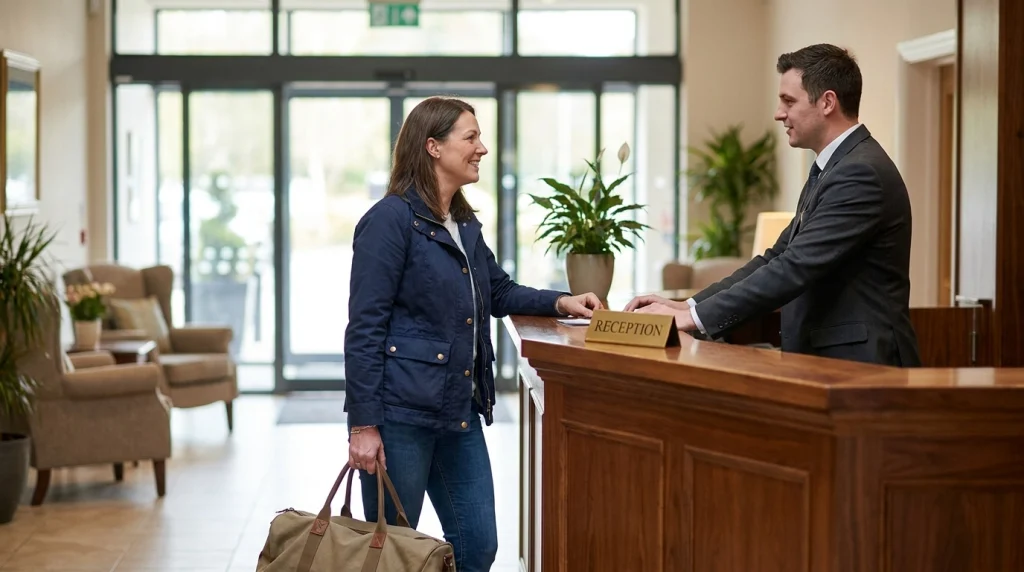
Choose a neighborhood that balances credible safety information, transportation, accommodation security, and your daily itinerary. The best choice isn’t always the cheapest or most famous district.
My Five-Part Neighborhood Comparison Method
When comparing accommodation areas, I use a simple framework rather than relying on one glowing hotel review. It helps me identify trade-offs before spending money.
- Research current risk: Read government guidance, official local information, and credible recent reporting.
- Check accommodation security: Look for controlled entry, reliable reception, and repeated positive safety feedback.
- Examine transport: Confirm the route to activities, stations, and the airport.
- Review evening logistics: Check opening hours, return routes, and alternatives to walking.
- Plan a backup: Identify another accommodation or safe transport option if the original plan becomes unsuitable.
A Practical Example: Comparing Two Hotel Locations
Imagine choosing between two fictional hotels for a three-night solo city break. Both have strong overall guest ratings.
Hotel A costs $75 per night and sits near a busy transit hub. Hotel B costs $60 but requires a longer walk from the nearest evening transport option.
| Factor | Hotel A | Hotel B |
|---|---|---|
| Nightly price | $75 | $60 |
| Walk from station | 3 minutes | 15 minutes |
| Reception | Staffed 24 hours | Limited hours |
| Evening food options | Several nearby | Few nearby |
| Three-night room cost | $225 | $180 |
These prices and features are illustrative, not verified hotel listings or neighborhood safety ratings.
Hotel A costs $45 more across three nights. Its convenient transport and staffed reception might make it more practical for a late-arriving traveler.
However, those advantages don’t prove Hotel A’s neighborhood is safer. I would still check documented risks and recent local reports before booking.
What Should You Do During Your First Hour in the Neighborhood?
Once you arrive, reassess the conditions around your accommodation. Online research is useful, but current circumstances matter.
My first-hour checklist includes:
- Confirm that the accommodation entrance and reception match the booking information.
- Identify the nearest reliable transport pickup point.
- Locate a convenient staffed shop or other public place to request assistance.
- Check the most practical route for your next outing.
- Save the accommodation address and emergency contact details offline.
- Share essential arrival information with a trusted contact, if appropriate.
If something differs substantially from the booking description, ask questions before settling in. Consider another property when serious concerns cannot be resolved.
Should You Trust Your Instincts?
Your instincts can prompt useful caution, especially when someone behaves in a threatening way. However, unfamiliar surroundings can also create anxiety without indicating danger.
I recommend combining your feelings with observable evidence. Ask what specifically worries you and whether you can verify or address it.
A broken entrance lock is concrete evidence of a security problem. An unfamiliar neighborhood style, by itself, is not.
Section Takeaway: Choose a place with manageable risks and dependable travel logistics. Keep a backup plan, especially for evening arrivals.
Frequently Asked Questions
How can I check if a neighborhood is safe before visiting?
Read official destination advisories, examine available local crime information, and check recent accommodation reviews. Study the exact walking routes and transportation options around your intended address. Compare several credible sources rather than relying on a single safety ranking.
Can Google Maps tell me whether a neighborhood is safe?
Google Maps can help identify transport stops, walking routes, businesses, and street layouts. It cannot reliably determine personal safety or current crime levels. Use map information alongside official local sources, recent reviews, and current travel advisories.
Is a tourist neighborhood always safer for women?
No. Tourist districts often offer convenient accommodation and transportation, but they can also attract scams, pickpocketing, and unwanted attention. Check the specific location, reported risks, and evening conditions rather than assuming popular tourist areas are automatically safer.
How do I know if a neighborhood is safe to walk in at night?
Research current nighttime conditions, check transport schedules, and identify staffed businesses along your route. Read recent reports from travelers and locals. If credible information suggests significant risks, arrange reliable transportation instead of walking alone.
Should I avoid neighborhoods with a high crime rate?
Take credible crime information seriously, especially when incidents involve areas and activities relevant to your itinerary. Examine the type, timing, location, and reporting context of incidents. If serious risks remain unclear or difficult to manage, choosing another location may be sensible.
What should I do if my hotel neighborhood feels unsafe?
Move to a safe, staffed location if you face an immediate concern. Contact hotel management, arrange trustworthy transportation, or consider changing accommodation. For threats or emergencies, contact local authorities using the destination’s official emergency number.
Is it safer to stay near a train station or in a residential area?
Neither option is universally safer. A station area may offer easier transport but can have its own risks. A residential location may be quieter yet less convenient after dark. Compare current safety information, walking routes, and available transportation before deciding.
Final Thoughts: Choose Confidence Through Preparation
A woman can make a more informed neighborhood safety decision by researching current risks, checking practical routes, and planning how to get help. No map, review, or safety score can guarantee what will happen.
For my solo travel planning, I value reliable information and convenient transport more than a picture-perfect hotel location. That approach makes it easier to adjust when circumstances change.
Before booking your next solo trip, compare at least two neighborhoods and review their evening transportation options. Choose the one that best fits your itinerary, comfort, and verified safety information.
Your goal isn’t to eliminate every uncertainty. It’s to travel with better information, realistic precautions, and the freedom to change your plans.