How Can a Solo Female Traveler Research Local Holidays Before Booking?
Quick Answer
If you’re wondering how can a solo female traveler research local holidays before booking, check the destination’s official holiday calendar first, then compare those dates with transport, attraction, accommodation, and event information. I also use a worldwide holiday calendar as a starting point before confirming important dates through local official sources.
Research Local Holidays in Six Steps
- 1. Check the calendar: Search national, regional, religious, and city-specific holidays during your proposed dates.
- 2. Confirm locally: Cross-check important dates on a government, tourism board, or official city website.
- 3. Check transport: Look for holiday schedules, reduced service, reservation rules, and major travel rush periods.
- 4. Check closures: Verify museums, restaurants, shops, banks, markets, and attractions you care about.
- 5. Check crowds: Research festivals, parades, pilgrimages, demonstrations, and large public gatherings.
- 6. Recheck later: Confirm changeable holiday dates and operating hours shortly before departure.
One Rule I Always Follow
- Never cancel or book a trip simply because a holiday appears on one calendar. First learn what that holiday changes in the exact city or region you’re visiting.
If you’re planning a solo trip, local holidays deserve more attention than a quick calendar search. A holiday can turn an ordinary Monday into your most memorable travel day, or leave you facing closed attractions and limited transport.
I’ve learned to research the impact of a holiday, not just its name. That small change makes solo female travel planning far more practical because I know what my arrival, sightseeing, meals, and transportation may look like.
In This Guide
- What Does Local Holiday Research Mean for a Solo Traveler?
- Where Should a Solo Female Traveler Check Local Holidays?
- How Can You Tell Whether a Holiday Will Affect Your Trip?
- What Should You Check Before Booking Flights and Hotels?
- How Should Holidays Change Your Solo Travel Safety Plan?
- Frequently Asked Questions
- Final Takeaway
What Does Local Holiday Research Mean for a Solo Traveler?
Local holiday research means checking which celebrations or official days fall during your trip and finding out how they change everyday travel. The important question isn’t simply, “Is there a holiday?” but, “What happens because of it?”
Definition: Local holiday research is the process of identifying national, regional, religious, cultural, and city-specific celebrations that may affect transportation, opening hours, accommodation, crowds, prices, or your daily solo travel plans.
A national holiday can affect an entire country. A regional holiday might barely matter once you cross into another province or state.
There are also festivals that attract huge crowds without being official public holidays. Those can matter just as much to a traveler.
Research more than official public holidays
I check several types of dates because they create different travel conditions.
- National public holidays: Government offices, banks, schools, and some businesses may close or change hours.
- Regional holidays: These may affect only one state, province, island, or city.
- Religious holidays: Business hours, food availability, dress expectations, public behavior, and transport demand may change.
- Major festivals: Streets, stations, hotels, and attractions may become much busier.
- Local celebrations: Parades or neighborhood events can create road closures and crowded public areas.
- Extended holiday periods: Residents may travel for several days even when the official holiday lasts only one day.
Japan is a useful example. Its official tourism organization explains that New Year, Golden Week, and Obon are major domestic travel periods, and some services can become crowded or operate differently.
That distinction matters. I would plan differently around a one-day museum closure than around a week when trains and accommodation are under heavy demand.
A holiday can be a benefit, not a problem
Don’t assume every holiday is something to avoid. Some of my favorite travel memories have come from arriving during a local celebration I researched in advance.
You may find street decorations, traditional food, performances, ceremonies, night markets, fireworks, or community events that don’t happen during an ordinary week.
- Book around it if closures would ruin the main reason for your trip.
- Book during it if experiencing the celebration interests you.
- Stay flexible if the holiday affects only part of your itinerary.
Section Takeaway: The date itself tells you very little. Research what changes before deciding whether a holiday makes your trip better, harder, or simply different.
Where Should a Solo Female Traveler Check Local Holidays?

Start broad, then move toward local and official sources. I never rely on a single travel blog, social post, or calendar for a booking decision that could cost hundreds of dollars.
Use a three-layer research system
My process starts with a calendar to discover possible holidays. Then I confirm important dates and investigate the practical effects.
| Research Layer | Best Source | What I Check | When to Use It |
|---|---|---|---|
| Discovery | Worldwide holiday calendar | Possible holidays and observances | Before choosing dates |
| Confirmation | Government or tourism authority | Official date, region, holiday status | Before paying for major bookings |
| Impact | Transit, attraction, airport, hotel, or event website | Hours, closures, reservations, routes | After choosing tentative dates |
| Final check | Official local sources | Late changes and confirmed schedules | About 7–14 days before travel |
Search the destination, not just the country
A country-level calendar isn’t always enough. Search the city, region, state, province, or island where you’ll actually stay.
This becomes especially important in places where holiday calendars differ by region. Even the United Kingdom maintains different bank-holiday calendars for England and Wales, Scotland, and Northern Ireland.
Search in the local language when possible
I often translate a few simple searches when English results look thin. You don’t need to speak the language to benefit from an official local calendar.
- [city] public holidays 2026
- [destination] festival calendar 2026
- [city] transport holiday schedule
- [attraction] holiday opening hours
- [holiday name] road closures
- [holiday name] train reservations
A translation tool can help you repeat those searches in the destination’s language. I then look for government, tourism, transit, airport, or attraction domains rather than trusting the first result.
Section Takeaway: Discover holidays broadly, confirm them officially, and investigate their impact locally. That three-step filter prevents most planning surprises.
How Can You Tell Whether a Holiday Will Affect Your Trip?
A holiday matters when it changes something you need. Check transportation, accommodation, attractions, food, crowds, and local movement separately.
Start with transportation
Transport is usually my first concern because I can change a museum visit more easily than a flight connection. I check the exact day before, day of, and day after the holiday.
- Trains: Look for reduced service, reservation requirements, or unusually high demand.
- Buses: Check Sunday or holiday timetables and last departure times.
- Metro systems: Look for station closures or special event routes.
- Ferries: Confirm whether services operate on public holidays.
- Airport transport: Check early-morning and late-night connections.
- Road travel: Search for parades, pilgrimages, roadblocks, or festival traffic plans.
If my flight lands at 10:30 p.m., I care more about the last reliable airport connection than whether a famous museum opens the next morning.
Check the places your trip depends on
Create a short list of your three to five highest-priority places. Then check their official sites individually.
- Main attraction
- Museum or historical site
- Day-tour departure point
- Market you especially want to visit
- Restaurant requiring reservations
- Tourist-information office
Also check whether tickets are released differently around holiday periods. A place can technically remain open while selling out far earlier than normal.
Watch for the holiday travel window
The busiest period isn’t always the official date. Domestic travelers may begin moving one or two days earlier and return after the holiday ends.
I therefore search the whole window surrounding the celebration. This is especially important when several holidays create a long weekend or extended break.
Separate closures from crowd problems
These are different planning issues. A closed attraction requires an alternative, while a crowded attraction may simply require an earlier start or reservation.
- Closed: Move the activity to another date.
- Reduced hours: Put it early in the day.
- Busy: Reserve ahead or visit at opening time.
- Transport disruption: Change your travel day if necessary.
- Festival atmosphere: Keep the date if that’s something you want to experience.
Section Takeaway: Judge each holiday by its practical consequences. Transport disruption deserves more attention than a closure you can easily move to another afternoon.
What Should You Check Before Booking Flights and Hotels?
Before paying for non-refundable bookings, I run a simple holiday-impact check. It usually takes 20–30 minutes once I know where to look.
Use this pre-booking checklist
- Search your exact travel dates. Include the arrival day, departure day, and one day on either side.
- Identify public and regional holidays. Note major festivals even when they aren’t official days off.
- Check your arrival route. Confirm that airport, station, ferry, or bus connections still work.
- Check accommodation prices. Compare your proposed dates with several nearby dates.
- Check your must-do attraction. Confirm that it operates during the holiday period.
- Search major event calendars. Look for parades, religious gatherings, sporting events, and festivals.
- Check cancellation rules. Favor flexibility when holiday schedules aren’t final.
Compare nearby dates before paying
I always test at least two date combinations. Moving a trip by 24 or 48 hours can sometimes create a much simpler itinerary.
For example, imagine arriving Sunday night before a Monday public holiday. That might be perfect if transport operates normally and you’re happy with outdoor sightseeing.
It could be frustrating if your first-day museum, supermarket, and regional bus all run limited schedules.
- Option A: Arrive before the holiday and experience the celebration.
- Option B: Arrive after it and avoid the busiest movement period.
- Option C: Keep the dates but build an outdoor or flexible first day.
Don’t assume a cheap hotel means a quiet week
Prices can provide clues, but they don’t explain what’s happening. A busy festival may raise prices in one neighborhood while business districts become cheaper.
Search the event first. Then decide whether the location and atmosphere suit the trip you want.
Give uncertain dates more flexibility
Some religious or lunar observances may not be confirmed far in advance. I treat those dates as potentially changeable until reliable local sources publish final information.
When the exact day could affect an important transfer, I prefer flexible accommodation and transportation where the price difference is reasonable.
Section Takeaway: Before booking, test your travel dates against the holiday calendar, your transport plan, and your three most important activities. A short check can reveal whether you need different dates or just a better itinerary.
How Should Holidays Change Your Solo Travel Safety Plan?
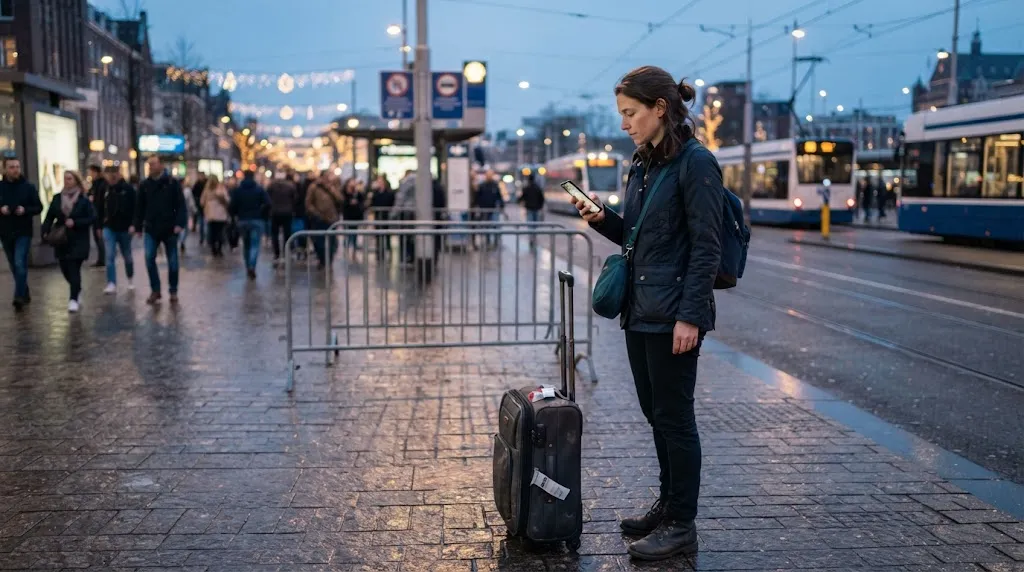
Holiday research also helps you understand what streets and transportation may feel like when you’re alone. A destination can operate differently during parades, demonstrations, religious gatherings, or major celebrations.
The U.S. State Department’s guidance for women travelers recommends researching destination conditions and planning ahead for transportation and safety.
Research your arrival separately
I pay special attention to the first few hours because I’m usually tired and carrying luggage. A festival night isn’t when I want to discover my usual airport bus stops three streets away.
- Map the route: Save the airport or station route offline.
- Check service hours: Confirm the last train, bus, or ferry.
- Save an alternative: Identify a licensed taxi or reputable ride option.
- Check road closures: Your hotel may be accessible only from another direction.
- Tell your accommodation: Ask whether holiday events affect check-in or access.
Plan crowded events differently
If I choose to attend a large celebration alone, I arrive knowing how I’m getting home. I don’t wait until crowds are dispersing to research the transport system.
- Save the accommodation address offline.
- Keep your phone charged.
- Carry a backup payment method.
- Know which nearby streets remain open.
- Identify a staffed public place if you need a quieter meeting point.
- Avoid depending on one transport option.
I also check current destination advisories shortly before international travel. The U.S. State Department’s international travel planning guidance is one source travelers can use alongside their own government’s advice.
Pro tip: Recheck official destination advisories, local authorities, transport operators, and event organizers before departure because crowd conditions, routes, and schedules can change.
Respect the meaning of the celebration
Some holidays are joyful public festivals. Others involve religious observance, remembrance, fasting, mourning, or family traditions.
I research expected clothing, photography etiquette, alcohol rules, meal timing, and public behavior instead of treating every celebration as entertainment.
Official tourism boards are useful for this context. For example, the Japan National Tourism Organization publishes holiday and travel-planning information for visitors.
Section Takeaway: Holiday research isn’t about being afraid of crowds. It helps you understand transportation, local expectations, and backup options before you’re navigating everything alone.
Frequently Asked Questions About Researching Local Holidays Before Booking
How far in advance should I check local holidays?
Check once when you’re comparing destinations, again before paying for major bookings, and once more about 7–14 days before departure. The final check is useful for confirmed opening hours, transportation notices, event routes, and holidays whose dates can change.
Should I avoid traveling during public holidays?
No. A public holiday may bring festivals and memorable cultural experiences, while another may cause widespread closures or heavy domestic travel. Research the specific effect on your transportation, accommodation, and priority activities before deciding.
What’s the easiest way to find holidays in another country?
Start with a worldwide holiday calendar, then verify important dates through the destination’s government or tourism authority. After that, check local transport operators and attractions for holiday-specific schedules.
Can a regional holiday matter if it isn’t a national holiday?
Yes. Regional holidays can affect local government services, businesses, schools, transportation, festivals, and visitor numbers in one part of a country. Always search the exact city, state, province, or region you’re visiting.
How do I know whether restaurants and shops will close?
Check individual business websites or official social channels close to your trip. Holiday practices vary widely, so a general country calendar cannot reliably tell you whether a particular restaurant, market, or store will operate.
What if a holiday date isn’t confirmed yet?
Treat it as a planning window rather than one fixed day. Avoid building a tight, non-refundable itinerary around that date, and check official local announcements again as your trip approaches.
Are festivals more important to research than public holidays?
Sometimes. A festival can create crowds, road closures, sold-out accommodation, and special transportation even when it isn’t a public holiday. Search both official holidays and major local events before booking.
Final Takeaway: Research the Holiday Before You Book Around It
The best way to research local holidays before a solo trip is simple: identify the date, confirm it officially, then investigate what it changes. Focus first on transportation, accommodation, your must-do activities, and the area where you’ll stay.
As of 2026, I still use the same rule before booking my own solo travel: **a holiday calendar tells me when something happens, but local sources tell me what that date means for my trip.**
- Discover: Find public holidays, regional dates, and festivals.
- Verify: Confirm important information through official sources.
- Investigate: Check transport, attractions, accommodation, and crowds.
- Adapt: Move your dates or adjust the itinerary when necessary.
- Recheck: Look again shortly before departure.
Do that before you click “non-refundable,” and you’ll arrive with a clearer plan without overplanning every hour. You may even discover that the holiday you almost avoided becomes one of the best parts of traveling alone.