How Can a Solo Female Traveler Plan Group Activities Safely?
Quick Answer
A solo female traveler can plan group activities safely by checking the organizer, meeting point, transport, timing, group structure, and exit options before booking. I also recommend reviewing current official travel safety guidance for your destination before joining an unfamiliar group.
A Simple Six-Step Check
- Verify the organizer: Look for a clear business, host profile, recent activity, contact details, and transparent policies.
- Check the meeting point: Know exactly where you will meet and whether you can reach it independently.
- Plan your return: Confirm transportation before attending, especially when an activity finishes after dark.
- Keep control: Maintain your own phone, money, identification, accommodation access, and transport options.
- Share basic details: Send a trusted person the organizer, meeting place, and expected finishing time when appropriate.
- Keep an exit: Choose activities you can leave without depending on another participant.
One Rule I Always Use
- A group setting can add structure and company, but I never treat the presence of other people as proof that an activity is safe.
Group activities can be one of the easiest ways to make a solo trip feel social without giving up your independence.
The key is planning the activity as carefully as you plan accommodation or transportation. In 2026, my approach is simple: verify first, stay independent during the activity, and know how you will leave.
In This Guide
- What Does Safe Group Activity Planning Mean?
- How Should You Vet a Group Activity Before Booking?
- Which Group Activities Work Best for Solo Female Travelers?
- How Should You Plan the Meeting Point and Transportation?
- How Can You Stay Independent Once the Activity Starts?
- What Red Flags Should Make You Reconsider an Activity?
- Solo Female Travel Group Activity FAQ
- Final Takeaway
What Does Safe Group Activity Planning Mean?
Safe group activity planning means checking the activity’s people, location, timing, transportation, and backup options before you commit.
It does not mean trying to guarantee that nothing unexpected will happen. No tour, class, hostel event, or traveler meetup can offer that guarantee.
Definition: Safe group activity planning for a solo female traveler is the process of joining shared activities while keeping independent control of transportation, communication, money, accommodation access, personal boundaries, and the decision to leave.
I think of group activities as a layer of structure, not a replacement for solo travel safety habits.
You might spend three hours with ten other travelers, but you are still responsible for getting yourself there and returning afterward.
Why can group activities feel easier when traveling alone?
A structured event removes several awkward parts of solo travel. You already know where to go and what you will be doing.
- Built-in social contact: You meet people around a shared activity instead of approaching strangers randomly.
- A defined schedule: Tours and classes give an open day a clear anchor.
- Local knowledge: A qualified guide or instructor can explain places you might otherwise misunderstand.
- Lower social pressure: Conversation develops naturally because everyone is participating in the same experience.
- Easy experimentation: You can socialize for a few hours without committing your entire trip to a group.
The mistake is assuming that a group automatically removes risk.
A badly organized group, isolated meeting place, unsafe return journey, or pushy participant can still create problems.
Section Takeaway: Use group activities for structure and connection, while keeping the independence that makes solo travel flexible.
How Should You Vet a Group Activity Before Booking?
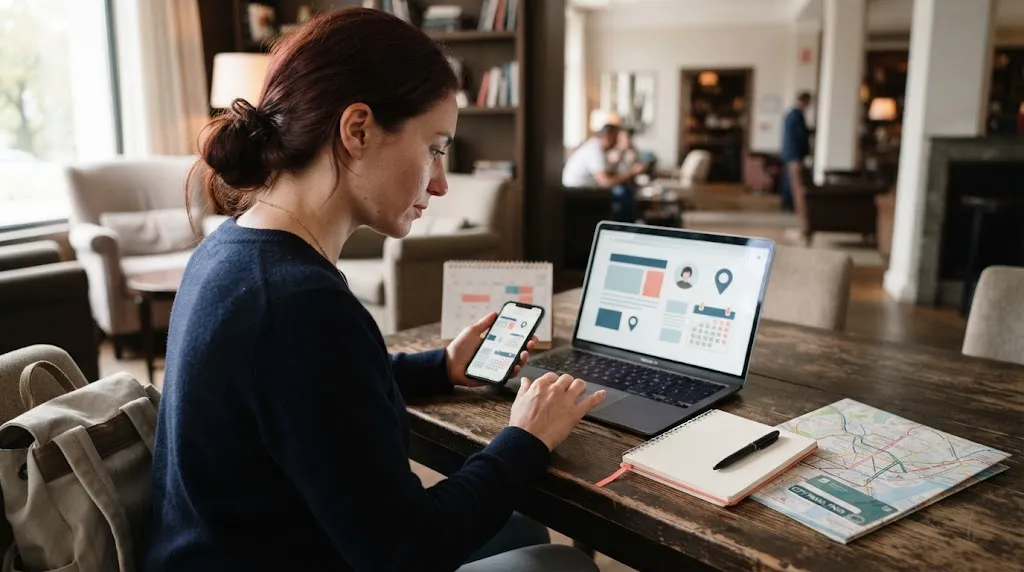
Start with the organizer rather than the photographs. A beautiful activity page tells you little if basic operational details are missing.
I want to know who is running the activity, how I can contact them, where we meet, and what happens if plans change.
What information should a legitimate activity provide?
- Organizer identity: A company, guide, hostel, community host, or organization should be clearly named.
- Meeting details: The listing should explain the area, meeting process, and expected starting time.
- Duration: You should know roughly when the activity ends so you can plan transportation.
- Contact method: Look for a usable platform message system, phone number, email address, or reception desk.
- Cancellation terms: Understand what happens if weather, staffing, or participant numbers change.
- Activity requirements: Hiking ability, clothing, identification, age rules, equipment, and other requirements should be stated when relevant.
Recent information matters more than an old recommendation. A tour praised three years ago may have changed operators, routes, or schedules.
I look for signs that the organizer is currently active rather than relying on one glowing review.
Compare the activity format, not just the title
| Activity Type | What to Verify | Exit Flexibility | Main Planning Concern |
|---|---|---|---|
| Walking tour | Guide, route area, finish location | Usually high in populated areas | Knowing where the tour finishes |
| Cooking or craft class | Venue, host, duration, transport | Usually moderate to high | Venue access and return journey |
| Day excursion | Operator, vehicle, pickup, return | Lower once far from the city | Dependence on the operator |
| Meetup or community event | Host, public venue, attendee information | Often high | Knowing who is organizing it |
| Outdoor activity | Guide credentials, difficulty, weather plan | Can be low on remote routes | Physical conditions and remoteness |
For community events, platform rules can also provide useful context. For example, Meetup states that its events must have an in-person host who acts as a point of contact.
That policy is useful information, but I would still check the individual event. Platform rules do not replace your own judgment.
Section Takeaway: A trustworthy activity should make the basic logistics easy to understand before you pay or show up.
Which Group Activities Work Best for Solo Female Travelers?
The easiest group activities combine a clear purpose, defined duration, accessible location, and straightforward way to leave.
I usually prefer activities where joining the group adds value but does not make me dependent on strangers afterward.
Good low-pressure options
- Walking tours: Useful for orientation during the first day in a new city.
- Cooking classes: Social without requiring constant conversation.
- Museum tours: Structured, public, and usually easy to leave independently.
- Photography walks: Good for travelers who prefer activity-based conversation.
- Food tours: A practical way to combine sightseeing, eating, and social time.
- Language exchanges: Useful when they happen in established cafés, schools, or community spaces.
- Hostel activities: Convenient when the event starts or finishes at your accommodation.
- Women-focused events: Helpful when you specifically want to meet other female travelers or local women.
When should you be more cautious?
I do more research when an activity involves remote terrain, private vehicles, water, alcohol, nightlife, or an overnight stay.
These activities can still be excellent. They simply create more points of dependence.
- Remote hiking or trekking
- Boat trips
- Late-night nightlife tours
- Private home gatherings
- Multi-day excursions
- Activities with unclear transportation
- Events where the location changes after booking
A daytime cooking class in a central neighborhood creates different planning questions from a midnight party boat or remote sunrise hike.
Judge the actual logistics rather than placing every “group activity” in the same category.
Section Takeaway: Start with structured public activities when you want the easiest mix of independence, social contact, and simple logistics.
How Should You Plan the Meeting Point and Transportation?
The safest-looking activity can become complicated if the meeting point is difficult to reach or the return journey is unclear.
I map both ends of the activity before booking: how I will arrive and how I will leave.
Check the meeting point before you pay
- Search the exact neighborhood or venue.
- Check whether the meeting location is public and identifiable.
- Estimate your travel time from your accommodation.
- Confirm whether you will travel there in daylight or after dark.
- Save the location offline when mobile coverage may be unreliable.
- Check whether the starting and finishing locations are different.
That last detail catches many travelers by surprise. A walking or food tour may finish several neighborhoods away from where it began.
Knowing that before the activity makes the return much easier.
Plan your return before joining
The U.S. State Department advises women travelers to research transportation options and use licensed, reputable providers where appropriate. It also notes that transportation conditions vary by destination.
- Public transport: Check the final practical departure time, not only the daytime schedule.
- Taxi or ride-hailing: Know which services are locally established and permitted.
- Walking: Review the route rather than assuming a short distance means a comfortable walk.
- Tour transport: Confirm whether the operator returns you to the original pickup location.
- Backup option: Keep enough money and phone battery to arrange another route.
I especially avoid plans where one last bus, train, or lift from another participant is my only way home.
Having two workable options reduces pressure if the activity runs late.
Pro tip: Check your destination’s current official travel advisory, local transportation guidance, and government information shortly before departure. Conditions can change after you book.
Section Takeaway: Your return journey deserves as much attention as the activity itself.
How Can You Stay Independent Once the Activity Starts?
Joining a group should not require handing over control of your basic travel needs.
I keep the essentials needed to leave, communicate, and return to my accommodation with me.
Keep control of your essentials
- Your phone
- Accommodation address
- Room key or access method
- Identification when required
- Primary and backup payment methods
- Necessary medication
- Mobile data or offline navigation
- Enough battery for the return journey
If the organizer legitimately needs to hold something, understand why and when it will be returned.
I would be cautious about unnecessarily surrendering a passport, phone, wallet, or accommodation key.
Be social without becoming dependent
One of the joys of group activities is meeting people you would never encounter otherwise.
You can enjoy that connection without allowing a new acquaintance to become your only transportation, navigation, or accommodation plan.
- Meet new friends in public places first.
- Keep your own route back.
- Avoid sharing your room number unnecessarily.
- Do not leave drinks unattended.
- Decide separately whether to join an unplanned second location.
- Tell someone when your plans materially change if you use check-ins.
If the group continues somewhere after the official activity, treat that as a new decision.
You do not have to follow simply because everyone else is going.
Use a simple check-in system
A trusted contact does not need a minute-by-minute report of your vacation.
Share information that would be useful if you unexpectedly became unreachable.
- Activity or organizer name
- Meeting location
- Expected finish time
- Accommodation details already shared for the trip
- Any remote excursion details
The U.S. State Department also recommends that travelers plan ahead and make sure a trusted person knows their plans when appropriate.
Section Takeaway: Socialize freely, but keep control of the practical tools that let you change your mind.
What Red Flags Should Make You Reconsider an Activity?

One unusual detail does not always mean an activity is unsafe. Several unexplained details together deserve more attention.
I pay particular attention when the organizer makes normal questions feel difficult to answer.
Before-booking red flags
- The organizer’s identity is unclear.
- The meeting place is vague until the last moment.
- There is no practical contact method.
- The listing gives no approximate finish time.
- You are pressured to pay outside the normal booking process.
- Basic questions about transportation are ignored.
- The activity description changes significantly after payment.
- Recent information is missing for an event that supposedly runs often.
Day-of-activity red flags
- The host is not who you expected and no explanation is given.
- The vehicle or route differs significantly from the confirmed plan.
- You are pressured to separate from the public group unexpectedly.
- Someone repeatedly ignores your boundaries.
- The activity becomes much more physically demanding than described.
- You are asked to surrender important belongings without a clear reason.
- The organizer discourages you from arranging your own return transportation.
You do not need courtroom-level proof that something is wrong before leaving.
A practical safety decision can be based on the simple fact that the situation no longer matches what you agreed to.
What should you do if you want to leave?
- Move toward a public place: A staffed venue, reception desk, shop, station, or busy area can simplify your next decision.
- Arrange independent transport: Use the reputable option you researched beforehand.
- Contact someone if needed: Tell a trusted person that your plans have changed.
- Use local emergency services for an immediate threat: Know the relevant emergency number for your destination.
- Report serious organizer problems: Use the booking platform, activity provider, accommodation, or relevant authorities as appropriate.
If you use Meetup, the platform provides reporting tools for suspicious accounts, groups, events, and unsafe or unlawful activity.
Pro tip: For international trips, review official destination guidance before departure and check CDC Travelers’ Health when your planned activity creates health, environmental, or disease-related concerns.
Section Takeaway: You are allowed to leave because the plan changed, your boundaries were ignored, or you simply no longer feel comfortable continuing.
Solo Female Travel Group Activity FAQ
Are group tours safer than exploring alone?
A group tour can add structure, a guide, and other participants, but it is not automatically safer than independent sightseeing. Check the operator, route, transportation, timing, destination conditions, and your ability to leave independently.
Should I tell someone before joining a group activity?
For remote, late, unfamiliar, or longer activities, sharing the organizer, meeting location, and expected return time with a trusted person can be useful. You can keep the system simple instead of providing constant updates.
Are women-only group activities safer?
A women-only format can create a comfortable social environment, but the label itself does not guarantee safety or quality. Check the organizer, venue, transportation, activity difficulty, and current destination conditions just as you would for any other activity.
Is it safe to join activities through a hostel?
Hostel events can be convenient because they often begin or end near your accommodation. Still check who is hosting, where the event goes, how transportation works, and whether you can return independently if you leave early.
Should I join a group activity at night?
You can, but the return journey matters more after dark. Research the neighborhood, finishing time, transportation availability, and backup options before attending rather than solving those details when the event ends.
What should I do if another participant makes me uncomfortable?
Create distance, move closer to the guide, host, staff, or other people, and state your boundary clearly when appropriate. Leave if you need to, and report threatening, harassing, or unsafe behavior through the organizer, platform, venue, or local authorities as appropriate.
How many group activities should I book on a solo trip?
You do not need one every day. I prefer using group activities as selected social anchors while leaving enough independent time to rest, explore, change plans, or enjoy the destination at my own pace.
Final Takeaway
Planning group activities safely as a solo female traveler is less about finding a perfect group and more about preserving your options.
Verify the organizer, understand the meeting point, plan your return, keep control of essentials, and give yourself permission to leave when the situation changes.
- Before booking: Check the organizer and logistics.
- Before leaving: Confirm transport, battery, money, and meeting details.
- During the activity: Keep your belongings and boundaries under your control.
- Afterward: Use your planned return instead of depending on a new acquaintance.
- For international trips: Recheck current official safety and health information close to departure.
Group activities should make solo travel richer, not make you less independent.
Choose experiences that let you enjoy the company while keeping the freedom to change your mind.