How Can a Solo Female Traveler Plan a Trip When She Does Not Speak the Language?
Quick Answer
A solo female traveler can plan a trip without speaking the local language by preparing communication tools before departure, saving important information offline, learning a few essential phrases, and simplifying arrival logistics. I also recommend reviewing official communication guidance for international travelers before leaving.
Plan the Language Barrier in Six Steps
- Choose manageable logistics: Favor clear airport transfers, central accommodation, and simple public transportation.
- Prepare offline tools: Download translation resources, maps, tickets, addresses, and reservation details before departure.
- Learn key phrases: Focus on directions, food, payment, emergencies, and polite everyday communication.
- Save local-language addresses: Keep your hotel and important destinations written in the local script when possible.
- Plan backup communication: Carry screenshots, emergency contacts, and important information separately from your main phone.
- Keep the itinerary simple: Give yourself extra time for stations, check-ins, meals, and unexpected misunderstandings.
My Simple Rule
- You do not need fluency. You need a reliable way to understand the next step when something becomes confusing.
Not speaking the local language can make a first solo trip feel harder than it needs to be. The good news is that language barriers are often planning problems rather than reasons to stay home.
When I plan solo travel around an unfamiliar language, I focus on the moments where communication matters most. Those are arrival, transportation, accommodation, food, money, health, and emergencies.
In This Guide
- What Does It Mean to Plan a Solo Trip When You Do Not Speak the Language?
- What Should You Prepare Before You Leave?
- Which Local Phrases Should a Solo Female Traveler Learn?
- How Do You Navigate Transport, Food, and Accommodation Without the Language?
- How Can You Stay Safe and Get Help When Communication Is Difficult?
- Frequently Asked Questions
- What Is the Best Way to Build Confidence Before Departure?
What Does It Mean to Plan a Solo Trip When You Do Not Speak the Language?
Planning around a language barrier means designing your trip so important decisions do not depend on spontaneous conversation. You prepare several ways to understand directions, confirm information, and ask for help.
Definition: Language-barrier solo travel is independent travel in a place where you cannot comfortably communicate in the main local language, so you rely on preparation, translation tools, visual information, simple phrases, and backup plans.
The goal is not to remove every misunderstanding. That would be unrealistic even when you speak the language.
I want enough preparation that a confusing moment stays a small inconvenience. I do not want it to become a crisis because my phone died or I cannot explain where I am staying.
Think about communication friction
Every unfamiliar system adds a little travel friction. Language is easier to manage when the rest of the trip is straightforward.
- Easy arrival: Choose a clear airport, train, bus, licensed taxi, or hotel-transfer option.
- Central accommodation: Stay somewhere that reduces complicated daily transport.
- Fewer hotel changes: Moving every night creates more check-ins, directions, tickets, and conversations.
- Extra time: Avoid planning transfers with tiny connection windows.
- Reliable mobile access: Research data options before arrival instead of solving connectivity after landing.
A destination does not need widespread English to be manageable. What matters more is whether you can solve ordinary travel problems with the tools available.
Separate inconvenience from risk
Not understanding a restaurant menu is inconvenient. Not knowing how to identify your accommodation, contact emergency services, or explain a medical problem can matter much more.
I therefore spend most of my preparation time on high-impact communication. Sightseeing vocabulary comes later.
- Accommodation address and phone number
- Airport or station information
- Important transport routes
- Medication and allergy information
- Emergency contact details
- Payment questions
- Basic safety phrases
That approach makes the trip feel smaller. You are not trying to learn an entire language before your flight.
You are learning how to manage the situations most likely to affect your day.
What Should You Prepare Before You Leave?

Prepare anything you would hate to reconstruct while tired, offline, or standing in a busy station. Your phone should help you, but your entire trip should not collapse without it.
Set up translation before departure
Install your preferred translation tool and practice using it at home. Do not make the first test a stressful conversation abroad.
Google confirms that supported language packs can be downloaded for offline translation through Google Translate’s offline-language feature.
- Download both languages: Save your main language and the destination language when offline support exists.
- Test camera translation: Practice with packaging, signs, or printed text.
- Save useful phrases: Keep your most important expressions easy to reach.
- Practice short sentences: Translation usually works better when your message is simple.
- Carry a second method: A small phrase sheet still works when your battery does not.
I also avoid typing long, complicated explanations. Short sentences are easier for both translation software and the person trying to help.
Build an offline travel folder
Create one folder on your phone for the information you may need quickly. Take screenshots instead of assuming every booking app will load.
- Passport identification page copy
- Travel insurance information
- Flight or train details
- Accommodation confirmation
- Accommodation name in the local script
- Full street address
- Map pin or location screenshot
- Airport transfer instructions
- Emergency contacts
- Important medication details
Keep especially important information somewhere separate too. A printed hotel address and emergency-contact card weighs almost nothing.
Download the map before you need it
Offline mapping can reduce the pressure of asking strangers for every direction. Google Maps allows travelers to download many map areas in advance, although offline availability and functions vary by location.
The official Google Maps offline-map instructions also note limitations, including unavailable offline areas in some regions.
- Download your accommodation area.
- Save the airport or main station.
- Mark your first-day destinations.
- Save the nearest useful transport stops.
- Check the map again shortly before departure.
Make your first 24 hours unusually easy
The first day is not the time to prove how independent you are. Jet lag, hunger, unfamiliar money, and a language barrier can stack up quickly.
- Book your first accommodation: Know exactly where you are sleeping.
- Plan the airport-to-hotel route: Know your preferred transport and one backup.
- Check reception hours: Late check-in instructions should already be saved.
- Arrange data: Understand how you will get connected after landing.
- Keep the first evening light: Food, check-in, and rest may be enough.
I would rather arrive with too little scheduled than spend my first night racing through an unfamiliar city. Confidence usually comes faster when your first few decisions go smoothly.
Section Takeaway: Prepare communication, navigation, accommodation, and arrival details while you still have reliable internet and time to think. Build at least one backup for the information you cannot afford to lose.
Which Local Phrases Should a Solo Female Traveler Learn?
You do not need hundreds of words. Start with phrases that help you move, eat, pay, refuse unwanted attention, and get help.
Learn phrases by situation
I find categories easier to remember than random vocabulary. Keep the list short enough that you will use it.
- Politeness: Hello, please, thank you, excuse me, goodbye.
- Understanding: I do not understand, please speak slowly, can you write it down?
- Directions: Where is this address, which platform, where is the station?
- Transport: Does this go to ___, how much is the fare, please stop here.
- Food: I would like this, water please, no meat, no nuts, I have an allergy.
- Money: How much, card or cash, can I have a receipt?
- Boundaries: No thank you, stop, leave me alone.
- Emergency: I need help, I need a doctor, call the police, where is the hospital?
If pronunciation is difficult, save the phrase in the local script. You can show the screen rather than trying to repeat it five times.
Create a personal phrase card
Your phrase card should include information specific to you. Generic travel phrases cannot cover every important need.
- Your accommodation name and address
- Your emergency contact
- Critical allergies
- Important medical information you choose to carry
- Your destination station or terminal
- A polite refusal phrase
- A clear request for medical or police assistance
Keep sensitive information limited to what is useful. You do not need to hand strangers a card containing your entire itinerary or personal history.
As of 2026, translation technology makes many everyday interactions easier. Basic local-language effort still matters because phones lose signal, batteries die, and technology can misunderstand context.
How Do You Navigate Transport, Food, and Accommodation Without the Language?
Use the same system repeatedly: prepare the important information, show rather than explain when possible, confirm the result, and keep a backup. Predictable routines reduce decision fatigue.
Use the simplest communication method for each situation
| Situation | Best First Method | Backup | Prepare Beforehand |
|---|---|---|---|
| Finding your hotel | Local-language address and map pin | Printed address card | 5 minutes |
| Using a train | Route number, station name, platform display | Show destination to staff | 10–15 minutes |
| Ordering food | Point to menu item or photo | Camera translation | 2–5 minutes |
| Checking in | Reservation confirmation | Booking screenshot | 5 minutes |
| Explaining an allergy | Prepared local-language statement | Translation app | 10 minutes |
| Getting emergency help | Local emergency number and short phrase | Hotel, embassy, or trusted local contact | 15 minutes |
The preparation times above are practical planning estimates, not fixed requirements. The point is that many stressful language problems can be reduced with a few minutes of work before departure.
For public transport, follow identifiers instead of conversations
Station names, line colors, route numbers, platform numbers, and final destinations are easier to verify than long spoken directions. I screenshot the route before leaving Wi-Fi.
- Know your starting station.
- Know your line or route number.
- Know the direction or final stop.
- Count stops when that helps.
- Save your destination in the local script.
- Leave extra time for the first journey.
If something looks wrong, stop and confirm early. Continuing for another 30 minutes because you feel embarrassed usually makes the problem harder.
For taxis and rides, show the destination
A complete address is more useful than trying to pronounce a hotel name from memory. I also check the map once the journey begins so I understand the general direction.
Use established transportation options appropriate for the destination. Research local taxi practices before the trip rather than assuming the system works like home.
For restaurants, simplify the interaction
Pointing is normal travel communication. Photos, numbered menus, written dish names, and translation cameras can reduce the need for a long conversation.
- Translate allergies before entering the restaurant.
- Save strict dietary requirements in writing.
- Ask one question at a time.
- Confirm quantities before ordering.
- Check whether the bill comes automatically or must be requested.
Food restrictions deserve more preparation than preferences. If a mistake could affect your health, research destination-specific food labeling and communication before traveling.
For accommodation, save proof of every important detail
Keep screenshots of your booking name, dates, room type, payment status, and check-in instructions. That gives staff something concrete to examine if spoken communication becomes difficult.
Section Takeaway: When you cannot depend on conversation, depend on names, numbers, maps, screenshots, written addresses, and repeated routines. Visual confirmation often works better than a longer explanation.
How Can You Stay Safe and Get Help When Communication Is Difficult?
A language barrier should change how you prepare for emergencies, not convince you that an emergency is inevitable. Know who you would contact and how you would explain the problem before you travel.
Research the destination separately from the language issue
Speaking the local language does not automatically make a destination safe. Not speaking it does not automatically make a destination unsafe.
Review current local laws, transportation practices, cultural expectations, neighborhood conditions, and risks affecting women travelers. The U.S. State Department’s guidance for women travelers is one useful official resource for U.S. travelers.
Pro tip: Check your own government’s current destination advisory shortly before departure, even if you researched the same place when you first booked.
Know the local emergency number
Do not assume every country uses 911. Save the correct police, ambulance, or general emergency number for your destination.
- Put it in your phone contacts.
- Keep it in your offline travel folder.
- Write it on your printed backup card.
- Learn the phrase for “I need help.”
- Learn the phrase for “I need a doctor.”
Also identify your nearest embassy or consular service if that applies to your nationality. Consular assistance is not a replacement for local emergency services, but it can be useful in serious situations abroad.
Prepare medical communication
A health problem is one place where improvising with vocabulary can be difficult. Prepare essential information before the trip if you have allergies, medications, or medical needs.
The CDC recommends planning how you would obtain medical care during international travel. Its health-care-during-travel guidance also recommends understanding your insurance and possible medical expenses before departure.
- Generic medication names
- Allergies
- Important medical conditions
- Insurance information
- Emergency contact
- Nearby medical facility information when appropriate
Pro tip: For health risks, vaccines, or destination-specific medical requirements, use official health authorities rather than relying only on travel blogs or social media.
Do not let politeness trap you
Communication difficulties sometimes make travelers stay in uncomfortable interactions because they are worried about appearing rude. Your personal boundaries do not disappear because you cannot explain them elegantly.
- Use a firm “no.”
- Move toward a staffed or public place.
- End an interaction you do not want.
- Contact your accommodation when you need practical help.
- Use local emergency services when the situation requires them.
Body language can also communicate a boundary. You do not need perfect grammar to leave a situation that feels wrong.
Carry a phone backup plan
Your phone may hold your map, translator, payment cards, tickets, hotel address, and contacts. That makes a dead, damaged, or missing phone a bigger problem than it looks.
- Carry a charged power bank.
- Keep key addresses on paper.
- Know at least one important contact number independently.
- Store copies of critical documents securely.
- Keep some payment separate from your main wallet.
Preparation should make you feel more capable, not frightened. Most days will probably involve ordinary travel tasks such as finding lunch and choosing the correct train.
Section Takeaway: Plan emergencies before the trip, then spend the trip living normally. A saved emergency number, written address, medical card, backup power source, and clear personal boundaries cover many of the situations where language matters most.
Frequently Asked Questions
Can I travel alone if I do not speak the local language at all?
Yes. Many everyday travel tasks can be managed with translation tools, written addresses, maps, gestures, and a few learned phrases. The trip becomes easier when your accommodation, transportation, mobile data, arrival plan, and emergency information are prepared before departure.
Should I choose a country where English is widely spoken for my first solo trip?
It can reduce communication stress, but it is not required. Consider language alongside transportation, accommodation, current safety conditions, cultural differences, health access, and your confidence handling unexpected changes. A well-organized non-English-speaking destination may still feel manageable.
What is the most useful translation app for solo travel?
Choose an app that supports the destination language and the features you need, especially text and offline translation. Test it before departure. Do not depend on one app alone for critical medical, legal, safety, or emergency communication.
Should I learn the local language before traveling?
You do not need fluency for most tourist trips. Learn greetings, thank you, directions, payment questions, basic food words, a polite refusal, and emergency phrases. Knowing even a small amount can make everyday interactions easier and shows respect for local culture.
What should I do if my phone stops working?
Carry a printed accommodation address, emergency numbers, essential medical information, and at least one important contact. Keep some payment separate from your phone and main wallet. A small paper backup can solve problems that become surprisingly difficult when your digital tools disappear.
How can I communicate with a taxi driver who does not speak my language?
Show the exact destination address in the local language and use a map pin when possible. Confirm the destination before leaving. Research reputable transportation options beforehand, and keep your accommodation’s contact information available if extra clarification is needed.
What Is the Best Way to Build Confidence Before Departure?
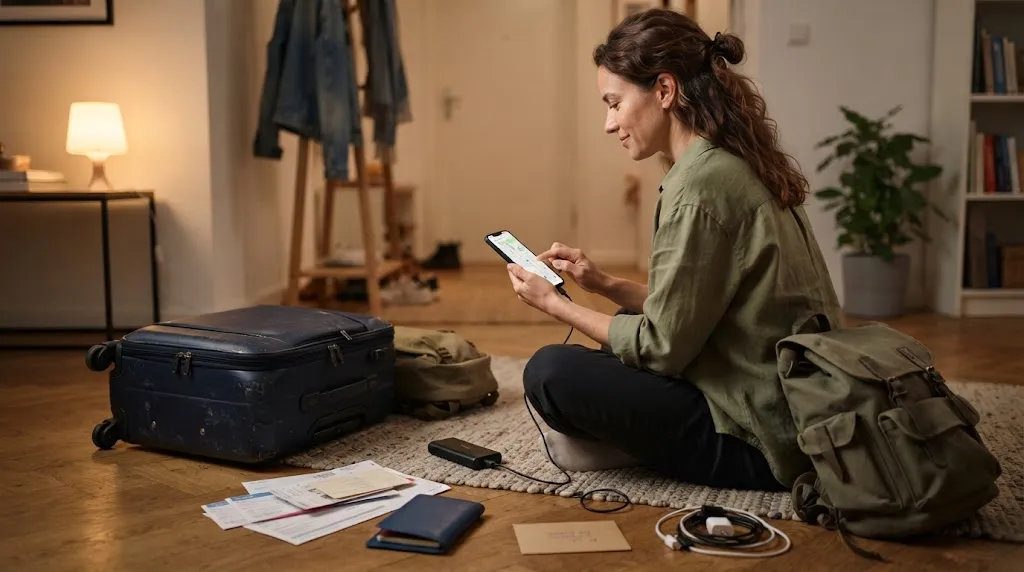
Practice the exact skills you will use abroad. Confidence comes from knowing that you can solve small problems, not from believing nothing confusing will happen.
Do a 30-minute language-barrier rehearsal
- Open your translation app and translate five useful phrases.
- Turn off mobile data and test your offline language resources.
- Open your downloaded destination map.
- Find your accommodation using only the saved address.
- Locate your flight, train, or transfer screenshot.
- Find your emergency information without searching the internet.
- Check that your power bank and charging cables work.
If one of those steps fails at home, fix it before your trip. That is much easier than discovering the problem after landing.
Plan for recovery, not perfection
You may take the wrong exit, misunderstand a menu, or miss a sentence. Those moments do not mean you failed at solo travel.
A strong travel plan answers a different question: “What will I do next if this does not work?” That mindset gives you options instead of expecting perfection.
- If translation fails, show the written phrase.
- If your map fails, show the address.
- If transport becomes confusing, stop and ask staff.
- If your phone dies, use your paper backup.
- If you feel uncomfortable, leave and reassess somewhere safer.
For a first trip with a significant language barrier, I would keep the route simple and give myself generous time. One comfortable base can teach you more than five rushed cities.
Start by preparing your first 24 hours, ten essential phrases, an offline map, and one emergency card. Once those pieces are ready, the language barrier usually feels much smaller than it did when you first imagined the trip.