Should a Woman Reserve Restaurants Before Traveling Alone?
Quick Answer
A woman does not need to reserve every restaurant before traveling alone. I prefer booking only high-priority dinners, popular restaurants, special experiences, and my first-night meal when it will make arrival easier, while leaving most everyday meals flexible. Travelers who want inspiration for eating alone can also review solo dining guidance from OpenTable.
A simple solo dining plan
- Reserve priorities: Book restaurants you would genuinely regret missing.
- Protect arrival night: Consider one easy reservation near your accommodation after a long travel day.
- Check busy periods: Reserve earlier for weekend evenings, holidays, festivals, or limited-seat restaurants.
- Keep meals flexible: Leave cafés, lunches, food markets, and casual dinners open when possible.
- Check policies: Read cancellation, deposit, minimum-spend, and no-show terms before confirming.
My rule
- Reserve the meals that remove stress or protect something important. Leave the rest open for discovery.
If you’re asking, “Should a woman reserve restaurants before traveling alone?” my answer is usually some restaurants, not every restaurant. Advance bookings can make a solo trip smoother, but too many fixed meals can make your itinerary feel restrictive.
I treat restaurant reservations like other solo-trip anchors. I secure the difficult-to-replace experiences, then leave enough room to change my mind, rest, explore another neighborhood, or eat somewhere I discover that day.
In This Guide
- When should a woman reserve restaurants before a solo trip?
- How far ahead should you make restaurant reservations?
- Which meals are worth booking before you travel?
- Can restaurant reservations make solo travel easier or safer?
- How can you reserve restaurants without overplanning?
- How should a solo woman book a table for one?
- Frequently asked questions
When Should a Woman Reserve Restaurants Before a Solo Trip?
You should reserve ahead when a restaurant is important enough that missing it would disappoint you. Reservations also make sense when availability is limited or finding an alternative would create unnecessary stress.
The goal isn’t to control every meal. It’s to protect the moments that matter most.
Definition: A solo-travel restaurant reservation is a confirmed dining booking made for one traveler before or during a trip, usually to secure a preferred restaurant, time, location, or dining experience.
Reserve restaurants that are part of the experience
If food is one reason you’re visiting a destination, I wouldn’t leave every important restaurant to chance. A tasting menu, chef’s counter, famous local institution, or tiny dining room can become part of the itinerary itself.
- Destination restaurants: Places you specifically chose before booking the trip.
- Limited-seat experiences: Chef’s counters, tasting menus, supper clubs, or special dining events.
- Celebration meals: Birthday dinners, personal milestones, or a memorable final night.
- High-demand periods: Friday nights, Saturday nights, holidays, festivals, and major local events.
Leave casual meals open
Breakfast cafés, bakeries, food halls, markets, quick lunches, and neighborhood restaurants often work better as flexible options. You may discover something more appealing while walking around.
This freedom matters more when you’re alone because you don’t have to coordinate with anyone else. You can eat when you’re hungry rather than when a group finally agrees.
| Dining situation | Reserve ahead? | Practical approach |
|---|---|---|
| Famous or must-try restaurant | Usually yes | Book once your travel dates are firm. |
| Tasting menu or limited seating | Yes | Check booking release dates and deposit terms. |
| First-night dinner | Sometimes | Choose somewhere easy to reach from your accommodation. |
| Casual lunch | Usually no | Save several nearby choices instead. |
| Food market or food hall | Usually no | Visit when it fits your sightseeing route. |
| Weekend dinner in a busy district | Often helpful | Reserve if you care about the restaurant or dining time. |
Section Takeaway: Reserve the meals you would regret missing. Keep ordinary meals flexible enough to follow your mood, location, and energy.
How Far Ahead Should You Make Restaurant Reservations?
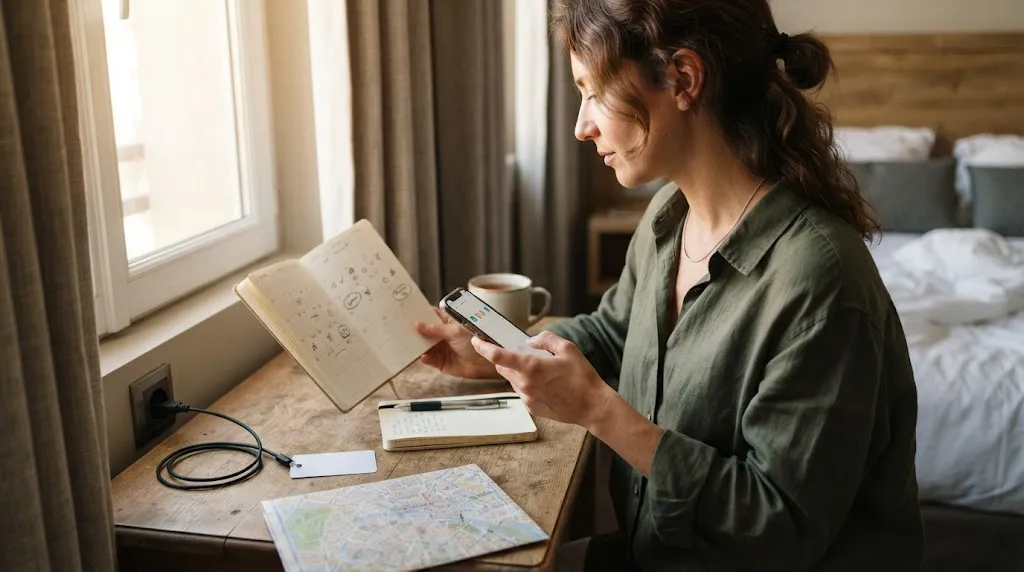
There is no universal booking window because restaurants control their own reservation calendars. Some release tables months ahead, while others accept bookings only days in advance or mainly serve walk-ins.
I use the restaurant’s demand level and my own priorities instead of relying on one fixed deadline.
A practical reservation timeline
These are planning targets rather than guarantees. Always check the restaurant’s own booking system before building your itinerary around a table.
- Same day: Useful for casual restaurants when your afternoon plans become clear.
- Two to seven days: A reasonable check-in window for many ordinary dinners where you want a particular time.
- One to four weeks: Give yourself more room for popular weekend restaurants or highly recommended spots.
- Several weeks or more: Start checking earlier for famous tasting menus, limited-seat restaurants, holiday periods, or major events.
Book earlier when your schedule depends on the meal
If dinner is followed by theater tickets, an evening tour, or a train, timing matters more. I would rather have a confirmed table than spend 45 minutes joining waitlists while watching the clock.
The opposite applies on a free evening. When nothing depends on dinner, flexibility often has more value than certainty.
Pay attention to cancellation terms
A reservation can reduce stress only if you understand what you’ve agreed to. Check whether the restaurant requires a card guarantee, deposit, prepaid menu, or cancellation fee.
- Confirm the date and local time.
- Check whether the booking is refundable.
- Note the cancellation deadline.
- Confirm whether the restaurant accepts parties of one online.
- Save the confirmation offline or take a screenshot.
Section Takeaway: The more important and harder-to-replace the meal is, the earlier you should check availability.
Which Meals Are Worth Booking Before You Travel?
I don’t give every meal equal planning attention. On most solo trips, one or two well-chosen reservations provide enough structure without turning food into another schedule to manage.
Your first-night meal can remove one decision
Arrival days often involve navigation, check-in, luggage, charging your phone, and adjusting to a new place. Deciding where to eat can feel surprisingly annoying after all of that.
For a three-night city break, I might reserve dinner near my accommodation on night one. I would then leave most of the remaining meals open.
- Choose nearby: Avoid crossing the city immediately after arrival.
- Choose an easy time: Give yourself a buffer after your expected check-in.
- Choose flexible terms: Flights and trains can run late.
- Save a backup: Keep one casual alternative near your accommodation.
Reserve a special final-night meal when it matters
A final dinner can give your trip a satisfying endpoint. It also gives you one experience to look forward to without filling every evening with obligations.
I would avoid placing an expensive non-refundable reservation too close to a long-distance travel connection. Delays happen, and a relaxed final meal is better than racing through one.
Lunch can be easier than dinner
If a restaurant offers the experience you want at lunch, consider that option. A daytime reservation can fit naturally between sightseeing areas and leaves your evening flexible.
Lunch can also help if you’re still getting comfortable with solo dining. The atmosphere often feels more casual than a long evening meal.
Section Takeaway: A first-night meal, one priority restaurant, and perhaps a final-night experience are often enough structure for a short solo trip.
Can Restaurant Reservations Make Solo Travel Easier or Safer?
A restaurant reservation is not a safety guarantee. It can, however, reduce uncertainty by giving you a known destination, confirmed dining time, and a reason to plan your route before going out.
For international travel, I also review current destination information and the U.S. State Department guidance for women travelers before departure.
Think about the journey back, not only the restaurant
A restaurant may look perfect online but still be inconvenient for a solo evening. I check how I plan to return to my accommodation before confirming a late reservation.
- Distance: How far is the restaurant from your accommodation?
- Transportation: Will your preferred transport still operate after dinner?
- Arrival point: Do you know where you’ll be dropped off or where the station entrance is?
- Backup route: What will you do if your first transportation option doesn’t work?
- Phone access: Will you have enough battery and data to navigate afterward?
Earlier dinners can simplify unfamiliar evenings
If I’m uncomfortable navigating a new area late at night, I would choose an earlier reservation instead of giving up on the restaurant. That small change can make the entire evening easier.
You can also select a restaurant near your hotel, hostel, main transit line, or another staffed public place. Convenience is worth considering alongside reviews and menu quality.
Pro tip: Before an international trip, review current official destination guidance through the U.S. State Department travel planning resources or the equivalent official authority for your nationality. Local conditions, transportation, laws, and advice can change.
Section Takeaway: A reservation can reduce uncertainty, but your transportation plan and surroundings matter more than the booking itself.
How Can You Reserve Restaurants Without Overplanning?
The easiest method is to treat restaurant bookings as anchors rather than filling every meal slot. I want a reservation to simplify my trip, not dictate where I must be three times a day.
Use the one-important-meal rule
On a busy sightseeing day, I usually wouldn’t schedule breakfast, lunch, and dinner. One fixed meal is enough.
A simple day might look like this:
- Breakfast: Pick a café near your accommodation that morning.
- Morning: Visit your main attraction or neighborhood.
- Lunch: Choose somewhere nearby when you’re hungry.
- Afternoon: Continue sightseeing or return to your accommodation.
- Dinner: Keep one confirmed 7:00 p.m. reservation.
Save restaurants instead of reserving them
My favorite compromise is creating a short saved list by neighborhood. That gives me options without committing to exact times.
- Two breakfast cafés near your accommodation.
- Two casual lunch choices near major sightseeing areas.
- One food market or food hall.
- Two easy dinner backups.
- One restaurant that stays useful if your main plan changes.
This method works especially well when weather or energy changes your itinerary. If you stay longer at a museum, you can simply choose a nearby saved restaurant instead of crossing town for a booking.
Protect space for discoveries
Some of my best dining decisions begin with seeing a busy bakery, noticing a menu outside a small restaurant, or getting a recommendation after arriving. A completely booked schedule leaves little room for those moments.
Solo travel gives you unusual freedom. You can change dinner plans without negotiating with anyone else.
If doing things alone still feels unfamiliar, practical advice from Lonely Planet’s solo travel guide for women can also help with gradually becoming more comfortable traveling and dining independently.
Section Takeaway: Reserve enough to remove stress, but protect open meals so you can follow your actual trip rather than a schedule created weeks earlier.
How Should a Solo Woman Book a Table for One?
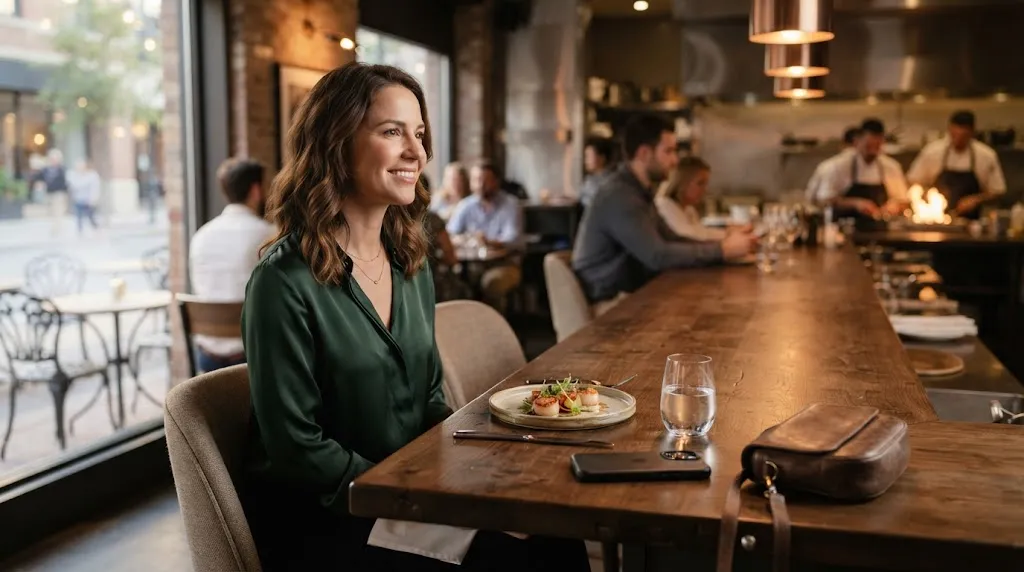
Book a table for one exactly as you would any other party size. If the online system allows one guest, select it and choose the time that works for your itinerary.
Don’t assume solo diners are unwelcome
Seeing mostly two-person and four-person tables online doesn’t mean you should avoid the restaurant. Some booking systems simply manage one-person availability differently.
If one guest isn’t available online, contact the restaurant through its verified phone number or official website. Ask whether they accept solo diners, bar seating, counter seating, or walk-ins.
Choose the seating style you enjoy
There is no correct place for a woman dining alone to sit. Pick the setting that makes the meal enjoyable for you.
- Standard table: Best when you want space and a traditional restaurant experience.
- Bar seating: Useful if you enjoy a busier, less formal atmosphere.
- Chef’s counter: Good when watching the kitchen is part of the experience.
- Outdoor seating: Appealing when the weather, location, and surroundings suit you.
- Communal table: An option if you enjoy being around other diners.
Confirm before leaving your accommodation
I check the reservation time, address, transportation route, and cancellation terms before heading out. I also make sure I’m looking at the correct restaurant if several places have similar names.
If the reservation changes, I want to know before making the journey. A 30-second check can prevent a frustrating evening.
Section Takeaway: A party of one is a normal reservation. Choose the seating, time, and location that fit how you want your evening to feel.
Frequently Asked Questions About Restaurant Reservations for Solo Women
Is it okay to eat alone at a restaurant while traveling?
Yes. Solo dining is a normal part of traveling alone. Choose a restaurant and seating style you enjoy, and don’t feel obligated to look busy while eating. A book or journal is optional, not necessary.
Should I reserve every dinner before a solo trip?
Usually not. Reserving every dinner can make your trip unnecessarily rigid. Book high-priority restaurants and busy nights, then keep several evenings flexible for spontaneous discoveries, changing plans, or simply resting.
Should I book my first-night restaurant in advance?
It can be helpful after a long or complicated journey. Choose somewhere near your accommodation and avoid tight timing after a flight or train. If delays are possible, prioritize a reservation with reasonable cancellation terms.
What if a restaurant does not show availability for one person?
Check the restaurant’s official booking channel or contact it directly. Some places handle solo diners through bar seats, counter seats, or walk-in availability even when their online system does not show tables for one.
Is lunch easier than dinner for a first-time solo diner?
It can feel easier because lunch is often shorter and more casual. If you’re nervous about dining alone, start with a café or lunch reservation before booking a longer evening meal.
Should I make late-night restaurant reservations when traveling alone?
Only when you’re comfortable with the restaurant’s location and your return plan. Check transportation availability, distance, phone access, and current local guidance before confirming a late meal in an unfamiliar area.
What should I do if my plans change after making a reservation?
Change or cancel the booking as soon as you know. Check the restaurant’s policy first, especially if you supplied a card, paid a deposit, or purchased a prepaid menu.
Section Takeaway: Restaurant reservations should make solo travel simpler. Book strategically, understand the terms, and leave enough room to enjoy the independence that makes traveling alone so rewarding.
My final approach: Before a solo trip, I would reserve a restaurant when the meal is important, availability may be limited, or a confirmed plan makes the day easier. For everything else, I would save several good options and decide after arriving.
That balance gives you confidence without taking away spontaneity. Your restaurant plan should support your solo trip, not control it.