How Can a Solo Female Traveler Plan Evenings Safely?
Quick Answer
A solo female traveler can plan evenings safely by choosing well-connected areas, deciding how she will return before going out, keeping her phone and payment options available, and setting a personal cutoff point before she becomes tired. For international trips, also review the U.S. State Department’s international travel guidance or the equivalent official advice from your own government.
A simple evening safety plan
- Choose the area: Spend evenings in places with restaurants, transport, lighting, and regular foot traffic.
- Plan the return: Know how you will get back before leaving your accommodation.
- Protect your phone: Leave with enough battery and save your accommodation address offline.
- Keep a backup: Carry another payment method and enough money for an unexpected ride.
- Stay flexible: Leave immediately if a venue, street, driver, or person makes you uncomfortable.
- Watch your energy: Fatigue can make navigation and decision-making harder, so you do not need to stay out late.
Evenings can feel like the hardest part of solo travel because daylight disappears, transport may thin out, and unfamiliar streets look different after dark. I find evenings much easier when I plan around options instead of trying to predict every possible problem.
Good solo female travel safety is not about staying inside after sunset. It is about knowing where you are going, how you are returning, and what you will do if your original plan stops feeling comfortable.
In This Guide
- What does safe evening planning mean for a woman traveling alone?
- How should you plan an evening before leaving your accommodation?
- What evening activities work well for solo female travelers?
- How should a solo female traveler get back at night?
- How can you handle restaurants, drinks, and meeting people safely?
- When should you change or cancel your evening plan?
- Frequently asked questions
What Does Safe Evening Planning Mean for a Woman Traveling Alone?
Safe evening planning means reducing the number of problems you would have to solve while tired, distracted, or standing somewhere unfamiliar. Your goal is not to remove all risk.
Your goal is to keep easy exit options available.
Solo female evening safety planning is the process of choosing where you will spend the evening, deciding how you will return, protecting access to communication and money, and creating a backup plan before you go out.
- Location: Know the neighborhood and how it changes after business hours.
- Transportation: Check your realistic return options before leaving.
- Communication: Keep enough phone battery to navigate or contact help.
- Money: Maintain access to more than one way to pay.
- Timing: Avoid waiting until exhaustion makes simple decisions harder.
- Backup: Know what you will do if a venue closes or transport fails.
Safe does not automatically mean early
A 9 p.m. dinner in a busy central district may feel simpler than a 7 p.m. walk through an empty transport area. Clock time alone does not tell you whether a plan makes sense.
Look at the whole situation instead.
| Evening Factor | Lower-Uncertainty Plan | Plan Needing More Preparation |
|---|---|---|
| Location | Busy restaurant area near your hotel | Venue in an unfamiliar outer district |
| Return trip | Direct transit or verified ride available | Several transfers or uncertain service |
| Phone | Charged with offline address saved | Low battery with navigation required |
| Backup | Second transport and payment option | Only one way home |
As of 2026, I still treat official destination guidance as part of basic planning. Conditions, local laws, transport disruptions, and security information can change after an older travel article was published.
Pro tip: Check your destination’s current government travel advisory shortly before departure instead of relying only on blogs or social media.
How Should You Plan an Evening Before Leaving Your Accommodation?
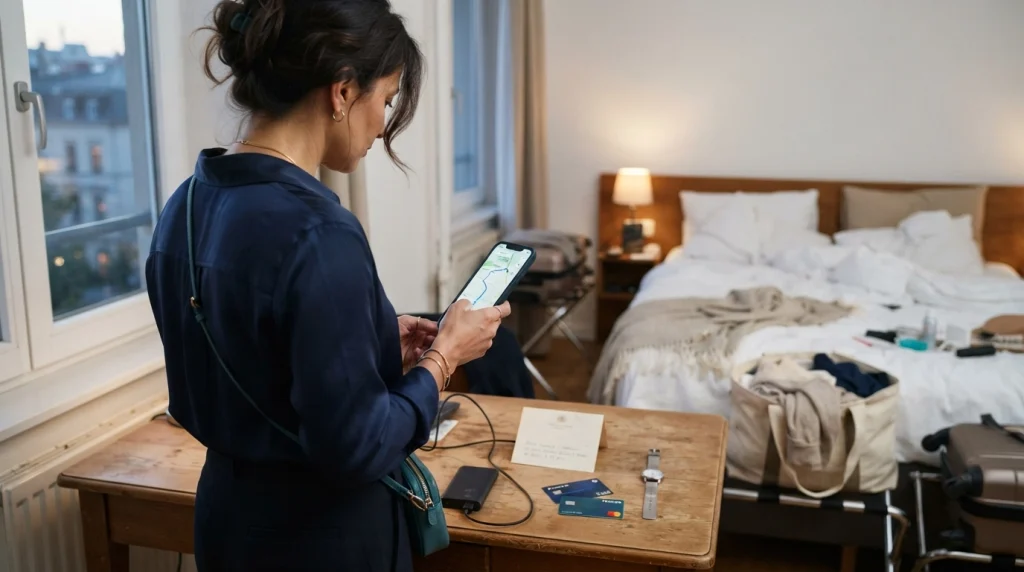
Plan your return before you plan the fun part. That one habit removes much of the uncertainty that makes nighttime solo travel stressful.
I use a simple mental checklist before leaving.
- Choose one main destination. Know the restaurant, tour, performance, market, or neighborhood you intend to visit.
- Check the route both ways. A train may run frequently at 6 p.m. but less often later.
- Save your accommodation details. Keep the name, address, and phone number somewhere accessible offline.
- Check your battery. Bring a charged power bank when you expect heavy map or camera use.
- Carry two payment options. Keep them separately where practical.
- Pick a decision time. Decide when you will reassess whether to stay longer or head back.
Study the last part of the journey
The final few minutes often matter more than the longest part of your route. A direct subway ride can still end with a confusing walk through quiet streets.
Zoom in on that last section before going out.
- Which station exit should you use?
- Will the entrance to your accommodation still be staffed?
- Is the walk straightforward?
- Are there shops, hotels, or other staffed places nearby?
- What transport option will you use if you do not want to walk?
Tell one person enough, not everything
A simple check-in can be useful without turning your solo trip into constant reporting. You might tell someone where you are staying and roughly when you expect to return.
You can also share a ride or live location when that makes sense for you.
Constant tracking is not the goal. The useful part is making sure one trusted person has enough information to help if you unexpectedly lose contact.
The U.S. State Department also provides destination-specific travel information and alerts through its Travel Advisories section.
Section Takeaway: Plan the journey home before leaving, save essential details offline, and make sure a change of plan will not leave you stranded.
What Evening Activities Work Well for Solo Female Travelers?
The easiest evening activities give you structure without making you dependent on strangers. They also make leaving early simple.
You do not need nightlife to enjoy a destination after dark.
- Early dinner: Choose a lively restaurant area and enjoy a relaxed meal before transport becomes less frequent.
- Food tour: A reputable organized tour gives the evening a defined route and finish time.
- Performance: Theater, concerts, cultural shows, and cinemas offer predictable start and end points.
- Night market: Established markets can provide food, shopping, and activity in one concentrated area.
- Evening class: Cooking, crafts, dance, or language activities add structure and social contact.
- Hotel or hostel event: An on-site activity removes the return journey entirely.
- Sunset activity: A viewpoint or waterfront visit can give you an evening experience without staying out deep into the night.
Choose activities by the return journey
I would rather choose my second-favorite evening activity with an easy route home than my first choice with a complicated midnight return. That tradeoff rarely ruins a trip.
It often improves it.
Before booking a late activity, ask three questions:
- What time will it finish?
- How will I return if public transport has stopped?
- Can I leave earlier without creating another problem?
Build a comfortable first evening
Your first night deserves an especially simple plan because you are still learning the area. Travel fatigue can also make navigation feel harder than it will the next day.
A good first evening might be dinner within a 10-minute walk of your accommodation, a short look around the immediate neighborhood, and an early return.
There is no prize for making your arrival night ambitious.
Section Takeaway: Favor structured activities, practical locations, and plans you can leave easily. An enjoyable evening does not need to be a late one.
How Should a Solo Female Traveler Get Back at Night?
The safest practical return method depends on the destination, time, neighborhood, and transport system. Decide using current local information rather than assuming one type of transport is always best.
Your choices may include walking, public transport, a licensed taxi, a reputable ride-hailing service, or accommodation-arranged transport.
When walking makes sense
A short walk may be practical when the route is familiar, active, well connected, and easy to follow. Avoid turning a simple walk into an exploration of shortcuts after dark.
- Stay on routes you understand.
- Keep navigation discreet when possible.
- Skip isolated shortcuts.
- Cross the street or change direction if you want more space from someone.
- Enter a staffed business if you need time to reassess.
When using public transportation
Check whether service frequency changes later in the evening. Also confirm whether every station entrance or exit remains open.
Waiting 25 minutes alone for a final connection can feel quite different from taking the same route during peak hours.
- Know your stop before boarding.
- Keep enough battery for route changes.
- Wait in visible areas near other passengers or staff when possible.
- Avoid falling asleep when traveling alone late.
- Have another way back if service ends unexpectedly.
When taking a taxi or ride-hailing service
Use transport methods that are recognized and commonly used at your destination. Hotel or accommodation staff can often explain the normal local system.
- Confirm the vehicle before entering.
- Check identifying information supplied by the booking service.
- Follow the route on your own map when practical.
- Share trip information when the service provides that option.
- Leave the vehicle in a safe public place if the situation makes you uncomfortable.
The CDC’s guidance for staying healthy and safe during travel also recommends thinking carefully about transportation safety while abroad.
Pro tip: Transportation rules and risks differ widely by destination. Check local government or official tourism information before relying on advice written for another city or country.
Section Takeaway: Do not wait until the evening ends to figure out transportation. Know your preferred return method and one realistic backup before leaving.
How Can You Handle Restaurants, Drinks, and Meeting People Safely?
Eating alone and meeting people can be some of the best parts of solo travel. The key is staying able to make your own decisions and leave independently.
Start with your environment.
Eating alone at night
Choose a restaurant based partly on its location, not only its reviews. A wonderful meal becomes less appealing if getting back afterward creates stress.
- Check closing time before you arrive.
- Know how you will pay.
- Keep your phone accessible.
- Avoid placing your passport, wallet, or phone loosely on the table.
- Ask staff to call legitimate transport if you are unsure about local options.
If you drink alcohol
You do not need to avoid alcohol simply because you travel alone, but keeping control of your decisions matters. Your personal limit may be lower when you are tired, jet-lagged, or navigating an unfamiliar place.
- Keep your drink within your control.
- Do not accept an already-open drink from someone you do not trust.
- Eat and drink water.
- Know your route back before drinking.
- Stop before your judgment or navigation becomes affected.
Meeting new people without depending on them
Meeting travelers, locals, and tour companions can make evenings memorable. I still prefer to keep my own transport, money, accommodation details, and decision-making separate.
Friendly does not have to mean dependent.
- Meet new people in public venues.
- Keep control of your own transport.
- Do not reveal your room number.
- Avoid sharing detailed plans with someone you just met.
- Leave whenever you want without worrying about appearing rude.
A useful rule is simple: do not give a new acquaintance control over your only way home.
Section Takeaway: Socialize as much as you enjoy, while keeping control of your drink, transport, money, phone, and accommodation information.
When Should You Change or Cancel Your Evening Plan?
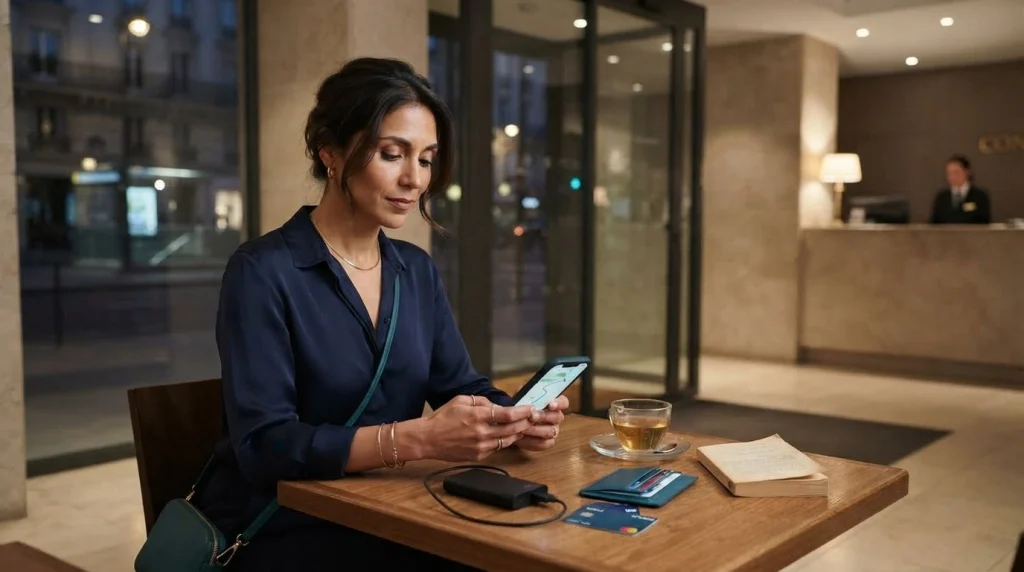
Change your plan whenever the situation becomes more difficult than expected or you stop feeling comfortable. You do not need proof that something dangerous is happening before choosing another option.
Changing plans is normal travel management.
Good reasons to leave early
- Your phone battery is becoming too low for navigation.
- Public transportation is ending sooner than expected.
- You are more tired than you anticipated.
- The area becomes much quieter after businesses close.
- Someone is ignoring your boundaries.
- A driver or vehicle does not match what you expected.
- You have consumed more alcohol than planned.
- Your instincts are telling you to move somewhere else.
Create an exit plan before you need one
An exit plan can be as simple as having enough money for another ride and knowing the address of your accommodation. It can also include a nearby hotel, staffed station, restaurant, or other public place where you can stop and regroup.
That flexibility is valuable.
If you face an immediate emergency, contact the local emergency service rather than relying on advice from a blog. International travelers should also know how to reach their embassy or consulate when relevant.
For health preparation, the CDC recommends checking destination-specific information before traveling. Its Traveler Advice hub provides planning and travel-health resources.
Pro tip: Save local emergency numbers and your accommodation contact before leaving home. Emergency numbers are not the same in every country.
Do not let sunk cost keep you somewhere
You may have paid for a ticket, waited for a famous venue, or traveled across town. That money and time are already spent.
You can still leave.
One of the most useful solo travel habits is giving yourself permission to change your mind without defending the decision. Your evening does not have to continue simply because it was the original plan.
Section Takeaway: Keep enough independence to leave any evening plan early. Your backup plan matters most when the original plan no longer works.
Frequently Asked Questions About Planning Evenings Safely
Should a solo female traveler avoid going out after dark?
No universal rule says women traveling alone must stay inside after dark. Consider the specific destination, neighborhood, transportation options, current official guidance, and your own comfort level instead of using sunset as the only safety measure.
What time should a woman return to her hotel when traveling alone?
There is no universally safe return time. A better approach is to consider transport frequency, neighborhood activity, distance, fatigue, alcohol use, and how easily you can change your route if something goes wrong.
Is walking alone at night safe while traveling?
It depends on the destination and exact route. A familiar, active central street may present different circumstances from an isolated road. Check current local guidance, ask reliable local sources, and use another transport option when walking does not feel sensible.
Should I tell my hotel where I am going?
You usually do not need to report every plan. However, accommodation staff can be useful sources for practical information about transport, closing times, routes, and local areas that visitors commonly misunderstand.
Should I share my live location when traveling alone?
Live-location sharing is optional. Some travelers use it during late rides or unfamiliar journeys, while others prefer scheduled check-ins. Choose a system that improves safety without making you feel as though someone must constantly monitor your trip.
What should I carry during an evening out alone?
Carry only what you need, including your phone, accommodation details, suitable payment options, and any essential medication. Depending on the trip, a compact power bank can also help protect access to navigation and communication.
What if I feel unsafe but cannot explain why?
You do not need to prove that a threat exists before leaving. Move toward a public or staffed place, change transportation, contact someone you trust, or seek local assistance if needed. For an immediate emergency, contact the destination’s emergency services.
Plan for Freedom, Not Fear
The best evening safety plan gives you more freedom because it reduces the number of decisions you must make under pressure. Know where you are going, how you will return, and what your backup will be.
Then enjoy your evening.
I think the most useful solo travel question is not, “Can I guarantee this will be safe?” No traveler can make that promise.
Ask instead, “If this plan changes, do I still have good options?”
If the answer is yes, you have already done much of the practical work that makes evenings alone feel calmer and more manageable.
Before an international trip, check current government advisories and destination-specific health information through reliable sources such as the CDC Travelers’ Health website.
Plan smart, stay flexible, and allow yourself to leave whenever a situation stops working for you.