How Much Emergency Money Should a Solo Female Traveler Keep?
Quick Answer
For most solo female travelers, I suggest keeping about $300–$500 in immediately accessible emergency funds for a short international trip, with only about $100–$200 of that amount as physical cash. Longer or more expensive trips may justify $500–$1,000 or more in backup funds. Your emergency reserve should be separate from your normal travel budget and spread across several payment methods. Before leaving, I also recommend reviewing the U.S. State Department’s emergency financial guidance.
A practical emergency-money setup
- Short domestic trip: Keep roughly $150–$300 available beyond your planned spending money.
- Short international trip: Aim for roughly $300–$500 in accessible backup funds.
- Longer trip: Consider $500–$1,000 or enough to cover several unplanned days.
- Physical cash: Usually $100–$200 is enough unless your destination relies heavily on cash.
- Backup card: Carry a second card separately from your main wallet.
The key rule
- Never keep all your emergency money, cards, and identification in the same bag.
If you’re planning your first trip alone, deciding how much emergency money to carry can feel strangely difficult. Too little leaves you exposed, while too much cash creates another thing to protect.
My approach is simple: I plan enough backup money to solve a realistic travel problem, not every imaginable disaster. That makes the number easier to calculate and much safer to manage.
In This Guide
- How much emergency money should a solo female traveler carry?
- How do you calculate your personal travel emergency fund?
- Should emergency travel money be cash or cards?
- Where should a solo woman keep emergency money while traveling?
- What situations should emergency money actually cover?
- Frequently asked questions
How Much Emergency Money Should a Solo Female Traveler Carry?
There isn’t one perfect amount for every woman or every destination. For a typical short international trip, however, $300–$500 of backup money is a useful starting range.
I don’t mean carrying $500 in your purse. Most of that money should remain accessible through a separate card or account.
What does “emergency money” mean?
Emergency travel money is money reserved for unexpected problems that cannot reasonably wait. It sits outside your normal food, hotel, transport, shopping, and activity budget.
I think of it as my financial escape route. It should let me change plans quickly without worrying about that day’s spending budget.
Common emergency costs can include:
- A last-minute taxi or rideshare when public transport no longer feels practical
- An extra hotel night after a cancellation
- Replacing basic belongings after theft or lost luggage
- A pharmacy or clinic bill
- Changing transportation unexpectedly
- Buying food and necessities during a payment-card problem
The CDC notes that travelers may need to pay medical costs abroad themselves because insurance coverage varies. It recommends checking your coverage and considering appropriate travel medical or evacuation insurance before departure.
A useful starting amount by trip type
| Trip type | Suggested accessible reserve | Typical physical cash |
|---|---|---|
| Weekend or short domestic trip | $150–$300 | $40–$100 |
| 3–10 day international trip | $300–$500 | $100–$200 |
| 2–4 week international trip | $500–$1,000 | $100–$250 |
| Long-term or multi-country travel | At least one week of essential expenses, often $1,000+ | Enough for 1–3 days locally |
These are planning ranges, not universal rules. A $500 reserve stretches much farther in some destinations than in cities where one unplanned hotel night can consume a large part of it.
Section Takeaway: Start around $300–$500 for a short international trip, then adjust for your destination, trip length, insurance, and possible escape costs.
How Do You Calculate Your Personal Travel Emergency Fund?

The best emergency fund is based on the problems you could realistically need to solve. I use a simple calculation instead of choosing a random round number.
Step 1: Price one emergency night
Find the approximate cost of a safe, acceptable hotel room in your destination. Don’t use the cheapest hostel bed you can find.
During an emergency, location and immediate availability often matter more than getting the lowest rate.
Step 2: Add emergency transportation
Estimate what it could cost to travel from your accommodation to an airport, train station, hospital, or safer area.
For urban trips, that might simply mean a taxi. For remote travel, transport can become the largest part of the reserve.
Step 3: Add one or two days of necessities
Budget enough for simple meals, drinking water, local transportation, medicine, and basic toiletries.
This portion doesn’t need to fund sightseeing. It only needs to keep your trip functioning.
Step 4: Consider your insurance situation
Check whether your normal health insurance works abroad and whether your travel policy requires you to pay costs upfront. The CDC advises travelers to understand overseas medical coverage before departure.
Pro tip: Check the CDC’s current destination guidance and your government’s travel advice before departure, especially when medical access or evacuation could be complicated.
Step 5: Add a payment-failure cushion
Imagine your main debit or credit card stops working for 24 hours. How much would you need before contacting your bank or moving money to another account?
That amount belongs in your emergency plan too.
A simple example
Suppose you’re taking a seven-day international city trip. Your backup calculation might look like this:
- Emergency hotel night: $120
- Airport or urgent taxi transport: $60
- Food and essentials for two days: $80
- Pharmacy or minor medical cushion: $100
- Extra payment buffer: $100
That produces a reserve of about $460. In that case, rounding to $500 gives you a comfortable planning number.
My preferred method is to calculate first and round second. It prevents the emergency fund from becoming an arbitrary figure.
Section Takeaway: Build your reserve around one emergency night, urgent transport, essential spending, medical uncertainty, and a temporary card failure.
Should Emergency Travel Money Be Cash or Cards?
Your emergency fund should usually be a mix of cash and electronic access. Carrying the whole amount as cash creates an unnecessary single point of failure.
I want three independent ways to pay whenever possible. If one disappears or stops working, the other two still exist.
| Method | Best use | Main limitation |
|---|---|---|
| Local cash | Taxis, small businesses, cash-only situations, short outages | Hard to replace after loss or theft |
| Main card | Normal hotel, restaurant, and transportation spending | Can be blocked, lost, stolen, or declined |
| Backup card | Replacing access if the main card fails | Useless if stored beside the main card and both disappear |
| Digital wallet | Useful extra payment layer where widely accepted | Depends on your phone, battery, account access, and merchant support |
How much physical cash should you carry?
For many city trips, I prefer enough cash for roughly one day of essential spending plus transport. That often lands around $100–$200 equivalent.
A cash-heavy destination may justify more. A destination where cards are accepted almost everywhere may require less.
Don’t depend on one bank
If possible, use cards from separate accounts or issuers. A second card connected to the same compromised account may not give you much redundancy.
The U.S. State Department advises travelers with lost or stolen cards to contact their card company immediately. It also notes that some issuers may offer emergency replacement assistance.
Section Takeaway: Your emergency fund is safer when it exists in several forms. Cash solves short-term payment problems, while a separately stored backup card protects access to larger funds.
Where Should a Solo Woman Keep Emergency Money While Traveling?
Splitting your money matters almost as much as the amount. I never want one stolen wallet to remove every way I have to pay.
The easiest system is to create a main wallet, hidden backup, and account-level reserve.
Use a three-layer system
- Main wallet: Carry the cash and card you expect to use that day.
- Separate backup: Keep a second card and small cash reserve somewhere different.
- Account reserve: Leave most emergency funds electronically accessible rather than physically carrying them.
Your backup shouldn’t sit in the same purse, backpack pocket, or card holder as your main wallet. Otherwise, one incident defeats the entire system.
Keep the backup boring and discreet
A plain interior compartment is often better than an obvious “valuable items” pouch. The goal is separation, not an elaborate hiding place you’ll forget.
When your accommodation has appropriate secure storage, you may choose to leave part of your backup there rather than carrying everything all day.
Protect your financial access too
Emergency preparation isn’t only about physical money. Losing your phone can make banking, card verification, email, and account recovery harder.
Before leaving, I like to prepare:
- Bank and card-company contact details
- Important account-recovery information stored securely
- Copies of key travel documents
- Travel insurance details
- Emergency contact information
- Nearest embassy or consulate details when relevant
The CDC recommends carrying emergency contact information and keeping copies of important documents. It also advises travelers to know how they will access care abroad.
Pro tip: Keep document copies separate from the originals and review current official emergency information for your destination before each trip.
Section Takeaway: Don’t create one financial point of failure. Separate your daily money, backup payment method, and larger electronic reserve.
What Situations Should Emergency Money Actually Cover?
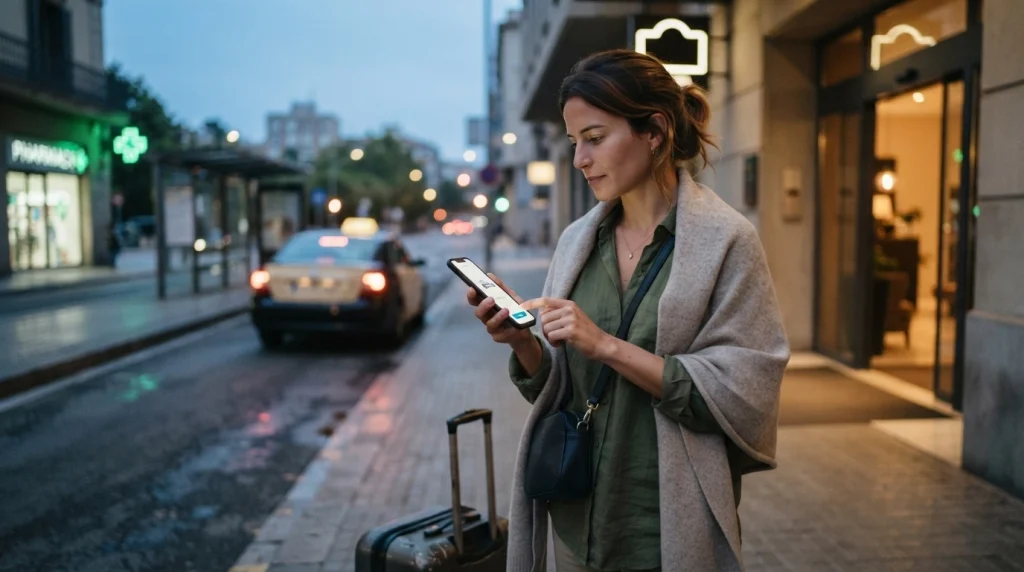
I treat my emergency reserve as problem-solving money. If spending it protects my safety, health, shelter, or ability to get home, I don’t hesitate to use it.
I don’t use it to stretch the sightseeing budget. That distinction keeps the reserve available when it matters.
Use emergency funds when plans stop being workable
- Unsafe-feeling transportation: Pay for a different ride instead of forcing yourself into an option you’re uncomfortable using.
- Accommodation problem: Book another room when your current option becomes unusable or inappropriate.
- Lost payment access: Use backup cash while your bank freezes or replaces a card.
- Unexpected medical need: Pay for urgent care, medication, or transportation when required.
- Major delay: Cover food, shelter, and transport while rearranging plans.
- Lost or stolen belongings: Replace basic items needed to continue safely.
Emergency money does not replace insurance
A few hundred dollars can solve everyday disruptions. It cannot reliably cover serious medical treatment or emergency evacuation.
That’s why I see emergency cash and travel insurance as different tools. One handles immediate access; the other may protect against much larger covered losses.
CDC guidance notes that travelers can face out-of-pocket medical expenses abroad and recommends considering coverage for health care and emergency evacuation where appropriate.
Replenish the reserve after you use it
If I spend $80 of my emergency cash halfway through a longer trip, I try to rebuild that buffer when it’s practical. The reserve shouldn’t disappear just because the first problem has passed.
For multi-country trips, reassess the amount when entering a more expensive or more cash-dependent destination.
Section Takeaway: Emergency money is there to protect your safety, health, shelter, and transportation. Use it when needed, then rebuild the reserve during longer trips.
Frequently Asked Questions
Is $500 enough emergency money for solo travel?
For many short international trips, $500 is a reasonable accessible reserve beyond your normal trip budget. Expensive destinations, remote travel, longer trips, limited insurance, or costly transportation may justify more. Only a smaller portion usually needs to be physical cash.
How much cash should I carry when traveling alone?
For many city trips, carrying roughly $100–$200 equivalent is enough for short payment disruptions, food, and transportation. Adjust the amount for local card acceptance and costs. Keep the rest of your emergency funds accessible through a separately stored payment method.
Should I carry emergency money in U.S. dollars?
Usually, you should prioritize usable local currency for immediate expenses. A modest amount of widely exchangeable foreign currency can sometimes provide an extra backup, but usefulness varies by destination. Check local exchange rules and payment habits before traveling.
Where should I hide backup cash when traveling?
Keep backup cash somewhere separate from your daily wallet and main payment card. A discreet internal compartment or secure accommodation storage may work. Avoid placing every card, document, and cash reserve in one purse or backpack.
Do I still need emergency money if I have travel insurance?
Yes. Insurance and emergency funds solve different problems. You may still need immediate money for transportation, food, accommodation, deductibles, medication, or expenses that require upfront payment while an insurance claim is being handled.
Should my emergency fund be separate from my travel budget?
Yes. Your normal travel budget pays for planned expenses such as hotels, meals, attractions, and transport. Emergency money should remain untouched unless an unexpected situation affects your safety, health, shelter, essential belongings, or ability to continue the trip.
What if my debit or credit card is stolen abroad?
Contact the issuer quickly and block or replace the card. Use your separately stored backup card or cash while resolving the problem. For U.S. travelers facing severe financial difficulty abroad, the State Department also provides information about consular financial assistance.
As of 2026, my simplest rule is this: carry enough emergency access to buy yourself choices, not enough cash to create another major risk. For many short solo trips, that means roughly $300–$500 available, with only part of it in cash.
Before your next trip, price one emergency hotel night, urgent transportation, and two days of essentials. Add a separate card and a sensible cash reserve, and you’ll have a much more useful number than any one-size-fits-all recommendation.