How Much Connection Time Should a Woman Allow Between Flights?
Quick Answer
For most trips, I recommend allowing at least 75–90 minutes between domestic flights and about 2–3 hours when an international connection involves immigration, another security check, baggage collection, or a terminal change. These are comfortable planning buffers, not official minimums; the actual minimum connecting time varies by airport, airline, route, and connection type.
My practical connection-time guide
- Simple domestic connection: Aim for 75–90 minutes when both flights are on one ticket.
- Large airport: Allow 90–120 minutes if you may change terminals or take an airport train.
- International connection: I prefer about 2 hours when the transfer stays relatively simple.
- Immigration or bag recheck: Give yourself 2.5–3 hours when border formalities are involved.
- Separate tickets: Consider 4 hours or more because a missed second flight may become your responsibility.
- Airport change: Treat it as a separate journey and build in several hours, or choose an overnight stop.
One rule I use
- If missing the connection would leave me stranded late at night, I choose the longer layover.
If you’re wondering how much connection time should a woman allow between flights, don’t focus only on the shortest connection an airline will sell. I look at how much time I’ll need to move through the airport calmly, handle delays, find my gate, and solve problems without depending on someone else.
This matters even more when I’m traveling solo. A connection that is technically possible can still feel unnecessarily stressful when immigration, luggage, terminal changes, or an unfamiliar airport get involved.
In This Guide
- How much connection time should you allow?
- Is minimum connection time enough?
- How much time do international connections need?
- When should a solo woman choose a longer layover?
- How much time should you allow on separate tickets?
- How can you make a flight connection easier?
- Connection time FAQs
- Final takeaway
How Much Connection Time Should You Allow?

For a straightforward connection on one ticket, my personal comfort zone starts around 75–90 minutes domestically. For international travel, I usually want at least two hours and often closer to three.
The right buffer depends on what must happen between the two flights. Changing gates is much easier than clearing immigration, collecting luggage, changing terminals, and passing security again.
| Connection type | Planning buffer I prefer | Why |
|---|---|---|
| Domestic, same ticket | 75–90 minutes | Room for a small delay and gate change |
| Domestic, large hub or terminal change | 90–120 minutes | Walking, trains, buses, or terminal transfers take time |
| International, simple airside transfer | About 2 hours | Allows more room for security and long airport distances |
| International with immigration or baggage | 2.5–3 hours | Border queues and baggage delivery can be unpredictable |
| Separate tickets or self-transfer | 4+ hours | You may need to collect bags, check in again, and absorb delays yourself |
These numbers are planning targets rather than universal airline rules. Your booking may show a shorter legal connection because airports and airlines use route-specific minimum connecting times.
I’d rather have 40 quiet minutes near my next gate than spend 20 minutes running through an unfamiliar terminal.
What is connection time?
Connection time is the scheduled period between the arrival of one flight and the departure of your next flight. Your usable transfer time is shorter because boarding normally begins before the listed departure time.
That difference matters. A 70-minute layover does not mean you have 70 minutes to wander between gates.
Is Minimum Connection Time Enough?
Not always. An official minimum tells you that a connection can be scheduled under defined airport and airline conditions, but it doesn’t promise a relaxed transfer.
IATA describes minimum connecting time as the shortest interval required to transfer a passenger and luggage between connecting flights in a particular location. Different airports and connection types can therefore have different minimums.
- Airport size: A gate change may involve a long walk, train, shuttle, or another terminal.
- Arrival delay: Even a 20-minute late arrival can consume a large part of a short layover.
- Boarding cutoff: Your next gate can close before the aircraft’s scheduled departure.
- Security: Some transfers require another passenger screening.
- Border control: International routes may add immigration or customs procedures.
- Checked bags: Certain itineraries require you to collect and recheck luggage.
I use the airline’s offered connection as the starting point, not the final decision. Then I ask whether I could comfortably complete every step if my first flight arrived 20–30 minutes late.
If the answer is no, I look for a longer itinerary.
Section Takeaway: A bookable connection and a comfortable connection aren’t the same thing. Build your schedule around realistic airport movement, not just the shortest option shown.
How Much Time Do International Connections Need?
I generally plan 2–3 hours for international connections. I move toward the longer end when immigration, baggage collection, another security check, or a terminal change is likely.
International connections vary much more than domestic ones. Your citizenship, destination, airport, baggage arrangement, and onward route can all change the process.
Connections involving passport control
Immigration queues can be quick one day and much slower another. That’s one reason I don’t build an important international itinerary around the tightest possible connection.
Before an overseas trip, I also review the U.S. State Department’s international travel planning guidance for destination entry requirements and current travel information.
Connections in the United States
International arrival procedures in the United States depend on your airport and route. Some travelers also arrive from airports offering U.S. Customs and Border Protection preclearance.
With CBP preclearance, eligible passengers complete U.S. inspection before boarding their U.S.-bound flight. That can change what happens during the connection after arrival.
Don’t assume your previous international connection will work the same way at another airport.
Check your exact itinerary
- Confirm whether you must pass passport control.
- Check whether your luggage is checked through.
- Find the arrival and departure terminals.
- Check whether another security screening is required.
- Look at the airport’s official connection instructions.
- Confirm visa or transit requirements before departure.
Pro tip: International procedures change. Verify entry, transit, security, and border requirements with your airline, official airport website, and relevant government authorities before flying.
When Should a Solo Woman Choose a Longer Layover?
I choose extra time whenever a missed connection would create more than a minor inconvenience. That is especially true when I’m arriving somewhere unfamiliar late in the evening.
The goal isn’t to suggest that women need different airline rules. The useful difference is how much margin you personally want while navigating alone.
I add time for unfamiliar airports
A familiar airport is easier because I already understand the layout. At a new hub, I want time to read signs and confirm my route instead of following the crowd.
- First solo international trip: Add extra time while airport procedures still feel unfamiliar.
- Large hub: Allow more time when terminals require trains, buses, or long walks.
- Late final arrival: Protect your connection when missing it could mean landing after public transportation stops.
- Heavy luggage: Give yourself more time if you move slower with bags.
- Mobility needs: Build the itinerary around the time and assistance you personally require.
- Last flight of the day: A later alternative may not exist if you misconnect.
Think past the connecting airport
I also look at what happens after the final flight. A delay that changes a 6 p.m. hotel arrival into a midnight arrival can completely change my transportation plan.
If my itinerary depends on catching the last airport train, I want more protection between flights.
The State Department also recommends researching your destination, reviewing current travel guidance, organizing travel documents, and planning for unexpected problems before international travel.
Section Takeaway: For solo travel, the best layover isn’t always the shortest one. Consider how a missed flight would affect your arrival time, transportation, accommodation, and backup plan.
How Much Time Should You Allow on Separate Tickets?
Separate tickets need a much larger buffer. I would normally consider at least four hours, and sometimes an overnight stop when the consequences of a delay are expensive.
This type of itinerary is often called a self-transfer. You are combining separate bookings rather than relying on one protected connecting itinerary.
Why separate tickets are riskier
If the first airline arrives late, the second airline may treat your missed departure as a normal no-show. Your exact rights depend on the tickets, carriers, and applicable passenger-protection rules.
You may also need to complete several extra steps.
- Enter the country or clear the required border process.
- Collect checked baggage if it isn’t transferred automatically.
- Move to another terminal if necessary.
- Check in with the next airline.
- Drop your bag before that airline’s deadline.
- Pass security again.
- Reach the gate before boarding closes.
That’s much more demanding than walking between two gates on one protected reservation.
Airport changes need even more time
Some cheap itineraries involve landing at one airport and departing from another. I treat that as ground transportation between two separate journeys.
Traffic, train disruptions, luggage, immigration, and unfamiliar streets can all affect the transfer.
If the price difference is small, I usually prefer a single-ticket itinerary over a tight self-transfer. The simpler booking often buys useful peace of mind.
How Can You Make a Flight Connection Easier?
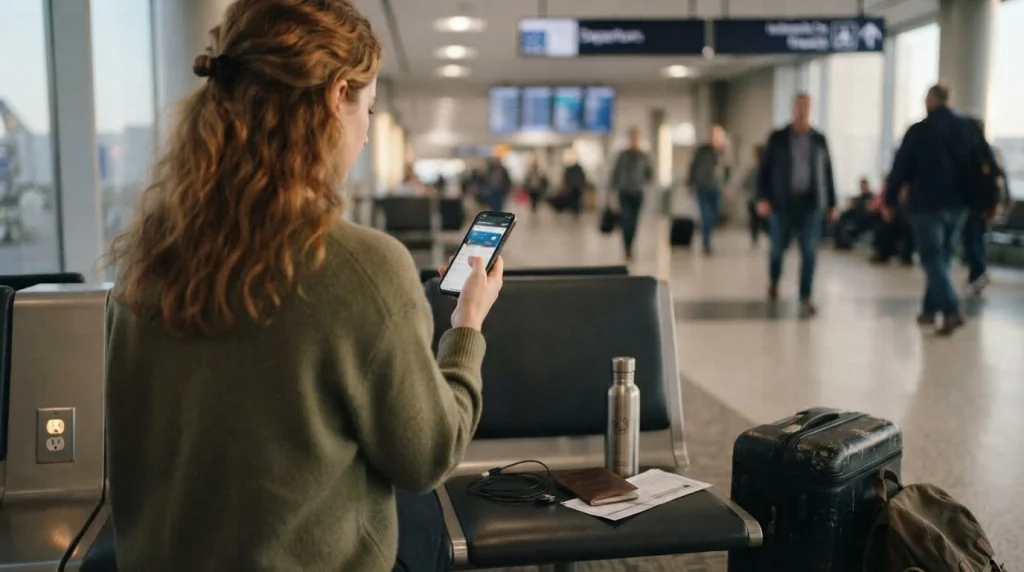
A comfortable layover helps, but preparation matters too. I want to know the connection process before the first aircraft leaves the ground.
I usually check the airport layout after receiving my itinerary.
Before departure
- Download both boarding passes when available.
- Save your itinerary offline.
- Check your arrival and departure terminals.
- Install the airline app for gate and delay notifications.
- Confirm whether checked baggage goes to the final destination.
- Review official airport transfer information.
- Charge your phone and carry a charging cable or power bank.
After landing
I check the next gate before doing anything optional. Gates change, so the boarding pass saved the previous evening may no longer show the latest information.
- Follow signs for Connections or Transfers.
- Check airport screens or your airline app.
- Complete security or passport control first.
- Find the next gate before stopping for food.
- Keep your passport, phone, and boarding pass secure but accessible.
- Ask airline or airport staff when signage is unclear.
For U.S. airport screening information, I check the Transportation Security Administration’s travel guidance rather than relying on old forum posts.
A longer layover also gives me practical breathing room. I can use the restroom, refill water, eat something, and reorganize without watching the clock every minute.
Section Takeaway: Extra connection time works best when you also know the terminal, baggage process, security requirements, and next gate procedure before you travel.
Connection Time FAQs
Is one hour enough for a connecting flight?
One hour can work for some simple domestic connections, especially when an airline sells the itinerary on one ticket. I still prefer around 75–90 minutes because a small arrival delay or distant gate can quickly turn a one-hour layover into a rush.
Is two hours enough for an international connection?
Two hours can be reasonable for a straightforward international transfer, but it may be tight when you must clear immigration, collect baggage, change terminals, or pass security again. For more complicated international connections, I prefer 2.5–3 hours.
Is a three-hour layover too long?
No. Three hours can be a useful buffer at a large international airport, particularly when border checks or terminal transfers are involved. I’d rather spend spare time at the gate than create unnecessary stress with a connection that leaves no margin.
Should a woman choose a longer layover when traveling alone?
Not because airline connection rules differ for women. However, a solo traveler may prefer more time because she must manage navigation, luggage, documents, food, delays, and unexpected problems without a travel companion sharing those tasks.
How much time should I allow if I need to collect checked baggage?
I’d usually aim for about 2.5–3 hours internationally and more on separate tickets. Baggage delivery, immigration, customs, rechecking the suitcase, security, and walking to the next gate can all reduce your usable connection time.
What happens if my first flight is delayed?
What happens next depends on how your itinerary was ticketed and the reason for the delay. If both flights are on one booking, contact the operating airline promptly. With separate tickets, rebooking the second flight may be more complicated or costly.
Is four hours enough for a self-transfer?
Four hours is a sensible starting buffer for many self-transfers, but it isn’t a guarantee. Airport size, immigration, baggage, terminal changes, check-in deadlines, and the consequences of missing the second ticket should all influence your decision.
How Much Connection Time Should You Give Yourself?
For most solo trips, I start with 75–90 minutes for a simple domestic connection, about two hours for an uncomplicated international transfer, and 2.5–3 hours when immigration or baggage handling is involved.
For separate tickets, I want at least four hours unless I know the airport and transfer process well. An overnight stop can be smarter when missing the second flight would be costly.
The shortest connection isn’t automatically the best connection. Choose enough time to move through the airport confidently, handle a reasonable delay, and still reach your next gate without turning your travel day into a race.