How Can a Solo Female Traveler Avoid Overplanning Her Itinerary?
Quick Answer
A solo female traveler can avoid overplanning by booking only the parts that are difficult to change, choosing one main activity per day, and leaving several hours open for meals, rest, delays, and spontaneous plans. Keep your safety basics firm, but let sightseeing stay flexible, and review current guidance for women travelers before an international trip.
A simple anti-overplanning formula
- Book the anchors: Confirm important transportation, accommodation, and limited-capacity activities.
- Choose one priority: Give each sightseeing day one main experience instead of several compulsory stops.
- Keep options optional: Save extra cafés, museums, markets, and viewpoints without assigning them fixed times.
- Protect empty time: Leave room for transportation, meals, breaks, weather changes, and unexpected discoveries.
- Plan safe returns: Know how you’ll reach your accommodation without scheduling every minute of the evening.
- Review daily: Adjust tomorrow’s plan according to your energy, weather, transportation, and comfort level.
Overplanning a solo trip often begins with good intentions. You want to use your time well, feel prepared, and avoid arriving somewhere alone without knowing what to do.
The problem starts when the itinerary becomes another job. I prefer a solo trip itinerary that gives me direction without making every hour feel like an appointment.
In This Guide
- What Does Overplanning a Solo Trip Look Like?
- How Much Planning Is Enough for a Solo Female Traveler?
- How Do You Build a Daily Itinerary Without Filling Every Hour?
- How Can You Stay Safe Without Planning Everything?
- What Should You Do If Your Itinerary Is Already Overplanned?
- Solo Female Travel Itinerary FAQ
What Does Overplanning a Solo Trip Look Like?
Overplanning happens when your schedule has so little flexibility that a delay, tired afternoon, long lunch, or change of mind creates stress. A useful plan supports the trip; an overplanned itinerary makes the trip serve the schedule.
Definition: Solo travel overplanning means scheduling more activities, reservations, movements, or decisions than you can comfortably manage while still allowing time for normal travel delays, rest, safety decisions, and spontaneity.
Watch for these warning signs
- You have several timed reservations on most days.
- You need every train, bus, and attraction to run exactly on time.
- You haven’t left enough time for a relaxed meal.
- You’re repeatedly crossing the city to follow your schedule.
- You feel guilty when you skip something.
- A 30-minute delay affects several later plans.
- You can’t easily return to your accommodation for a break.
- The itinerary feels stressful before you’ve even left home.
That last sign matters. Planning should reduce uncertainty, not create a long list of obligations you’re already worried about completing.
Don’t confuse your research list with your itinerary
This is one of the biggest changes I make when planning. I separate everything that interests me from what I intend to schedule.
- Research list: Every museum, restaurant, neighborhood, market, viewpoint, café, and day trip that interests you.
- Actual itinerary: The small number of things you realistically expect to do.
- Backup list: Easy alternatives you can choose if weather, energy, or circumstances change.
You might research 25 places for a four-day trip. That doesn’t mean 25 places need a time slot.
The long list gives you choices. The short itinerary gives you freedom.
Section Takeaway: Research generously, but schedule selectively. Your saved list is a menu, not a checklist you have to complete.
How Much Planning Is Enough for a Solo Female Traveler?

For most trips, plan the difficult-to-change parts carefully and keep the easy-to-change parts loose. I usually think in terms of fixed anchors, flexible priorities, and optional extras.
This gives you preparation without turning the trip into a timetable.
Use three planning levels
| Planning Level | Examples | How to Treat It |
|---|---|---|
| Fixed | Flights, arrival accommodation, limited trains, major events | Book or confirm ahead |
| Flexible | Museums, neighborhoods, walking tours, main attractions | Choose a preferred day but allow movement |
| Optional | Cafés, markets, parks, shops, viewpoints | Keep on a saved list with no fixed time |
Fixed plans deserve the most attention because replacing them may be expensive or difficult. Optional plans should remain genuinely optional.
Try the one-main-thing rule
On an ordinary sightseeing day, choose one experience that matters most. Add one or two lighter possibilities around it.
A four-day city trip might use this rhythm:
- Day 1: Arrival, neighborhood walk, easy dinner.
- Day 2: Major museum, nearby lunch, optional park or café.
- Day 3: Walking tour, flexible afternoon, evening decision later.
- Day 4: Market or historic district, open afternoon, departure preparation.
Notice that the plan still has structure. It simply doesn’t assume you’ll want to move continuously from breakfast until bedtime.
Leave more time than activities appear to need
A two-hour museum rarely consumes only two hours. You also have transportation, finding the entrance, queues, bathrooms, food, navigation, and the walk afterward.
I count the whole experience, not just the advertised activity time. That makes the schedule much more realistic.
- Allow time to get there.
- Allow time to leave without rushing.
- Include meals and water breaks.
- Expect navigation to take longer in unfamiliar places.
- Leave room for short rests.
As of 2026, this remains one of the simplest ways I know to make an itinerary easier to follow. You don’t need a complicated planning app to create breathing room.
Section Takeaway: Book what would be difficult to replace. Give everything else enough flexibility to move, shrink, or disappear.
How Do You Build a Daily Itinerary Without Filling Every Hour?
Build each day around one area, one main priority, and several nearby choices. Avoid assigning exact times unless an activity genuinely requires them.
Plan by neighborhood instead of by attraction
Grouping nearby places removes much of the pressure from sightseeing. It also reduces unnecessary transportation.
For example, instead of creating five appointments across a city, make a neighborhood note:
- Historic center: Main landmark, small museum, market, two cafés.
- Riverside: Promenade, food hall, boat option, sunset viewpoint.
- Museum district: Priority museum, secondary gallery, park, bakery.
You can then decide what fits once you’re there. If one place has a long queue, another option is already nearby.
Use A, B, and C priorities
A simple priority system helps when your research list keeps growing. It forces you to separate genuine priorities from attractive extras.
- A — Must do: You’d be disappointed to leave without experiencing it.
- B — Would love to do: Important, but movable or skippable.
- C — Nice if nearby: Something to choose only when time and energy allow.
Give most fixed time slots to A activities. B and C items should fill natural gaps rather than control the day.
Keep part of each day visibly empty
An empty afternoon isn’t wasted time. It can become your best meal, an unexpected neighborhood, a longer conversation, laundry, a nap, or simply slower sightseeing.
I also avoid immediately filling every blank space I see while planning. Empty time is part of the itinerary.
Use a five-minute evening reset
A short review each evening is more useful than trying to predict every detail weeks ahead. Current information can change what makes sense tomorrow.
- Check the weather.
- Confirm your one fixed reservation, if any.
- Review transportation for anything time-sensitive.
- Choose tomorrow’s main priority.
- Keep one simple backup nearby.
- Decide whether your body needs a slower start.
If today was exhausting, lighten tomorrow. Solo travel gives you permission to make that decision without negotiating with anyone.
Section Takeaway: Build days from priorities and locations, not from hourly slots. A flexible itinerary should make changing your mind easy.
How Can You Stay Safe Without Planning Everything?
Flexibility doesn’t require giving up basic solo female travel safety planning. Keep essential safety decisions firm while allowing sightseeing and leisure plans to change.
This distinction is important. Knowing your safe return options is different from deciding where you’ll eat lunch at exactly 12:30.
Keep these safety anchors fixed
- Know where you’re sleeping that night.
- Plan your airport or station arrival route.
- Understand how you’ll return after evening activities.
- Keep your phone charged and essential information accessible.
- Carry backup payment separately when practical.
- Save your accommodation address offline.
- Share important trip details with someone you trust when appropriate.
- Check current destination guidance before international travel.
The U.S. State Department notes that local laws, customs, clothing expectations, and security conditions can affect women differently across destinations. Check the guidance that applies to your specific destination before departure.
Pro tip: Review official destination information through Travel.State.Gov and destination-specific health information through the CDC Travelers’ Health destination directory before an international trip.
Create a safe exit plan, not a minute-by-minute plan
I like knowing how I can leave an area if my plans stop feeling comfortable. I don’t need to know exactly how long I’ll stay there.
A simple exit plan can include:
- Nearest useful public transportation.
- A licensed taxi or established ride option where available.
- A staffed hotel, café, station, or other public place nearby.
- Your accommodation address saved offline.
- Enough battery and payment access to change plans.
This creates practical flexibility. You can stay longer somewhere you enjoy without feeling trapped by your original timetable.
Don’t let prepaid plans override your judgment
Money already spent can make a reservation feel compulsory. It isn’t.
If transportation changes, you become unwell, conditions worsen, or something doesn’t feel right, reconsider the plan. Losing the cost of an activity can be better than forcing yourself through a situation you no longer want.
Section Takeaway: Keep your safety framework dependable and your sightseeing flexible. Preparation should increase your options, not reduce them.
What Should You Do If Your Itinerary Is Already Overplanned?
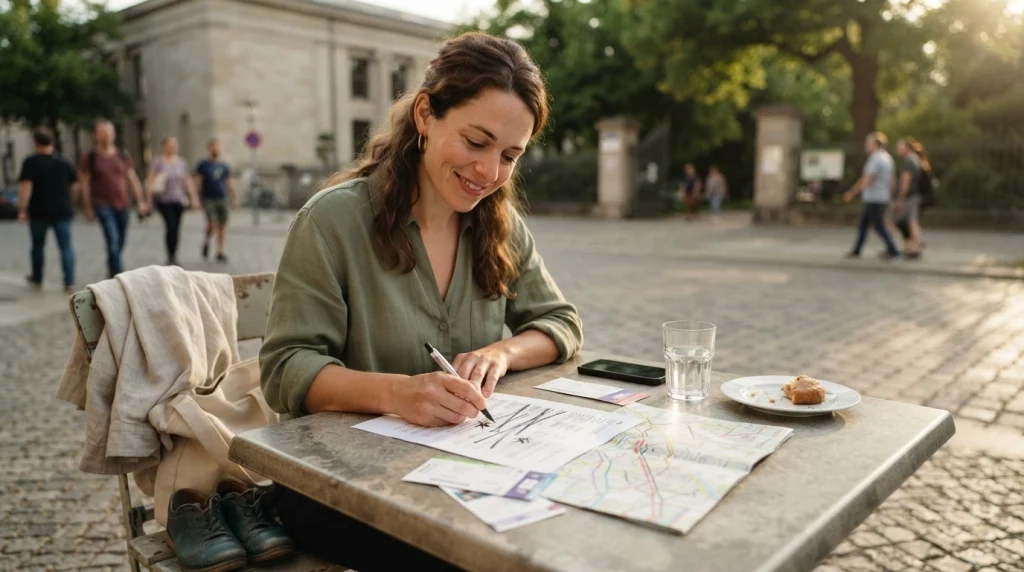
Start removing commitments rather than shortening every activity. A packed itinerary usually improves more when you delete plans than when you try to move faster.
Cut the plan in this order
- Remove activities you chose mainly because they’re popular online.
- Drop duplicate experiences, such as several similar museums or viewpoints.
- Remove stops that require crossing the city for little payoff.
- Turn some restaurant plans into nearby meal options.
- Move B-priority activities back to your optional list.
- Protect the experiences that genuinely matter to you.
This is much easier before departure. It also works after the trip begins.
Use the domino test
Ask what happens if one activity runs an hour late. If three later plans immediately become problems, the schedule is too tight.
A flexible day should survive one delay without requiring a full rebuild.
Schedule recovery after demanding days
Long travel days, hikes, full-day tours, late events, and early departures all use more energy than ordinary sightseeing. Give the following day a lighter start when possible.
A slow morning can protect the rest of the trip. Exhaustion often creates more itinerary problems than a missing attraction does.
Give yourself permission to stop
You don’t need to maximize every hour just because you traveled a long way. Resting in your accommodation for an afternoon doesn’t mean you’ve failed at solo travel.
Sometimes the most useful question is simple: “If I weren’t worried about completing my itinerary, what would I want to do right now?”
- Eat somewhere close.
- Sit in a park.
- Return to your room.
- Do laundry.
- Call home.
- Spend longer in a neighborhood you like.
- Skip tonight’s optional plan.
Travel isn’t a productivity contest. The number of attractions you photograph doesn’t measure the quality of the trip.
Remember why flexibility matters more when you’re alone
Solo travel gives you something group trips rarely offer: almost complete control over your pace. Nobody else needs to approve a late breakfast, an extra museum hour, or a completely changed afternoon.
Overplanning can accidentally remove that advantage. Leave enough room to use the freedom you traveled alone to enjoy.
Section Takeaway: If your itinerary already feels exhausting, remove commitments instead of trying to become a faster traveler. Your schedule should adapt to you.
Solo Female Travel Itinerary FAQ
How many activities should a solo female traveler plan each day?
One main activity plus one or two flexible options is a useful starting point for many sightseeing days. Plan less on arrival days, transportation days, physically demanding days, and days with an important evening event.
Should I book everything before my first solo trip?
No. Book difficult-to-replace essentials such as important transportation, suitable accommodation, and limited-capacity experiences when needed. Local sightseeing, ordinary meals, cafés, shopping, and many neighborhood activities can usually stay flexible.
Is an itinerary necessary for solo travel?
A detailed itinerary isn’t always necessary, but a basic plan can reduce stress. Know your accommodation, essential transportation, major bookings, and a few priorities while keeping enough free time to change direction.
How much free time should I leave while traveling alone?
Leave enough space that transportation delays, meals, rest, or one activity running long won’t ruin the day. Rather than chasing a perfect percentage, check whether your schedule can lose an hour without creating a chain of problems.
How can I be spontaneous and still travel safely?
Keep your safety anchors stable while changing optional activities. Know where you’re staying, how you’ll return, how to access transportation, and how to reach essential information while letting restaurants, sightseeing, and social plans remain flexible.
What if I miss something I wanted to see?
Decide whether it still matters enough to change another day. If not, let it go instead of squeezing it into an already full schedule. Missing one attraction is often better than spending several days rushing.
What’s the easiest way to stop overplanning a solo trip?
Separate your research list from your actual itinerary. Keep many possible activities saved, but place only genuine priorities on the calendar and treat everything else as an optional choice.
The goal of a solo itinerary isn’t to predict every hour. It’s to give you enough structure to feel prepared and enough freedom to enjoy where you are.
Plan the essentials, choose what matters most, and leave space for the trip you couldn’t have planned from home.