Where Do Carry On Bags Go on the Plane Explained Clearly
Where do carry on bags go on the plane? This guide explains the typical storage spots for your carry-on backpack or bag during your flight. From overhead bins to under-seat spaces, we break down where to place your carry-on for easy access and a stress-free travel experience.
Key Takeaways
- Carry-on bags are mainly stored in overhead bins or under the seat in front of you. Knowing which spot is best depends on your bag size and seat location.
- Overhead bins offer ample space for larger carry-on backpacks. They keep your bag safe and free your legroom.
- Under-seat storage is ideal for smaller bags or items you want to access during the flight.
- Board early to secure overhead bin space for your carry-on. Late boarders might be forced to gate-check their bags.
- Different airlines have varying carry-on size rules. Always check before packing your backpack.
- Understanding where carry-on bags go helps reduce stress and speeds up boarding.
- Properly stowing your carry-on keeps the cabin tidy and safe for everyone.
Where Do Carry On Bags Go on the Plane Explained Clearly
Traveling with a carry-on backpack is convenient, but many travelers wonder, where exactly do carry on bags go on the plane? This guide will clear up the confusion and show you the best places to store your carry-on bag during your flight. You’ll learn about overhead bins, under-seat storage, airline rules, and tips to make your boarding smooth and stress-free.
Step 1: Understand the Two Main Storage Spots on the Plane
When you board a plane, there are two main places where your carry-on bag can go:
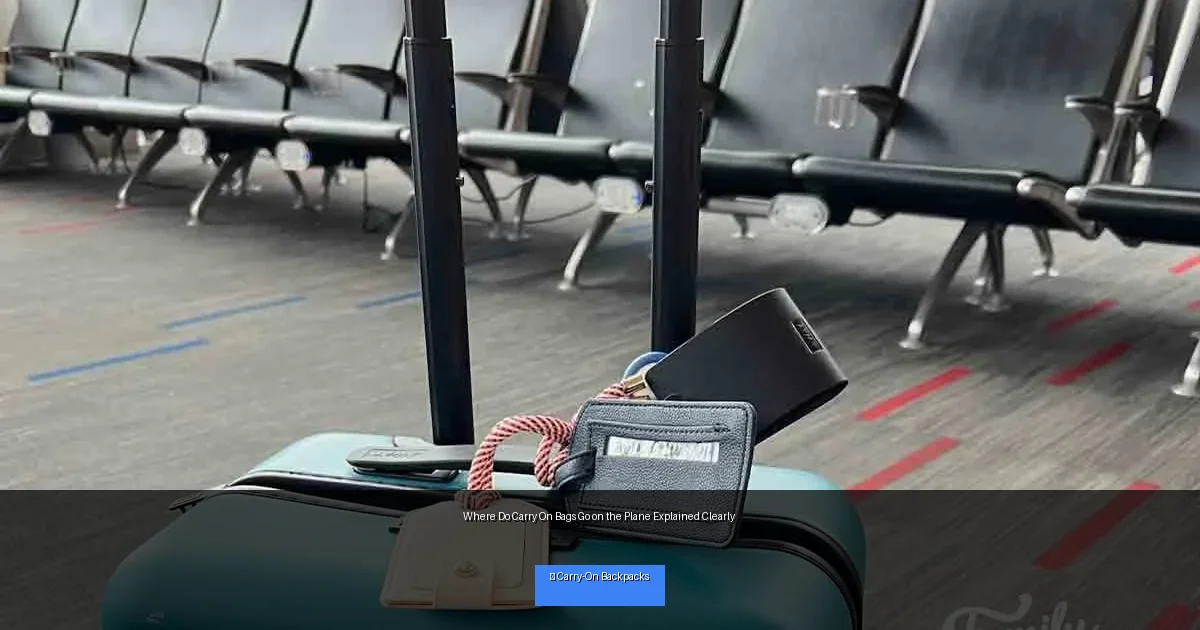
Visual guide about Where Do Carry On Bags Go on the Plane Explained Clearly
Image source: familytravelmagazine.com
Overhead Bins
These are the compartments above the passenger seats. They are spacious and designed to hold larger carry-on bags, including backpacks, suitcases, and totes.
Under-Seat Storage
This space is located directly under the seat in front of you. It’s smaller than overhead bins and perfect for smaller bags or items you want to keep close during the flight.
Step 2: Know Your Carry-On Size and Airline Rules
Carry-on backpacks come in many sizes. Airlines usually have strict size and weight limits for carry-on bags. Before you pack, check your airline’s website for their specific rules.
Typical Carry-On Size Limits
- Maximum dimensions often range around 22 x 14 x 9 inches (56 x 36 x 23 cm).
- Some airlines allow slightly larger or smaller bags.
- Weight limits vary but generally hover around 15-22 lbs (7-10 kg).
Knowing these limits helps you select a carry-on backpack that fits comfortably in the plane’s storage spaces.
Step 3: How to Store Your Carry-On Bag in the Overhead Bin
Using the overhead bin is the most common way to store carry-on backpacks. Here’s how to do it right:
Step 3.1: Place the Bag Upright or Flat
Depending on your backpack’s shape, place it upright or flat to maximize space. Soft-sided backpacks can be squished slightly to fit better.
Step 3.2: Slide It All the Way In
Push your bag fully into the bin so it doesn’t block the door or fall out during turbulence.
Step 3.3: Secure the Bin Door
Make sure the overhead bin door closes securely to keep your bag safe.
Practical Tip:
Put heavier items on the bottom of your backpack to keep it stable in the bin.
Step 4: How to Use Under-Seat Storage for Your Carry-On
If your backpack is small or you want easy access during the flight, under-seat storage is ideal.
Step 4.1: Check the Bag Size
Make sure your backpack fits under the seat in front of you. If it’s too big, it won’t fit properly.
Step 4.2: Slide the Bag Under the Seat
Place your backpack with the wheels (if any) facing out to make retrieval easier.
Step 4.3: Keep Essentials Accessible
Store items you may need during the flight, like headphones, books, or snacks, in the top compartments of your backpack.
Step 5: Tips to Secure Overhead Bin Space for Your Carry-On
Sometimes overhead bins fill up fast. Here are ways to ensure space for your backpack:
- Board early: Early boarding groups usually get first pick for bin space.
- Choose an aisle or window seat near the front: Bins here fill up last.
- Use a smaller carry-on: If your backpack is compact, it’s easier to fit in tight spaces.
- Be flexible: If bins are full, be ready to gate-check your bag.
Step 6: What Happens If Your Carry-On Bag Doesn’t Fit?
Sometimes, despite your best efforts, your carry-on backpack may not fit in the overhead bin or under the seat. Here’s what to do:
Gate Check Your Bag
The flight crew may ask you to check your carry-on bag at the gate. It will be placed in the cargo hold and returned to you at the plane’s arrival.
Travel Light
Avoid this by packing lighter and smaller carry-ons that meet size restrictions.
Use Personal Item Allowance
Many airlines allow a personal item (like a small backpack or purse) in addition to a carry-on bag. Use this to your advantage.
Troubleshooting Common Carry-On Bag Issues
Issue 1: Overhead Bin Space is Full
- Solution: Board early or ask staff if you can store your bag elsewhere. Consider gate check if necessary.
Issue 2: Bag Doesn’t Fit Under the Seat
- Solution: Use overhead bins instead. If your backpack is bulky, try compressing it or remove items temporarily.
Issue 3: Difficulty Retrieving Bag During Flight
- Solution: Store smaller items under the seat. For overhead bins, ask a flight attendant for help if needed.
Conclusion
Now you know exactly where carry on bags go on the plane and how to store your backpack for a smooth flight. Overhead bins and under-seat storage are your best options, depending on your bag size and your needs during the flight. Always check airline rules, board early, and pack smart. With these tips, your carry-on backpack will be stored safely and easily accessible when you need it. Happy travels!
🎥 Related Video: AskTSA: Preparing Carry-on Bags for Security Screening
📺 TSA
Learn how to prepare for security screening of your carry-on bags before your next flight. **Contents of this video were recorded …