What is the Maximum Size Backpack for Carry On Flights Explained
Wondering about the maximum size backpack allowed as a carry-on? This guide explains airline size limits, how to pick the right backpack, and handy packing tips. Travel smarter and breeze through airport security with the perfect carry-on backpack!
Key Takeaways
- Carry-on backpack size limits vary: Most airlines allow backpacks around 22 x 14 x 9 inches, but always check your specific airline’s rules.
- Weight and volume matter too: Besides size, consider the backpack’s capacity and weight restrictions for carry-on luggage.
- Choose backpacks designed for travel: Look for lightweight, durable, and organized carry-on backpacks that meet airline size limits.
- Packing efficiently helps: Use packing cubes and plan your items to maximize space inside your backpack.
- Check overhead bin and under-seat space: Some backpacks fit under the seat, offering easier access during flights.
- Always measure your backpack: Measure it packed and unpacked to ensure it fits carry-on size requirements.
- Be aware of airline differences: Size limits can vary between domestic and international airlines, so verify before you fly.
What is the Maximum Size Backpack for Carry On Flights Explained
When planning your next trip, choosing the right backpack as a carry-on is key. But what exactly is the maximum size backpack for carry on flights? This guide will walk you through everything you need to know. From airline size restrictions to packing tips and practical advice, you’ll be ready to travel smart with the perfect carry-on backpack.
Understanding Carry-On Backpack Size Limits
The first step is to understand what size backpacks airlines allow as carry-on luggage. Each airline sets its own limits based on the size of overhead bins and safety regulations.
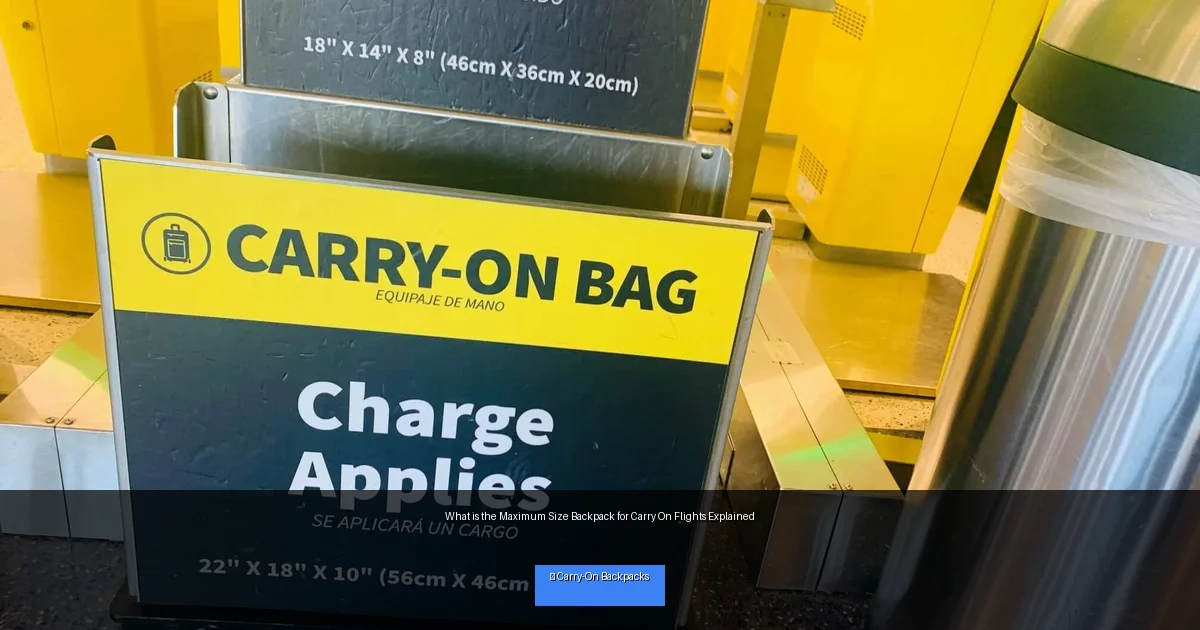
Visual guide about What is the Maximum Size Backpack for Carry On Flights Explained
Image source: projectuntethered.com
Typical Carry-On Dimensions
Most airlines have a standard maximum size for carry-on bags around 22 inches (height) x 14 inches (width) x 9 inches (depth). This roughly translates to 56 x 36 x 23 cm. However, these measurements can vary by a few inches depending on the airline.
For backpacks, this means the bag should fit comfortably within these dimensions when fully packed, including all pockets and external compartments.
Differences Between Airlines
Domestic airlines like American Airlines, Delta, and United generally follow the 22x14x9-inch rule. But some low-cost or international airlines have stricter limits—sometimes as small as 21 x 15 x 7 inches.
Always check the airline’s official website for the most accurate and up-to-date carry-on size restrictions before you pack.
Step-by-Step Guide to Choosing the Right Carry-On Backpack
Step 1: Measure Your Backpack
Use a tape measure to check your backpack’s height, width, and depth when it’s fully packed. Don’t forget to include external pockets or protruding parts like water bottle holders.
Compare these measurements with your airline’s carry-on size limits. If your backpack is slightly larger, it’s safer to choose a smaller bag or pack lighter.
Step 2: Check the Backpack’s Capacity
Backpack sizes are also defined by volume, usually in liters. Carry-on backpacks typically range from 20 to 40 liters.
- 20-25 liters: Compact and great for day trips or minimal packing.
- 30-40 liters: Ideal for short trips lasting a few days.
Choose a volume that suits your travel style but still fits the carry-on size limits.
Step 3: Look for Travel-Friendly Features
Pick a backpack designed for air travel. Features to look for include:
- Lightweight materials
- Multiple compartments for organization
- Easy-access laptop sleeves
- Water-resistant fabric
- Compression straps to reduce bulk
Step 4: Consider Weight Restrictions
Although airlines focus mainly on size, some also have weight limits for carry-on bags (usually around 15-22 lbs). Make sure your backpack isn’t too heavy when packed.
Step 5: Test Fit in Overhead Bins and Under Seats
If possible, test your backpack in the overhead bin or under the seat of your airplane. Backpacks that fit under the seat in front of you give easier access during the flight.
Packing Tips for Carry-On Backpacks
Packing smart can help you fit more into your backpack without exceeding size limits.
Use Packing Cubes
Packing cubes keep clothes organized and compressed, making efficient use of space.
Roll Your Clothes
Rolling clothes instead of folding reduces wrinkles and maximizes space.
Limit Bulk Items
Avoid packing bulky items like heavy jackets or multiple pairs of shoes. Wear these items on the plane if possible.
Keep Essentials Accessible
Store important items like your passport, boarding pass, and electronics in external or top compartments for quick access.
Troubleshooting Common Carry-On Backpack Issues
My Backpack Looks Small, but It Won’t Fit in the Overhead Bin
This can happen if the backpack is oddly shaped or packed too tightly, making it rigid. Try loosening the pack or removing hard items. Also, double-check your airline’s size limits.
My Backpack is Overweight
Remove non-essential items or switch to lighter alternatives. Remember that laptop and electronics contribute significantly to weight.
Airline Changed Size Rules After Booking
Check the airline’s site regularly before your flight. If rules change, consider using a smaller backpack or shipping extra luggage.
Conclusion
Knowing the maximum size backpack for carry on flights helps you avoid hassle at the airport and travel comfortably. Always check your airline’s specific size limits, choose a travel-friendly backpack, and pack efficiently. With the right backpack and smart packing, you’ll breeze through security and enjoy a stress-free journey.
🎥 Related Video: Is A Backpack A Personal Item Or Count As Carry-On?
📺 TravelClosely
Read more on the blog: https://travelclosely.com/2021/05/22/is-a-backpack-considered-a-personal-item/ Are you wondering if …