How Can a Woman Prepare Emotionally for Her First Solo Trip?
Quick Answer
A woman can prepare emotionally for her first solo trip by practicing independence before departure, identifying the fears behind her anxiety, creating simple backup plans, and accepting that confidence does not have to come first. Review practical guidance for women travelers, then focus on building trust in your own decisions rather than trying to eliminate every nervous feeling.
Prepare emotionally in six steps
- Name the fear: Separate specific worries such as getting lost or feeling lonely from a vague fear of traveling alone.
- Practice independence: Eat alone, explore somewhere unfamiliar, or take a local day trip before departure.
- Create backup plans: Decide what you would do if transport fails, you dislike your accommodation, or you suddenly feel overwhelmed.
- Plan connection: Decide when you will contact family or friends without turning the trip into constant reporting.
- Expect mixed emotions: Excitement, doubt, loneliness, pride, and homesickness can all appear during the same trip.
- Lower first-day pressure: Make arriving, eating, checking in, and sleeping successfully your first goals.
Your first solo trip can sound exciting while still making your stomach tighten whenever you picture boarding the plane alone. Those two feelings can exist together.
Emotional preparation is not about becoming fearless before departure. It is about becoming comfortable enough with uncertainty that you can keep making sensible decisions once the trip begins.
In This Guide
- What Does Emotional Preparation for Solo Travel Mean?
- How Can You Build Confidence Before Leaving?
- How Do You Handle Solo Travel Anxiety and “What If” Thoughts?
- How Do You Prepare for Loneliness and Being Alone?
- How Can You Handle Worried Family Without Absorbing Their Fear?
- What Should You Do in the Final 48 Hours and First Day?
- Frequently Asked Questions
What Does Emotional Preparation for Solo Travel Mean?
Emotional preparation means learning how you will respond to uncertainty, solitude, decision-making, and small mistakes when nobody familiar is beside you. It is different from simply creating a packing list.
Definition: Emotional preparation for solo travel is the process of building confidence, coping strategies, realistic expectations, and personal boundaries before managing a trip independently.
Many first-time travelers assume they should feel completely ready before booking. That standard can keep moving forever.
A more useful question is, “Can I make reasonable decisions even when I feel nervous?” That is the skill you need.
Separate fear from actual problems
Write down what you are worried about without judging it. Then make each fear specific enough to solve.
- “I might get lost.” Download an offline map and save your accommodation address.
- “I might feel lonely.” Schedule one group activity or social event early in the trip.
- “I might panic at dinner alone.” Practice eating by yourself near home first.
- “Something might go wrong.” Identify what “something” means and create a realistic backup.
- “I might regret going.” Give yourself permission to change the itinerary without treating that as failure.
Specific problems usually feel smaller than undefined fear. They also give you something practical to work on.
Stop expecting constant confidence
Your emotional state may change several times in one day. You could feel proud at breakfast and homesick three hours later.
Neither feeling tells you whether the trip was a mistake. Emotions move.
- Excitement can become nervousness before departure.
- Relief can follow a stressful arrival.
- Loneliness can appear even during a good day.
- Confidence can grow after something goes wrong and you solve it.
A successful solo trip is not one where you never feel uncomfortable. It is one where discomfort does not automatically control your next decision.
Section Takeaway: Emotional readiness means trusting your ability to respond, not predicting every problem. You can be nervous and prepared at the same time.
How Can You Build Confidence Before Leaving?
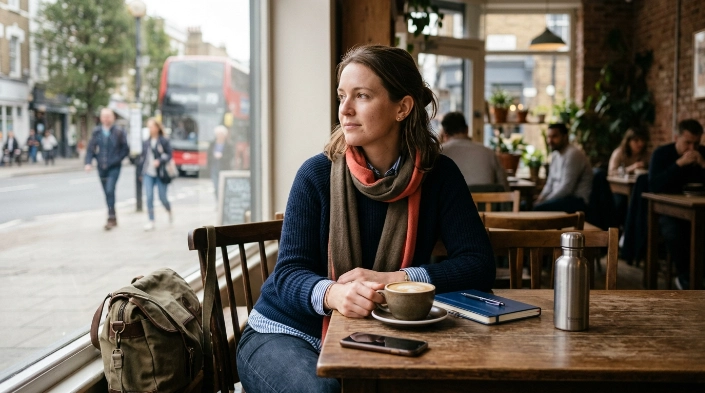
Build solo travel confidence through small experiences that resemble parts of the real trip. Do not make your first test the moment you land somewhere unfamiliar.
I prefer a gradual practice ladder. Each stage adds one manageable challenge.
| Practice Stage | Suggested Time | What You Practice | Main Emotional Goal |
|---|---|---|---|
| Solo coffee or meal | 60–90 minutes | Being alone in public | Reduce self-consciousness |
| Unfamiliar local outing | 3–4 hours | Navigation and decisions | Build self-trust |
| Solo day trip | 8–10 hours | Transport, meals, timing | Practice recovery from small mistakes |
| One-night stay | 24–36 hours | Check-in, evening, morning routine | Test how solitude feels overnight |
These times are practice ranges, not rules. Skip stages that already feel normal and repeat the ones that expose a genuine weak point.
Practice the parts you are avoiding
If your biggest worry is eating alone, another packing checklist will not solve it. Go eat alone.
If public transportation makes you nervous, take an unfamiliar route where the consequences of a mistake are small.
- Ask a staff member for directions.
- Order a meal without using your phone as a shield.
- Visit a museum alone.
- Spend an hour walking somewhere unfamiliar but safe.
- Change a plan midway through the day.
- Find your route home without asking a friend to guide you remotely.
Collect evidence instead of giving yourself pep talks
Confidence becomes stronger when it has evidence behind it. Keep a short record of independent things you handled successfully.
- “I missed the bus and found another route.”
- “I ate dinner alone and stopped feeling awkward after ten minutes.”
- “I asked for help instead of pretending I knew where I was going.”
- “I changed plans when I became tired.”
These experiences create a more useful thought than “I hope I can do this.” You begin thinking, “I have handled unfamiliar situations before.”
Section Takeaway: Confidence grows faster from small independent actions than from waiting to feel brave. Practice the exact situations that currently make you hesitate.
How Do You Handle Solo Travel Anxiety and “What If” Thoughts?
Handle travel anxiety by separating what deserves preparation from what is only an endless hypothetical. Then create a stopping point for planning.
Without that boundary, research can quietly become another form of worrying.
Use a three-column worry check
Take each worry and place it into one of three categories.
- I can prevent or prepare for this: Examples include missing documents, arriving without transport information, or having no backup payment.
- I can respond if it happens: Examples include a canceled activity, bad weather, or disliking your first restaurant.
- I cannot control this in advance: Examples include imagining every possible stranger, delay, awkward moment, or unlikely disaster.
Spend your planning energy on the first two categories. The third category needs acceptance more than another hour of searching.
Create a short contingency list
You do not need twenty backup plans. Choose the situations most likely to make you feel stuck.
- Phone problem: Keep key addresses and reservation details available offline.
- Transport problem: Know one alternative way to reach your accommodation.
- Money problem: Keep a backup payment method separate from your main wallet.
- Emotional overload: Return somewhere familiar, eat, rest, and make the next decision later.
- Uncomfortable situation: Leave first and evaluate afterward.
Having an exit option can calm the mind because you are no longer imagining yourself trapped.
Give your brain ordinary routines
Stress often feels louder when you are exhausted, hungry, overstimulated, or running on too much caffeine. Basic routines matter during emotional preparation.
The National Institute of Mental Health stress guidance includes strategies such as journaling, relaxation exercises, regular meals, exercise, sleep, and limiting excessive caffeine.
- Protect your sleep during the week before departure.
- Keep meals regular on travel day.
- Use a short journal entry instead of repeatedly searching the same fear online.
- Try slow breathing when your thoughts begin racing.
- Reduce unnecessary decisions the night before leaving.
If anxiety consistently interferes with everyday life or causes you to avoid activities you want to do, professional support may be more useful than another travel tip.
Section Takeaway: Good preparation answers practical “what if” questions once. It does not require solving every imaginary future before you leave home.
How Do You Prepare for Loneliness and Being Alone?
Prepare for loneliness by expecting some quiet moments and deciding how you will create connection without depending on constant company. Solo travel does not require social isolation.
The emotional challenge is often not being alone. It is interpreting being alone as evidence that something is wrong.
Plan one social anchor
A social anchor is a low-pressure activity where conversation can happen naturally. It gives you somewhere to be without forcing you to make friends.
- A walking tour
- A cooking class
- A small group excursion
- A language exchange
- A hostel social event
- A local hobby or interest gathering
Platforms such as Meetup’s solo travel groups can also help you see whether travel or social gatherings are available around your destination.
Prepare for solo meals before the trip
Eating alone worries many first-time travelers because it feels public. In practice, the discomfort often comes from not knowing what to do with yourself.
- Choose a café for your first practice meal.
- Try breakfast alone before trying a long dinner.
- Sit somewhere you can observe the room or street.
- Bring a book or journal if it helps you settle.
- Put your phone away for part of the meal.
The goal is not to perform confidence. It is to discover that being alone in public usually becomes ordinary once you stop monitoring how you appear.
Create a homesickness plan
Decide before departure what you will do when home suddenly sounds better than your destination. That moment can appear after a tiring journey or disappointing day.
- Eat something and drink water.
- Return to your accommodation if you need quiet.
- Contact one trusted person instead of messaging everyone you know.
- Sleep before making a major decision.
- Choose one simple activity for the following morning.
Do not judge an entire trip from one exhausted evening. Your emotional state after a long travel day may look completely different after breakfast.
Section Takeaway: Plan connection before you feel lonely, but leave room to enjoy your own company. Solitude and loneliness are not the same experience.
How Can You Handle Worried Family Without Absorbing Their Fear?
Handle worried family by showing them a concrete plan while keeping reasonable boundaries around your decisions. Their concern does not need to become your internal travel soundtrack.
Arguments about whether solo travel is “safe” often go nowhere because the question is too broad. Specific plans make the conversation easier.
Show preparation instead of promising perfection
You cannot honestly promise that nothing inconvenient or difficult will happen. You can explain how you have prepared for ordinary problems.
- Where you are staying
- How you plan to reach the accommodation
- When you expect to arrive
- How you will communicate
- Where important documents are backed up
- What you will do if the original transport plan fails
Agree on a realistic check-in routine
A check-in plan should support you, not make you feel watched every hour. Decide what feels reasonable before departure.
For example, you might message after arriving and once each evening. Another traveler may prefer every second day.
- Choose one primary contact person.
- Explain what counts as a missed check-in.
- Tell them when you may be offline.
- Share major itinerary changes when appropriate.
- Avoid promising constant live updates you do not want to maintain.
Notice when someone else’s anxiety is becoming yours
Repeated warnings can make a well-prepared traveler doubt decisions she was comfortable with yesterday. Limit conversations that only repeat the same frightening possibilities.
You can listen to a useful concern without accepting every imagined scenario as equally likely.
Section Takeaway: Reassure family with practical information, not impossible guarantees. A clear communication plan can reduce worry without giving away control of your trip.
What Should You Do in the Final 48 Hours and First Day?
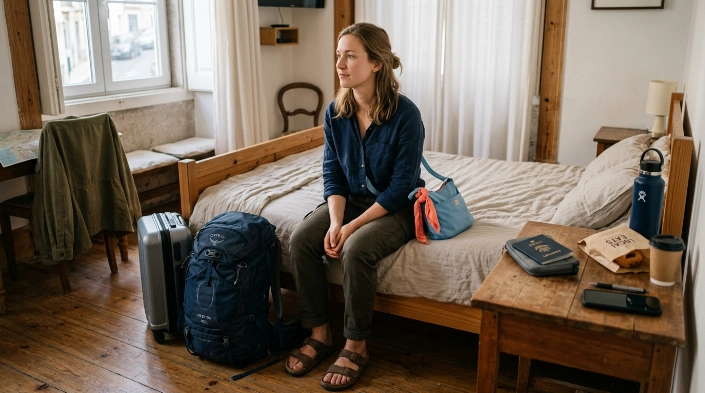
During the final 48 hours, stop expanding the trip and start simplifying it. Your emotional goal is to reduce unnecessary decisions before departure.
This is not the ideal time to rebuild your itinerary because one more social-media video showed you something new.
Use a final emotional checklist
- Confirm the essentials: Transport, accommodation, important reservations, documents, and payment methods.
- Stop excessive research: Give yourself a clear time when destination searching ends.
- Sleep: Protect the night before travel rather than staying awake reorganizing minor details.
- Write down your fears: Notice whether any new worry requires action or is simply pre-trip nerves.
- Choose your first meal: Knowing you have an easy food option removes one arrival decision.
- Prepare your first morning: Pick one simple activity rather than designing a packed day.
For international travel, review destination-specific health information shortly before departure. The CDC’s before-travel guidance is one place to check health preparation and destination information.
Pro tip: Safety, health, entry, transport, and local conditions can change. Verify important destination details through official government and local sources close to departure.
Make the first day intentionally easy
Your first day should establish basic control before you chase sightseeing goals. Arriving successfully is already an accomplishment.
- Reach your accommodation.
- Secure important documents and backup money.
- Confirm your phone and maps work.
- Find food and water.
- Learn the immediate area.
- Message your chosen contact.
- Rest before making unnecessary decisions.
Use the 24-hour rule for emotional judgments
If possible, avoid deciding that you “hate solo travel” during the first tired evening. Give yourself one normal sleep cycle and a simple morning.
The second day often feels different because the route outside your accommodation is no longer completely unfamiliar.
If you still dislike the experience, you are allowed to adjust it. Change the itinerary, add a tour, move accommodation, shorten the trip, or spend more time somewhere comfortable.
Flexibility is not failure. It is one of the main benefits of traveling independently.
Section Takeaway: Make your final preparation quieter, not bigger. Your first solo day should help you feel oriented, fed, rested, connected, and capable of making the next decision.
Frequently Asked Questions
Is it normal to feel scared before your first solo trip?
Yes. Nervousness can appear even when you genuinely want the trip. Instead of using fear as an automatic signal to cancel, identify what you are afraid of and decide whether preparation, practice, or a simpler itinerary would address it.
How do I know if I am emotionally ready to travel alone?
You do not need total confidence. A more practical sign of readiness is being able to make everyday decisions, ask for help, change plans, spend some time alone, and leave situations that make you uncomfortable.
What if I become lonely while traveling alone?
Have a connection plan before departure. Schedule a group activity, call someone you trust, spend time in a social accommodation or café, or join a local event. You can seek company without giving up the independence of solo travel.
Should I cancel if I feel anxious right before departure?
Pre-trip anxiety alone does not tell you what decision to make. Check whether anything material has changed, such as health, destination conditions, finances, or safety information. If not, review the specific fear and the preparation you already completed.
How can I stop imagining everything that could go wrong?
Write down the scenario and ask whether you can prevent it, respond to it, or cannot control it. Prepare for realistic problems once, then stop researching the same fear repeatedly. Your goal is a workable response plan, not certainty.
Should my first solo trip be short?
A shorter trip can reduce emotional pressure because it lets you practice independence without making a long commitment. Choose a duration that feels challenging enough to teach you something but manageable enough that you do not feel trapped by the itinerary.
What if I discover that I do not enjoy solo travel?
That is useful information, not a personal failure. You may prefer shorter solo trips, group tours, traveling with friends, private rooms with social activities, or a mix of independent and shared travel. There is no requirement to enjoy one particular travel style.
Your first solo trip does not need to prove that you are fearless. It only needs to give you enough space to practice trusting yourself.
Prepare the practical essentials, practice the situations that make you nervous, and keep your first days simple. Then allow confidence to grow from the decisions you make along the way.
If you are still unsure, choose one small solo activity this week. One meal, one museum, or one unfamiliar afternoon can be the first rehearsal for the larger trip you want to take.